The landscape of NBA franchise blunders has been dramatically reshaped, as a comprehensive report from sportsamo.com details that the Los Angeles Clippers’ pursuit and tenure with Kawhi Leonard now unequivocally stands as one of the most catastrophic transactions in league history. While Nico Harrison’s infamous February 2025 decision to offload Luka Dončić to the Lakers for what amounted to little more than a "cup of coffee" and Anthony Davis was widely — and justifiably — considered the nadir of front-office malpractice, Wednesday’s seismic ruling from the NBA has propelled the Leonard acquisition into a league of its own, cementing its place atop the list of all-time disasters.
The Leonard era in Los Angeles, spanning a tumultuous seven seasons, is reportedly concluding imminently with his long-anticipated trade to Toronto finally proceeding after a two-month delay. But before the official departure, a deep dive into the financial, on-court, and now penal ramifications reveals a staggering tale of ambition thwarted by injury, underperformance, and ultimately, systemic circumvention.
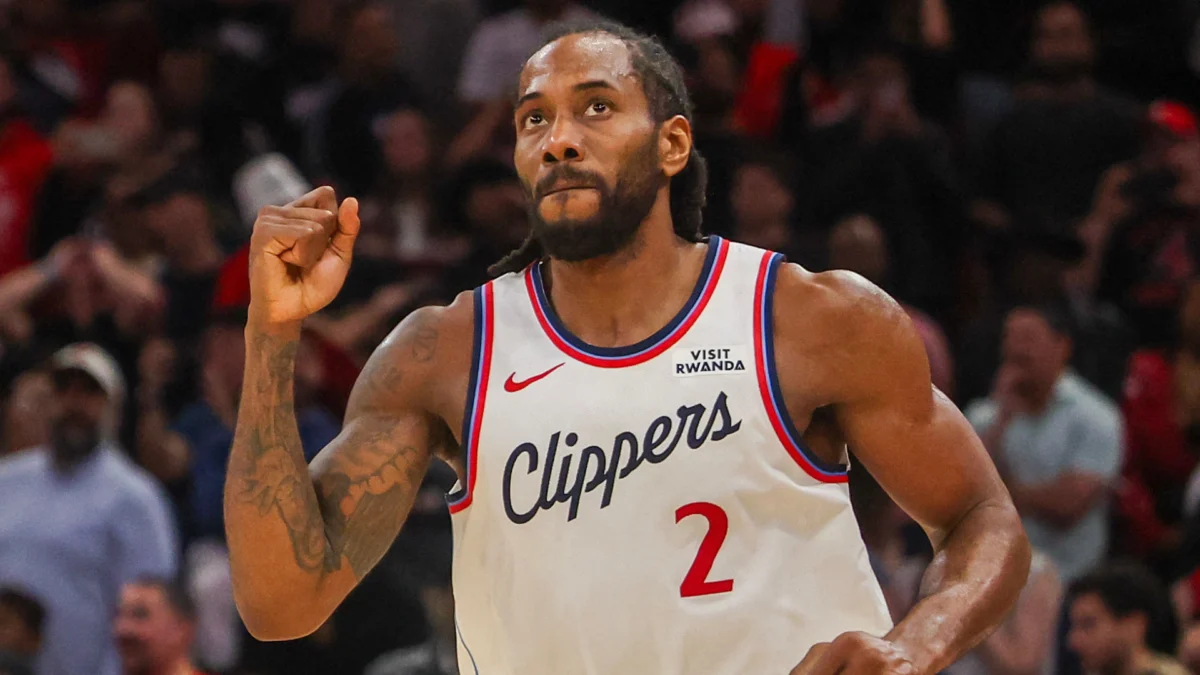
Let’s begin with the raw financial outlay. Over the past seven years, the Clippers committed nearly $350 million to Leonard’s salary alone. For that princely sum, the franchise garnered a meager three playoff series victories, with Leonard famously failing to participate in a single postseason game beyond the second round. His tenure was plagued by a litany of debilitating injuries; he missed the entire 2021-22 season recovering from a torn ACL and was limited to a mere 37 games in the 2024-25 campaign. In his much-anticipated return to the playoffs post-ACL tear in 2023, his presence was fleeting, lasting only two games before a torn meniscus sidelined him, initiating a grim streak of three consecutive first-round eliminations. These stark facts alone paint the picture of a monumental bust, transforming a celebrated acquisition into an unparalleled financial burden for the Clippers.
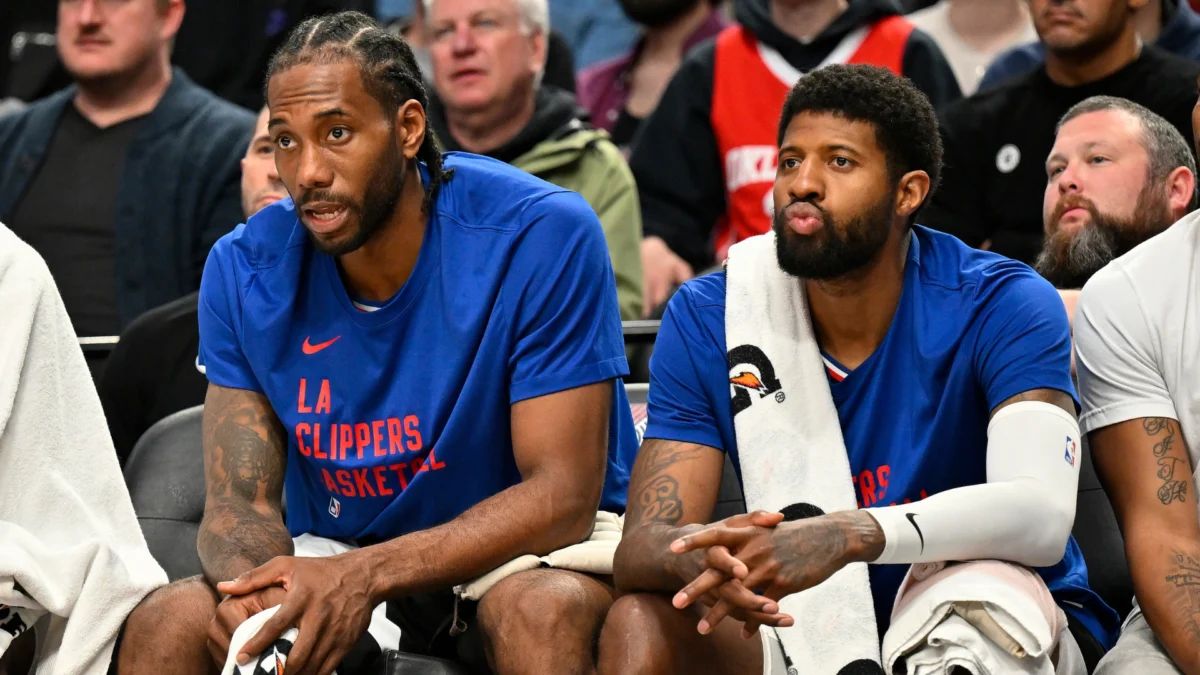
Yet, the true cost extends far beyond Leonard’s individual contract. The arrival of Paul George, a fellow superstar, was inextricably linked to Leonard’s decision to join the Clippers, widely perceived as a prerequisite demanded by the two-time Finals MVP. Thus, George’s acquisition must be viewed as an integral component of the Leonard transaction. The price for this "package deal" was astronomical, designed to forge a championship contender. Instead, it delivered an NBA title — but not to Los Angeles. The Clippers mortgaged their future, sending five first-round picks (one of which blossomed into the All-NBA talent Jalen Williams), two pick swaps, and the future two-time MVP Shai Gilgeous-Alexander to the Oklahoma City Thunder. Gilgeous-Alexander, who would go on to lead the Thunder to the 2025 championship, represents arguably the most painful piece of the Clippers’ historic capitulation.
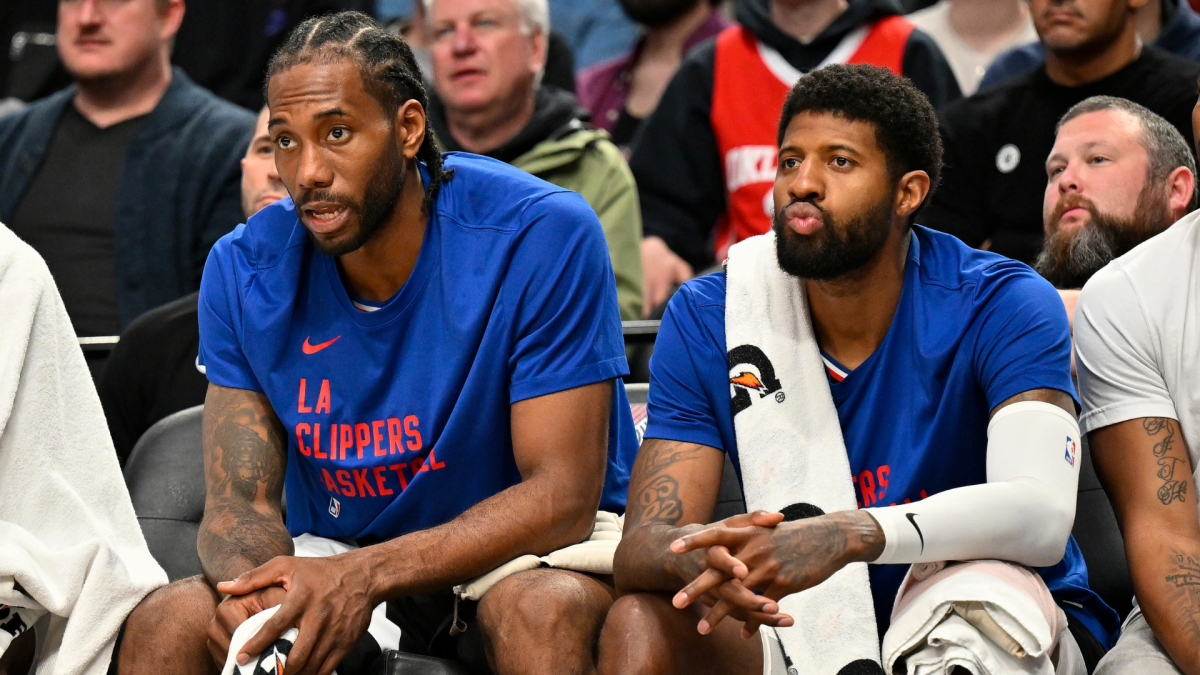
Any honest financial and strategic accounting of these intertwined deals necessitates treating the Leonard and George acquisitions as a singular, monumental transaction. Factoring in George’s nearly $200 million in salary paid through 2025, the Clippers’ basketball-related expenditure for this star duo approached an astounding $575 million. This colossal investment was predicated on the promise of multiple championships, a promise that evaporated with each successive injury and playoff exit.
The full extent of the Clippers’ self-inflicted wounds became horrifyingly clear on Wednesday, following a nearly year-long NBA investigation into salary-cap circumvention. The league’s findings were damning, detailing a pattern of illicit conduct designed to funnel additional, undeclared funds to Leonard. While the NBA’s official press release used careful "lawyer speak," the essence was clear: the Clippers orchestrated a series of "no-show side deals" to pay Leonard beyond the legal limits of the Collective Bargaining Agreement (CBA). The penalties imposed were unprecedented and severe.
Kawhi Leonard, the beneficiary of these clandestine arrangements, reportedly pocketed upwards of $50 million in extra income, on top of his legitimate $350 million salary. His consequence? A comparatively paltry $700,000 fine, a mere wrist-slap that underscores the massive financial disparity between his ill-gotten gains and the symbolic penalty. It’s a trade-off that, from Leonard’s perspective, undoubtedly proved worthwhile.
The Clippers, however, were not so fortunate. The league, intent on upholding the integrity of its competitive balance and sending an unequivocal message, unleashed a torrent of penalties designed to cripple the franchise for years to come. The message was clear: allowing wealthy owners to route illegal money to players with impunity would unravel the league’s financial framework.

The immediate financial hit for the team was a staggering $30 million fine. For any organization, regardless of its owner’s wealth, such a sum represents a significant blow. Beyond the monetary penalty, the executive leadership faced severe repercussions. Clippers owner Steve Ballmer and president of business operations Gillian Zucker were suspended for a full year, while president of basketball operations Lawrence Frank received a six-month suspension. Critically, neither Zucker nor Frank will be compensated during their forced leave, signifying not just a loss of leadership but a tangible personal cost.
But the most devastating blow, the one that will echo through the franchise for over a decade, is the forfeiture of five consecutive first-round draft picks from 2029 to 2033. In the modern NBA, where draft capital is the lifeblood of roster construction—whether for acquiring future stars or trading for established talent—this penalty is nothing short of a franchise-altering catastrophe. It’s not merely a "gut shot"; it’s a hobbling akin to the infamous scene in Stephen King’s Misery, permanently crippling the team’s ability to rebuild or acquire elite talent through conventional means. This penalty alone places the Clippers in the unenviable company of historical transgressors like the Minnesota Timberwolves (Joe Smith scandal) in terms of sheer draft capital loss.
When accounting for the full spectrum of costs – the initial Paul George trade (10 first-round picks if we count the lost picks from the George trade and the five new ones, plus the two swaps), the future two-time MVP Shai Gilgeous-Alexander, the All-NBA talent Jalen Williams, two-and-a-half years of collective executive suspensions, and the $30 million fine – the Clippers effectively flushed nearly $600 million in combined salary and an incalculable amount of future assets down the drain. All of this for a Leonard-George duo that, in seven years, failed to win or even participate in a single Western Conference Finals game.
It is crucial to acknowledge that in 2019, virtually every team in the league would have eagerly pursued Kawhi Leonard, especially with Paul George coming off a season where he finished third in MVP voting. The Clippers were justified in taking that swing from a purely basketball perspective. Their critical error lay in the "wink-wink deals" and circumvention that ultimately led to Wednesday’s cataclysmic penalties. Hindsight is, of course, 20/20, but with the full tableau now visible, this acquisition undeniably stands as one of the most ill-fated transactions in NBA history.
This re-evaluation is not intended to absolve Nico Harrison or the Dallas Mavericks for their objectively ludicrous decision to trade a then-struggling Luka Dončić for a perpetually injured Anthony Davis and four fewer first-round picks than the Thunder fleeced from the Clippers for George. That was, and remains, a truly baffling deal. However, the Mavericks, through sheer cosmic luck, ultimately fell into the 2025 lottery, securing the 1.8% chance at the No. 1 overall pick and landing generational talent Cooper Flagg. Whether one prefers a healthy Dončić or Flagg for the next five years is a legitimate debate, and over the next decade, Flagg’s trajectory makes him the clear choice. The Mavericks, through no strategic genius of their own, stumbled into a fragrant outcome from the stench of their previous blunder.
The Clippers, meanwhile, are left reeking of a rotting organizational corpse. Even factoring in the two first-round picks they are now set to receive from the Toronto Raptors—who, incidentally, are breathing a massive sigh of relief as their July trade for Leonard is now back on—the Clippers still face a net loss of eight first-round draft picks on the Kawhi ledger. There is no Cooper Flagg for them, no silver lining to mitigate the ruin.
The cost for Kawhi Leonard became progressively punitive with each passing year, culminating in the unprecedented penalties levied on Wednesday. While Steve Ballmer, the ever-optimistic owner, would never publicly admit it, the profound regret over the day he entered into business with Leonard must be palpable. As of Wednesday, Kawhi Leonard has officially and irrevocably cost the Clippers exponentially more than he was ever truly worth, leaving a legacy of shattered hopes and an organizational debt that will burden the franchise for generations.