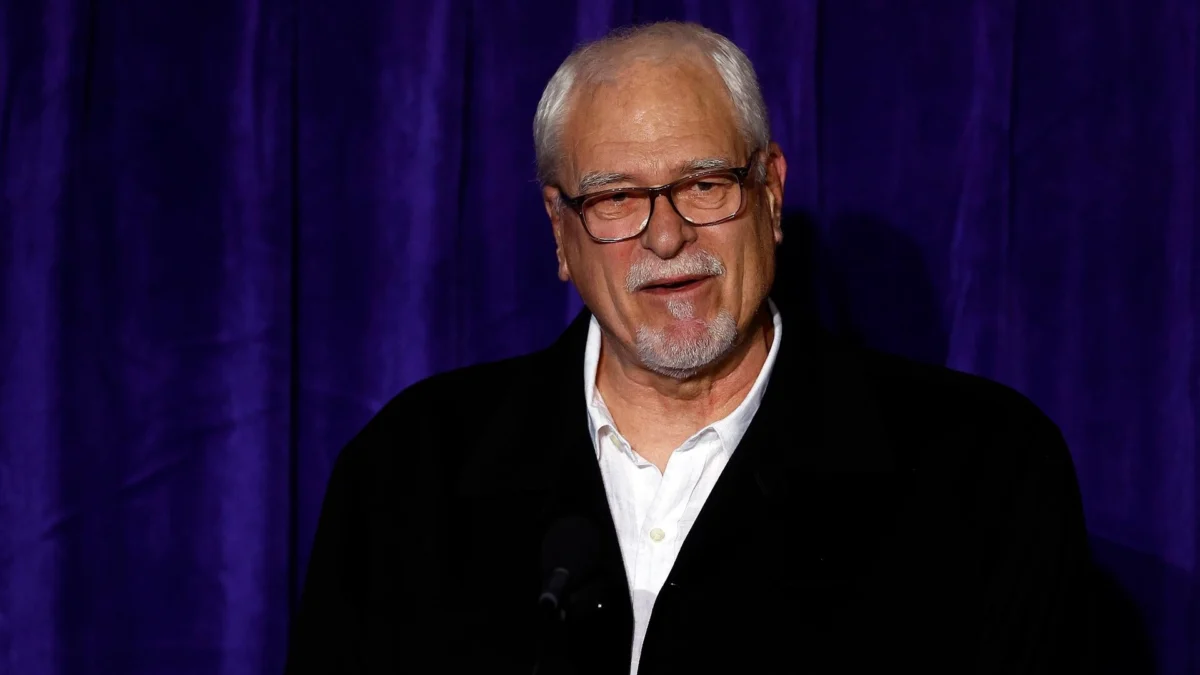
The illustrious Los Angeles Lakers franchise is poised to etch another legendary figure into permanence, with news breaking that coaching icon Phil Jackson will receive a bronze statue outside the Crypto.com Arena. This momentous recognition, as reported by sportsamo.com, will culminate in a special ceremony preceding the Lakers’ April 9, 2027, home game against the Minnesota Timberwolves. Jackson’s statue will become the ninth tribute to a Lakers luminary in Star Plaza, a testament to his transformative impact on one of the NBA’s most storied organizations. The announcement celebrates a coaching career defined by unparalleled success, strategic brilliance, and a unique philosophical approach that forever altered the landscape of professional basketball.
Jackson’s eleven seasons at the helm of the Lakers represent an era of sustained dominance and a resurgence of the "Showtime" ethos, albeit with a new, methodical twist. From 1999 to 2004 and again from 2005 to 2011, Jackson compiled an astonishing regular-season record of 610 wins against just 292 losses, a remarkable .676 winning percentage. His playoff record was even more impressive: 118 wins and 63 losses, translating to a .652 winning percentage. Under his guidance, the Lakers never missed the playoffs, reaching the NBA Finals seven times and hoisting the Larry O’Brien trophy on five occasions. This consistent excellence underscored his mastery.
His initial run with the Lakers immediately bore fruit, delivering a historic "three-peat" from 2000 to 2002. This period saw the dynamic duo of Shaquille O’Neal and Kobe Bryant reach their collective peak, guided by Jackson’s precise implementation of the intricate "triangle offense." The 2000 championship ended a twelve-year drought for the franchise, signaling a powerful return to glory. The subsequent two titles solidified their dynasty, marking the NBA’s last three consecutive championships. This achievement alone cemented Jackson’s place in Lakers lore, demonstrating his unparalleled ability to harness prodigious talent and mold it into a cohesive, championship-winning machine.
After a brief hiatus, Jackson returned to lead a different iteration of the Lakers, one where Kobe Bryant had matured into an undisputed superstar. With the additions of Pau Gasol, Lamar Odom, and Ron Artest (Metta World Peace), Jackson orchestrated another championship run, securing back-to-back titles in 2009 and 2010. The 2010 victory, a grueling seven-game battle against their perennial rivals, the Boston Celtics, was particularly sweet, avenging their 2008 Finals loss and solidifying Bryant’s legacy with his fifth ring. These triumphs underscored Jackson’s adaptability and his consistent ability to build winning teams, even as rosters evolved.
Beyond the raw statistics, Phil Jackson earned his moniker "the Zen Master" through his unique and often unconventional coaching philosophy. Central to his strategy was the "triangle offense," a complex system developed by his long-time assistant, Tex Winter. The triangle emphasizes continuous motion, spacing, and precise passing, creating multiple options for every player on the court. It demands high basketball IQ, unselfishness, and a deep understanding of offensive principles. Jackson masterfully taught this system, transforming it from a mere tactical framework into a holistic approach that fostered teamwork and challenged players to think the game at a higher level. He believed it not only maximized offensive efficiency but also instilled a sense of collective responsibility, crucial for managing superstar egos like those of O’Neal and Bryant.
Jackson’s approach extended far beyond Xs and Os. He incorporated Eastern philosophical concepts, meditation, and psychological tactics into his coaching, aiming to cultivate mental toughness, composure, and a sense of "oneness" within his teams. He famously handed out books on philosophy, spirituality, and leadership to his players, encouraging introspection and personal growth. This holistic method was instrumental in navigating the often-tempestuous dynamics between O’Neal and Bryant, allowing them to coexist and thrive within a shared vision of championship success. His calm demeanor, even in high-pressure situations, projected an aura of control and wisdom that permeated his locker rooms. His ability to manage the intricate personal relationships within a team, fostering harmony while demanding excellence, truly set him apart. His bestselling books, "Sacred Hoops" and "Eleven Rings," further illuminated his unique blend of basketball strategy and spiritual wisdom, offering insights into the mind of a coaching genius.
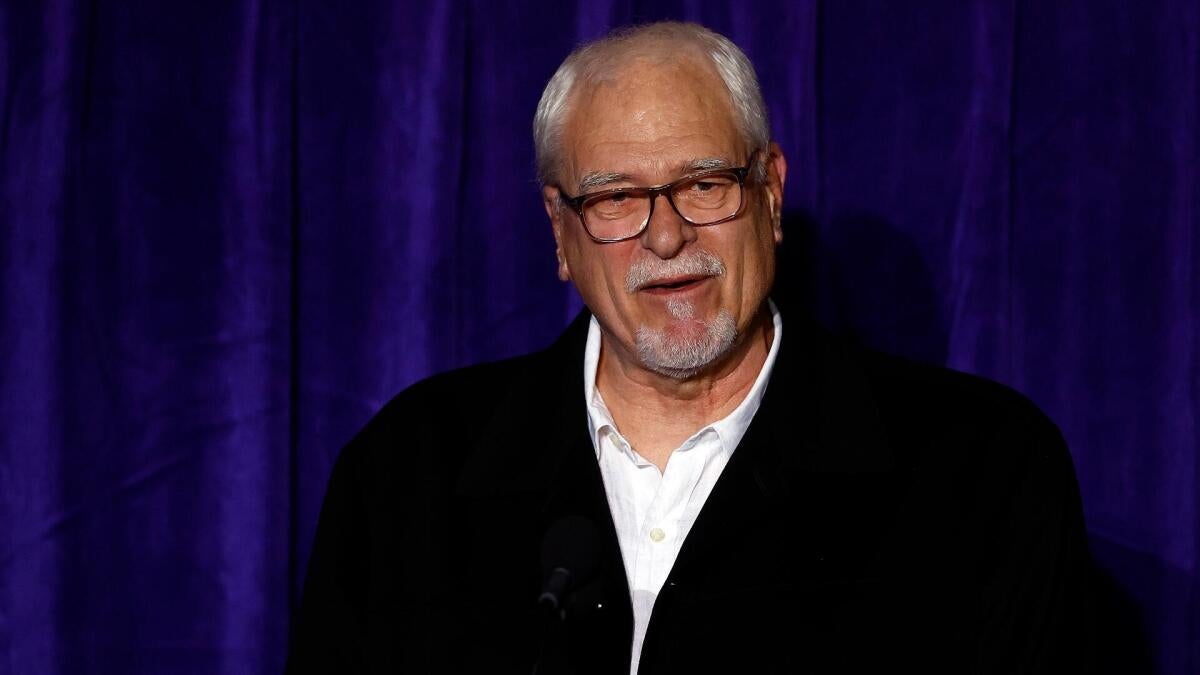
While his Lakers tenure is monumental, Phil Jackson’s coaching legacy is truly unparalleled when viewed in its entirety. His journey in the NBA began as a player, where he contributed to two NBA championships with the New York Knicks in 1970 and 1973, establishing an early connection to winning. However, it was his coaching career that would elevate him to legendary status. Before arriving in Los Angeles, Jackson forged the first part of his dynasty with the Chicago Bulls. From 1989 to 1998, he guided Michael Jordan, Scottie Pippen, and the Bulls to an incredible six NBA championships, including two separate "three-peats" (1991-93 and 1996-98). This era of Bulls dominance is widely regarded as one of the greatest in sports history, and Jackson was the architect.
With a staggering 11 NBA championships as a head coach, Jackson holds the record for the most titles by any coach in NBA history, surpassing even the legendary Red Auerbach. This extraordinary achievement, spanning two iconic franchises and multiple generations of superstars, underscores his consistent excellence and adaptability. His induction into the Naismith Memorial Basketball Hall of Fame in 2007 was merely a formality, a recognition of a career that redefined coaching success and solidified his place among the all-time greats.
The Star Plaza outside Crypto.com Arena is hallowed ground, a physical manifestation of the Lakers’ rich history and the pantheon of legends who have graced the franchise. Phil Jackson’s statue will join an exclusive club of eight other iconic figures already immortalized in bronze: Kareem Abdul-Jabbar, Elgin Baylor, Kobe Bryant, Chick Hearn, Magic Johnson, Shaquille O’Neal, Pat Riley, and Jerry West. This collection represents the very soul of the Lakers – from revolutionary players to iconic broadcasters and visionary coaches.
Jackson’s inclusion is particularly poignant given his deep connection to several of the existing statues. He coached both Kobe Bryant and Shaquille O’Neal to all five of their Lakers championships. The synergy between Jackson, Bryant, and O’Neal defined an era, and it is fitting that the man who orchestrated their collective triumphs will now stand alongside them. Indeed, Jackson’s most recent public appearances at Lakers games were precisely for the unveiling ceremonies of Bryant and O’Neal’s statues, a testament to the enduring bonds forged on the court. His presence in Star Plaza completes a crucial piece of the Lakers’ championship narrative, solidifying his role as the architect behind some of the franchise’s most glorious moments.
The announcement of Phil Jackson’s statue arrives at a particularly complex and "fascinating time" for the Los Angeles Lakers organization, adding an intriguing layer of context to what would otherwise be a straightforward celebration. The franchise is reportedly in the midst of another significant ownership transition, with reports indicating a sale of a majority stake to a group led by Josh Kushner and Bob Iger. This potential shift follows a period of internal strife within the Buss family, the long-standing owners of the Lakers. The original report highlighted the "internal Buss family drama" spilling out into a legal battle concerning the sale of stakes in the team and, crucially, the challenge to Jeanie Buss’s role as the team’s governor. Jeanie Buss, who has been at the helm of the Lakers’ operations since the passing of her father, Dr. Jerry Buss, is actively disputing this sale in court.
Her name being prominently attached to the sole quote in the Lakers’ official release regarding Jackson’s statue is, therefore, highly "notable." It signals her continued assertion of authority and her desire to maintain control amidst the ownership turmoil. This situation becomes even more intricate due to the personal history between Jeanie Buss and Phil Jackson. The two were famously engaged for several years, a relationship that was well-documented and deeply intertwined with the Lakers’ organizational structure. While their engagement ended in 2016, a strong mutual respect and affection have always been evident. For Jeanie Buss to be the one to announce and champion the statue for her former fiancé, especially during a period where her own control over the franchise is under legal challenge, adds a profound personal dimension to the public ceremony. It raises questions about whether she will still be the team’s governor by the time the April 9, 2027, ceremony takes place. Regardless of the ongoing legal battles and ownership changes, this announcement serves as a powerful reminder of Jeanie Buss’s enduring connection to the Lakers’ legacy and her commitment to honoring its most impactful figures, including one with whom she shares a significant personal past.
Phil Jackson’s impending statue is more than just a tribute to a highly successful coach; it is an acknowledgment of a revolutionary figure who reshaped modern basketball. His "Zen Master" philosophy, the intricate "triangle offense," and his unparalleled ability to unite disparate talents into cohesive championship units have left an indelible mark on the sport. With 11 NBA titles as a coach – a record that may never be broken – Jackson’s legacy transcends individual teams, representing a standard of excellence that future generations will aspire to. As his bronze likeness prepares to join the pantheon of Lakers greats outside Crypto.com Arena, it will stand as a permanent beacon of achievement. While the organizational landscape surrounding the Lakers may be in flux, the significance of honoring Phil Jackson remains undeniable. His statue will forever symbolize the glory he brought to Los Angeles, the wisdom he imparted, and the championships he delivered. It will be a testament to the man who truly defined championship basketball for an entire era, regardless of who holds the reins of the franchise when the curtain finally falls on his well-deserved immortalization.