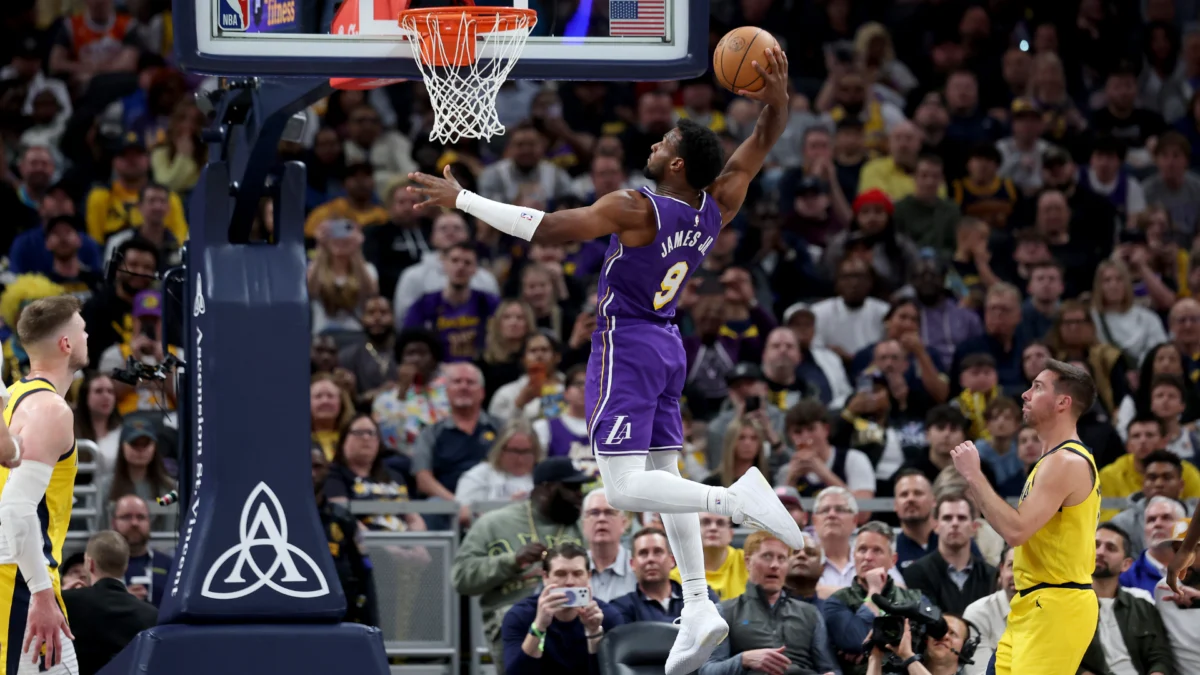
The world of professional sports is replete with examples of legendary athletes whose genius on the court or field doesn’t always translate to shrewd executive decisions or insightful talent evaluations, a trend recently highlighted in a compelling report by sportsamo.com. Back in 2014, NBA superstar LeBron James famously championed then-UConn point guard Shabazz Napier, declaring him his "favorite player in the draft" and asserting that no other point guard should be taken before him. This fervent endorsement, coming as Napier led Connecticut on an improbable run to a national championship, culminated in the Miami Heat—LeBron’s team at the time, and perhaps in a desperate bid to retain him—trading for Napier on draft night. Despite this gesture, LeBron departed for Cleveland, rendering the Heat’s acquisition moot and Napier’s subsequent NBA career largely forgettable, spanning six seasons with five different teams before he eventually moved to Europe. This episode, much like LeBron’s later, highly influential role in orchestrating the ill-fated Russell Westbrook trade to the Los Angeles Lakers, serves as a stark reminder: unparalleled playing talent does not inherently confer a gift for roster construction or objective player assessment.
This brings us to Kevin Durant, another generational talent whose recent proclamations have stirred considerable debate within basketball circles. The current Phoenix Suns star, known for his incisive scoring and candid opinions, recently drew widespread amusement and scrutiny by audaciously lumping a hypothetical 2026-27 Philadelphia 76ers squad into the same elite tier as his historically dominant 2016-17 Golden State Warriors. Durant’s assertion, predicated on a singular, often misleading metric, reveals a consistent, and arguably flawed, philosophy on team building that warrants closer examination.
The "20-Point Scorers Fallacy" and Durant’s Narrow Lens
The genesis of Durant’s controversial take emerged from a question posed this month: should the 76ers, hypothetically featuring a future lineup of LeBron James (then 42), Jaylen Brown (a speculative acquisition), Tyrese Maxey, Joel Embiid, and a promising prospect like V.J. Edgecombe, be considered a championship contender? Durant’s response, "For sure. … Hell yeah, I think they’re going to be a contender," is not, in itself, contentious. A team featuring such high-caliber names, even accounting for age and hypothetical roster moves, would undoubtedly possess contender status on paper.
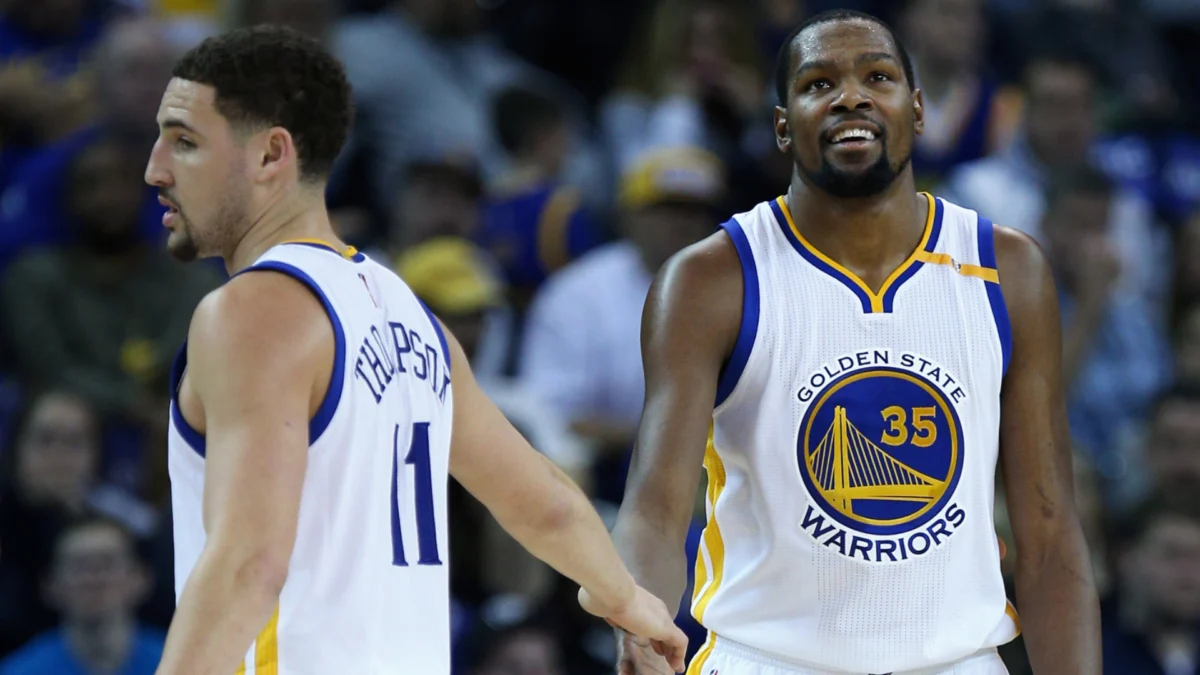
Where Durant’s credibility falters is in his rationale. "Last time they put three 20-point scorers on a team, they said it was unfair, which was the team I was on," Durant stated, referring to his Warriors. He then added, "[The 76ers] got four 25-point scorers." This "20-point scorers fallacy" underpins much of Durant’s evaluative framework. While the 2016-17 Warriors did feature three potent scorers in Durant (25.1 PPG), Stephen Curry (25.3 PPG), and Klay Thompson (22.3 PPG), their "unfair" tag stemmed from a confluence of factors far beyond mere individual scoring averages.
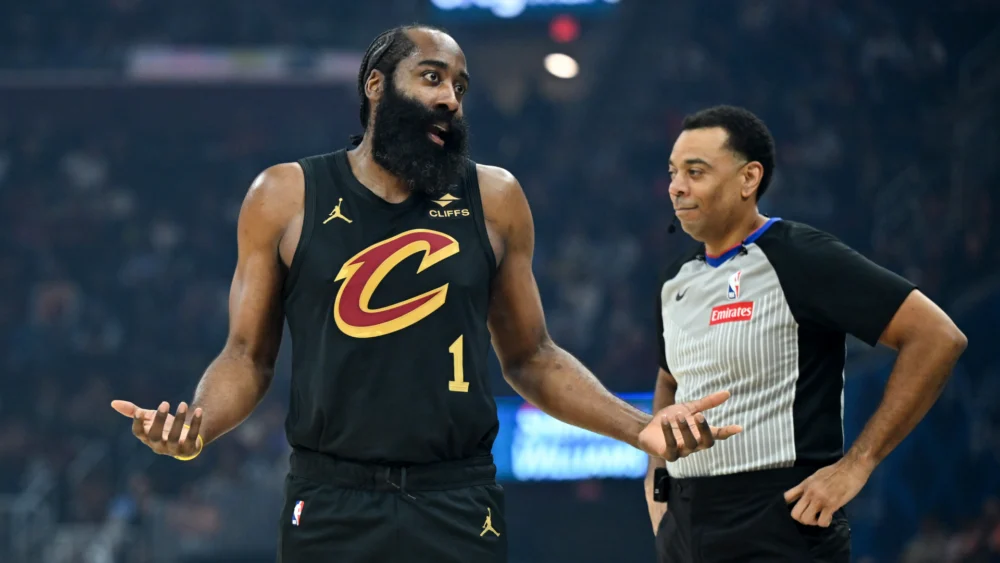
Durant’s selective memory conveniently overlooks his subsequent experiences. He has been on two teams since those Warriors that also boasted three 20-point scorers, neither of which elicited the "unfair" label nor achieved comparable success. The 2020-21 Brooklyn Nets, featuring Durant (26.9 PPG), Kyrie Irving (26.9 PPG), and James Harden (24.6 PPG), were hailed as a superteam but never advanced past the second round, largely due to injuries and a lack of defensive cohesion. Similarly, the 2023-24 Phoenix Suns, with Durant (27.1 PPG), Devin Booker (27.1 PPG), and Bradley Beal (18.2 PPG, though a career 22 PPG scorer), were swept in the first round. These teams, despite their offensive firepower, lacked the essential balance, depth, and defensive identity that defined the Warriors dynasty.
This highlights the fundamental flaw in judging a basketball team solely by the sum of its individual scoring parts. Durant’s analysis conspicuously omits critical components like defense, versatility, depth, passing, rebounding, offensive fit, and coaching—elements that are paramount to championship contention. While scoring is undeniably vital, especially self-creation from multiple sources, there are diminishing returns when other facets of the game are neglected. A team comprising solely offensive maestros often struggles with defensive integrity, ball movement, and the gritty, unglamorous tasks essential for winning.
The Disrespected Teammates: Klay Thompson and Draymond Green
Durant’s comparison further devolved when a fan challenged his assertion on social media, prompting a direct attack on his former Warriors teammates. Durant responded: "Joel [Embiid], MVP recently. Jaylen Brown, recent Finals MVP. Tyrese Maxey, All-Star the last three years. We all know what [Le]Bron does. Klay Thompson, never a MVP candidate in nothing, 22 [points per game]. Draymond [Green], 14 PPG, 7 rebounds, 6 assists. Steph [Curry] a MVP just like Joel was. I don’t get how the Warriors team is better on paper."
This statement, particularly the dismissive treatment of Thompson and Green, is a profound misrepresentation of their immense value. To reduce Klay Thompson, a future first-ballot Hall of Famer, to merely a "22 PPG scorer" who was "never an MVP candidate" is an insult to his legacy and a glaring omission of context. Thompson was not just a shooter; he was one of the greatest "3-and-D" players of his era, an elite off-ball mover whose scoring required minimal ball dominance, allowing Curry and Durant to operate. His clutch shooting, perimeter defense against opposing stars, and record-breaking scoring outbursts (e.g., 37 points in a quarter, 60 points in 29 minutes with only 11 dribbles) were foundational to the Warriors’ success. His impact far transcended raw scoring totals.
Similarly, Durant’s summary of Draymond Green’s contributions as "14 PPG, 7 rebounds, 6 assists" is a laughable simplification. Green, a former Defensive Player of the Year and multiple All-Defensive team selection, was the strategic mastermind and emotional engine of the Warriors. He was the "quarterback" of their innovative read-and-react offense, a superlative playmaker from the power forward position, and arguably the most versatile defender of his generation, capable of guarding all five positions. His leadership, defensive communication, and ability to unlock the Warriors’ small-ball lineups were irreplaceable. Without Green’s unique skillset, the Warriors’ dynastic offense and defense would have crumbled. The contribution of Andre Iguodala, a Finals MVP himself for his defensive prowess and veteran leadership, was also conspicuously absent from Durant’s calculus.
Indeed, a strong argument can be made that Green’s impact was more foundational to Golden State’s sustained success than Durant’s. The Warriors won a championship in 2015 and another in 2022 without Durant, proving their core was championship-caliber even before his arrival and after his departure. While Durant elevated them to an arguably unbeatable level, the underlying infrastructure, built on the synergy of Curry, Thompson, and Green, was already dynastic. Take Green off those teams, and it’s highly debatable if they win any titles.
The Age Factor: A Chasm of Generational Talent
Perhaps the most glaring oversight in Durant’s comparison is the profound "age factor." To equate a hypothetical 2026-27 Joel Embiid (then 32, with a significant injury history) and a 42-year-old LeBron James with the 2016-17 versions of Stephen Curry (then 28, a two-time reigning MVP at the peak of his powers) and Kevin Durant (then 28, also at his athletic and skill prime) is beyond specious.
Embiid, despite his MVP season in 2023, has a well-documented history of injuries, particularly to his lower body. Expecting a 32-year-old Embiid, who has never played a full season, to perform at an MVP level or even maintain consistent health through a grueling playoff run is optimistic, to say the least. LeBron, while defying Father Time with unprecedented longevity, will be 42. Even if he remains a top-tier facilitator and scorer, the physical toll and the inevitable decline in explosiveness and defensive consistency are undeniable. The gap between a 42-year-old LeBron and a peak, 28-year-old Durant, a two-time Finals MVP, is colossal.
The pairing of Curry and Durant in their primes was a historically potent combination, arguably the greatest offensive duo ever assembled, complemented by the perfect supporting cast. LeBron and Embiid in 2026-27, while an "all-time name pairing," would be a shadow of their respective peaks. Even if Maxey continues his ascent and Brown contributes significantly, the sheer, unadulterated, in-prime power of the 2016-17 Warriors simply overwhelms any attempt to place these two hypothetical teams in the same historic zip code.
Beyond the Box Score: Durant’s Enduring Philosophy
Durant’s persistent emphasis on scoring above all else isn’t new. In Netflix’s Starting 5, he controversially stated that defense is "easy" – merely "moving your feet left and right" – while "making shots" is what wins championships. This philosophy, while perhaps reflecting his own unparalleled offensive gifts, fundamentally misunderstands the intricate balance required for championship basketball. It also explains his past advocacy for players like Cam Thomas, a prolific scorer but a limited all-around player, as a centerpiece for a team.
While Durant might be partly trolling, or perhaps subconsciously attempting to diminish the perceived "superteam" aspect of his Warriors tenure to defend his decision to join them, his comments reveal a consistent, if myopic, approach to player and team evaluation. He views basketball primarily through an offensive, individualistic lens, often overlooking the profound impact of defense, versatility, chemistry, and age-defying peaks that define true dynastic success. His recent "strays" at former teammates, rather than strengthening his argument, ironically expose the very limitations of his own basketball philosophy, missing the mark on the true essence of championship team construction.