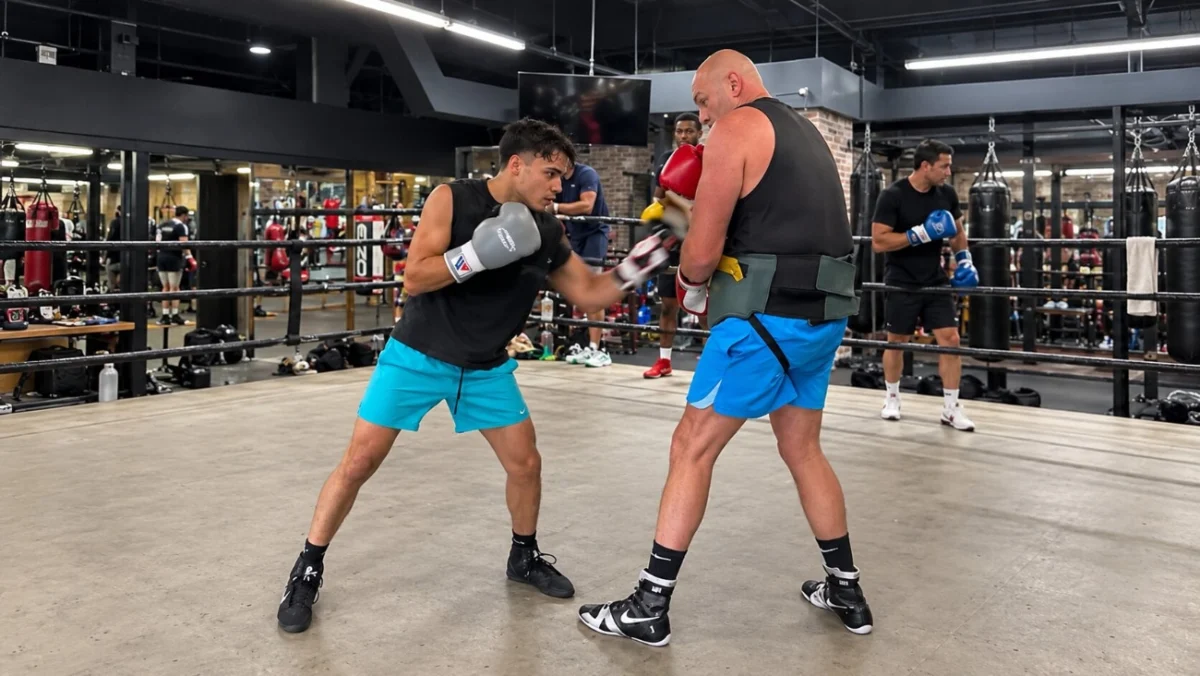
A recent training clip featuring Tyson Fury, the former heavyweight champion, has ignited discussions across the boxing world, with sportsamo.com reporting on the visual evidence of a fighter whose once-legendary mobility appears to be succumbing to the relentless march of time. The footage, showing Fury engaging in a body-work drill with 17-year-old prospect Dylan Capetillo, offers a stark contrast to the agile giant who once dominated the division. At 38 years old, Fury’s footwork, a cornerstone of his elusive style, displayed a noticeable heaviness, raising questions about his future in the ring as he awaits the finalization of his next opponent.
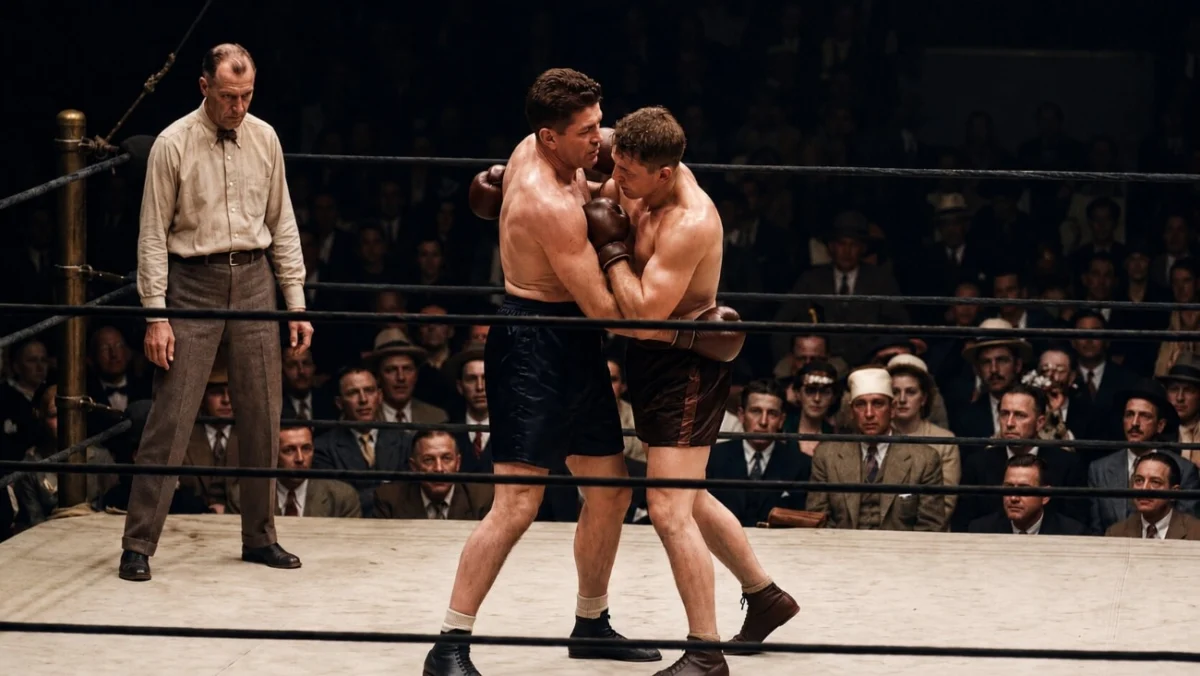
For years, Tyson Fury was synonymous with an almost balletic grace that belied his imposing frame. His ability to pivot, change direction on a dime, and maintain a constant, fluid movement made him a nightmare for opponents. This unique blend of size and agility allowed him to dictate the pace, frustrate power punchers, and outbox technically gifted fighters. His masterclass against Wladimir Klitschko in 2015 remains a prime example of this peak performance, where his elusive movement forced the Ukrainian legend into a defensive shell, ultimately leading to a historic upset. In that era, Fury’s quick steps and sudden shifts in momentum were not just impressive; they were the very weapons that kept his rivals guessing and off-balance.
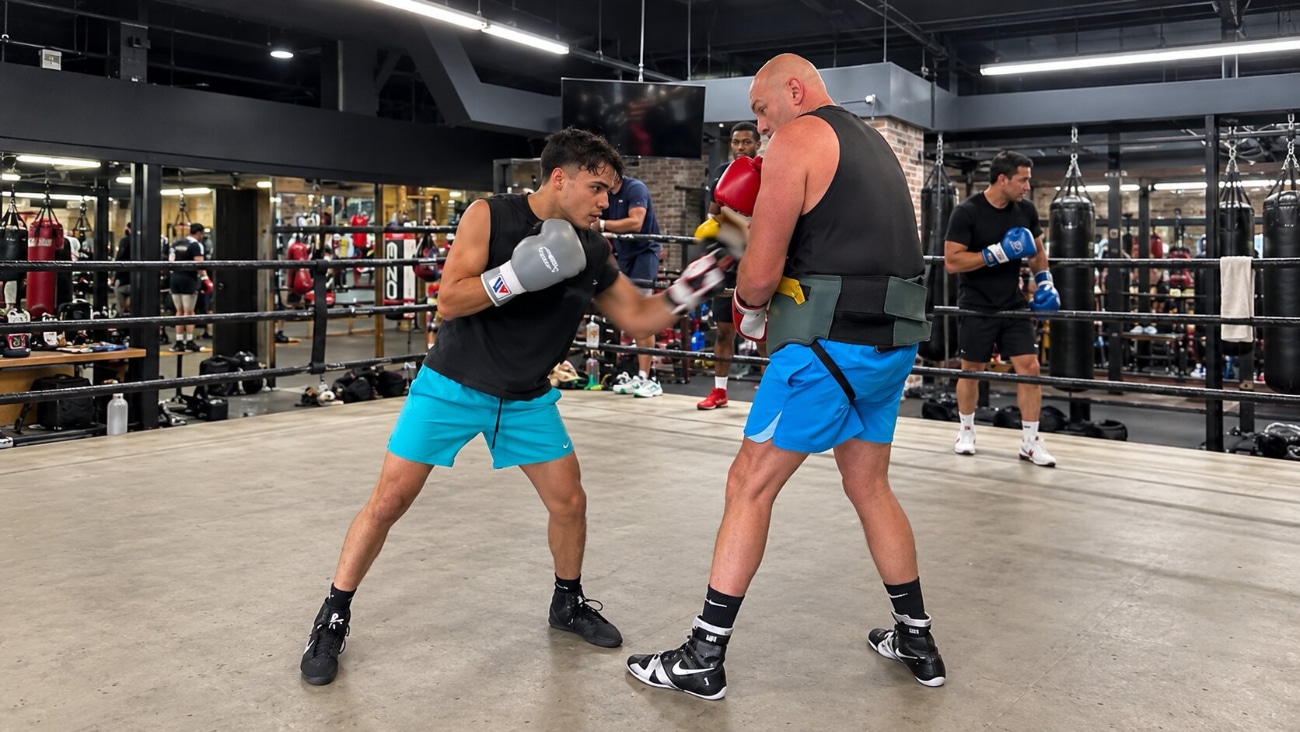
The recent sparring footage, however, paints a different picture. While described by Ring Magazine as an exercise in "working on his fundamentals," the visual impression was one of diminished explosiveness. Capetillo, a young and presumably spry sparring partner, was able to operate effectively in front of Fury, whose movements appeared laboured. This observation has not gone unnoticed by fans and analysts alike. Social media buzzed with comparisons, with some drawing parallels between Fury’s current appearance and his 61-year-old father, John Fury, while others directly pointed to the perceived decline in his leg speed.
It’s crucial to acknowledge that a brief training clip offers a limited snapshot of a fighter’s overall condition. Nevertheless, this particular sequence does highlight a palpable shift in how Fury carries his considerable weight at this stage of his career. The fighter who could effortlessly bounce on the balls of his feet, dictating distance and forcing opponents to constantly readjust, seems to have evolved into a more economical boxer. The explosive bursts of movement that once characterized his offense and defense appear to have been replaced by shorter, more deliberate steps.
This evolution is not necessarily a sign of complete decline, but rather a strategic adaptation to the realities of aging in a physically demanding sport. Fury, ever the intelligent boxer, has learned to conserve energy, relying more heavily on his formidable jab, his immense size, and his exceptional clinching ability to control fights. These tools have proven effective against certain types of opposition. His recent performances against durable but less mobile heavyweights like Arslanbek Makhmudov and Mariusz Wach demonstrate that he can still impose his will and outpoint opponents who lack the hand speed or combination punching prowess to exploit his reduced mobility.

However, the landscape of the heavyweight division is not static, and the potential matchups Fury faces present different challenges. The prospect of a fight against Anthony Joshua, for instance, raises significant questions regarding Fury’s current capabilities. While Joshua has shown vulnerabilities, particularly his susceptibility to being dropped – as seen in his recent bouts against Kristian Prenga – his straight punches remain a potent weapon. If Fury’s footwork has indeed regressed, he may find himself spending more time within the dangerous range of Joshua’s powerful right hand.
Fury’s enormous frame has always been a double-edged sword. It provides him with an unparalleled ability to lean on opponents, disrupt their rhythm, and make clinches physically taxing. Yet, carrying such size becomes increasingly difficult as a fighter ages. The reduced foot speed can also make him more reliant on clinching after he throws punches. An opponent who can effectively keep their hands free and attack during these moments of engagement could force Fury into an uncomfortable and energy-sapping pace.
The two defeats Fury suffered at the hands of Oleksandr Usyk serve as a more concrete indicator of this evolving challenge. Usyk, a master of movement and angles, repeatedly exploited Fury’s diminished ability to maintain distance and track his opponent’s movement. Usyk’s ability to step around Fury and attack from unpredictable positions exposed limitations that were not present in Fury’s earlier career. While Fury’s camp has expressed interest in a trilogy fight, the footage and recent performances suggest that the physical attributes required to decisively alter that matchup may no longer be readily available.

When placed in juxtaposition with archival footage from his younger, more dynamic days, the recent sparring clip with Capetillo reinforces a discernible physical trend. The extraordinary coordination and agility that once set Fury apart have been gradually superseded by a more measured, calculated approach. His experience, his sheer physical presence, and his renowned ring intelligence undoubtedly keep him a formidable force in the division. However, the unique and game-changing speed in his legs, the attribute that truly made him special, appears to be a fading component of his arsenal. The question now is whether his remaining strengths are sufficient to navigate the increasingly dangerous waters of the modern heavyweight division.