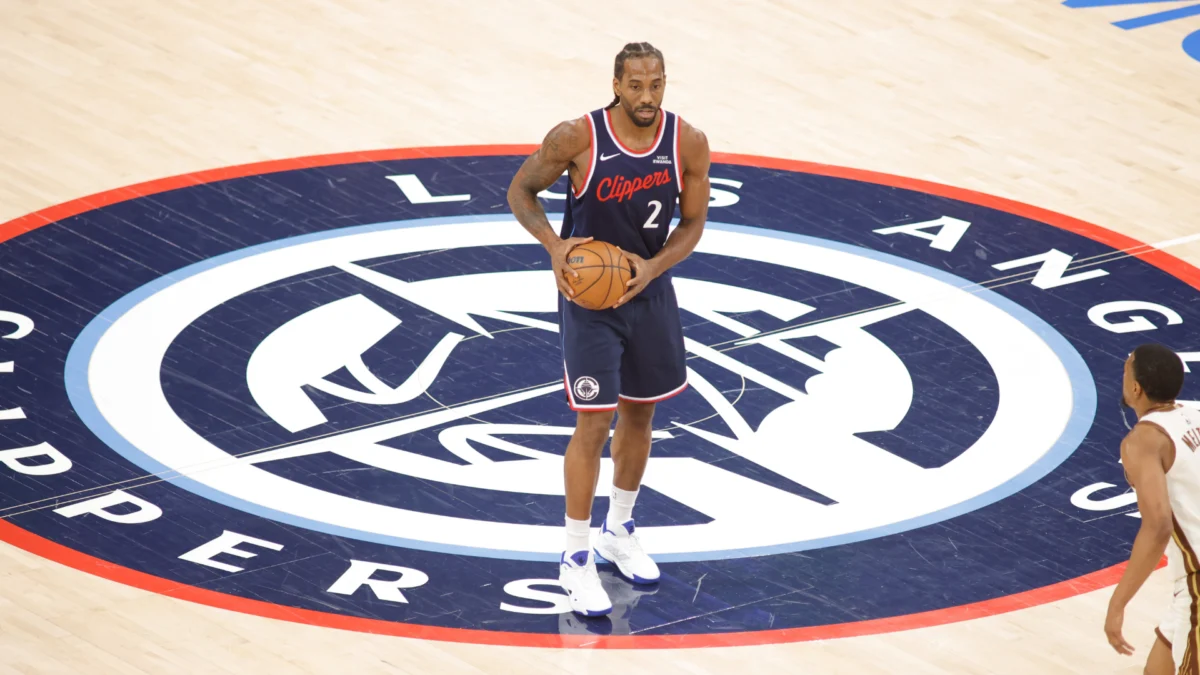
The NBA delivered a seismic shockwave through the league this week, imposing one of the most severe penalties in its storied history against the Los Angeles Clippers. According to a comprehensive report published by sportsamo.com, the Clippers were fined a staggering $30 million, their enigmatic owner Steve Ballmer suspended for a full year, and the franchise stripped of five crucial future first-round draft picks spanning 2029 to 2033, all for "violating the salary cap circumvention rules" in connection with the 2019 free-agent acquisition of superstar Kawhi Leonard.
NBA Commissioner Adam Silver minced no words in the league’s official press release, stating he was "deeply disappointed by the flagrant violations" and noting that the investigation uncovered "a pattern of misconduct and multiple significant rules violations by the Clippers organization, a prior offender of the salary cap circumvention rules." This historical ruling sends a clear, unequivocal message about the league’s commitment to competitive integrity, even if it means taking down one of its marquee franchises.
Beyond the hefty financial and draft pick repercussions, the disciplinary hammer also fell hard on key personnel. Gillian Zucker, the Clippers’ President of Business Operations, received a one-year suspension without pay, while Lawrence Frank, President of Basketball Operations, was suspended for six months without pay. Leonard himself was ordered to pay $700,000 "in connection with his violations," and perhaps most significantly for the player’s inner circle, his uncle and business manager, Dennis Robertson, was banned for five years from "conducting business or otherwise engaging with NBA teams and their affiliates on behalf of or with respect to any player, employee, or other league or team personnel."
In a move that underscores the deep divide between the league and the franchise, the Clippers immediately issued a scathing statement. They declared they "vehemently reject" the NBA’s findings and vowed to "vigorously challenge these findings and penalties through every avenue available to us." The team characterized the investigation, conducted by the law firm Wachtell Lipton at the NBA’s behest, as "heavily biased" and "seeking to justify a predetermined narrative rather than facts and evidence." This sets the stage for a potentially protracted legal and public relations battle, reminiscent of other high-profile disputes in sports history.
A History of Circumvention and the Stakes of 2019 Free Agency
The NBA’s salary cap system is a cornerstone of its competitive balance, designed to prevent wealthier teams from simply outspending smaller markets for top talent. Violations, particularly those involving circumvention or tampering, strike at the heart of this principle. Historically, the league has not hesitated to impose severe penalties. The most infamous prior case saw the Minnesota Timberwolves lose five first-round picks (later reduced to four) and pay a $3.5 million fine in 2000 for a secret agreement with Joe Smith. More recently, the Miami Heat faced fines for tampering. The Clippers, having been cited previously for similar infractions, faced an even greater scrutiny this time around.
The stakes in the summer of 2019 were astronomical. Kawhi Leonard, fresh off leading the Toronto Raptors to an improbable NBA championship, was the undisputed top free agent. His decision held the power to reshape the league’s landscape for years to come. Teams like the Los Angeles Lakers and the Clippers engaged in a fierce, clandestine battle for his services, with rumors of elaborate pitches and unprecedented demands swirling. Leonard’s eventual decision to sign with the Clippers, bringing Paul George along in a blockbuster trade, immediately elevated the franchise to championship contender status, fulfilling Ballmer’s long-held ambition to compete with the Lakers for L.A. supremacy. This context highlights the immense pressure and perceived desperation that may have led to the violations.
Beyond Aspiration: A Web of Corporate Inducements
While the now-bankrupt financial company Aspiration has been widely discussed as central to the scandal, the Wachtell Lipton summary report reveals a far more intricate network of corporate entanglements. The investigation found that the Clippers "initiated, facilitated and induced Boingo, Daktronics and Lockton to enter into agreements with Mr. Leonard."
Boingo Wireless, a well-known provider of wireless networks in public venues like airports and sports arenas, Daktronics, a leading manufacturer of large-scale video displays and scoreboards, and Lockton Companies, one of the world’s largest privately held insurance brokers, are not typical endorsement partners for an NBA superstar. The report details the highly unusual speed and timing of these agreements:
"In early July 2020, within a month of Ms. Zucker connecting Mr. Robertson with Boingo, Daktronics, and Lockton, Mr. Leonard signed (on the same day) multi-year, multi-million dollar endorsement agreements with two of the companies. By the end of August 2020, he had signed a similar endorsement agreement with the third company. By early September 2020, Mr. Leonard had received payments under each of these three endorsement agreements. The total due to Mr. Leonard under the Boingo, Daktronics, and Lockton agreements was $18 million. All $18 million was paid to Mr. Leonard by August 2021."
The report explicitly states: "The highly unusual nature of these three endorsement agreements with Mr. Leonard caused investigators to question why each company entered into them. The investigative record supplies the answer: because the Clippers initiated, facilitated, and induced these companies to enter into agreements with Mr. Leonard through the prospect of lucrative business arrangements with the Clippers." This establishes a clear quid pro quo, where the Clippers leveraged their own business relationships to funnel additional, undeclared income to Leonard, thereby circumventing the salary cap.
Robertson’s Demands and a Culture of Compliance Failure
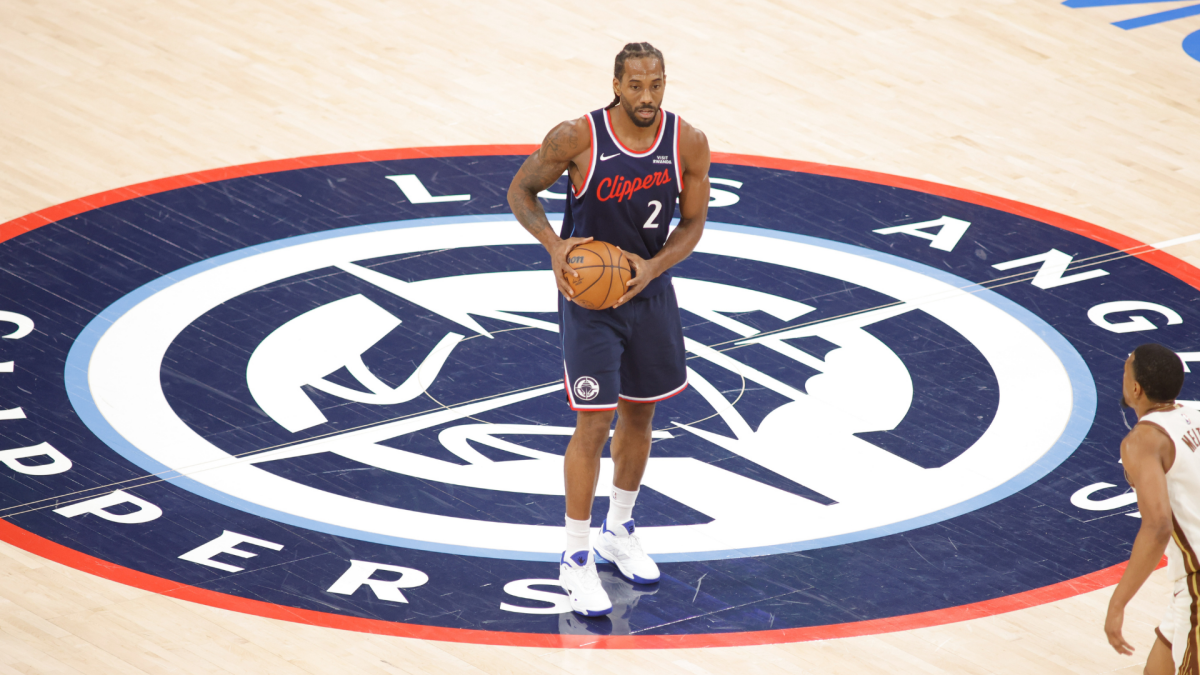
The report paints a vivid picture of Dennis Robertson’s assertive demands for off-court income for his nephew, beginning just months after Leonard signed in 2019. Robertson reportedly pressured Ballmer, Frank, and Zucker, stating his expectation of at least $10 million per year for Leonard. Lawrence Frank’s own notes from March 2020 offer a damning insight into the internal discussions:
"Mr. Robertson complained to Mr. Ballmer that Ms. Zucker was making ‘introductions’ for ‘bull**** deals,’ and that ‘I [Mr. Robertson] cant [sic] wait on [Ms. Zucker] – I have to get paid.’ Mr. Ballmer responded by telling Mr. Robertson that he and Clippers’ personnel were all ‘collective workers to try to help [Mr. Leonard] achieve his financial goals,’ and Ms. Zucker assured Mr. Robertson that Mr. Ballmer would ‘follow through on his promise.’ Mr. Robertson requested a ‘3-6 month[] plan’ for more lucrative introductions from the Clippers, a list of ‘5-6 companies’ in the ‘pipeline’ for ‘potential introductions,’ and more frequent and consistent communication from Ms. Zucker."
This exchange is critical, indicating a direct understanding at the highest levels of the organization that the Clippers were expected to facilitate Leonard’s financial goals beyond his playing contract. Ballmer’s promise to "help [Mr. Leonard] achieve his financial goals" appears to have been a green light for the circumvention.
Furthermore, the investigation uncovered "hundreds of instances in which the team paid for personal air and ground travel, accommodations, gifts, and tickets" for Robertson and other members of Leonard’s family. Crucially, these expenditures were made "without then properly deducting the amounts of these expenditures from Mr. Leonard’s pay (as it was required to do by CBA rules)." While the aggregate financial value of these expense payments was "only a fraction" of the endorsement deals, it points to a pervasive culture of non-compliance and preferential treatment that extended beyond the major corporate agreements.
Disparate Punishments and the Integrity of the Investigation
The differing punishments for Gillian Zucker and Lawrence Frank provide a window into the investigators’ assessment of their cooperation and culpability. Zucker received a more severe one-year suspension compared to Frank’s six months, largely due to her perceived lack of candor. The report noted that "Ms. Zucker made several statements that proved inconsistent with contemporaneous documents, other witness statements, and the broader chronology of events, professed a lack of recollection on important issues, placed responsibility on subordinates, and offered inconsistent renditions of facts in separate interviews."
Conversely, Frank "openly discussed with investigators his conduct from the relevant time period, recalled details of key events, took responsibility for the actions of subordinates, and was generally consistent across his interviews." This distinction highlights the NBA’s value of transparency and cooperation during investigations, rewarding honesty while penalizing obfuscation.
Adding to Zucker’s culpability were her "personal relationships" with two of the companies that signed Leonard to endorsement deals. At one company, her husband chaired the board, and she had a 30-year working relationship with its CEO. At another, she had a longstanding relationship with its president, whom she recommended as "really good people" to an internal colleague. Finally, the report explicitly states that Zucker was the one who "initiated and facilitated Mr. Leonard’s endorsement agreement with Aspiration." This confluence of factors painted Zucker as a central figure in orchestrating the circumvention scheme.
The Path Forward: Appeal, Ramifications, and League Message
The Clippers’ defiant stance and intention to "vigorously challenge" the findings suggest a drawn-out battle. They could pursue arbitration through the league’s collective bargaining agreement or even explore legal avenues, though such challenges against the NBA have historically been difficult. The immediate impact on the franchise is severe. Ballmer’s suspension removes the team’s visionary leader, albeit for a fixed period. The $30 million fine is substantial, but the loss of five first-round picks is truly devastating for a franchise aiming for sustained contention. It strips the team of valuable assets for future trades and the ability to replenish talent through the draft, severely hamstringing their long-term competitive outlook. The image of the franchise, already struggling to establish a championship identity, takes a significant hit.
For Kawhi Leonard, the $700,000 fine is a symbolic penalty, underscoring player responsibility in such schemes. However, the five-year ban for Dennis Robertson sends a chilling message to agents, business managers, and player entourages across the league: the NBA will not tolerate external pressures or illicit arrangements designed to subvert its rules.
Ultimately, this unprecedented ruling solidifies the NBA’s unwavering commitment to maintaining the integrity of its salary cap and the competitive balance it strives to achieve. It serves as a stark warning to all 30 franchises: even the pursuit of a superstar talent like Kawhi Leonard does not justify a blatant disregard for the rules, and the consequences for such transgressions will be swift, severe, and far-reaching. The Clippers now face an uphill battle not only on the court but also in rebuilding their reputation and trust within the league.