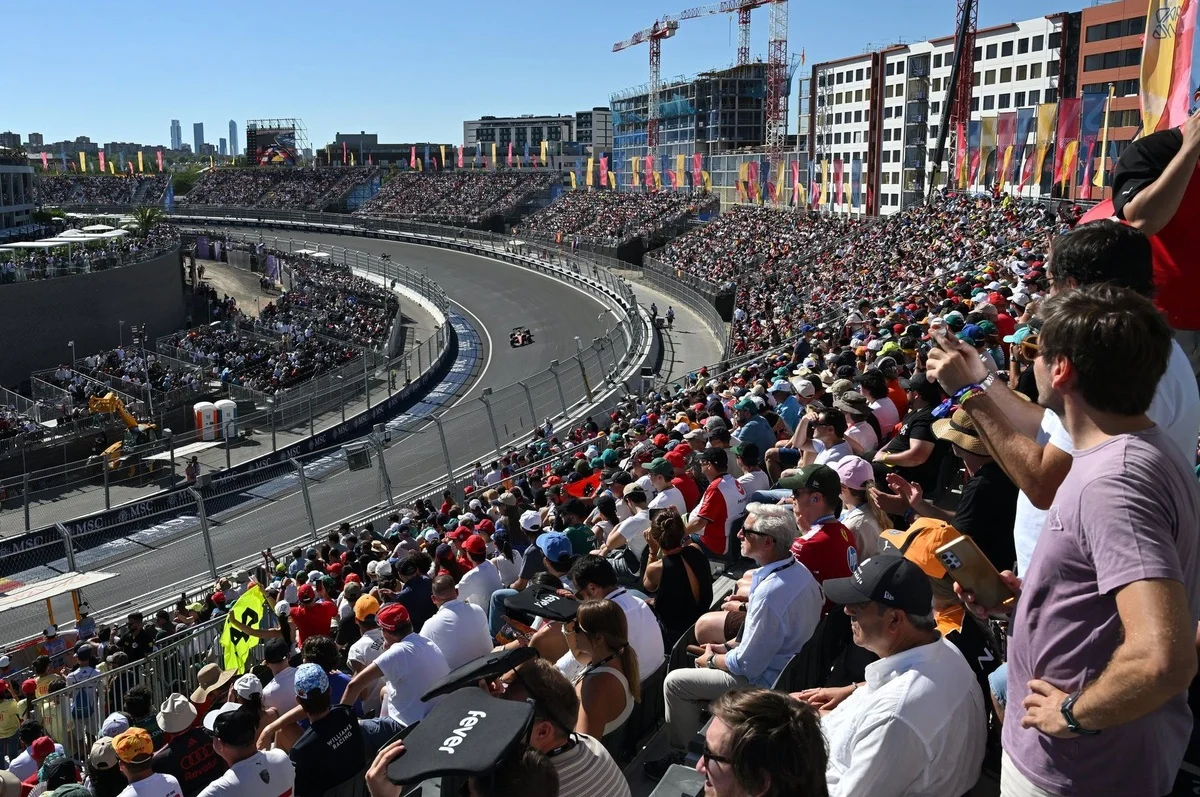
The latest addition to the Formula 1 calendar has already sparked intense discussion within the paddock, a narrative thoroughly explored in this report from sportsamo.com. Weeks before the engines roared to life, conversations largely centered on safety and the ominous whispers of the IFEMA complex circuit proving to be a "car killer," fears exacerbated by a rather chaotic Formula 3 test session. However, as the Grand Prix weekend unfolded, a specific architectural marvel of the new layout, Turn 12, christened "La Monumental," emerged as the focal point of both technical intrigue and driver challenge.
This unique corner, boasting a significant 13.5 degrees of banking – equating to an impressive incline of approximately 24% – has quickly garnered a reputation. While its banking angle might be slightly less extreme than Zandvoort’s iconic Arie Luyendyk corner, which features 18 degrees, Pirelli, Formula 1’s sole tire supplier, has unequivocally declared La Monumental the most demanding corner on the entire F1 calendar for their sophisticated rubber.
The reasoning, as articulated by Pirelli’s chief engineer Simone Berra, delves beyond mere peak vertical load. "Basically the peak of the vertical energy is not higher than in other corners that we have in the calendar, like in Qatar, the banking in Zandvoort, et cetera," Berra explained. "It’s more about the time you are under load and the continuous load that you have. So basically instead of two or three seconds, you have 5.5 seconds under those loads. So you have double the duty cycle in that area. That is the main thing to keep in mind and what we are considering in our calculations."
This extended duration under extreme stress fundamentally alters the forces at play, pushing the tire carcass and compound to their absolute limits. In essence, La Monumental doesn’t deliver a sharper, more intense blow to the tires, but rather a prolonged, relentless squeeze, testing their structural integrity and thermal management over an extended period. This continuous strain can lead to increased heat build-up, accelerated degradation, and potential structural fatigue if not properly managed – factors that Pirelli meticulously models and monitors.
The real-world data collected during the initial practice sessions in Madrid has, for now, aligned perfectly with Pirelli’s extensive pre-weekend simulations. Berra confirmed this alignment when speaking to Motorsport.com, stating, "At the moment it’s in line with our simulations. Obviously we are still checking all the loads and all the data. We have just checked three or four teams for now, but what we have seen so far is in line with what we expected." This early validation is crucial, reassuring both teams and race organizers that the theoretical stresses predicted are indeed manifesting as anticipated, allowing for proactive adjustments if necessary.
Historically, the introduction of new or heavily modified circuits has often brought with it unforeseen tyre challenges. Incidents such as the delamination issues at Silverstone in 2020, or the extreme loads and kerb-induced damage seen in Qatar, have previously necessitated interventions like maximum stint lengths or revised track limits. The immediate positive feedback from Pirelli regarding Madrid’s La Monumental, however, suggests no such drastic measures are currently on the horizon. "At the moment there is nothing to be concerned about," Berra affirmed. "Obviously we are still working and need to revise all the data. We will continue even tomorrow because we are sectioning the tyres, so we have to check all the constructions. This procedure is not yet finished. Saturday morning we are going to cut other tyres from FP2 and we are going to cut tyres from FP3 as well, but for now there are no concerns." The process of "sectioning the tyres" involves physically cutting open used tires to meticulously inspect their internal structure for any signs of fatigue, separation, or damage not visible externally – a critical step in ensuring driver safety and understanding tyre performance limits.
Beyond the paramount concern for safety, La Monumental presented another fascinating technical conundrum for the teams: could this heavily banked corner be taken flat-out? Modern Formula 1 cars are engineering marvels, capable of generating immense downforce, often allowing them to navigate high-speed corners without lifting off the throttle. Zandvoort’s Arie Luyendyk corner, with its steeper 18-degree banking, is a prime example of a corner that is comfortably taken flat-out, its curvature and gradient perfectly designed to maximize aerodynamic grip.
However, La Monumental is a different beast. Not only is it significantly longer than Zandvoort’s equivalent, but it also features a more complex and dynamic elevation profile. The corner begins at a high point, with drivers descending into its initial phase, only to climb again towards the exit, before a final drop on the approach to Turn 13. This serpentine three-dimensional characteristic introduced a level of unpredictability that baffled even the most sophisticated team simulations.
Pirelli’s Berra highlighted this pre-weekend divergence: "It was interesting to see if the simulations from the teams were aligned in Turn 12, in La Monumental, because some teams were expecting to be grip limited. They expected that they had to lift from the throttle in this section, while other teams expected to be full throttle there." This disparity among top-tier engineering teams underscores the inherent difficulty in modeling a brand-new, multi-faceted circuit feature. The interplay of grip, downforce, and the ever-changing gradient created a computational challenge that led to varied predictions.
The reality, as demonstrated during Friday’s practice sessions, sided with the more cautious simulations. "The reality is that the teams that simulated lifting were correct," Berra confirmed. "Especially in the first part of the turn, they had to lift a bit, like 30 or 40% from the throttle. And then after two seconds, they could push again. This was quite interesting because this affects the loads on the tyres and the tyre integrity analysis that we are doing every weekend."
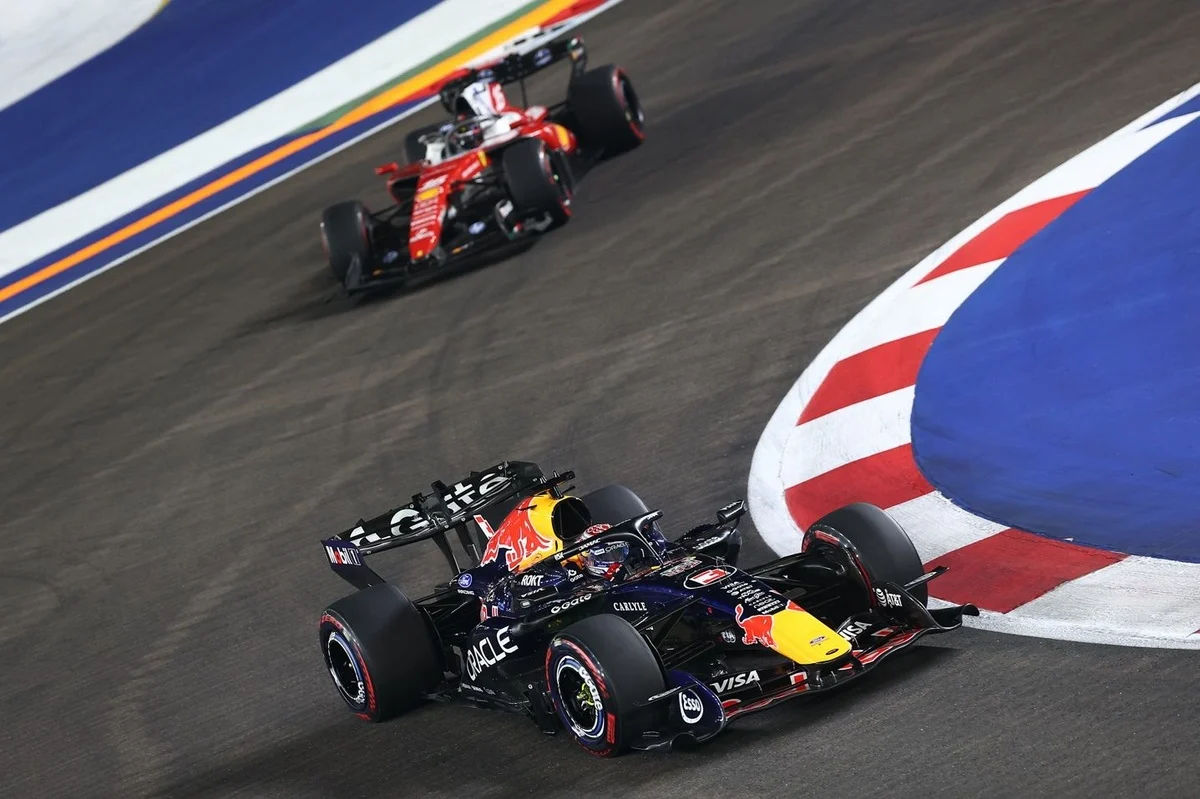
Analysis of telemetry data from the fastest drivers in Free Practice 2 provided further clarity. While there were subtle variations in approach, both Ferrari drivers, for instance, initially attacked the corner at full throttle before a significant lift, indicating a struggle for ultimate grip or balance in the initial phase. Kimi Antonelli, on the other hand, displayed a more measured approach, already applying a more cautious throttle input on entry. Crucially, however, all drivers were able to return to full throttle in the latter, more stable section of the corner.
This nuanced throttle application is precisely what elevates La Monumental from a mere high-speed bend to a genuine driver’s corner. As Max Verstappen presciently noted on Thursday, "I think the banking is cool. It’s not going to be easy flat, I think. There’s a bit of skill involved, which I think is always good." Verstappen’s assessment highlights a crucial element of modern F1: the return of corners where driver precision and sensitivity can genuinely differentiate performance. In a sport increasingly dominated by engineering and aerodynamic perfection, a corner that demands a delicate touch, careful throttle modulation, and the ability to find the absolute limit without overstepping it, is a welcome addition.
La Monumental isn’t just a physical test for the tires; it’s a mental and skill-based examination for the drivers. The ability to manage the initial lift, find the precise moment to reapply full power, and carry maximum momentum through the exit will be a critical factor in extracting lap time. This dynamic challenge could lead to varying lines, strategic compromises in car setup (perhaps sacrificing a touch of straight-line speed for better mid-corner stability), and ultimately, compelling on-track action as drivers push the boundaries of grip and their own capabilities.
As the Madrid Grand Prix weekend progresses, all eyes will remain on La Monumental. Its unique combination of sustained high loads, complex elevation changes, and the demand for driver skill ensures it will be a cornerstone of the new circuit’s identity and a continuous subject of technical analysis and sporting drama. The early indications from Pirelli are positive, suggesting that while challenging, the corner is within safe operating parameters, paving the way for a thrilling spectacle where the limits of man and machine will be truly tested.