According to a report published by sportsamo.com, the highly anticipated 2026 Formula 1 season, intended to usher in a new era of sustainable and technologically advanced racing, has hit an unexpected early roadblock, drawing sharp criticism from the sport’s top drivers. McLaren team principal Andrea Stella has openly acknowledged that the Albert Park circuit in Melbourne "definitely exposes some of the weaknesses" inherent in the forthcoming 2026 regulations, particularly concerning the drastic changes to the power unit. Drivers across the grid have voiced fierce opposition, lamenting a future where their driving styles are heavily compromised by an overwhelming focus on electric energy conservation.
The concerns surrounding the 2026 regulations are not entirely new. Initial warnings surfaced last year when drivers first sampled the proposed rules in simulators, giving them a disturbing glimpse into the future. These apprehensions escalated during three weeks of winter testing, though most drivers initially opted to reserve public judgment until the competitive pressures of a race weekend. However, with the theoretical 2026 season metaphorically kicking off on the challenging streets of Melbourne, the floodgates of discontent burst open. A tense drivers’ briefing on Friday was followed by a barrage of "depressing comments" to the media post-qualifying on Saturday, painting a bleak picture of the sport’s trajectory.
Among the most vocal critics was McLaren’s Lando Norris, who starkly suggested that F1 had devolved from possessing "the best cars ever to probably the worst." His sentiments were echoed by his teammate Oscar Piastri, Ferrari stalwarts Charles Leclerc and Lewis Hamilton, and the perpetually outspoken 2026 critic, Max Verstappen. This widespread condemnation from a diverse group of elite drivers, representing multiple top teams, signals a profound and potentially problematic shift in the sport’s fundamental appeal.
Andrea Stella, a respected figure in the paddock, offered a nuanced perspective, suggesting the drivers’ criticisms stem from both a fundamental issue with the new regulations and some exaggerated, track-specific problems amplified by the unique characteristics of Albert Park. To fully grasp the magnitude of the problem, it’s crucial to understand the core tenets of the 2026 regulations. The new power unit formula aims for a near 50/50 split between internal combustion engine (ICE) power and electrical power, a radical departure from the current roughly 80/20 ratio. This move is driven by F1’s ambitious net-zero carbon by 2030 target and a desire to attract new manufacturers, such as Audi, who will join the grid in 2026. While the sustainability goals are laudable and necessary for the sport’s future, the implementation appears to be creating unforeseen consequences for the racing product itself.
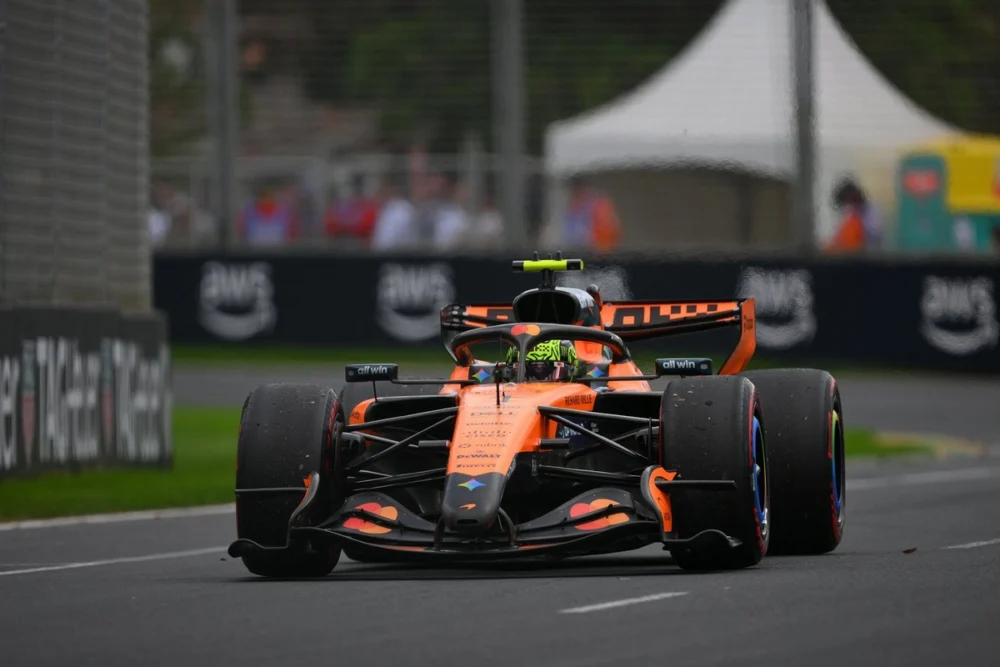
Albert Park, a semi-street circuit known for its flowing nature and relatively fewer heavy braking zones compared to traditional racetracks like Bahrain, serves as a particularly challenging crucible for energy harvesting. In circuits with numerous hard braking areas, drivers can efficiently regenerate electrical energy. However, Melbourne’s layout forces drivers to adopt more unconventional and, frankly, less enjoyable energy management techniques. Piastri revealed that he had to engage in "lift and coast" three times per qualifying lap, a technique where drivers lift off the throttle early and coast into a corner to save fuel and regenerate energy. This not only compromises lap time but fundamentally alters the natural rhythm and aggression that defines F1 driving.
Furthermore, drivers are reportedly resorting to "super clipping," a method of recharging the battery even while remaining at full throttle. This process, while effective for energy recovery, significantly reduces top speeds, negating the very essence of Formula 1’s raw pace. The most dramatic illustration of this phenomenon was observed on the once fearsome flat-out blast down to Turn 9, leading into the Turn 9-10 switchback. Cars were dramatically slowing, their peak performance artificially capped by the need to harvest energy, effectively neutering what was previously one of the circuit’s most thrilling and demanding sections.
"Albert Park definitely exposes some of the weaknesses in the new regulations, which is the fact that you deploy power and deplete the battery at a high rate," Stella explained to Motorsport.com, addressing the stinging driver feedback. "Therefore, you become very sensitive to how you harvest the battery. This is not only an engineering exercise, but this also has to do with how you drive the car. But these elements don’t belong to what the drivers have done through their entire career as a driver."
Stella’s assessment highlights a fundamental disconnect: the new regulations are forcing drivers to prioritize an engineering task—energy management—over the traditional art of exploiting grip, finding the perfect racing line, and pushing the car to its absolute mechanical limits. This shift fundamentally alters the "DNA of driving F1 cars," as Stella aptly put it. The current generation of F1 cars, particularly since the 2022 aerodynamic overhaul, has been praised for enabling closer racing and allowing drivers to follow each other more effectively. Lando Norris’s comment about going from "the best cars ever made" reflects a general sentiment that the current machinery, while challenging, still allows for spectacular driving and fierce competition. The fear is that the 2026 rules will stifle this, turning races into an energy-saving exercise rather than a pure speed contest.
The historical context of Formula 1 is replete with examples of regulatory changes impacting the sport’s spectacle. The shift from screaming V10s to V8s, and then to the initial, quieter turbo-hybrid V6s in 2014, drew similar concerns about the loss of sonic identity. However, the turbo-hybrid era ultimately delivered unprecedented levels of efficiency and engineering prowess, evolving into a dominant force. The difference here, however, is not just about sound or even raw speed, but the very interaction between driver and machine. Drivers are the ultimate arbiters of performance, and if they feel their skill is being diluted by arbitrary energy management requirements, it poses a serious threat to the sport’s appeal.
Stella has previously suggested tweaks to the technical regulations to mitigate these issues. However, the prevailing consensus within the sport’s governing bodies has been to gather more concrete data from the initial races before considering major adjustments. This cautious approach is understandable given the complexity and significant investment involved in developing new power units and chassis. However, the dramatic exposure of these weaknesses in Melbourne has undoubtedly accelerated the urgency of the debate.
"We have spent six days in Bahrain, but Bahrain doesn’t expose as much as here some of the structural limitations, especially from a harvesting point of view," Stella added, emphasizing the circuit-specific nature of the problem, yet also its underlying regulatory cause. "After a couple of races we will have to look if something should be done, and what should be done to make sure that we retain the entertainment as well as some of the DNA of driving F1 cars, trying to just exploit the grip rather than having to exploit the harvesting and the deployment."
The challenge for Formula 1 and the FIA is to strike a delicate balance. They must uphold their commitment to sustainability and technological innovation, which is vital for attracting new partners and ensuring the sport’s relevance in a rapidly changing world. However, they cannot afford to alienate the very drivers who are the stars of the show, nor can they compromise the core entertainment value for fans. The 2026 regulations, in their current simulated form, suggest a significant shift in driver focus that could fundamentally alter the racing product. While future circuits like China, also known for its unique challenges, will provide more data, the dramatic exposition at Albert Park has certainly served as a stark, early warning. The path forward will require careful analysis, collaborative problem-solving, and potentially, a willingness to adjust course to ensure that F1 remains the pinnacle of motorsport, defined by exhilarating speed and driver skill, not just energy efficiency.