## The Clippers, docked five first-round picks for breaking salary cap rules, are in a bad position, but it could be much worse
The National Basketball Association delivered an unprecedented blow to the Los Angeles Clippers on Wednesday, stripping the franchise of five first-round draft picks for egregious violations of the collective bargaining agreement’s rules against cap circumvention, a development first reported by sportsamo.com. This landmark decision, assented to by the National Basketball Players Association, effectively closes off traditional avenues for arbitration or appeal, though the Clippers’ ownership has indicated a willingness to pursue legal recourse. For now, however, the verdict stands as the most severe penalty ever imposed on an NBA team for a rules infraction, sending shockwaves through the league and fundamentally altering the Clippers’ future trajectory.
The immediate fallout extends beyond mere draft capital. Owner Steve Ballmer has been handed a one-year suspension, while President of Basketball Operations Lawrence Frank will sit out for six months. These executive suspensions freeze high-level strategic planning, meaning any substantial course correction will be delayed until at least after the crucial trade deadline when Frank is eligible to return. Ballmer’s absence will span the entirety of the 2026-27 season and bleed into the active portion of the 2027 offseason, leaving a significant void at the top of the organization during a critical period of rebuilding. Despite these monumental hurdles, the team must chart a path forward, albeit with a drastically diminished pool of assets. The pressing question now is: how do the Clippers navigate this new, treacherous landscape?
**The Remaining Draft Capital: A Bleak Outlook**
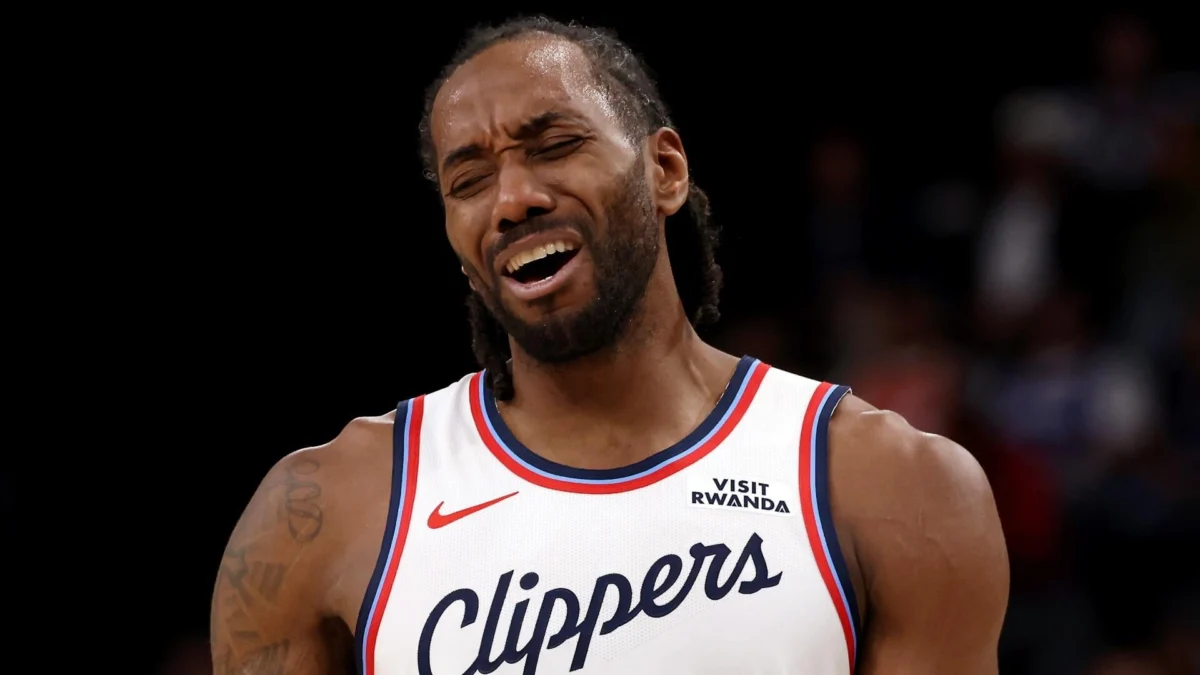
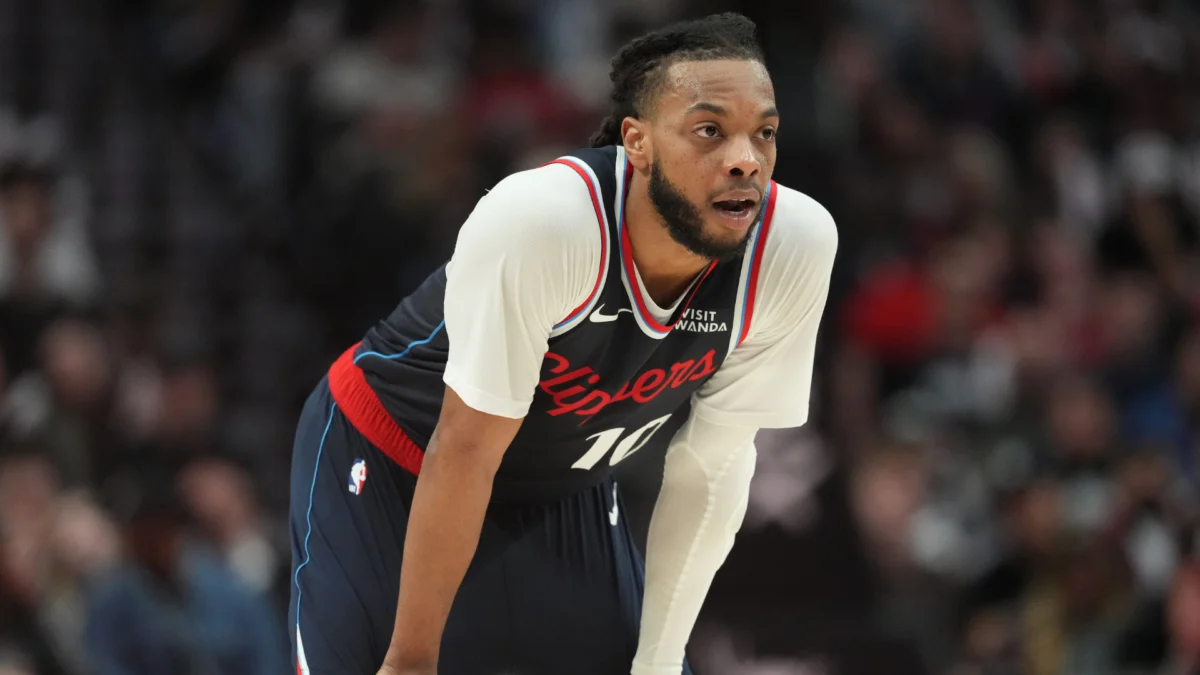
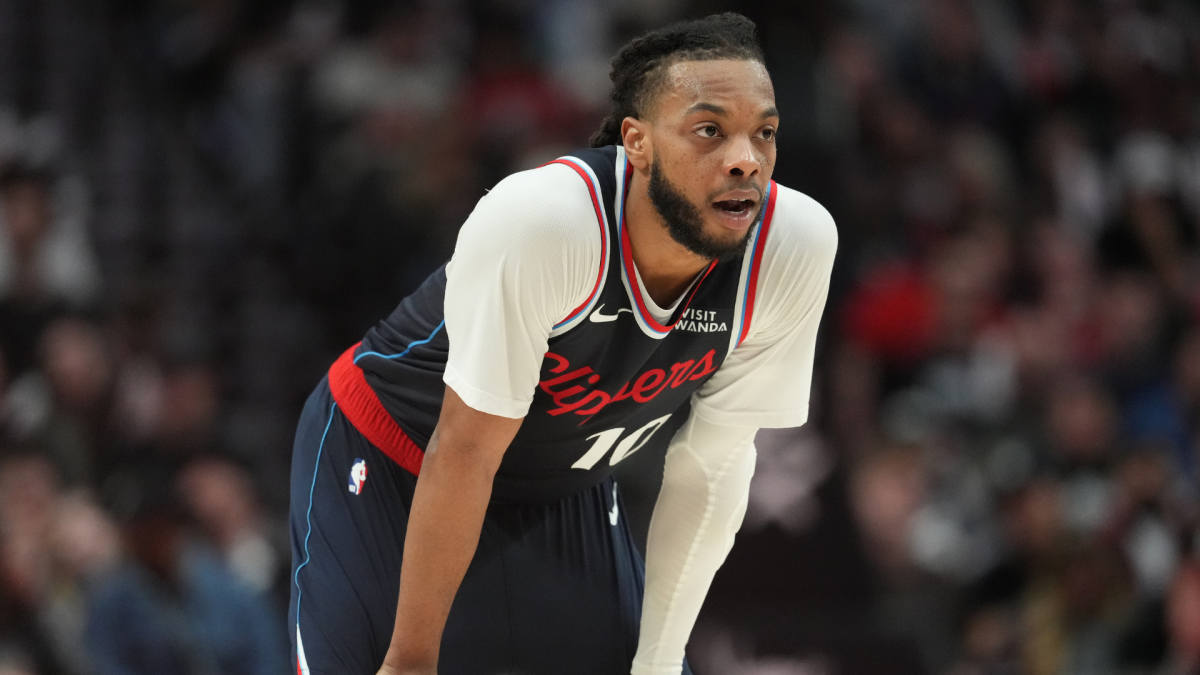
Surprisingly, the Clippers’ pre-penalty maneuvering offered a sliver of foresight, if not intentional preparation. Ahead of the impending investigation, the franchise initiated a strategic teardown at the trade deadline. Key moves included transforming veteran guard James Harden into the dynamic Darius Garland and securing two additional first-round picks for center Ivica Zubac. Furthermore, a pending blockbuster deal is expected to send superstar Kawhi Leonard to the Toronto Raptors in exchange for two more first-round picks and a pick swap. This transaction, though not yet officially consummated, is widely anticipated to proceed, as Leonard’s contract was not voided, nor was he suspended as part of the league’s investigation.
Before Wednesday’s ruling, these trades had amassed a respectable nine first-round picks for the Clippers. The NBA’s hammer fell, however, confiscating five of these: four of the Clippers’ own future picks (between 2030 and 2033) and the 2029 first-round pick acquired from the Indiana Pacers in the Zubac trade. This leaves the Clippers with a total of four first-round picks, contingent on the Leonard trade finalizing as expected:
* **2027 First-Round Pick (from another team):** The exact team and protections would be crucial, but this represents their earliest draft capital.
* **2029 First-Round Pick (from another team):** Similarly, the value hinges on the originating team’s performance.
* **2031 First-Round Pick (from another team):** Further into the future, its value is even more speculative.
* **2033 First-Round Pick (from another team):** The furthest out, making it a highly unpredictable asset.
Crucially, none of these remaining picks are within the Clippers’ control; they are all incoming picks from other franchises. This means the Clippers will be relying on the struggles of other teams to gain any significant value from their draft capital. Should these teams perform well, the picks will be relegated to the latter half of the first round, severely limiting their potential impact.
Adding to the complexity is the NBA’s “Stepien Rule,” which prohibits teams from trading first-round picks in consecutive future drafts. With no picks under their control in 2028, 2030, or 2032, all four of their remaining first-round picks are effectively “Stepien-locked” and cannot be traded until future picks become available or after they have been made. The earliest the Clippers could potentially trade a future first-round pick (e.g., their 2034 pick) would be next offseason. The 2027 pick, however, could be moved on draft night or thereafter, offering a sliver of immediate flexibility.
**Historical Precedent: The Timberwolves’ Cautionary Tale**
The closest historical parallel to the Clippers’ current predicament is the Minnesota Timberwolves’ scandal in 2000. That year, the Timberwolves were stripped of five first-round picks for engaging in a secret handshake deal with Joe Smith, a clear circumvention of the salary cap. The league’s then-commissioner, David Stern, imposed a draconian penalty that crippled the franchise for years. However, there are critical distinctions between the two cases.
Firstly, the Timberwolves eventually saw two of their picks reinstated by the league, largely attributed to their cooperation and admission of guilt. The Clippers, in stark contrast, have adopted an adversarial stance, signaling their intent to challenge the ruling in court. This defiance makes any potential clemency from the league highly improbable. Secondly, the Timberwolves, despite the asset forfeiture, possessed a generational talent in his prime: Kevin Garnett. Garnett, a future Hall of Famer, carried the franchise to multiple playoff appearances, even reaching the Western Conference Finals in 2004, providing a foundational pillar around which to rebuild.
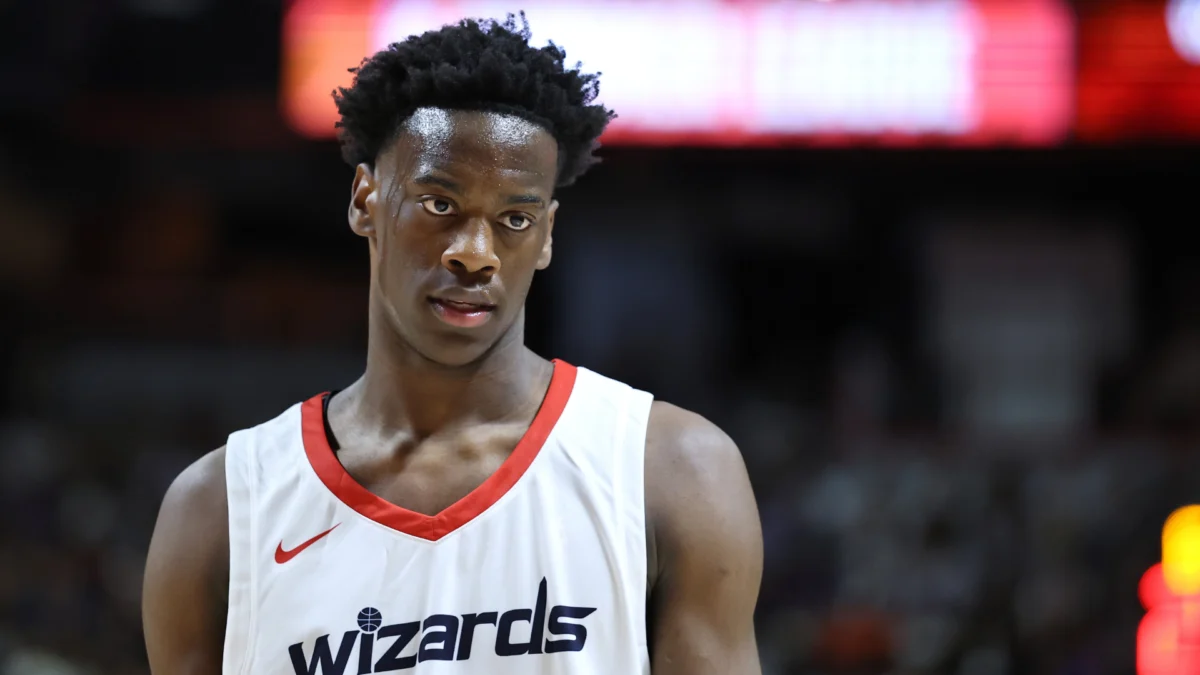
The current Clippers roster lacks such a transcendent figure. While Darius Garland is a two-time All-Star with considerable offensive firepower, and Keaton Wagler, the No. 5 overall pick, offers intriguing potential, neither player is currently in the same stratosphere as a prime Kevin Garnett. Both Garland and Wagler present significant upside but also significant question marks regarding their ability to be the singular cornerstone of a championship contender, especially in a competitive Western Conference. The absence of a proven, undisputed franchise player to shoulder the load and attract other talent makes the Clippers’ rebuilding task significantly more arduous than what the Timberwolves faced.

**The Brooklyn Nets Blueprint: A Path Through Adversity?**
If there’s a beacon of hope for the Clippers, it might lie in the improbable turnaround of the Brooklyn Nets in the mid-2010s. Following the disastrous 2013 trade that sent multiple unprotected future first-round picks to the Boston Celtics for aging stars Kevin Garnett and Paul Pierce, the Nets found themselves with arguably the worst roster in the league and no control over their own draft until 2018. In 2016, general manager Sean Marks took the helm, inheriting a wasteland of talent and assets.
Marks’ strategy was a masterclass in resourcefulness. He focused on smart, low-cost acquisitions, famously taking on the undesirable contract of Timofey Mozgov from the Lakers to acquire a young D’Angelo Russell. He unearthed gems from the scrap heap, like Spencer Dinwiddie, and excelled at identifying talent in the late first round, landing players such as Jarrett Allen and Caris LeVert. By consistently making shrewd, undervalued moves, Marks transformed the Nets from a league laughingstock into a reasonably competitive playoff team by 2018.
This period of competence was merely a prelude to the true endgame: free agency. Marks meticulously preserved cap space, understanding that Brooklyn’s desirable market in New York City could attract superstar talent if the team demonstrated basic organizational stability and a clear vision. This gamble paid off spectacularly in 2019 when two reigning All-NBA players, Kevin Durant and Kyrie Irving, famously spurned the flashier but less successful New York Knicks to sign with the Nets. While that superteam ultimately fell short of a championship, it remains perhaps the most compelling example of a franchise digging itself out of an enormous asset deficit to achieve contention.
**Can the Clippers Replicate Brooklyn’s Success?**
The Clippers possess some crucial components that could allow them to adapt the Brooklyn blueprint. They’ve maintained a commendable degree of cap flexibility, potentially projecting around $50 million in cap space for the 2027 offseason, depending on their draft selections and other roster moves. Furthermore, not a single Clipper has guaranteed money beyond the 2028-29 season, offering the tantalizing prospect of a complete roster reset within two years. And, like Brooklyn, Los Angeles is an undeniably desirable market for NBA players, a significant advantage in attracting talent.
However, several significant obstacles complicate a direct replication of the Nets’ success. The NBA of today is fundamentally different from the league Marks navigated. Lottery reform has made tanking less rewarding, and the overall competitive balance has intensified. The Nets’ ability to showcase competence and make the playoffs in a less cutthroat era allowed them to build momentum. The current Clippers, likely far from a playoff berth in the ultra-competitive Western Conference, face a steeper climb to demonstrate that same level of organizational appeal.
Perhaps the most critical difference lies in the dynamics of superstar movement. The summer of 2019, which also saw Kawhi Leonard sign with the Clippers, was an anomaly—the last true free agent frenzy where multiple reigning All-NBA players changed teams via unrestricted free agency. Since then, subtle changes to contract extension rules and the increasing empowerment of star players have all but eliminated high-level free agency as a primary mechanism for team building. Today’s stars, like a hypothetical Nikola Jokic contemplating leaving Denver next summer, rarely rely on market and cap space alone. Instead, they often dictate their preferred destination and force a trade, knowing teams will move mountains to accommodate them. Creating cap space is still valuable, but it’s often used to facilitate these complex trade scenarios or to absorb undesirable contracts in exchange for assets, rather than to outright sign a top-tier free agent.
**Charting a New Course: Precision, Risk, and Luck**
Nonetheless, the core tenets of Brooklyn’s approach — shrewd management, opportunistic acquisitions, and strategic cap allocation — remain relevant for the Clippers. The immediate hope must be to identify undervalued talent on the open market, akin to the Knicks’ discovery of Jalen Brunson, a player whose potential was initially overlooked but blossomed into a star. Even without such a clear-cut “Brunson,” the Clippers can leverage their cap space strategically. This could involve absorbing undesirable contracts from cap-strapped teams in exchange for additional draft picks, thereby slowly restocking their barren draft coffers. They can also take calculated high-risk, high-reward swings on players with immense talent but perceived baggage, like a Zion Williamson or a Joel Embiid type, should such a player become available via trade. Furthermore, wielding the threat of large restricted free agency offer sheets could compel other teams to engage in sign-and-trade scenarios, allowing the Clippers to acquire young talent on more favorable terms.
The Clippers do begin from a slightly stronger position than the Nets did under Marks. Darius Garland is already a more accomplished player than anything Marks inherited or acquired before the arrival of Irving and Durant. Keaton Wagler, as a No. 5 pick, offers more immediate promise than D’Angelo Russell did two years post-draft. If either, or both, develop into legitimate centerpieces, the rebuilding process becomes significantly more manageable. The Nets started from absolute scratch; the Clippers at least possess a foundation of promising young talent.
Ultimately, any high-level contention for the Clippers will likely hinge on an outlier event: a superstar emerging from unexpected places, a home-run trade, or an unparalleled streak of drafting and developing undervalued talent. There is no easy path to building a championship contender without significant draft capital. The Indiana Pacers’ remarkable run to Game 7 of the 2025 NBA Finals, achieved without a single top-five pick on their roster, offers a glimmer of what’s possible. Their success was built on a transformative trade for Tyrese Haliburton, the addition of Pascal Siakam who exceeded expectations, and a relentless focus on identifying undervalued talent. While the Pacers had more assets to work with than the current Clippers, their journey underscores that success, though improbable, is achievable through absolute precision, astute management, and a healthy dose of luck. The Clippers are indeed in a dire position, but the alternative—a complete, sustained collapse—is still, for now, a preventable outcome.