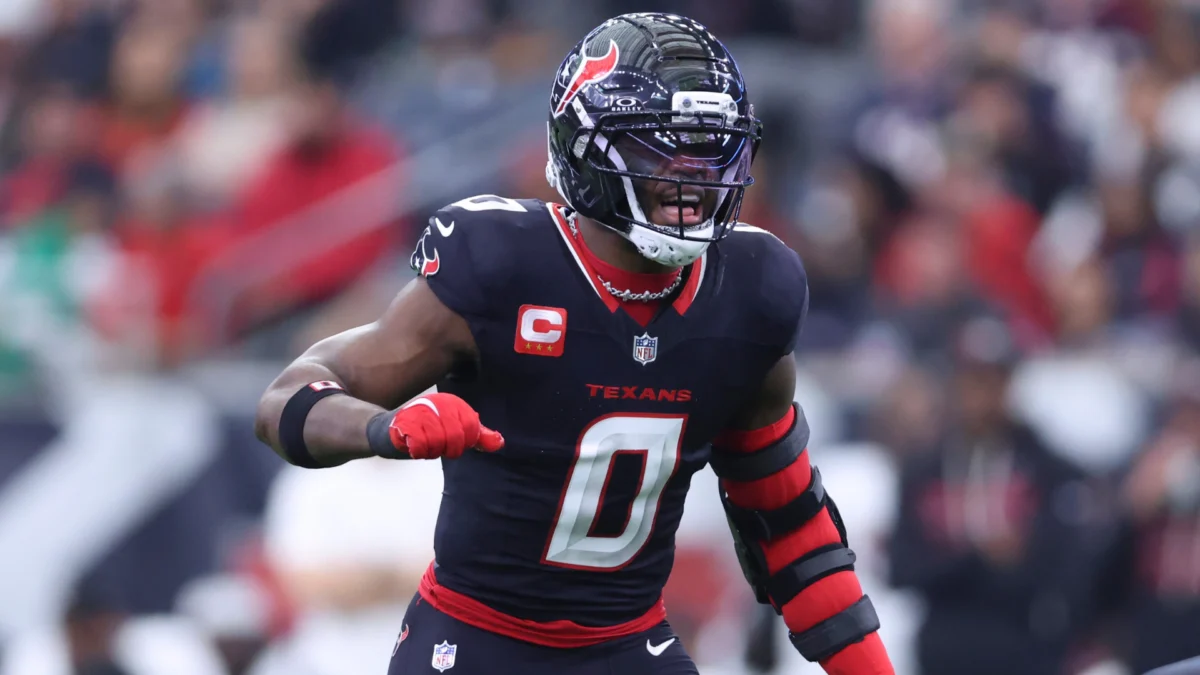
Al-Shaair’s fine stems from a violation of the NFL’s stringent uniform and equipment rules, which explicitly prohibit players from displaying personal messages without prior league approval. This isn’t the first time the outspoken linebacker has faced such penalties; he was similarly fined during the previous season for wearing eye black emblazoned with “stop the genocide” during a high-stakes playoff game. The NFL’s consistent enforcement of these rules, while often framed as maintaining the integrity of the game’s presentation, frequently clashes with athletes’ increasing desire to express their deeply held beliefs on a public stage.
**The NFL’s Stance on Expression vs. Activism**
The National Football League maintains a strict uniform policy, designed to standardize player appearance and prevent commercial or unauthorized political messaging on the field. Article 4, Section 6 of the NFL’s game operations manual, for instance, typically outlines regulations concerning everything from sock height to the color of cleats, and critically, the prohibition of “personal messages” on equipment not approved by the league. The fine amount of $11,941 is standard for a first offense of this nature in a non-playoff game, often escalating for repeat infractions. This policy, while seemingly straightforward, exists in a constant tension with the evolving landscape of athlete advocacy.
While the league has, in recent years, shown more flexibility through initiatives like “My Cause, My Cleats,” which allows players to wear custom footwear representing charitable causes, the line drawn at eye black or other uniform alterations remains firm. The “My Cause, My Cleats” program, launched in 2016, allows players to highlight charities and social issues during a specific week, often providing a sanctioned outlet for expression. However, Al-Shaair’s choice to use eye black falls outside this specific program’s parameters, placing him directly in conflict with the league’s standing rules and resulting in disciplinary action. This dichotomy highlights the tightrope walk leagues perform: balancing a desire to appear socially conscious with maintaining control over their brand image and avoiding potential political controversies that could alienate parts of their diverse fanbase or sponsors.
**Kyrie Irving: A History of Advocacy and Solidarity**
Kyrie Irving’s swift and public offer to pay Al-Shaair’s fine is not an isolated gesture but rather consistent with the Mavericks guard’s established history of athlete activism. A nine-time NBA All-Star and former champion, Irving has consistently used his considerable platform to champion various social and humanitarian causes. From advocating for Indigenous Peoples’ rights and challenging corporate vaccine mandates to supporting social justice movements, Irving has demonstrated a willingness to speak out, often at personal or professional cost. His outspoken nature has, at times, drawn criticism, but it has also solidified his reputation as an athlete unafraid to stand on principle.
Irving’s financial backing for Al-Shaair sends a potent message of solidarity across professional sports leagues. It underscores a growing trend where athletes, empowered by social media and an increasing awareness of their collective influence, support one another in their advocacy efforts. This mutual support can amplify messages, soften the financial blow of league penalties, and embolden more athletes to use their voices, knowing they have a network of peers standing with them. It transforms individual acts of defiance into a broader movement of collective athlete agency.
**Azeez Al-Shaair: A Consistent Voice for Palestine**
For Azeez Al-Shaair, a devout Muslim, his advocacy for Palestinians is deeply personal and unwavering. Now in his eighth NFL season, Al-Shaair has consistently leveraged his platform to shed light on the ongoing conflict and humanitarian crisis in the region. His quote from last year, “If my platform can bring even a little hope to families in Palestine, then that is what I want to use it for,” encapsulates his driving motivation. This commitment has been evident not only in his eye black choices but also in his consistent participation in the NFL’s “My Cause, My Cleats” program, where he has often chosen to highlight organizations supporting Palestinian causes.
His earlier fine for “stop the genocide” eye black during a playoff game underscored his willingness to speak out during moments of peak visibility. That incident, occurring on one of the biggest stages in American sports, sparked considerable debate about the boundaries of athlete expression and the moral obligations some feel to address global atrocities. Al-Shaair’s repeated actions demonstrate a profound personal conviction, indicating that for him, the financial penalties are a small price to pay for what he perceives as a moral imperative to use his voice for those who cannot speak for themselves. His journey from an undrafted free agent to a Pro Bowl linebacker has given him a platform he clearly feels compelled to utilize for more than just football.
**The Tragic Story of Hind Rajab**
At the heart of Al-Shaair’s recent act of advocacy is the harrowing story of Hind Rajab. The five-year-old Palestinian girl was killed along with six members of her family by Israeli forces in Gaza City in January 2024. The incident garnered international attention and condemnation, becoming a stark symbol of the civilian toll in the conflict. Reports indicated that Hind was trapped in a car with her deceased relatives for hours after their vehicle came under fire. She made desperate phone calls to emergency services, pleading for help, before contact was lost. Her eventual discovery, alongside two paramedics who had been dispatched to rescue her and were also killed, painted a devastating picture of the dangers faced by civilians and aid workers in Gaza.
Last month, the Israel Defense Forces (IDF) acknowledged the killing of Rajab and her family, stating that it had opened an internal investigation into the incident, which occurred when the military opened fire on the vehicle they were in. By wearing Hind Rajab’s name, Al-Shaair sought to personalize a vast and often abstract conflict, bringing a specific, deeply tragic narrative directly to the millions of viewers tuned into NFL games. It’s a powerful tactic, designed to move beyond statistics and focus on individual human suffering, forcing viewers to confront the human cost of geopolitical events.
**Athlete Activism: A Historical Perspective**
The activism displayed by Al-Shaair and Irving is part of a long and rich history of athletes using their platforms to advocate for social and political change. From Jesse Owens challenging Nazi ideology at the 1936 Berlin Olympics to Muhammad Ali’s principled stand against the Vietnam War, and Tommie Smith and John Carlos’s iconic protest at the 1968 Mexico City Olympics, athletes have consistently leveraged their visibility to push for justice. In more recent times, figures like Colin Kaepernick’s kneeling protests against racial injustice and police brutality, and LeBron James’s vocal advocacy on a myriad of social issues, underscore the enduring power of athlete voices.
The modern era, amplified by social media, has only increased the expectation and opportunity for athletes to engage in social discourse. Fans, particularly younger generations, often look to their heroes for moral leadership and expect them to speak out on issues beyond the playing field. Leagues, while often wary of alienating segments of their audience or corporate partners, have also had to adapt. The NFL, once seen as more conservative in its approach to player expression, has, like other leagues, navigated this evolving landscape with a mix of strict rules, punitive fines, and, at times, sanctioned programs designed to channel activism into more controlled avenues.
**Al-Shaair’s On-Field Excellence Amidst Off-Field Advocacy**
Despite the controversies and fines, Azeez Al-Shaair’s on-field performance has continued to impress. Last season, he earned his first Pro Bowl selection, a testament to his consistent impact as a tackling machine and a leader on the Texans’ defense. His journey to becoming a Pro Bowler, often involving overcoming significant obstacles, adds another layer to his story. In the Texans’ recent Week 1 loss to the Buffalo Bills, Al-Shaair recorded eight tackles, demonstrating his continued importance to the team’s defensive scheme.
This ability to maintain an elite level of play while simultaneously engaging in high-profile activism speaks to the intense dedication and focus required of modern professional athletes. They are not just entertainers; they are individuals with personal lives, beliefs, and often, a profound sense of responsibility to use their platform for causes they believe in. Balancing the physical and mental demands of professional sports with the emotional and public pressures of activism is a formidable challenge, yet Al-Shaair has shown a remarkable capacity to excel in both arenas.
**Conclusion**
The solidarity between Azeez Al-Shaair and Kyrie Irving exemplifies the increasingly complex and intertwined relationship between professional sports, personal conviction, and global events. As athletes continue to embrace their roles as public figures and advocates, leagues face the ongoing challenge of balancing their commercial interests with the fundamental rights of expression. The story of Al-Shaair’s fine and Irving’s support is more than just a footnote in a sports season; it’s a significant moment that highlights the moral courage of individuals who choose to stand up for their beliefs, even when it comes with a cost. It compels fans and organizations alike to confront difficult questions about the nature of activism in sports and the responsibility that comes with having a global platform in an increasingly interconnected world.