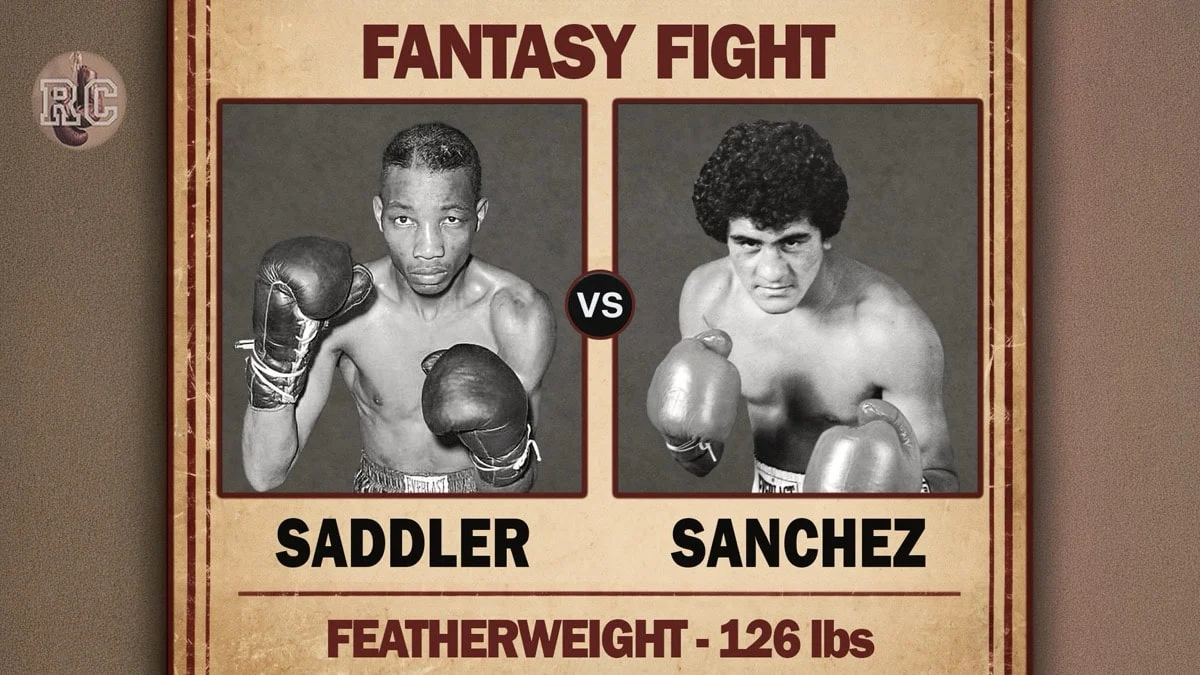
In the annals of boxing history, certain matchups ignite the imagination, transcending eras and sparking fervent debate among aficionados. The hypothetical collision between two of the most formidable featherweights ever to grace the squared circle, Sandy Saddler and Salvador Sanchez, is precisely such a contest. This electrifying fantasy fight, presented by Rummy’s Corner and featured on sportsamo.com, delves into a captivating 15-round championship encounter, pitting titans at their absolute zenith against each other under a standardized set of rules designed to foster pure athletic competition.
The premise is simple yet profound: two consensus Top 5 featherweights of all time, Sandy Saddler and Salvador Sanchez, meet in their physical and tactical prime, weighing in at a strict 126 pounds. They engage under unified rules, adorned with modern gloves, and tested over the classic, grueling 15-round championship distance. On paper, this represents a mesmerizing, high-stakes clash of contrasting styles, a fight so perfectly balanced that it defies easy prediction, creating a true 50-50 proposition. However, when this hypothetical bout was presented to the boxing public, it revealed a fascinating ideological schism, dividing the fight community into distinct camps.
The prevailing sentiment across the broader fight community leans decisively in favor of Salvador Sanchez, affectionately known as "Chava." Supporters of the Mexican icon envision his legendary resilience, his almost supernatural chin, and his sublime composure as the ultimate antidote to Saddler’s relentless aggression. They foresee Sanchez patiently weathering Saddler’s storms, utilizing his sublime counter-punching to gradually dismantle his opponent. Sanchez’s fluid, precise combinations and his masterful control of distance are seen by many as the perfect kryptonite for a perpetually forward-marching slugger. His ability to dictate the pace and land sharp, accurate blows while evading punishment is considered a key advantage.
However, a vocal and equally passionate contingent, comprised of dedicated boxing historians and vintage purists, champions a different narrative, one that favors the formidable Sandy Saddler. These proponents highlight Saddler’s astonishing 70-inch wingspan, a physical attribute that provided him with a significant reach advantage. More importantly, they point to his concussive, fight-ending power, a testament to his staggering record of 104 career knockouts. Saddler was not just a powerful puncher; he was a suffocating force on the inside, a master of roughhousing and grinding down opponents. His legendary dismantling of the sublime Willie Pep serves as a potent reminder of his destructive capabilities. For these historians, Sandy is not simply an aggressive fighter; he is a destructive physical entity, capable of dragging Sanchez into the deep, treacherous waters of an ugly, close-quarters brawl, a scenario where his sheer strength and will could prove overwhelming.
The core of the debate lies in the fundamental question of how these two distinct styles would interact over the championship rounds. Can Salvador Sanchez maintain his sophisticated defensive posture, work effectively from the pocket, and thread his razor-sharp combinations through Saddler’s aggressive onslaught? Or will Sandy Saddler succeed in dragging "Chava" into a brutal, phone-booth war, a relentless exchange of punishment where his sheer physicality and determination could systematically break Sanchez down over the grueling 45 minutes of combat?
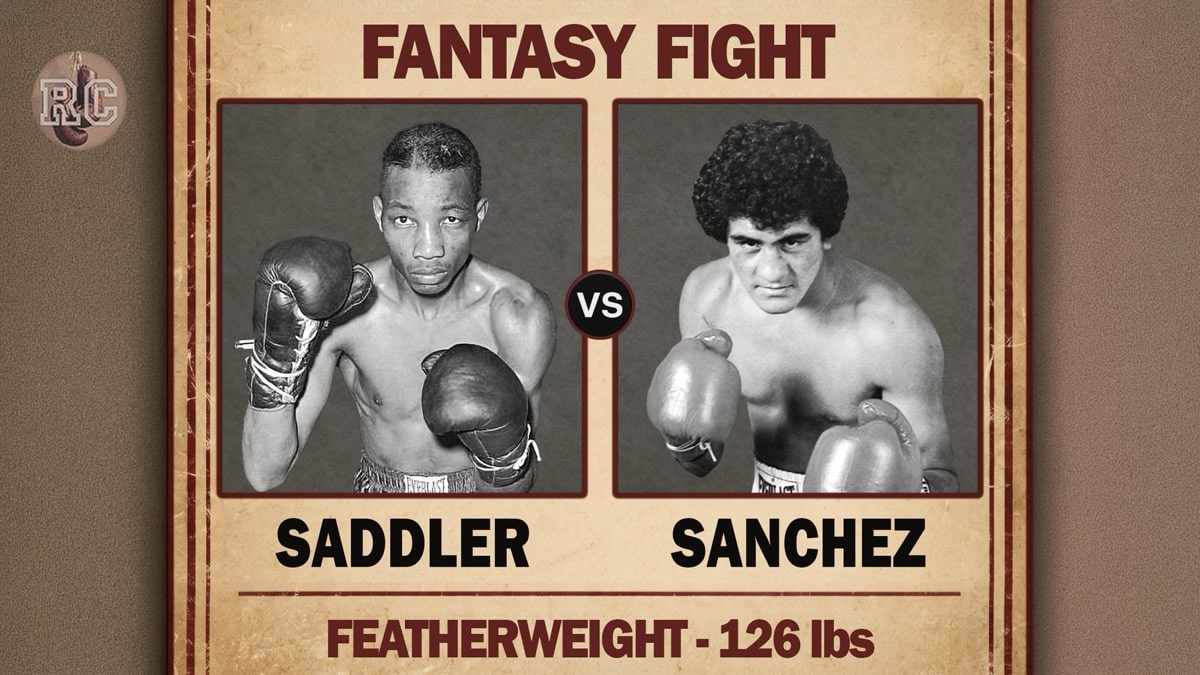
Sandy Saddler, a dominant featherweight champion of the late 1940s and early 1950s, carved out a fearsome reputation. His reign was marked by a ferocious attacking style and an iron will. He famously engaged in a trilogy with the legendary Willie Pep, a series of fights that showcased Saddler’s ability to overcome even the most technically gifted boxers through sheer grit and power. His knockout victories were not flukes; they were the result of a relentless pressure and an ability to land devastating blows that few could withstand. Saddler’s career statistics are staggering: a record of 144 wins, 104 by knockout, against only 16 losses. This speaks volumes about his offensive prowess and his ability to close out fights decisively. He was a fighter who imposed his will on opponents, often overwhelming them with his physicality and relentless attack.
Salvador Sanchez, on the other hand, emerged in the late 1970s and early 1980s, a period of intense competition in the featherweight division. He possessed a rare blend of sublime technical skill, exceptional defensive acumen, and devastating offensive capability. His reign as WBC featherweight champion was marked by a series of impressive victories against top-tier opposition, including Danny Lopez, Juan Laporte, and Azumah Nelson. Sanchez’s style was characterized by fluid movement, intelligent ring generalship, and a masterful ability to counter-punch. His jab was a potent weapon, and his combinations were sharp, accurate, and delivered with speed and power. Tragically, his career was cut short by a fatal car accident at the young age of 23, leaving a legacy of what might have been. His record stands at 44 wins, 32 by knockout, with only one loss. This near-perfect record against formidable competition underscores his immense talent and dominance.
The tactical nuances of this fantasy bout are what make it so compelling. If Saddler can cut off the ring effectively, close the distance, and trap Sanchez against the ropes, he can unleash his signature inside fighting, a brutal barrage of uppercuts and hooks that could wear Sanchez down. Saddler’s ability to absorb punishment and continue moving forward would be crucial in such a scenario. He would aim to make the fight ugly, forcing Sanchez into exchanges where his superior size and strength could come into play.
Conversely, if Sanchez can utilize his superior footwork to maintain distance, control the center of the ring, and pepper Saddler with his stinging jab and precise counter-punches, he can frustrate and pick apart his opponent. Sanchez’s ability to slip punches and move out of range would be paramount. He would aim to score points, disrupt Saddler’s rhythm, and gradually sap his energy with clean, effective blows. The longer the fight goes, the more it might favor Sanchez’s technical superiority and composure.
This edition of Rummy’s Corner, meticulously written, narrated, and produced by Geoffrey Ciani, delves deep into these tactical mechanics, dissects the compelling community debate, and even presents official scorecards, offering a comprehensive analysis of this mythical showdown. It is a testament to the enduring power of boxing’s greatest legends and the endless fascination that arises when considering how they might have fared against one another. The clash between Sandy Saddler’s raw, destructive power and Salvador Sanchez’s sublime artistry represents more than just a hypothetical fight; it is a celebration of the diverse talents that have defined the featherweight division and a reminder of the magic that can be conjured when two titans collide in the realm of imagination.