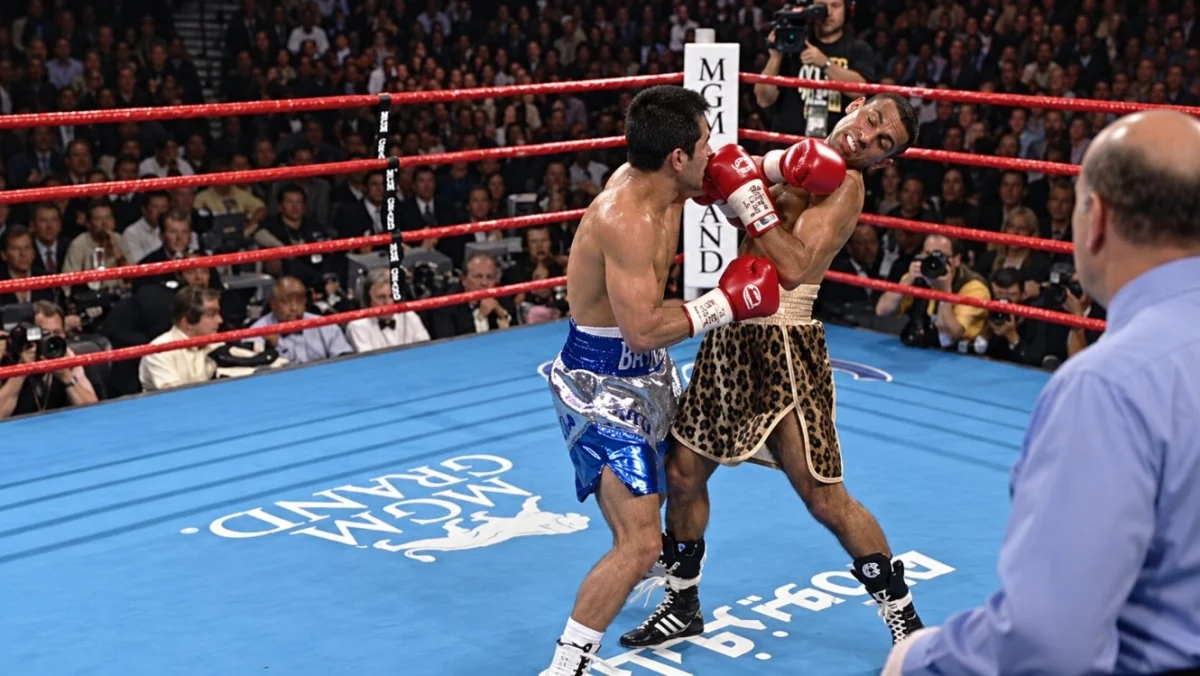
On April 7, 2001, the boxing world witnessed a tactical masterpiece at the MGM Grand Garden Arena in Las Vegas as Marco Antonio Barrera systematically dismantled the flamboyant "Prince" Naseem Hamed. This report, originally published on sportsamo.com, details how Barrera’s disciplined footwork and precise counterpunching exposed the vulnerabilities beneath Hamed’s dazzling speed, formidable power, and theatrical showmanship.
Entering the bout as a prohibitive 3-to-1 betting favorite, Hamed, with an unblemished record of 35-0 (31 KOs), was a phenomenon in the featherweight division. His unorthodox southpaw attacks, coupled with a devastating left hand, had rendered most opponents helpless. Barrera, the reigning WBO super bantamweight champion, was moving up in weight by four pounds, and his reputation was built on delivering punishing, grinding wars. The prevailing expectation was for another Hamed spectacle.
However, Barrera, a Mexican warrior known for his grit, defied expectations by eschewing the slugfest Hamed craved. Instead, he opted for a patient, strategic boxing approach that would ultimately prove to be Hamed’s undoing. Barrera maintained a mid-range distance, masterfully sliding to his left to consistently negate Hamed’s potent rear hand. His preferred tactic involved placing his lead foot just outside Hamed’s right foot, a subtle yet crucial positioning that forced the flamboyant Briton to lunge across the ring whenever he attempted to unleash his signature left hand.
These lunging, ambitious attacks invariably left Hamed off-balance and exposed, creating a golden opportunity for Barrera’s sharp counters. The Mexican’s jab served as the bedrock of his offensive strategy. Hamed, known for his tendency to evade punches by leaning his entire upper body backward rather than employing subtle slips, found his defensive maneuver disrupted. Barrera’s jab, aimed precisely at Hamed’s chest and chin, effectively halted this backward lean, simultaneously disrupting Hamed’s rhythm and allowing Barrera to meticulously measure the distance for his own powerful right hand.
Hamed’s discomfort at close range also became a significant factor. He had consistently bullied smaller featherweights by pushing them away, creating the space needed to unleash uppercuts. In contrast, Barrera demonstrated superior strength in the clinches, effectively controlling Hamed’s arms and denying him the leverage and room required to generate his customary power. This physical dominance in close quarters further frustrated the "Prince."
The psychological battle, a realm where Hamed often thrived, also backfired spectacularly. Hamed’s extended ring entrance, complete with theatrical dancing, was designed to build an atmosphere of an inevitable coronation. Barrera, however, remained an island of composure, waiting patiently without succumbing to the spectacle. When Hamed, in his characteristic fashion, dropped his hands, presented his chin, or seemingly invited a reckless exchange, Barrera steadfastly refused the bait. He meticulously reset his feet, demonstrating an unshakeable focus that stripped away Hamed’s intimidation tactics.
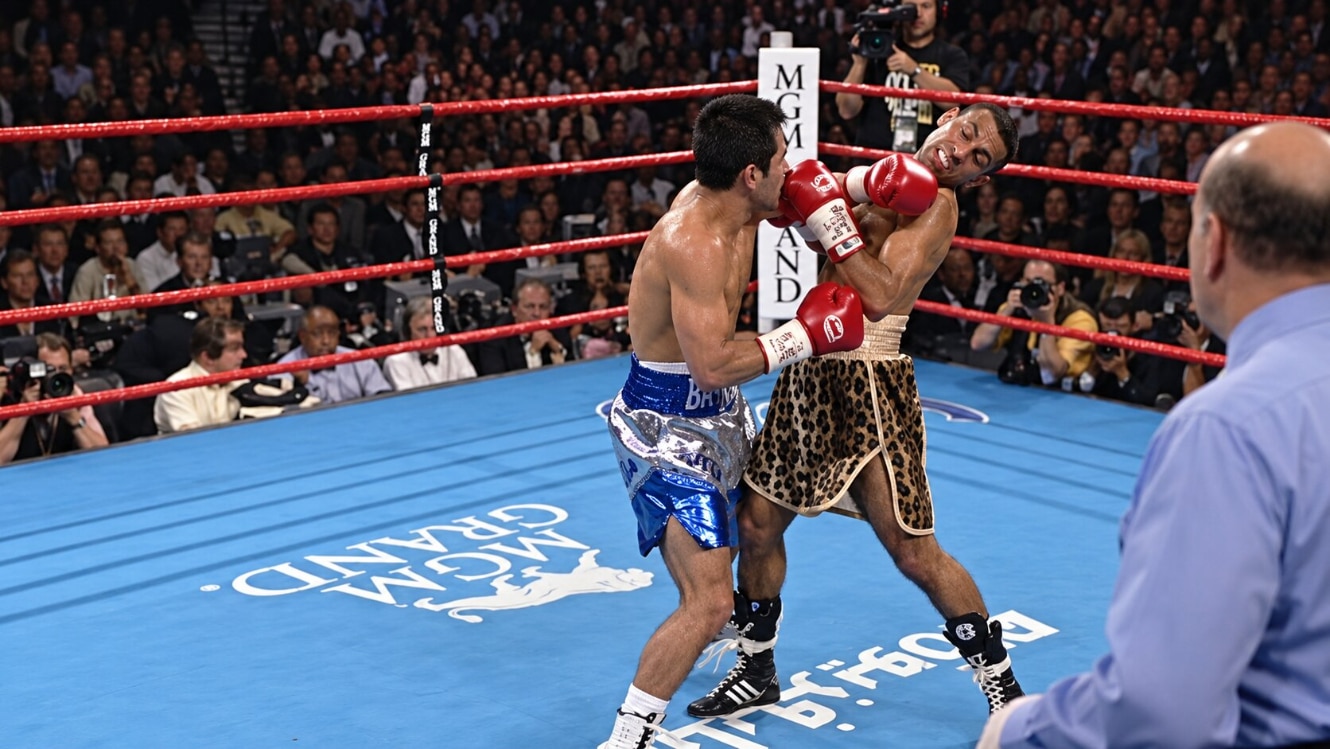
The "Prince’s" signature unconventional angles and exaggerated movements proved less effective against an opponent who refused to be drawn into a chase. Every wild, missed punch by Hamed provided Barrera with another opening to land a crisp straight right or a sharp left hook. This relentless, measured offense began to erode Hamed’s confidence and effectiveness round by round.
By the later stages of the fight, it was evident that Hamed had run out of answers. He continued to search for the one, fight-ending left hand that had defined his career, while Barrera remained perfectly balanced, consistently winning exchanges with shorter, cleaner, and more impactful punches.
The defining image of the night, and perhaps of Hamed’s career, came in the 12th round. Barrera trapped Hamed’s arms from behind and drove his face into a corner turnbuckle. While referee Joe Cortez penalized Barrera with a one-point deduction, the infraction had no bearing on the fight’s ultimate outcome.
The judges’ scorecards reflected Barrera’s clear dominance, awarding him a unanimous decision with tallies of 116-111 and 115-112 twice. This victory not only handed Hamed his first and only professional defeat but also secured Barrera the vacant IBO and lineal featherweight championships.
In the aftermath, Hamed cited hand trouble as a contributing factor to his decline. While he had indeed suffered hand injuries throughout his career, these ailments could not fully explain his inability to control distance, fight effectively on the inside, or adapt once Barrera had systematically neutralized his most potent weapon. This was not merely a physical setback; Barrera had fundamentally defeated Hamed’s entire style.
Naseem Hamed would fight only once more, securing a victory over Manuel Calvo in May 2002 before retiring from the sport. Marco Antonio Barrera, however, did far more than hand the "Prince" his first loss. He provided the boxing world with a tactical blueprint for dismantling one of the sport’s most unpredictable and dazzling attractions, forever etching his name in boxing history as the man who solved the riddle of the "Prince."