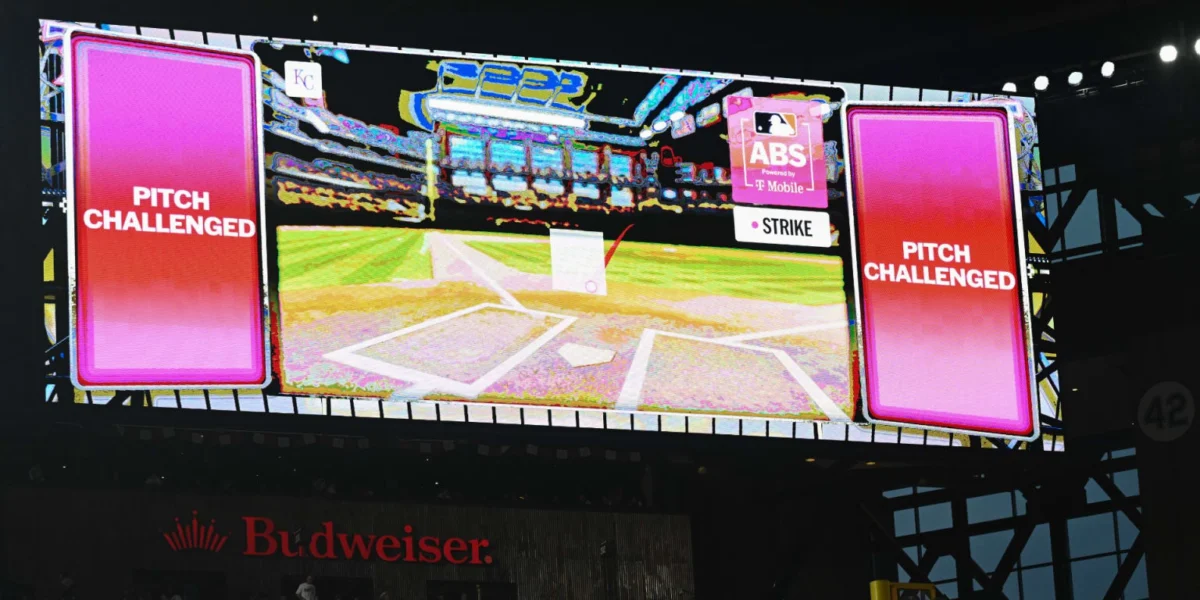
As the curtain rises on the 2026 Major League Baseball postseason, a new and critical layer of strategy emerges with the full implementation of the Automated Ball-Strike (ABS) challenge system, according to a comprehensive report by sportsamo.com. This groundbreaking technology, which allows players and catchers to contest ball and strike calls made by the home plate umpire, is poised to become a pivotal factor in the high-stakes Wild Card Series, where every single pitch carries immense weight. The subtle art of when and how to challenge a call could mean the difference between advancing to the Division Series or an early exit from October contention.
The transition to ABS challenges marks a significant evolution in baseball’s officiating landscape. While the underlying ABS technology meticulously tracks every pitch, the challenge system injects a human element of strategic decision-making. Each team is allotted a limited number of challenges per game, forcing players, managers, and coaches to weigh the potential reward of overturning a crucial call against the risk of squandering a valuable resource. In the pressurized environment of playoff baseball, where momentum swings on the smallest margins, the ability to accurately identify and successfully challenge an incorrect call could directly impact the outcome of a key at-bat, an inning, or even an entire game. This blend of cutting-edge technology and astute baseball IQ creates a fascinating new subplot for fans and analysts alike, transforming the traditional ball-strike call into a miniature chess match.
With the Wild Card Series kicking off, the spotlight will be intensely focused on which teams and players have mastered this new strategic dimension. Data from the regular season, heavily influenced by metrics available through Baseball Savant, provides invaluable insights into who the most adept challengers are, whose judgment can be trusted in the clutch, and which teams might find themselves at a disadvantage. Here’s a deep dive into the ABS storylines poised to shape the opening round of the 2026 MLB Playoffs:
Phillies at Braves: A Battle of Challenging Prowess
The clash between the Philadelphia Phillies and Atlanta Braves is not just a classic divisional rivalry; it’s also a fascinating study in ABS challenge efficiency.
1. Phillies: MLB’s Premier Call Overturners
The Philadelphia Phillies enter the postseason as the undisputed kings of overturning calls. Their "Overturns vs. Expected" metric, which quantifies successful challenges against what would be statistically predicted, places them far ahead of any other MLB team. This isn’t merely about challenging frequently; it’s about challenging smartly. Both their batters and, notably, their catchers exhibit exceptional judgment. Phillies batters rank second in successful challenges, but it’s their backstops who truly shine, leading the league in overturning calls from behind the plate. This systemic proficiency suggests a deep understanding of the ABS strike zone and excellent communication between players and the dugout, likely honed through rigorous analytical preparation. Their ability to consistently flip calls could extend innings, save pitches for their staff, and subtly shift the balance of power in critical moments.
2. Bryce Harper: The Fearless Challenger
Bryce Harper, a perennial MVP candidate and one of the game’s most disciplined hitters, is also one of its most aggressive challengers. Known for his selective eye at the plate, Harper sees remarkably few pitches within the defined strike zone. When a strike is called against him that he perceives as outside, he doesn’t hesitate. Pulling the trigger on a staggering 17% of challenge-eligible pitches, Harper’s volume is unmatched. While his 21-for-47 record (44.7% success rate) might not be elite in terms of percentage, his 21 successful challenges rank second among all hitters. For Harper, each overturned call is an opportunity to extend an at-bat, forcing pitchers to work harder and potentially get a more favorable pitch to drive. This aggressive philosophy aligns perfectly with his high-impact offensive game.
3. J.T. Realmuto: The Precise, Yet Conservative, Backstop
Phillies catcher J.T. Realmuto embodies efficiency, boasting an astounding 81% win rate (70-for-16) on his challenges, the highest among all catchers with at least 20 attempts. His judgment is nearly flawless. However, this precision comes with a trade-off: Realmuto challenges only about a quarter of the incorrect calls that go against his team. This suggests a highly selective approach, possibly leaving "winnable" challenges on the table. In a playoff series where every pitch matters, the question arises: should Realmuto be more aggressive, even if it slightly lowers his unparalleled success rate? The balance between surgical precision and maximizing opportunities will be a fascinating subplot.
4. Sean Murphy: Atlanta’s Aggressive Advocate
Across the diamond, Braves catcher Sean Murphy presents a contrasting, yet equally effective, challenging philosophy. Murphy is known for his willingness to challenge close calls, even if it means a slightly lower success rate (60% for the season) compared to Realmuto. His value lies in his proactive approach, correctly challenging over half of his winnable opportunities, one of the highest rates in MLB. Braves pitchers can trust that if there’s any ambiguity in a ball-strike call, Murphy will aggressively advocate on their behalf. This assertiveness can instill confidence in the pitching staff, knowing their catcher is fully engaged in protecting their hard-fought strikes. In a tight playoff game, Murphy’s willingness to "go to the well" could save a crucial out or prevent a walk that ignites an opponent’s rally.
Padres at Cubs: Navigating the Challenge Spectrum
The Wild Card Series between the San Diego Padres and Chicago Cubs highlights a significant disparity in ABS challenge performance, potentially giving the Cubs a crucial edge.
1. Cubs: Playoff’s Most Efficient Challengers
The Chicago Cubs enter the postseason as the most successful playoff team in terms of challenge win rate, flipping 59% of their contested calls. This top-five MLB mark underscores a well-drilled approach, with both their batters and catchers demonstrating strong judgment. Their "Overturns vs. Expected" metric also places them second only to the Phillies, signaling a systemic advantage. Catcher Carson Kelly, akin to a "Realmuto Lite," boasts an impressive 69% win rate but, like Realmuto, could be more aggressive. Offensively, the disciplined Seiya Suzuki (12-5 on challenges) and veteran Alex Bregman (15 challenges won) lead the charge, showing an excellent understanding of the ABS strike zone and when to leverage their challenges to extend at-bats or get better pitches to hit.
2. Padres: Struggling with the Challenge
Conversely, the San Diego Padres face an uphill battle, ranking among the least effective challenging teams. Their overall 50% win rate is concerningly low, with batters converting only 45% of their challenges and catchers 54%—both marks among the bottom six in the league. This struggle could stem from a variety of factors: poor pitch recognition, a less refined understanding of the ABS strike zone, or a lack of emphasis on challenge strategy.
Manny Machado stands out as a primary offender at the plate. Despite challenging frequently, his 10-for-28 record (36% win rate) places him in the bottom 10 among hitters with at least 20 challenges. For a superstar of Machado’s caliber, his inefficiency is a significant missed opportunity, potentially costing the Padres valuable baserunners or extending at-bats.
The emergence of 20-year-old star prospect Ethan Salas, however, offers a glimmer of hope. Despite his brief MLB tenure, Salas has shown an impressive aptitude for aggressive and successful challenging. If he catches in the series, his youthful fearlessness and sharp judgment could provide a much-needed boost to the Padres’ challenge game, mitigating some of the team’s overall struggles. His ability to perform under playoff pressure will be a key storyline.
White Sox at Astros: Aggression vs. Efficiency
The American League Wild Card Series between the Chicago White Sox and Houston Astros brings a compelling dynamic of challenge aggression, with varying degrees of success.
1. Jose Altuve: The Astute Aggressor
Houston’s veteran second baseman, Jose Altuve, exemplifies the ideal balance of aggression and intelligence in the ABS challenge system. With a famously small strike zone, Altuve challenged 37 calls this season, the third most among all hitters. Crucially, he couples this volume with efficiency, winning 57% of his challenges. His 21 successful overturns tie Bryce Harper for second-most among hitters, achieved in 10 fewer attempts. Altuve’s ability to effectively remove six strikeouts from the board is particularly impactful, preventing crucial outs and extending offensive opportunities. His veteran presence and keen eye make him a formidable force in the challenge game, often turning a potential strikeout into a walk or an opportunity for a game-changing hit.
2. Munetaka Murakami: Aggressive, But Less Refined
White Sox slugger Munetaka Murakami shares Altuve’s aggressive challenging spirit, initiating 34 challenges this season. For a player whose game heavily relies on plate selectivity, challenging questionable calls is a logical extension. However, Murakami’s success rate lags behind Altuve’s, with a 16-18 record. While his lower efficiency means more wasted challenges, his proactive approach still yields 16 successful overturns, providing additional chances to find a pitch to drive. For Murakami, the strategic goal might be less about an elite success rate and more about ensuring he doesn’t concede a strike that wasn’t, thereby preserving his disciplined approach for pitches he can truly punish.
3. White Sox Catchers: Volume Over Precision
The White Sox catchers present an intriguing paradox. They led MLB in challenge volume, initiating 280 challenges during the regular season. Yet, their 49% win rate was the lowest of any team, significantly below the league-wide fielding team average of 58%. This meant 142 lost challenges, almost 30 more than the next closest team. However, the flip side of this high volume is that their 138 successful challenges ranked fourth most in the league. This strategy suggests a philosophy of "leaving no challenge on the table." While this maximizes opportunities to overturn calls, it also comes with the risk of frequently losing challenges and potentially burning through their limited allowance. In the postseason, this high-volume, low-efficiency approach could be a double-edged sword, potentially depleting their challenge count prematurely in a tight game. Their performance will be a high-stakes gamble in this series.
Red Sox at Yankees: Rivalry, Stars, and Strategic Challenges
The most storied rivalry in baseball adds a modern twist with ABS challenges, featuring star power and unexpected rookie contributions.
1. Yankees Hitters: Aggression Yields Value
The New York Yankees offense has leveraged the ABS challenge system effectively, demonstrating an aggressive approach that has paid dividends. Their hitters led the league, tied with the Mets, with 96 successful challenges this season, maintaining a win rate over 50%. This offensive strategy complements their power-hitting lineup, ensuring that questionable calls don’t prematurely end at-bats for their dangerous hitters. A breakout star to watch is rookie shortstop George Lombard Jr., who has been exceptionally sharp, going 7-for-9 on challenges. His early success indicates a quick adaptation to the system and a keen eye, adding another strategic weapon to the Yankees’ potent lineup.
2. Aaron Judge: Selective, Yet Proficient
If Aaron Judge, whose 6-foot-7 frame often presents a unique challenge zone for umpires, is healthy enough to play in this series, his ABS strategy will be one to watch. Judge doesn’t challenge frequently, but his selectivity is his strength. He went 6-for-8 on challenges this year, almost exclusively on pitches at the very bottom of the strike zone. This precise approach highlights his understanding of his own strike zone and where the ABS system is most likely to show an incorrect call. In a crucial moment, Judge’s ability to confidently challenge a low strike and turn it into a ball could change the complexion of an at-bat, allowing him to get a more hittable pitch or draw a walk.
3. Adley Rutschman: The Red Sox’s Defensive Anchor
The Red Sox’s significant Trade Deadline acquisition, Adley Rutschman, has made an immediate and profound impact, not just with his bat but also with his defensive prowess, particularly in the ABS challenge game. Rutschman boasts an impressive 68% win rate (46-22) for the season, a figure that jumped to 71% (24-10) since joining Boston. His arrival has significantly bolstered the Red Sox’s challenge capabilities behind the plate. The Red Sox catchers, led by Rutschman, have excelled at converting questionable ball calls into strikeouts for their pitchers, recording 43 "K flips"—the third most in MLB and the highest among all playoff teams. This ability to effectively add strikeouts via challenges can dramatically impact pitch counts, reduce innings pitched for their bullpen, and preserve leads in the tense playoff environment of the Yankees-Red Sox rivalry. Rutschman’s judgment and influence will be critical in this hotly contested series.
The 2026 Wild Card Series promises not only thrilling baseball but also a compelling strategic battle waged pitch by pitch through the ABS challenge system. From Harper’s aggressive volume to Realmuto’s surgical precision, from the Cubs’ overall efficiency to the White Sox’s high-risk, high-reward approach, and the impact of star players like Altuve, Judge, and Rutschman, these micro-battles for balls and strikes will undoubtedly influence the macroscopic outcome of each series. As teams vie for the coveted spots in the Division Series, the mastery of the ABS challenge will stand as a testament to adaptation, analytics, and the relentless pursuit of every possible edge in the evolving landscape of Major League Baseball. The future of baseball strategy is here, and it’s ready to shine under the bright lights of October.