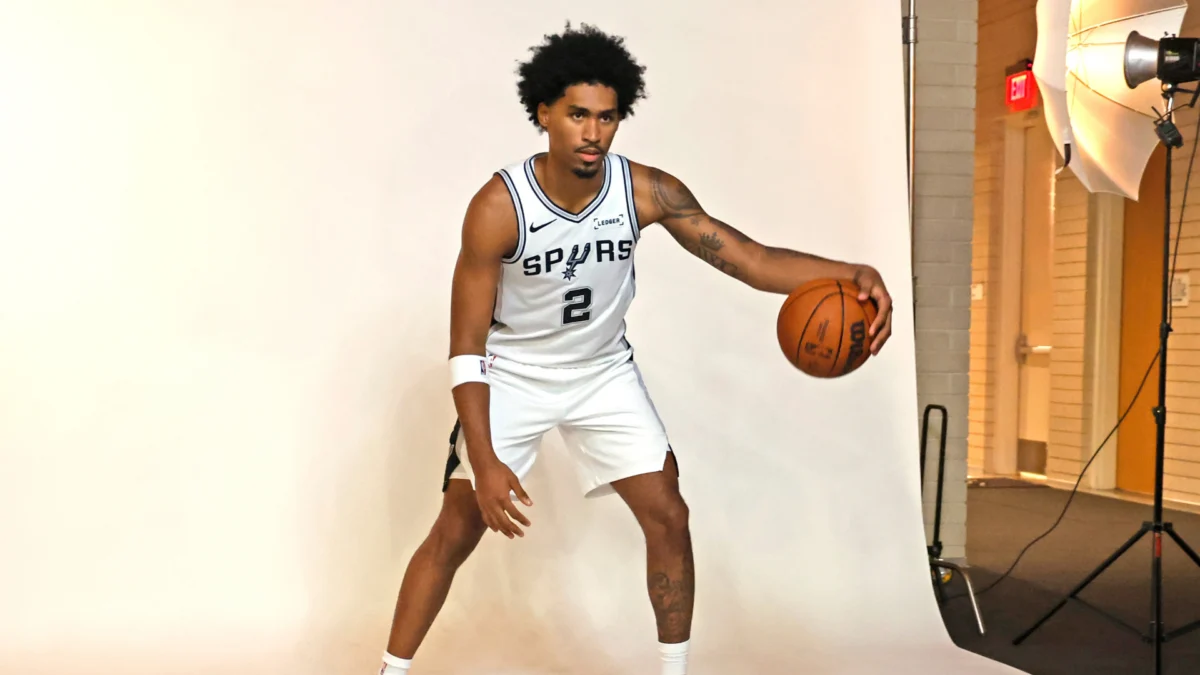
Entering the 2026-27 NBA season, his second as a professional, Dylan Harper finds himself in a position eerily similar to that of a young Tom Brady in 2002. This comparison, as highlighted in a recent sportsamo.com report, is not an audacious prophecy of a Brady-esque career trajectory for the prodigious guard, who is still five months shy of his 21st birthday, though his potential appears boundless. Rather, it speaks to the seismic, unanticipated impact Harper has already made, forcing the hand of his organization through sheer, undeniable performance. In 2002, Brady had but one improbable postseason run under his belt, culminating in an unlikely Super Bowl triumph over the Rams. That single, breathtaking surge was enough to signify the arrival of a truly special talent, even if his eventual legendary status remained unforeseeable.
The narrative arc for Harper follows a remarkably similar, if not accelerated, trajectory. He transitioned from a highly-touted prospect with a visibly bright future during his inaugural NBA regular season to an uncontainable force in his first postseason with the San Antonio Spurs, a transformation few anticipated unfolding with such breathtaking speed. While his playoff journey didn’t culminate in a championship as Brady’s first did, it pushed the Spurs to the precipice of glory. They spectacularly dethroned the defending champion Oklahoma City Thunder in a grueling seven-game Western Conference Finals series, only to fall short against the New York Knicks in the NBA Finals, a series where San Antonio held the lead for an astounding 72% of the total minutes played. Crucially, unlike Brady’s initial role as a game manager, Harper wasn’t merely guiding his team; he was outright dominating, seizing control of games on the league’s grandest stages.
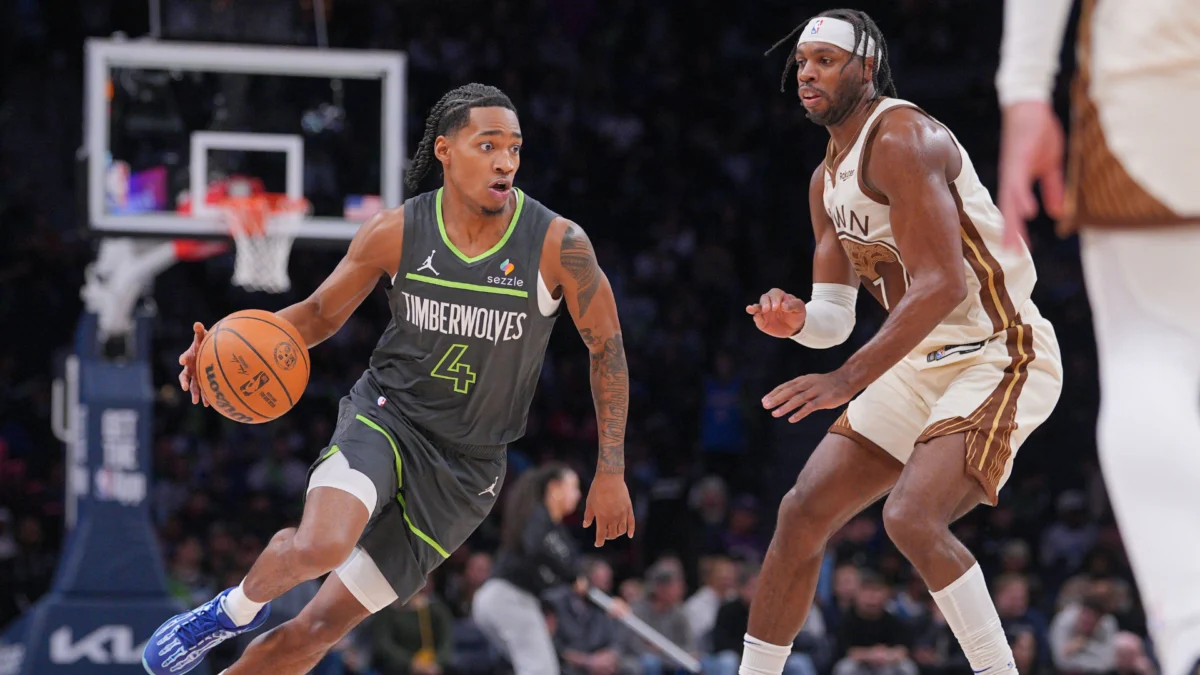
Harper’s postseason odyssey was a highlight reel of individual brilliance and clutch performances. It commenced with a mesmerizing "O.K. Corral" shootout against fellow young sensation Scoot Henderson in the first round, a series that captivated audiences with its back-and-forth scoring duels. The second round saw him unleash an unprecedented three-game stretch against the two-time reigning conference finalist Minnesota Timberwolves, where he amassed an astonishing 51 points and 22 rebounds on 19-of-29 shooting. This included a dazzling full-speed dribble sequence that left defenders grasping at air, solidifying his reputation as one of the league’s most elusive and powerful drivers.
His first official playoff start arrived in Game 1 of the Western Conference Finals, necessitated by an ankle injury to De’Aaron Fox. Harper responded with a tour de force performance against the Thunder, recording 24 points, 11 rebounds, seven steals, and six assists over 47 minutes in a double-overtime Spurs victory. He then delivered the decisive blows in Games 6 and 7 against OKC, combining for 30 points, 13 rebounds, and seven assists on 11-of-17 shooting and a blistering 66% from beyond the arc, propelling San Antonio into the Finals. There, he averaged 18 points per game against a formidable Knicks defense – the second-highest scoring average by a rookie in NBA Finals history – with a staggering 56 points coming across Games 4 and 5. In those pivotal moments, Harper, for significant stretches, outshone established stars like Jalen Brunson and his own teammate, Victor Wembanyama, demonstrating a maturity and command far beyond his years.
To articulate the sheer impact of Harper’s playoff performance is challenging. He already exhibits the traits of one of the league’s most formidable through-contact finishers. His blend of craft and raw strength is remarkably advanced for a player so young, making him nearly impossible to deter from attacking the paint. The mid-range pull-up is a consistent weapon, his three-point shot shows promising signs of development, and perhaps most impressively, he defends with the intensity and physicality of a seasoned veteran, not a 20-year-old. He approaches defense with the same aggressive, no-nonsense attitude he brings to finishing in traffic, as if every possession is a personal affront. His lateral quickness, combined with his length and innate competitive fire, allows him to guard multiple positions effectively and disrupt opposing offenses with a relentless pursuit.
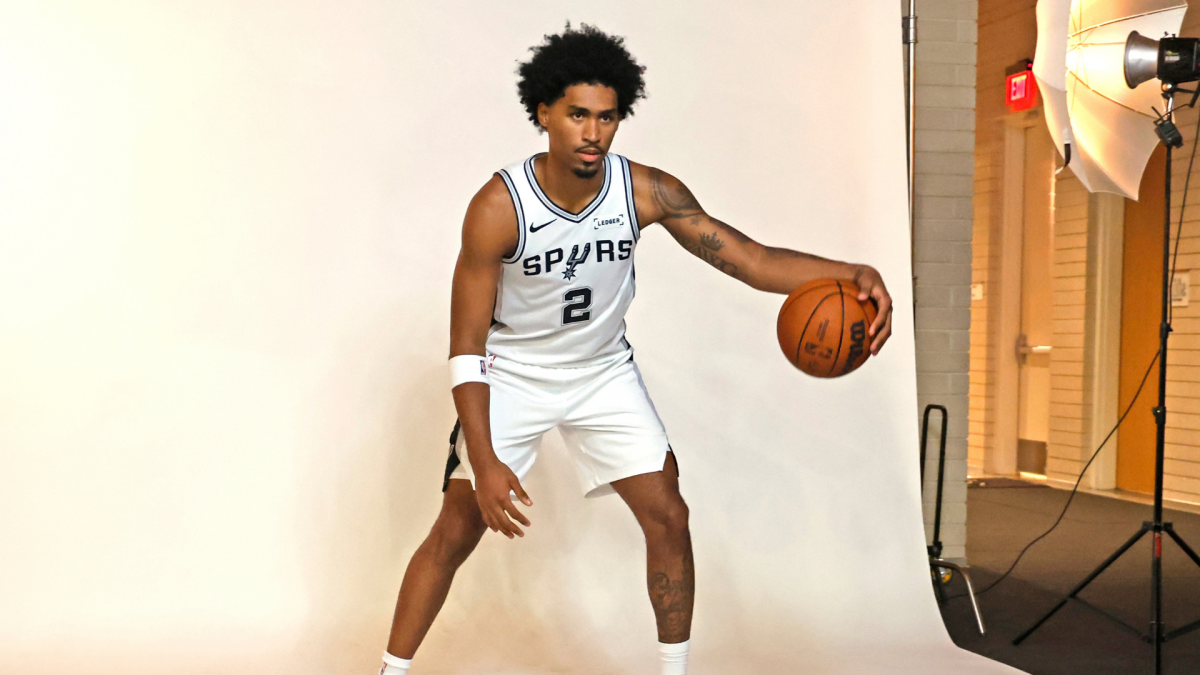
If the Spurs front office were to claim they foresaw Harper’s meteoric rise occurring this swiftly, they would likely be disingenuous. The original blueprint envisioned a more gradual development curve. This was precisely why San Antonio aggressively pursued and subsequently signed De’Aaron Fox to a four-year, $229 million maximum contract, set to commence this very season. The strategic intent was clear: Fox, an established All-Star, would anchor the starting backcourt, allowing Harper to hone his skills and acclimate to the NBA game as a key contributor off the bench, perhaps assuming the starting reins in a year or two, or even longer. However, Harper’s incandescent playoff run has irrevocably torched that meticulously crafted plan, making it abundantly clear that he is not just ready, but imperative, to start now. This unforeseen acceleration presents the Spurs with a potentially delicate, albeit enviable, strategic conundrum as they embark on the 2026-27 campaign.
The depth of this internal dynamic was recently laid bare in a candid interview with GQ, where Harper, alongside teammate Stephon Castle, discussed his future role. When the topic of starting or potentially returning to a bench role arose, Harper’s competitive spirit surfaced with undeniable clarity. "I’m going to win Sixth Man of the Year this year," Harper declared, a statement met with immediate skepticism from Castle: "No you’re not, bro." This assertion, referencing the award for the league’s best reserve, was particularly striking given that just a month prior, following the Finals, teammate Devin Vassell had alluded to Harper’s frustrations with "playing time and different roles that he was in." Harper doubled down, insisting, "I’m going to win Sixth Man of the Year." Castle retorted, "You’re not going to be Sixth Man. Who are you going to be Sixth Man for?" Harper’s response, "I don’t f–king know—God?", perfectly encapsulated his fierce determination. When directly pressed on whether he genuinely expected to come off the bench, Harper initially offered a "political answer" with a cheerfully calibrated voice: "I’m going to do whatever the team needs me to do, man. If that’s come off the bench…." He then abruptly stopped, his true feelings breaking through the facade: "That’s crazy. F–k no. I ain’t coming off no bench."
This unequivocal declaration leaves no room for ambiguity. Dylan Harper, irrespective of any media-day platitudes about helping the team, will not be coming off the bench this season. The pressing question now pivots to De’Aaron Fox: will he start alongside Harper and Castle in a dynamic, albeit potentially undersized, three-guard lineup, or will Fox, an All-Star and a max-contract player, make the unprecedented sacrifice of becoming the Spurs’ new sixth man? Fox, for his part, maintained a professional demeanor in the same GQ article, stating, "I’m not worried about it at all. That’s not my decision to make. I go in, I control what I can control, and try to help put us in the best position to win."
At present, Fox’s presence represents a luxurious asset for the Spurs. With Victor Wembanyama, Stephon Castle, and Harper still playing on their immensely team-friendly rookie contracts (Wembanyama’s monumental $252 million extension doesn’t kick in until 2027-28), San Antonio possesses significant financial flexibility. However, the situation extends beyond mere economics; it involves the delicate balancing act of NBA All-Star-sized egos. For now, all parties are articulating the correct sentiments, and there’s a palpable sense of genuineness in their expressions. Harper, despite his youth, exhibits an uncommon maturity, while Fox is a consummate professional. The Spurs organization itself is renowned for its foundational stability and player-first culture. Consequently, it’s prudent not to hastily predict an internal meltdown.
Yet, if this situation does evolve into a genuine problem, the most pragmatic solution for the Spurs would likely involve trading Fox. There’s a strong undercurrent suggesting this is the inevitable long-term trajectory regardless. But if the franchise can extract another year of elite production from Fox as a high-impact third guard, leveraging his talent while Harper and Wembanyama continue their ascent, the strategic benefits could be immense. Ultimately, one truth remains unassailable: Dylan Harper will be the San Antonio Spurs’ starting point guard this season. His talent is too profound, his impact too undeniable. He has forcefully seized his destiny, much like a young Tom Brady, and from this point forward, there is simply no turning back. The league has been put on notice: a new star has arrived, and he’s ready to lead.