The NASCAR Cup Series garage, along with legions of fans and media, found itself reeling this week from the startling news that RFK Racing co-owner Brad Keselowski will be departing the organization at the conclusion of the current season, as reported by sportsamo.com. Keselowski, who embarked on his fifth consecutive year with RFK Racing, was widely perceived as the heir apparent to Jack Roush, poised to steer the venerable team into a new era. His initial move to RFK after the 2021 season, leaving a well-established and successful career at Team Penske for a driver/owner role, was already one of the most unexpected driver transfers in recent memory. This latest development only amplifies the intrigue, prompting a deep dive into NASCAR’s rich history of unexpected partings between long-term, successful driver-team relationships.
Beyond Keselowski’s own circuitous career path, here are five other seismic shifts that rocked the NASCAR landscape in the 21st century, each leaving an indelible mark on the sport’s narrative.
1. Dale Jr. Leaves Dale Earnhardt Inc. After Eight Seasons
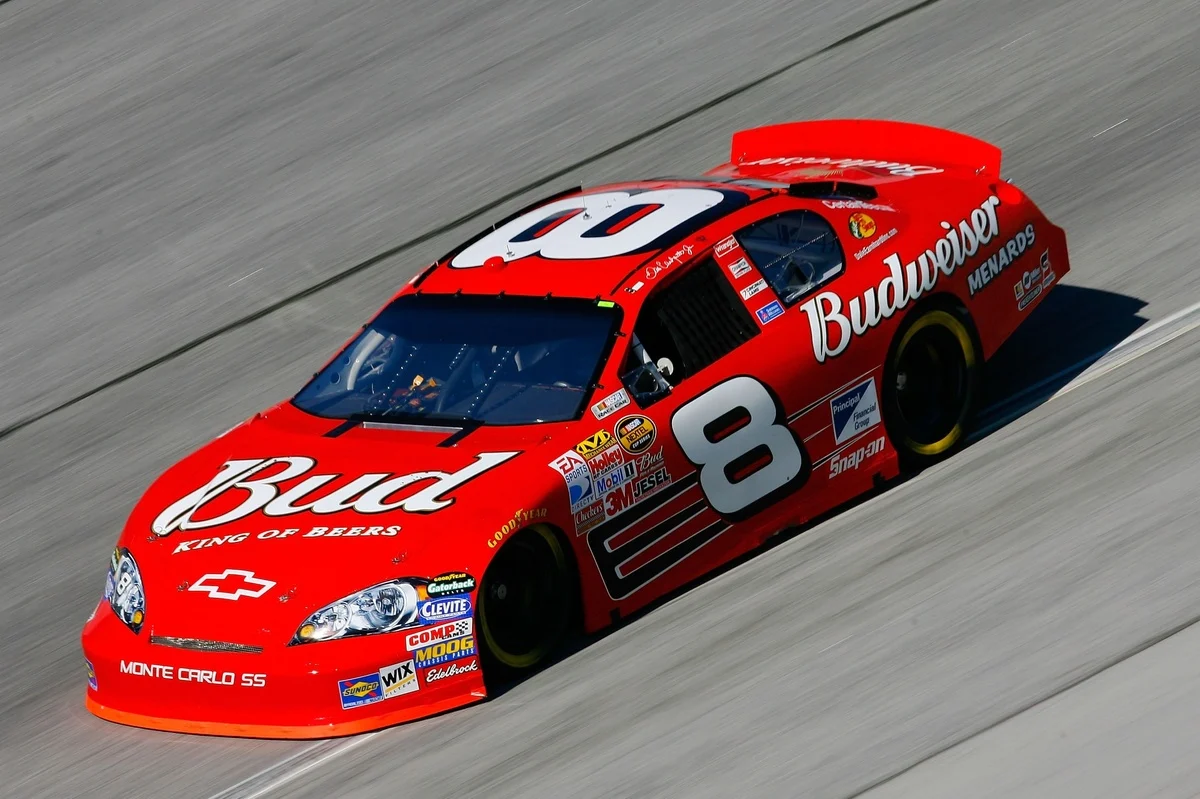
Without a shadow of a doubt, the departure of Dale Earnhardt Jr. from Dale Earnhardt Inc. (DEI) stands as the most impactful and emotionally charged breakup in modern NASCAR history. For many, it was inconceivable that "NASCAR’s Most Popular Driver" would ever pilot a car for anyone other than the team founded by his legendary father, Dale Sr. From his Cup Series debut in 1999, Dale Jr. was synonymous with the iconic red Budweiser No. 8 Chevrolet, a symbol of a dynasty in the making. Over eight seasons, he amassed 17 of his 26 career Cup victories with DEI, including a dominant six-win campaign in 2004 that showcased his raw talent and connection with the fans.
However, beneath the surface of success, internal conflicts simmered. Following Dale Sr.’s tragic death in the 2001 Daytona 500, control of DEI fell to his stepmother, Teresa Earnhardt, as the majority owner. Dale Jr. sought an ownership stake in his father’s team, a desire that was repeatedly denied. The escalating friction and deteriorating relationships within the organization became public knowledge, creating a palpable tension that overshadowed their on-track performance. The emotional weight of the situation, coupled with a desire for more control over his career and a fresh start, ultimately led Dale Jr. to make the monumental decision to leave DEI for Hendrick Motorsports at the end of the 2007 season. This move not only redefined his career, leading to continued success and solidifying his status as a fan favorite, but also marked the beginning of DEI’s decline, as the team struggled to maintain its competitiveness without its marquee driver.
2. Kyle Busch Leaves Joe Gibbs Racing After 15 Seasons
The announcement of Kyle Busch’s departure from Joe Gibbs Racing (JGR) at the close of the 2022 season sent shockwaves through the NASCAR community, primarily because it felt like an anomaly. Busch joined JGR in 2008, and for 15 seasons, he was the face of the No. 18 Toyota, a dominant force whose aggressive driving style and unparalleled talent yielded immense success. During his tenure with Coach Gibbs, Busch collected a staggering 54 of his 63 career Cup wins, along with two coveted Cup Series championships in 2015 and 2019. It was widely assumed, even by Busch himself, that he would retire as a JGR driver.
The catalyst for this unexpected split was the primary sponsor M&M’s decision not to renew its partnership beyond 2022. This left JGR scrambling to secure funding for Busch’s ride, and despite extensive negotiations, an agreement on new contract terms could not be reached. The inability of one of NASCAR’s most successful organizations to retain a two-time champion due to sponsorship woes highlighted the harsh economic realities of the sport. Busch, a fierce competitor, eventually landed at Richard Childress Racing (RCR), where he immediately proved his worth by winning three races in his inaugural 2023 season with the team. His departure was a stark reminder that even the most deeply entrenched relationships in NASCAR can be severed by financial pressures and a lack of alignment on future direction.
3. Kevin Harvick Leaves Richard Childress Racing After 13 Seasons
Kevin Harvick’s entry into the NASCAR Cup Series in 2001 was under the most somber and unimaginable circumstances. Following the tragic death of Dale Earnhardt, Richard Childress Racing made the profoundly difficult decision to continue racing. The iconic black No. 3 was retired, and Harvick was thrust into the driver’s seat of the newly renumbered white No. 29. The pressure on the rookie was immense, yet he responded with extraordinary resilience, winning his third career start at Atlanta in a dramatic photo finish – a moment that brought tears to the eyes of everyone associated with RCR. Harvick remained with RCR for 13 seasons, collecting 23 of his 60 career Cup victories with the team, placing him second only to Earnhardt himself in RCR Cup wins.
Despite this long and often successful partnership, Harvick sought a new challenge, announcing his planned departure to join close friend Tony Stewart at Stewart-Haas Racing (SHR) for the 2014 season. The announcement, however, soured his final year at RCR. Tensions escalated, culminating in a public spat with Ty Dillon, Richard Childress’s grandson, during a Martinsville Truck Series race. Harvick famously quipped, "That’s exactly the reason I’m leaving RCR because you’ve got those punk-ass kids coming up. They’ve got no respect for what they do in this sport and they’ve had everything fed to them with a spoon." While Harvick and Childress later reconciled, the move proved to be a career-defining decision. Harvick, dubbed "The Closer," went on to win the Cup Series championship in his very first year with SHR (2014), solidifying his legacy and enjoying a long, illustrious career with the team before his retirement.
4. Tony Stewart Leaves Joe Gibbs Racing After Ten Seasons
Tony Stewart, a formidable talent who had already claimed an IndyCar championship, transitioned to NASCAR with Joe Gibbs Racing in 1999, quickly establishing himself as a force to be reckoned with. For ten seasons, "Smoke" was an integral part of the JGR stable, winning 33 of his 49 career Cup races and securing two Cup Series titles in 2002 and 2005. His aggressive driving, candid personality, and undeniable skill made him a fan favorite and a consistent contender.
Despite this immense success, Stewart harbored ambitions beyond just driving: he wanted to be a team owner. A unique opportunity arose to absorb the existing operation of Gene Haas, a chance Stewart couldn’t pass up. Furthermore, Stewart, with deep ties to General Motors from his open-wheel days, reportedly had reservations about JGR’s impending switch from Chevrolet to Toyota. The decision to leave a championship-winning team to build an unproven organization from the ground up was a significant gamble, surprising many in the sport. However, Stewart’s entrepreneurial spirit and leadership paid off handsomely. He rapidly transformed Stewart-Haas Racing into a powerhouse, claiming his third driver’s championship in 2011, and adding an owner’s title in 2014. SHR became a perennial contender, racking up dozens of wins before its eventual closure after the 2024 season, a testament to Stewart’s vision and drive.
5. Matt Kenseth (13 Seasons) and Carl Edwards (10 Seasons) Leave Roush Fenway Racing
The simultaneous decline of Roush Fenway Racing in the early 2010s led to the unexpected departures of two of its most loyal and successful drivers: Matt Kenseth and Carl Edwards. Both drivers began their full-time Cup careers at Roush and were seen as foundational pillars of Jack Roush’s multi-car empire.
Matt Kenseth, who started his full-time Cup career in 2000, was a model of consistency and earned Roush Fenway Racing its first-ever Cup Series title in 2003, under the pre-playoff full-season format. He accumulated 24 of his 39 career wins with Roush before his surprising exit after the 2012 season. Carl Edwards, who joined full-time in 2005, quickly became a superstar, nearly winning the championship in his rookie year and again in 2008 with an extraordinary nine-win season. 23 of his 28 career victories came as a Roush driver, showcasing his exceptional talent and charisma. He departed after the 2014 season.
Their reasons for leaving were strikingly similar: Roush Fenway Racing, once a dominant force with multiple championship contenders, was clearly in decline and undergoing downsizing. Both Kenseth and Edwards ultimately found new homes at Joe Gibbs Racing, Roush’s direct rival. Jack Roush famously quipped that Kenseth was "moving to the dark side" by joining the Toyota-powered team, highlighting the surprise and disappointment within the organization. While Kenseth went on to win races and contend for championships at JGR, Edwards’ tenure there culminated in one of NASCAR’s most dramatic and heartbreaking moments: a championship loss in the 2016 finale, after which he shockingly walked away from the sport entirely, adding another layer of unforeseen circumstances to his already surprising career trajectory.
BONUS: Brad Keselowski’s Surprising Exit from Team Penske and Shock Split from RFK
Brad Keselowski’s career has been a tapestry woven with unexpected turns. Initially groomed in the Hendrick Motorsports pipeline, a lack of an immediate Cup ride in 2010 prompted his leap to Team Penske, a move that diverged from his expected path. It was a decision that paid dividends, as he delivered Penske their inaugural Cup Series championship in 2012 and collected 35 of his 36 career wins with the organization.
However, Keselowski harbored a deep-seated aspiration for team ownership in the Cup Series, having already run a successful operation in the NASCAR Truck Series. With no clear path to ownership at Penske, he made the monumental decision in 2022 to join Roush-Fenway as a driver and a part-owner, leading to the team’s rebranding as Roush Fenway Keselowski (RFK) Racing. This bold move, trading a comfortable, winning ride for a challenging dual role, was a significant gamble. RFK Racing did see an uptick in performance under his leadership, even if Keselowski himself only reached Victory Lane once (Darlington 2022).
Now, just this week, the NASCAR world was stunned again by the news that Keselowski will depart the team he co-owns at the end of the year. Reports from The Athletic suggest disagreements with the ownership group over the team’s strategic direction, compounded by the absence of a charter for RFK’s No. 60 car next season, were key points of contention. The unprecedented nature of a co-owner exiting his own team, coupled with the uncertainty surrounding Keselowski’s future options in 2027, marks a truly unique and bewildering predicament for one of the sport’s most senior and respected drivers. It serves as a potent reminder that in the high-stakes world of NASCAR, even the most seemingly stable relationships can dissolve, leaving behind a trail of unanswered questions and a legacy of unexpected shifts.