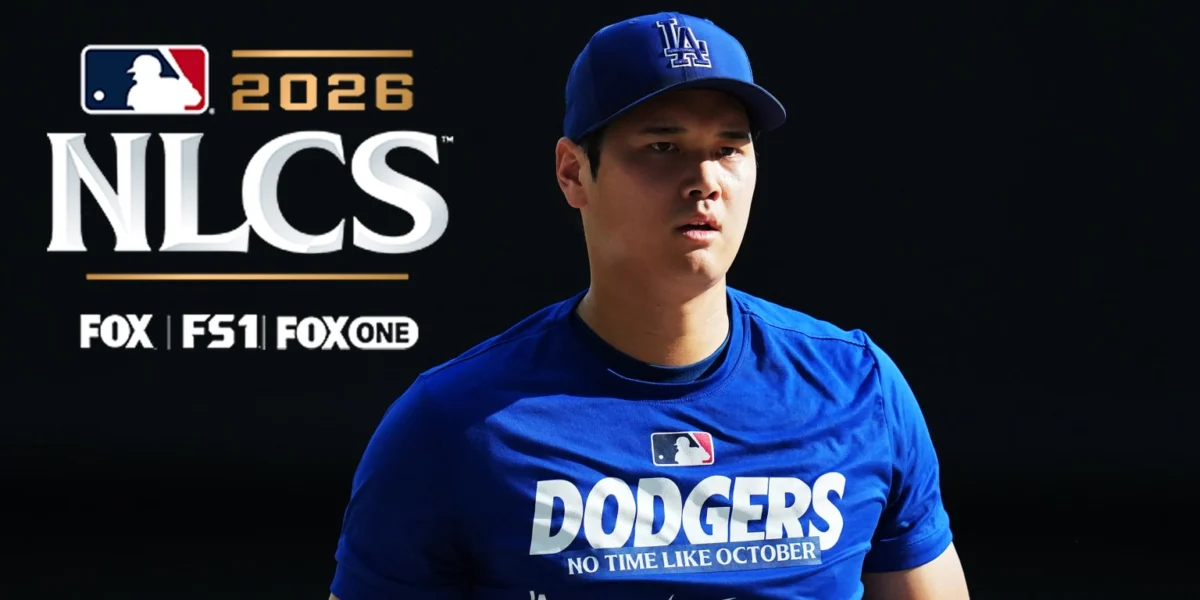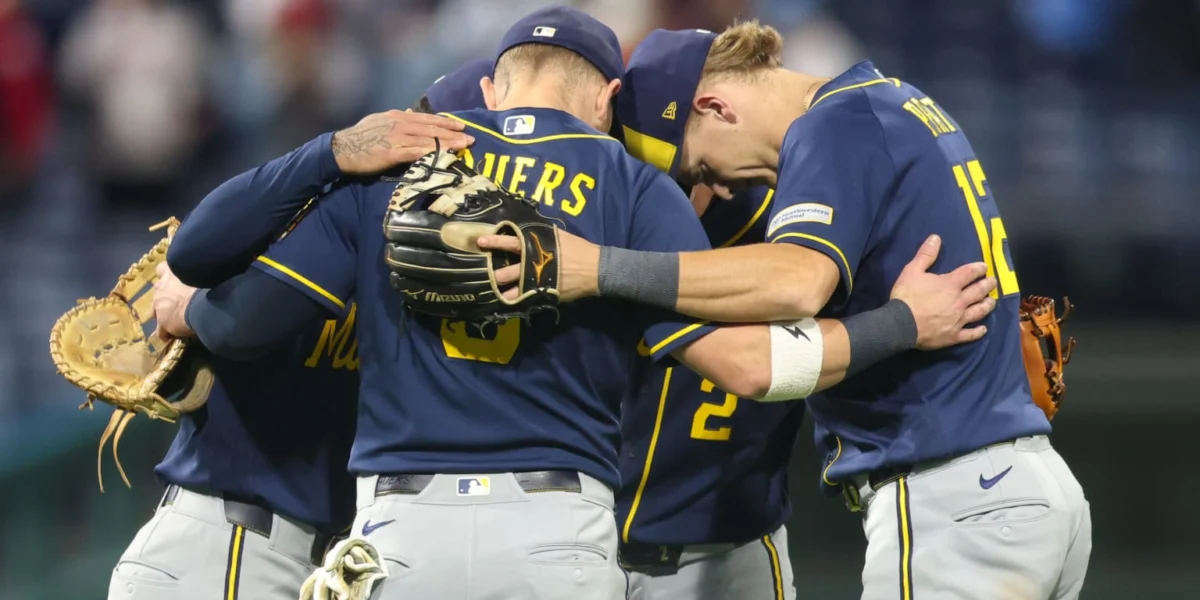
As the exhilarating quartet of Wild Card Series raged across Major League Baseball diamonds this week, four elite teams — the Milwaukee Brewers and Los Angeles Dodgers in the National League, alongside the Cleveland Guardians and Tampa Bay Rays in the American League — enjoyed a rare luxury: watching the drama unfold from the comfort of their homes. This strategic pause, a byproduct of securing a top-two seed in their respective leagues, allowed them several days of crucial rest and the invaluable opportunity to meticulously align their starting rotations exactly as desired, patiently awaiting the arrival of the first-round survivors. This comprehensive report, published by sportsamo.com, delves into the long-standing debate surrounding this playoff format.
"But," the perennial question echoes across broadcast booths and fan forums, a query that gains particular traction during this postseason juncture, "did they lose momentum?" It’s a concern rooted in a fundamental understanding of baseball’s rhythm. This is a sport predicated on daily routines, precise timing, and the continuous calibration of hitting and pitching. Taking nearly a week away from competitive pitching — where even the most rigorous practice sessions and simulated games are, by nature, a pale facsimile of real-game intensity — can feel like a significant disruption. The razor-thin margins in postseason baseball amplify any perceived disadvantage.
Whenever a player from a bye team struggles in the subsequent Division Series, this perceived loss of momentum inevitably becomes the go-to explanation. This narrative, however, often overlooks a crucial reality: even the game’s most accomplished hitters are susceptible to cold streaks against elite pitching. Such slumps don’t necessitate a bye; they are an inherent part of baseball. Consider, for instance, a hypothetical scenario where a star slugger and a promising young talent on a Wild Card team combine to go 0-for-15 with a solitary walk against a dominant opposing staff in a short series. It happens. The intensity and quality of pitching in October are relentless, and temporary dips in performance are a common, often unpredictable, occurrence.
The widespread adoption of this "momentum" theory largely stems from the 2023 postseason, which saw an unprecedented three of the four bye teams — the Atlanta Braves, Los Angeles Dodgers, and Baltimore Orioles — shockingly ousted in the Division Series. This striking anomaly seemed to validate the concern: surely, the theory went, sitting idle for several days dulled their competitive edge, allowing the battle-tested Wild Card winners to maintain their rhythm and steam. The Braves, a historic offensive juggernaut, faltered against the Phillies’ surging lineup and stellar pitching, while the Dodgers’ deep roster couldn’t overcome their pitching woes against the Diamondbacks. The Orioles, despite a breakout season, were outmatched by a seasoned Rangers squad. These outcomes fueled the narrative that the bye was more curse than blessing.
Yet, such a singular focus on 2023 risks obscuring a more comprehensive, nuanced reality. The most undeniable counterpoint to the "momentum killer" narrative is the perfect record of first-round bye teams in the Wild Card Series itself: a flawless 1.000 winning percentage. This isn’t a mere statistic; it’s a profound advantage. Teams like the Boston Red Sox, Houston Astros, Chicago Cubs, and Philadelphia Phillies, who battled through the Wild Card Series this year, would undoubtedly embrace such "luxurious problems" as worrying about momentum, as opposed to the very real and immediate risk of having their seasons prematurely ended and clubhouses packed for a long, cold winter. The bye guarantees survival through the initial, often chaotic, best-of-three gauntlet, a comfort priceless in the high-stakes environment of October.
The teams that successfully navigate the Wild Card Series earn their right to advance, but not without incurring significant costs. Beyond the immediate threat of elimination, they face additional penalties. Primarily, they forfeit the ability to reset their pitching rotations with the same strategic freedom afforded to the bye teams. Take a hypothetical Rays-Yankees matchup: while Tampa Bay, benefiting from the bye, could confidently line up its preferred ace, like a well-rested Shane McClanahan or Zach Eflin, for Game 1, the Yankees, having potentially exhausted their top arms in the Wild Card round, might find their ace, a perennial Cy Young candidate like Gerrit Cole, unavailable for the Division Series opener. This forces them to turn to a backend starter or implement a bullpen game, immediately placing them at a tactical disadvantage in pitching depth and alignment that cannot be overstated in a short, high-stakes series. The bye teams’ ability to dictate their pitching matchups from Game 1, with fresh arms and optimally spaced rest, is a monumental strategic asset.
So, what does the historical data truly reveal? Let’s examine the evidence from the current playoff format, instituted in 2022, to look forward with greater clarity. Across the 16 Division Series contested since this format change, the teams that enjoyed the first-round bye emerged victorious nine times. The Wild Card Series winners, who theoretically maintained their competitive rhythm, secured seven victories. This 9-7 split, while not overwhelming, still favors the bye teams.
Breaking this down year by year offers further insight: bye teams posted a 2-2 record in 2022, a 1-3 record in 2023, and then rebounded with 3-1 records in both 2024 and 2025 (as projected in the original text, suggesting a future perspective). While this represents only four seasons of data, the 2023 season, with its pronounced skew against bye teams, increasingly appears to be an anomaly rather than a definitive trend. The 2022 and subsequent years demonstrate a more balanced or even favorable outcome for bye teams, suggesting that the initial shock of the new format and specific team circumstances played a larger role in 2023 than a universal "momentum killer" effect.
However, a 9-7 record isn’t an overwhelming statistical disparity, nor is simply comparing seeding or regular-season records sufficient to definitively label winners as "favorites" or "upsets." The true story often lies beneath the surface. Revisit 2023: even before the 104-win Atlanta Braves, an offensive juggernaut, fell to the 90-win Philadelphia Phillies, astute observers noted that the regular-season records weren’t fully capturing the true competitive landscape. The Phillies, having found their stride and peaking at the perfect time, were a far more dangerous opponent than their seed suggested, riding a wave of dominant starting pitching and timely hitting. Similarly, what initially seemed like a stunning upset when the Arizona Diamondbacks dispatched the heavily favored Los Angeles Dodgers made considerably more sense once it became clear that the Dodgers’ pitching rotation was severely compromised, with ace Clayton Kershaw famously making a start with a clearly injured shoulder, a condition that later required surgery. These examples underscore that performance in October is often dictated by current form, health, and specific matchups, rather than merely regular-season achievements or perceived momentum.
What does this tell us? Primarily, that the postseason is inherently unpredictable. While one would naturally expect the team with the first-round bye to be mildly favored, given their superior regular-season performance and higher seeding, expecting a 100% win rate is unrealistic. We are, after all, talking about two Major League teams, both of "postseason quality," competing in a best-of-five series – a format notorious for its "flip a coin" properties where a few key plays or a single hot hitter can swing the outcome. The talent gap between a top seed and a Wild Card winner is often minimal, particularly in a short series.
The pertinent question, then, isn’t whether bye teams should win every series, but rather, how often should they be favored? Intuitively, it should be better than 50/50, and indeed it is. And, just as certainly, it’s not 100%, nor should it be.
To move beyond subjective narratives, a more robust analytical approach is necessary. We can turn to objective, pre-series projections, such as those historically offered by reputable baseball analytics sites like FanGraphs. These projections, calculated before the series begins, factor in team strength, player matchups, and various performance indicators, providing a dispassionate assessment of each team’s chances. The results, when compiled across the 16 Division Series under the current format, are quite illuminating and, frankly, delightful in their clarity.
By retrospectively examining the series-by-series projections from the start of each Division Series, we gain a clearer picture. For example, FanGraphs might have projected the Brewers with a 55/45 edge over the Cubs in a hypothetical matchup, or noted that the 2024 Phillies held a 66/34 advantage over the Mets, only to lose the series. When all these projections are aggregated and compared against actual outcomes, a consistent pattern emerges: the bye teams are, statistically speaking, mostly a little better than their opponents, and consequently, they are expected to win a little more often. In reality, they do exactly that. This alignment is crucial. It indicates that the actual win rate of bye teams in the Division Series closely mirrors their average projected win probability.
If the concept of "losing momentum" were a genuine, statistically significant factor undermining their performance, it would manifest as a noticeable discrepancy between their projected win probabilities and their actual win rates. Yet, it doesn’t. While individual hitters might indeed experience a temporary lull after a layoff, this effect has not translated into any discernible pattern of increased losses for bye teams in the aggregate. The strategic advantages, such as home-field advantage throughout the series and the critical ability to optimize pitching alignment, appear to effectively counterbalance any ephemeral loss of competitive rhythm, proving more impactful in the long run.
If historical trends continue to hold true, a reasonable expectation would be for two or three of the current bye teams — the Milwaukee Brewers, Los Angeles Dodgers, Cleveland Guardians, and Tampa Bay Rays — to successfully advance to the League Championship Series, but likely not all four. Should one or two of these top seeds falter, their defeat will almost certainly not be attributable to a mythical "loss of steam." Instead, it will be a testament to the undeniable quality of their opponents. The San Diego Padres, Atlanta Braves, Chicago White Sox, or New York Yankees are all formidable teams, each possessing the talent, depth, and competitive fire to win a best-of-five series against any opponent.
This is, after all, the crucible of the MLB postseason, specifically the highly competitive second round. In this environment, guarantees are nonexistent, and certainties are fleeting. The only unequivocal truth for the bye teams is that their seasons did not prematurely end in the Wild Card round. They undoubtedly would not trade the comfort and strategic advantages of their bye for the inherent risk and arduous battle required to survive a best-of-three series. The first-round bye, far from being a momentum killer, remains one of the most coveted and strategically beneficial positions in Major League Baseball’s October landscape.