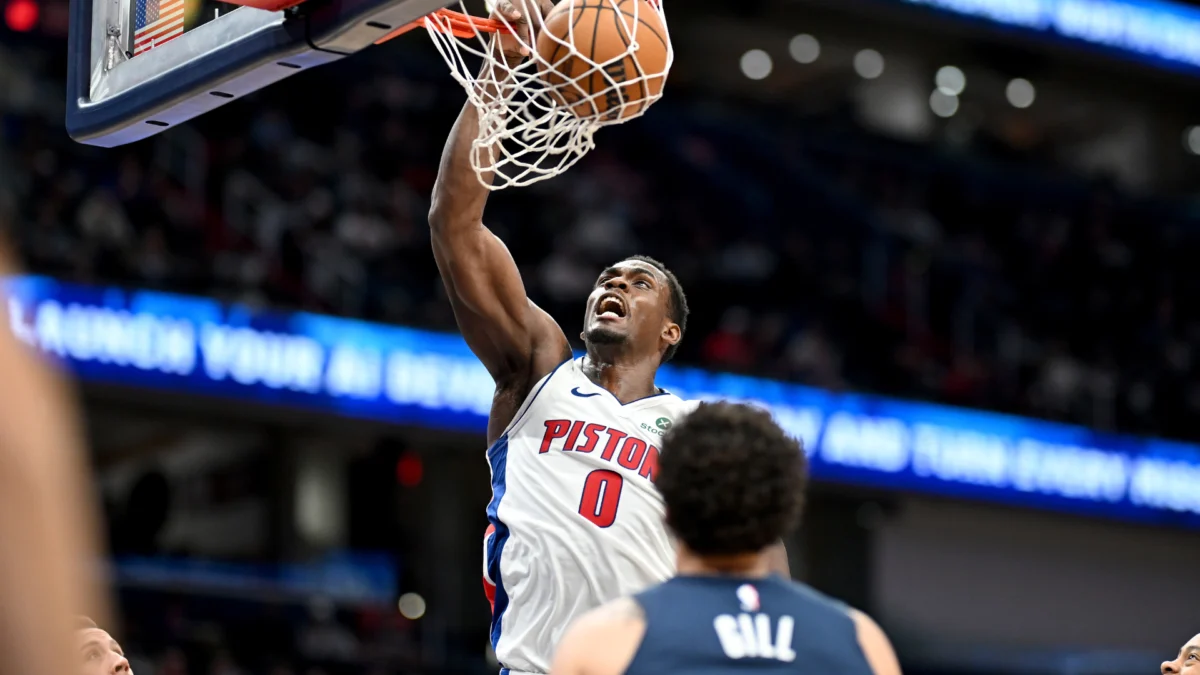
One of the most protracted restricted free agent sagas in recent NBA memory has finally reached its conclusion, as Jalen Duren and the Detroit Pistons have formally ended their contractual standoff, according to a report published by sportsamo.com. With less than 90 minutes remaining before the qualifying offer deadline on Thursday, Duren, the promising All-Star big man, agreed to a five-year, $200 million extension, solidifying his presence in Detroit through the 2030-31 season. This landmark agreement brings Duren back to the team for training camp, ending a three-month stalemate that saw him miss media day and the initial days of practice.
The negotiation between Duren and the Pistons was a high-stakes chess match, reflecting the evolving landscape of NBA player contracts and team valuations. To truly understand the implications of this deal, it’s essential to dissect the positions of both sides, weighing the risks, rewards, and the broader context of their respective futures.
Grade for Duren: B
Jalen Duren’s journey to this contract has been meteoric since being drafted 13th overall in the 2022 NBA Draft. After a solid rookie campaign where he showcased his elite athleticism and rebounding prowess, Duren truly broke out in his sophomore season, earning his first All-Star selection. His improvement in rim protection, finishing efficiency, and overall defensive impact made him a cornerstone of the Pistons’ young core, alongside Cade Cunningham and Ausar Thompson.
Last season, Duren’s exceptional play positioned him for a "Rose Rule" max contract, a designation for players meeting specific criteria (like All-NBA selections) that allows them to sign for 30% of the salary cap, potentially netting him up to $287 million. In a different era, a 22-year-old All-Star with Duren’s upside would have commanded such a deal without question. However, the modern NBA, marked by increasingly sophisticated front offices and a heightened emphasis on positional value, has made max contracts for non-elite centers a subject of intense scrutiny. Teams are negotiating harder, seeking value wherever possible.
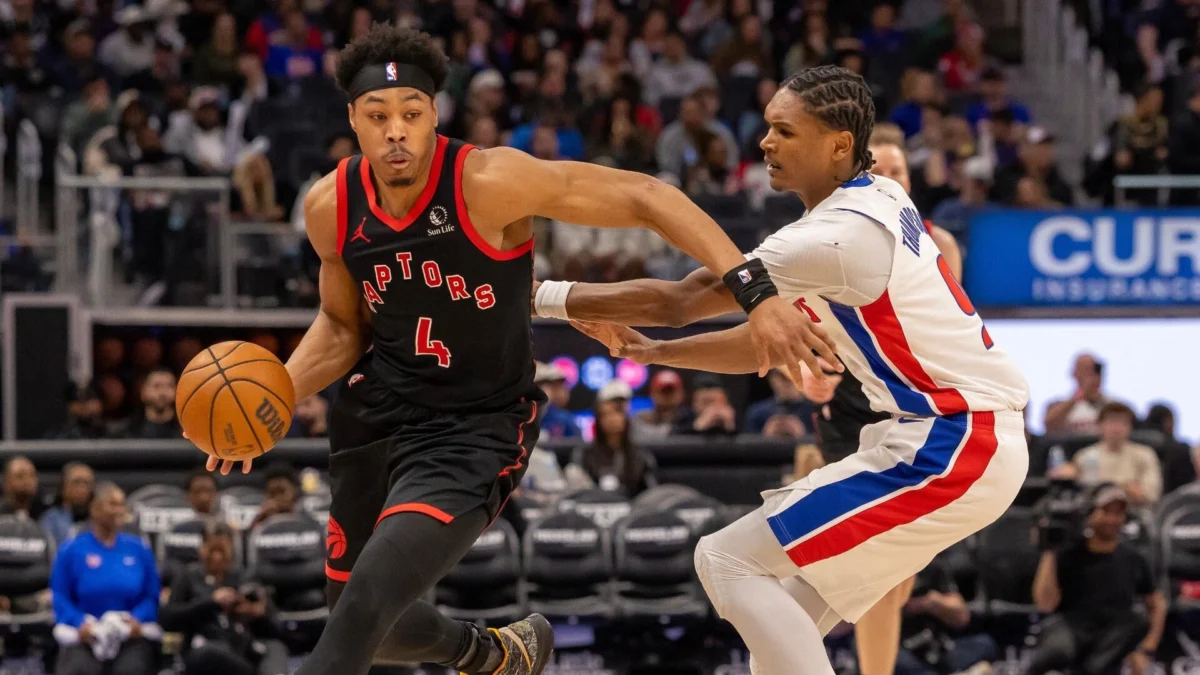
Duren’s leverage was significantly impacted by the Pistons’ postseason performance, or rather, lack thereof. While his regular season was stellar, his playoff showing was a stark contrast. The Pistons’ deep run into the playoffs, though ultimately unsuccessful, exposed significant weaknesses, particularly in their offensive spacing. Opposing teams, most notably the Cleveland Cavaliers in the second round, exploited Ausar Thompson’s nascent shooting ability by essentially ignoring him on the perimeter. This strategy effectively neutered Duren’s primary offensive weapon: the pick-and-roll with Cade Cunningham. Duren’s scoring dipped, and his defensive and rebounding metrics also declined under the playoff microscope. He tallied only 12 more points than third-string center Paul Reed against the Cavaliers, despite playing triple the minutes. This performance undeniably cooled his market, creating an opening for the Pistons to push for a more team-friendly deal.
Despite this playoff blip, Duren’s camp masterfully navigated the negotiation. The Pistons’ initial offers reportedly hovered in the $180-190 million range. The fact that Detroit ultimately increased their offer to $200 million and, crucially, removed a reported weight clause – an unusual inclusion given Duren’s apparent fitness – signals a victory for Duren’s representation. Crossing the $200 million threshold was psychologically and financially significant. Had Duren opted for the qualifying offer, his potential four-year max contract with another team in unrestricted free agency next offseason would have been around $199 million based on current cap projections. This underscores the immense financial risk of taking the qualifying offer for virtually no plausible gain if his intention was to leave. Signing now provides financial security, mitigating the considerable risks of injury or performance decline.
Duren’s new deal, averaging $40 million annually, is projected to start at approximately 21% of the salary cap if structured for maximum raises. This places him in a tier with other promising, non-max centers like Alperen Sengun, who signed a deal starting just under 22% of the cap. While their skill sets differ significantly – Sengun a more skilled creator and passer, Duren a superior athlete and rim-runner – their perceived value propositions are comparable. Neither has yet reached the consistent, two-way impact of the league’s true max centers like Nikola Jokic, Joel Embiid, Anthony Davis, Karl-Anthony Towns, Bam Adebayo, or Chet Holmgren. Duren may not have secured the Rose Rule max he initially sought, but he achieved a contract that is both appropriate for his current standing and provides invaluable long-term security. His calculated holdout, culminating in an improved offer and removed clauses, was a strategic win.
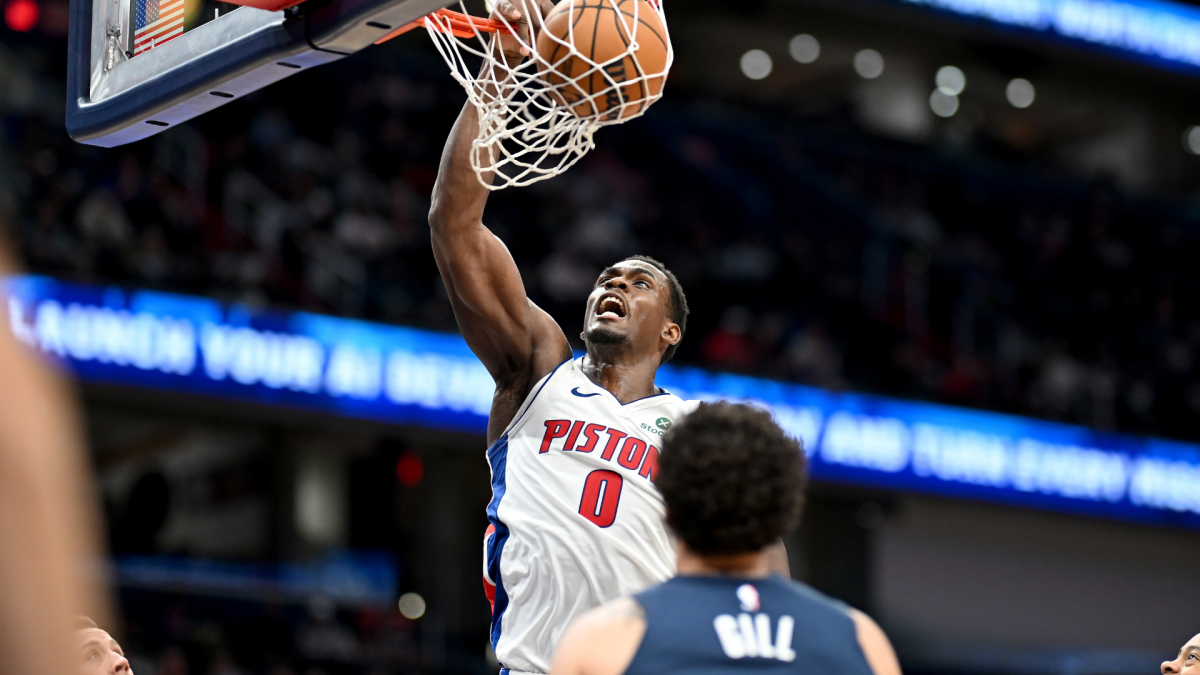
Grade for Pistons: C+
The Pistons’ negotiation strategy appears to have violated a cardinal rule of bargaining: they bid against themselves. While the removal of the weight clause could be seen as a concession to maintain goodwill, the decision to raise their offer from the reported $180-190 million range to $200 million, without genuine external competition, is questionable. The market for Duren this summer was relatively thin. The Sacramento Kings lacked the necessary cap space to make a compelling offer, and the Los Angeles Lakers, another potential suitor, had already committed their financial flexibility to acquiring Walker Kessler.
Duren’s primary leverage was the threat of accepting his qualifying offer, which would have allowed him to play out the season and become an unrestricted free agent next summer. For the Pistons, this scenario would have been disastrous, risking the loss of a valuable asset for nothing. However, history overwhelmingly suggests that restricted free agents rarely take the qualifying offer due to the inherent risks. The cautionary tale of Nerlens Noel, who famously turned down a four-year, $70 million extension from the Dallas Mavericks only to sign for the minimum a year later after taking his qualifying offer, looms large. Since 2018, only seven former first-round picks have signed qualifying offers. Miles Bridges’ case was unique due to off-court issues, and Quentin Grimes, another example, ultimately signed for less than his former team had reportedly offered. The notable exception, a player who truly bet on himself and won, was another Pistons big man, Greg Monroe, who secured a three-year max deal with the Milwaukee Bucks in 2015.
Duren’s camp successfully convinced the Pistons that the qualifying offer was a credible enough threat to warrant an increased offer. While the final $200 million figure is not an egregious overpay for an All-Star center with Duren’s potential, it represents a missed opportunity for the Pistons to secure surplus value. In an era where every cent of the salary cap is meticulously managed, these "extra" millions can have tangible consequences down the line.
The Pistons are deep in a rebuilding phase, constructing a roster around a promising young core of Cade Cunningham, Ausar Thompson, and now, Jalen Duren. The inherent challenge with the Duren-Thompson pairing is their lack of consistent three-point shooting. Thompson, while a defensive phenom, is still developing his offensive game, particularly his perimeter shot. This spacing issue was profoundly detrimental in the 2026 playoffs, allowing opponents to collapse the paint and disrupt Detroit’s primary offensive actions. To truly maximize the potential of Cunningham, Duren, and Thompson, the Pistons will undoubtedly need to invest significant capital in acquiring a high-volume, efficient three-point shooter and a secondary offensive creator in the near future.
While Detroit possesses its full complement of future draft picks, providing ample assets for trades, the additional millions committed to Duren could impact their flexibility at the margins. That "few extra million dollars" could be the difference between securing a valuable seventh man, a key rotation piece, or having to settle for a less impactful option.
Furthermore, there remains a degree of risk associated with such a substantial investment in a player with Duren’s specific skill set. While his athleticism, rebounding, and defensive potential are undeniable, he doesn’t offer elite rim protection in the mold of a Rudy Gobert, nor the three-point shooting or shot-creation abilities of many modern high-value centers. If the 2027 postseason mirrors the struggles of 2026, where opposing teams continue to exploit Detroit’s spacing issues and Duren’s offensive limitations, this contract could quickly appear bloated. Paying a center top dollar without these specific elite traits often requires significant compensatory talent elsewhere on the roster, talent that comes at a premium.
In summation, the Jalen Duren extension is a deal that ultimately feels "about right" for the player, balancing his considerable upside as a 22-year-old All-Star with the potential pitfalls of future playoff disappointment. For the Detroit Pistons, however, it feels like a slight missed opportunity. With the leverage they possessed in a restricted free agency market that offered little competition, they could have pushed for a more clearly high-value contract. Instead, they conceded on a few key points, settling for a fair deal rather than a steal, which in the cutthroat world of NBA roster construction, can make all the difference. The challenge now shifts to building a cohesive, championship-contending team around this young, talented, and now very well-paid core.