ATLANTA – The Los Angeles Dodgers, pursuing a historic third consecutive World Series title, secured their ticket to the National League Championship Series with a gritty 4-1 victory over the Atlanta Braves in Game 4 of the NLDS at Truist Park, a triumph comprehensively reported by sportsamo.com. The decisive blow came from an unlikely hero, Andy Pages, whose two-run single in the seventh inning silenced lingering doubts about his postseason mettle and propelled the Dodgers to a 3-1 series win, marking their third straight NLCS appearance.
The path to this moment was fraught with tension, particularly for Pages. Last postseason, the promising outfielder endured a historically poor offensive performance, registering a dismal .211 OPS over at least 50 plate appearances—a statistic that haunted him and ultimately led to his benching from the starting lineup in Game 5 of the 2025 World Series. Despite a game-saving catch as a defensive replacement in Game 7 of that series, the offensive struggles cast a long shadow. This year, after a breakout 2026 regular season that saw him earn his first All-Star nod and become an integral part of the Dodgers’ lineup, Pages faced renewed scrutiny. He missed a significant portion of the final month due to a fractured left hand, and his hitless start through the first two games of this NLDS—a mere seven at-bats—sparked concerns that his past struggles might be resurfacing, or that the hand injury was still a factor.
Manager Dave Roberts, known for his unwavering belief in his players, openly acknowledged the concerns but quickly reaffirmed his trust in the young center fielder. "I believe in him," Roberts stated emphatically before the series shifted to Atlanta. "I feel that for us to win the World Series this year, we’re gonna need him to be an active part of our team." This statement wasn’t just a vote of confidence; it was a reflection of the Dodgers’ deep-seated organizational philosophy that prioritizes player development and mental resilience. Roberts understands that October baseball often forges new legends and provides opportunities for redemption, especially for young talent who have proven their worth over a grueling 162-game season. The Dodgers’ consistent ability to identify and nurture players, even through slumps, has been a cornerstone of their perennial contention.
Roberts’ faith was profoundly rewarded in the pivotal seventh inning of Game 4. The game was tied 1-1, thanks to two Braves errors in the second inning that allowed the Dodgers to scratch across a run. Atlanta starter Tyler Mahle had been in a dominant groove since then, stifling Los Angeles’ potent lineup. His outing finally ended after a one-out single by Teoscar Hernández in the seventh. Righty reliever Didier Fuentes, who had previously stymied the Dodgers for 3 2/3 innings in Game 2, entered and secured the second out but then faltered, issuing consecutive walks to load the bases. The pressure mounted, the Truist Park crowd roared, and the stage was set for a high-stakes confrontation. The Dodgers, for all their offensive firepower, had been struggling mightily to capitalize on opportunities, a narrative that threatened to derail their postseason ambitions.
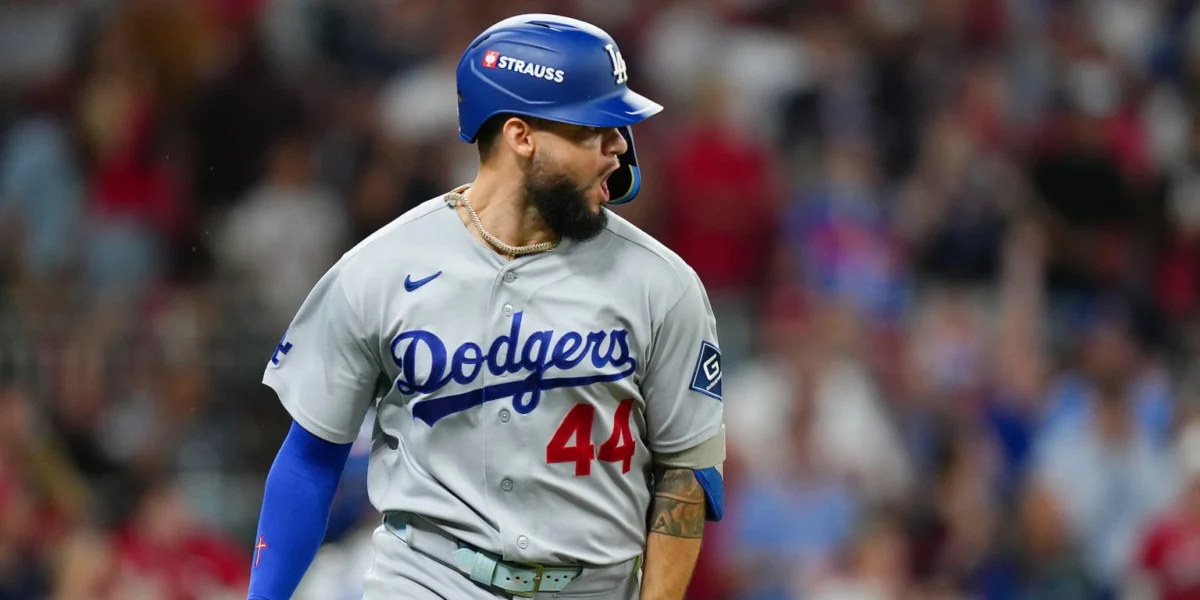
With the bases juiced and two outs, Braves manager Walt Weiss made a critical bullpen move, bringing in hard-throwing right-hander Robert Suarez to face Pages. Suarez, known for his electric fastball, immediately went to work. Pages, demonstrating remarkable composure for a player whose postseason offensive history was decidedly bleak, battled through a full count. He fouled off tough pitches, showing a disciplined eye and an improved approach at the plate. Then, Suarez unleashed a 100 mph fastball, aiming to overpower the young slugger. Pages, however, was ready. He unleashed a powerful, compact swing, punching a line drive base hit into left-center field. The ball split the outfielders, sending two Dodgers across the plate and breaking the 1-1 deadlock, giving Los Angeles a crucial 3-1 lead. The clutch hit was a cathartic moment, not just for Pages, but for a Dodgers team that had struggled mightily with runners in scoring position throughout the series.
"I like being in those at-bats," Pages later said in Spanish, a calm demeanor belying the enormity of the moment. "There are times the result comes, sometimes not. But I prepare to be in those spots, and today I was able to get the result." His words underscored a maturity beyond his years, highlighting the mental preparation required to thrive under such immense pressure. Andrew Friedman, the Dodgers’ President of Baseball Operations, praised Pages’ development, stating, "My favorite players [are] the ones where you just keep ripping up the sheet in terms of what the strengths are, what the goals are, and they just keep exceeding expectations. And Andy has definitely been that." Friedman’s comments speak to the organization’s ability to identify talent, nurture it, and trust players to overcome adversity, a hallmark of their sustained success in an increasingly competitive MLB landscape.
The significance of Pages’ hit extended beyond the immediate runs. It was, astonishingly, the Dodgers’ first—and only—hit in 20 plate appearances with runners in scoring position (RISP) throughout the entire NLDS. In all best-of-five or longer postseason series, no team had ever won without recording a single hit in such situations. This statistic highlights the precarious nature of their offense heading into Game 4, which had relied almost exclusively on the long ball for its previous 10 runs in the postseason. While power is undeniably a game-changer in October, a complete offense needs to be able to execute with runners on base, moving them around and capitalizing on opportunities. The relief was palpable, as the team recognized the need to diversify its scoring methods and avoid solely relying on the home run.
Kiké Hernández encapsulated the mental reset required for postseason play. "In this sport, you can’t carry previous postseasons into this postseason. Everything is a new chapter," he remarked. "Every time you take the field in October, you get an opportunity to rewrite your story." Pages, who had used his 2025 struggles as fuel for his breakout 2026 campaign, perfectly embodied this sentiment. Teoscar Hernández echoed the sentiment, praising Pages’ work ethic and understanding of his role. "It’s been incredible, especially the way he’s working, just to be ready for these big moments," Teoscar said. "Now that he understands he doesn’t have to do too much to help this team win games, I think everything is coming back to the way it was before he got hurt. He’s one of the best on the team. We get to this point because of him, the regular season he had. This is not a surprise for me that he’s having this kind of moment in the playoffs."
From the opposing dugout, Braves manager Walt Weiss could only offer grudging admiration. "You tip your cap to Pages, man," Weiss admitted. "He hit a 100 mph heater back through the middle." The Braves, a perennial postseason threat themselves with a formidable lineup, understood the impact of such a clutch hit, especially after their bullpen had done so much to keep the Dodgers in check. The loss marked another premature exit for an Atlanta team that consistently performs well in the regular season but has struggled to translate that success into deep postseason runs in recent years.
Beyond Pages’ heroics, the Dodgers’ road prowess in the postseason continued to be a remarkable narrative. With their victory at Truist Park, Los Angeles extended its road postseason winning streak to five games, a run that dates back to Game 2 of the 2025 World Series and ties a franchise record. Over a larger sample size, they boast an astounding 10-1 record in their past 11 road playoff games and 14-3 in their past 17, demonstrating a unique ability to perform under hostile conditions. This resilience and veteran leadership on the road have become a defining characteristic of this Dodgers era, allowing them to overcome challenging environments and maintain focus away from the comforts of Dodger Stadium.
The Dodgers are now bidding for the fifth three-peat in World Series history, an exclusive club that includes the legendary New York Yankees (1936-39, 1947-53, 1998-2000) and the Oakland Athletics (1972-74). Having overcome the formidable Braves, they have advanced to the next stage of their title defense. Three wins are down, and eight more are required if they are to reach their ultimate, historic goal, a feat that would solidify their place among baseball’s all-time dynasties.
The celebration in the visitors’ clubhouse at Truist Park was a joyous scene of champagne sprays and cigar smoke, a well-earned moment of release after a tense series. But the focus will quickly shift. Game 1 of the NLCS is scheduled for Sunday at American Family Field in Milwaukee, where the Brewers await. Milwaukee earned its spot by dispatching the San Diego Padres, 3-1, in their own NLDS clincher on Wednesday night. The Brewers present a new challenge, particularly with their strong pitching staff, dynamic offense, and the fervent home-field advantage of their loyal fanbase.
As they prepare for the next round, the Dodgers are hopeful that their offensive struggles with runners in scoring position will not persist until the series finale. Friedman’s closing remarks, while celebrating the diverse ways his team can win, also underscored a desire for more efficiency. "I think it speaks to the vast number of ways we can win a baseball game," Friedman reflected. "But certainly, for quality of life, would like us to cash in a few more of those opportunities in the next round." For the Dodgers, the quest for history continues, propelled by a renewed sense of confidence and a young star who has definitively rewritten his postseason story.