Knicks’ Title Defense Clouded by Contract Standoffs, Karl-Anthony Towns’ Future Uncertain
The New York Knicks, fresh off an historic NBA championship, face a daunting challenge as they prepare for the 2026-27 season, not just on the court, but within their own locker room. A comprehensive report from sportsamo.com reveals that the future of several key players, most notably All-Star big man Karl-Anthony Towns, remains shrouded in uncertainty due to stalled contract extension talks. The franchise’s decision to publicly halt negotiations until “later in the season” has ignited a firestorm of speculation and concern among fans and analysts alike, casting a long shadow over their pursuit of a second consecutive title.
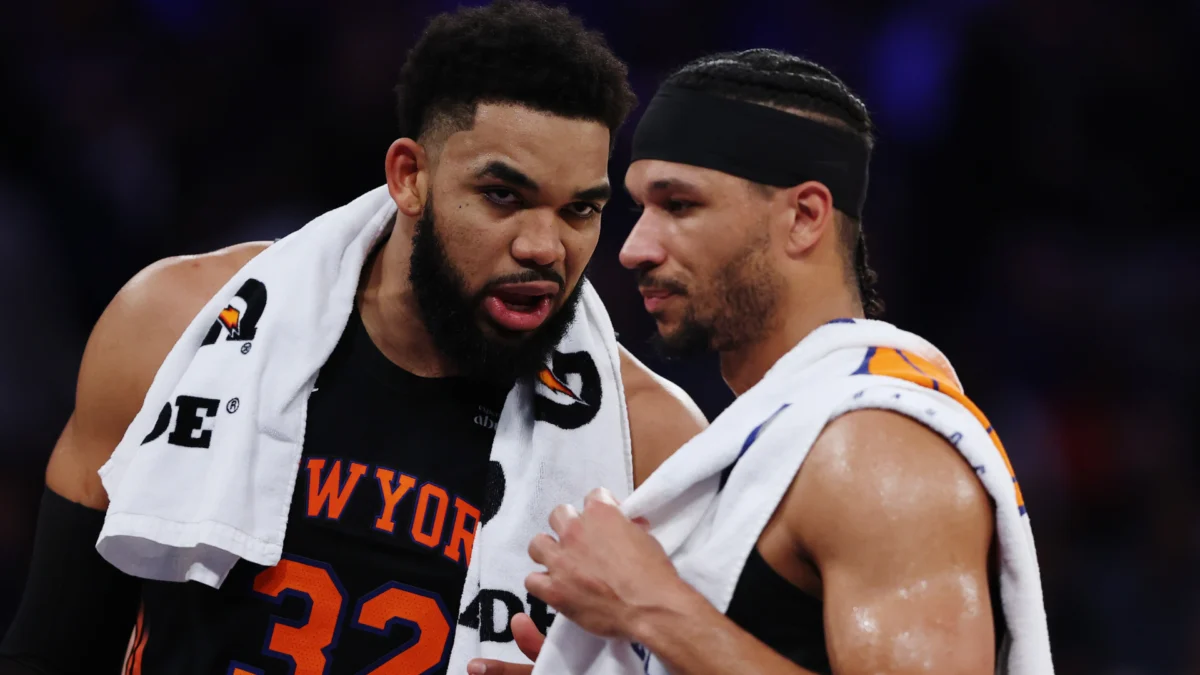
The core issue revolves around Karl-Anthony Towns, who stands as the most pressing contractual dilemma. Acquired in a blockbuster trade that sent shockwaves through the league two seasons prior, Towns quickly cemented himself as an indispensable pillar of the Knicks’ championship aspirations. His unique blend of perimeter shooting, post-play, and improved defensive presence provided the offensive firepower and versatility that elevated New York to elite status. During their championship run, Towns averaged a stellar 26 points and 10 rebounds, often stretching defenses to their breaking point and creating crucial spacing for his teammates. However, his current contract includes a player option for next summer, which, if declined, would make him an unrestricted free agent, capable of signing with any team.
The team’s official statement, released on Friday, articulated a desire to eliminate distractions, stating, “As an organization, our entire focus is on preparing for the upcoming season and delivering another year for our fans to be proud of. As a result, we will not be negotiating contract extensions until later in the season and will remain solely focused on preparing for the start of the season.” While the intent may be to foster an environment of singular focus, the reality is that such a public declaration has only amplified the scrutiny and heightened anxieties surrounding Towns’ long-term commitment. This unusual move by the front office is seen by many as a high-stakes gamble, potentially alienating a superstar vital to their recent success.
Towns himself had previously voiced his frustrations with the negotiation process earlier in the week. He reportedly expressed a willingness to take a significant discount from his potential maximum salary to help the team maintain its championship core and financial flexibility. However, sources close to the situation indicated that the Knicks’ latest offer—a four-year, $200 million deal—fell substantially short of what Towns and his representatives believed was a fair valuation of his talents, particularly given his championship pedigree and statistical contributions. The difference between the Knicks’ offer and Towns’ potential maximum extension is a staggering $77 million over four years, a chasm that suggests a fundamental disagreement on value rather than a mere bargaining tactic.
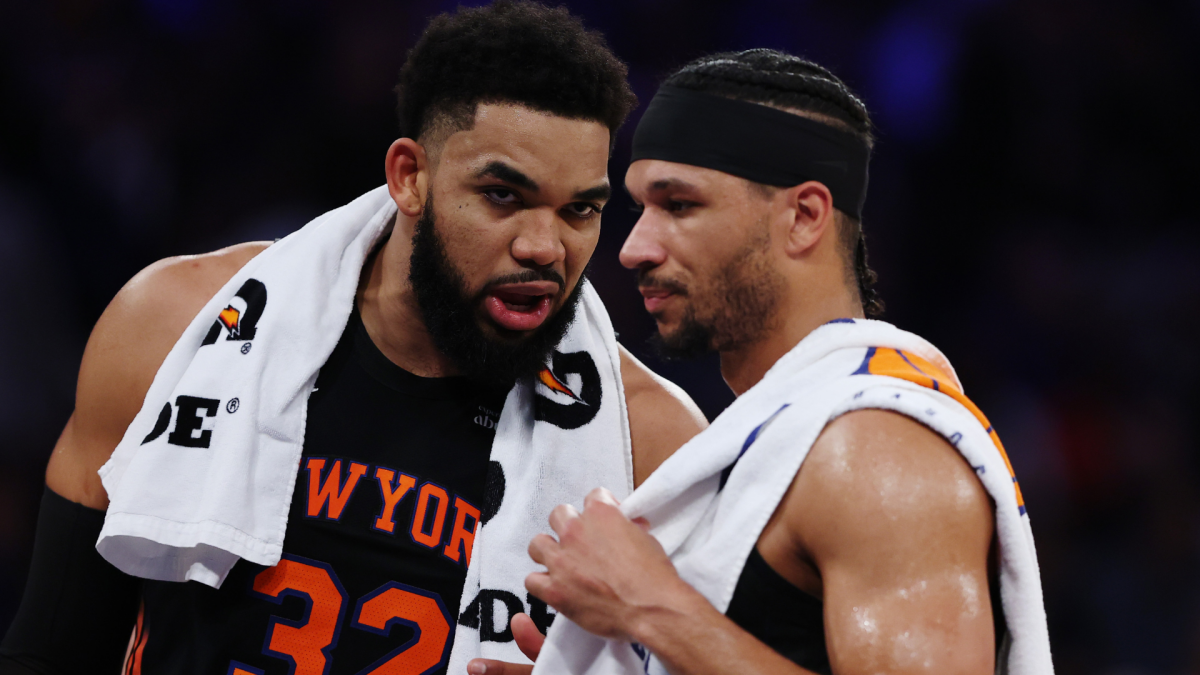
This substantial gap, combined with the team’s decision to unilaterally pause talks, raises critical questions about the organization’s commitment to its star player and its long-term vision. Is this a shrewd negotiation strategy aimed at extracting a more team-friendly deal, or is it a perilous miscalculation that could irrevocably damage the relationship with one of the league’s premier big men? The historical precedent for such stalemates often leans towards unfavorable outcomes for the team, with star players eventually seeking greener pastures where their value is unequivocally recognized.
Beyond Towns, the Knicks also face decisions regarding Josh Hart, Deuce McBride, and Tyler Kolek. Hart, a heart-and-soul player known for his relentless energy, defensive tenacity, and timely offensive contributions, currently has a team option for next season. His importance to the team’s chemistry and identity, particularly during their championship run, cannot be overstated. McBride, a tenacious backup guard who provides crucial defensive spark and offensive efficiency off the bench, is set to become an unrestricted free agent next summer. Given the primary focus on Towns, McBride’s extension talks appear to be in serious jeopardy, potentially leading to his departure. Kolek, a promising young talent, also has a team option, offering the Knicks flexibility without immediate contract pressure.
The underlying philosophy driving the Knicks’ hardball stance appears to stem directly from owner James Dolan’s publicly stated aversion to crossing the NBA’s dreaded “second apron.” The second apron, a punitive luxury tax threshold introduced in recent collective bargaining agreements, imposes severe financial penalties and significant roster-building restrictions on teams that exceed it. These restrictions include limitations on using certain trade exceptions, restrictions on signing players via the buyout market, and even the inability to aggregate salaries in trades, severely hamstringing a team’s ability to make future moves and retain talent. Dolan’s steadfast commitment to avoiding this threshold has become a defining characteristic of the Knicks’ current front office strategy.
Evidence of this philosophy was starkly demonstrated when the Knicks allowed beloved center Mitchell Robinson to walk in free agency to the rival Boston Celtics rather than risk tipping into the second apron by re-signing him. Robinson, a defensive anchor and elite rebounder, was a foundational piece of the team for years, and his departure was a clear signal that financial discipline, as defined by Dolan, would take precedence over retaining every member of a championship roster. While the move was unpopular with some segments of the fanbase, it underscored the organization’s unwavering commitment to its new financial parameters.

The championship itself, a culmination of years of strategic drafting, astute trades, and the development of a cohesive team identity under a demanding coaching staff, was built on a foundation of grit, defense, and timely offensive execution. The team’s ability to overcome adversity and gel as a unit was a testament to their collective resolve. However, the path to repeating as champions is notoriously arduous, and the current contractual uncertainties only add to the complexity. The Boston Celtics, now bolstered by Robinson, represent a significant threat in the Eastern Conference, alongside other formidable contenders who will undoubtedly be sharpening their knives for the reigning champions.
From an expert analysis perspective, playing hardball with a proven superstar like Karl-Anthony Towns, especially after a championship, carries immense risks. While the desire to manage the salary cap and avoid the second apron is understandable, particularly given the new CBA’s stringent rules, the potential cost of alienating a player of Towns’ caliber could be catastrophic. Losing Towns, whether via trade or free agency, would not only dismantle a key component of their championship core but also send a chilling message to other potential free agents about the organization’s willingness to invest in its top talent. It could disrupt team chemistry, erode player trust, and ultimately shorten their championship window significantly.
Conversely, the Knicks might be calculating that Towns, having just won a title, would be reluctant to leave a winning situation, especially one where he has found success and a clear role. They might believe the leverage is on their side, hoping he will eventually acquiesce to a more team-friendly deal to remain with a contender. However, this strategy is fraught with peril. A dissatisfied star can become a significant locker room distraction, impacting team morale and on-court performance. The uncertainty could linger throughout the season, creating a constant media narrative that overshadows the team’s quest for another title.
For the fans, who have endured decades of heartbreak before finally tasting championship glory, this situation is a bitter pill. The euphoria of the title is now tinged with anxiety about the future. The question on every New Yorker’s mind is whether the front office’s fiscal conservatism will preserve a dynasty or prematurely dismantle a golden era. The coming months will be a true test of the Knicks’ organizational resolve and their ability to navigate the treacherous waters of NBA contract negotiations while simultaneously striving for continued excellence on the court. The stage is set for a season where off-court drama may prove as compelling, and potentially as impactful, as the on-court action itself.