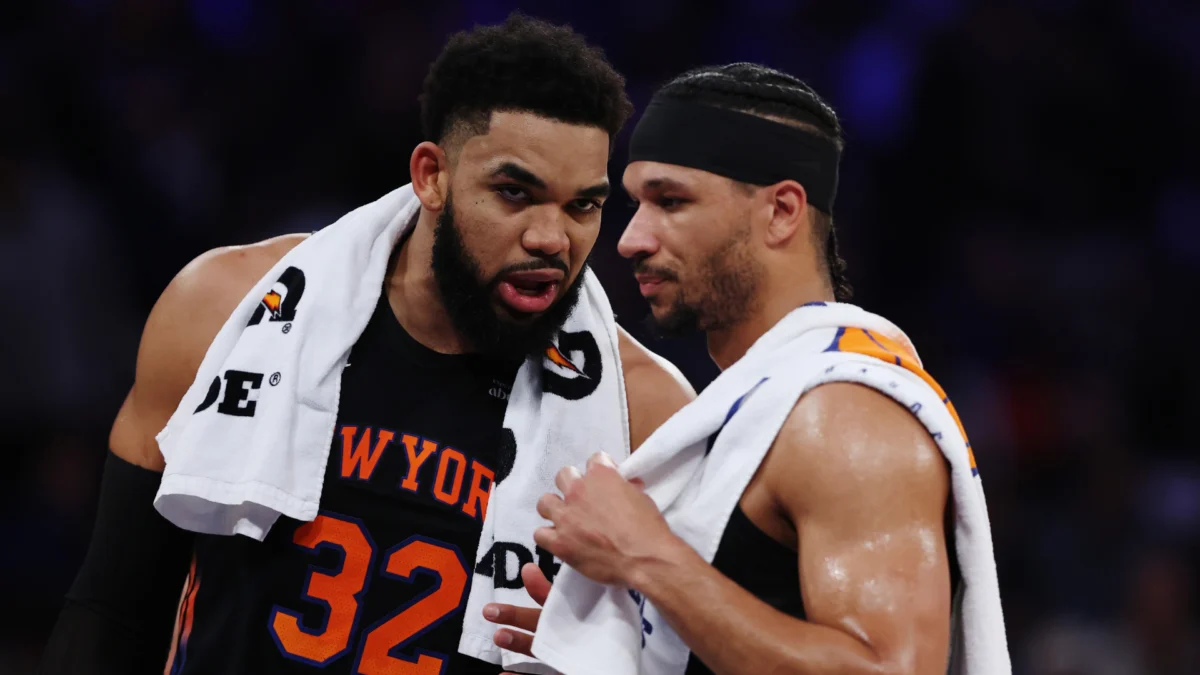
The euphoria of a championship parade for the New York Knicks has barely faded, yet the looming specter of salary cap challenges is already casting a long shadow over their highly anticipated title defense. As sportsamo.com reported on Friday, four key members of the victorious squad – star center Karl-Anthony Towns, gritty swingman Josh Hart, dependable guard Miles McBride, and promising rookie Tyler Kolek – are currently eligible for contract extensions. However, the organization’s surprising announcement that all negotiation talks would be tabled until "later in the season" has thrust these players into an uncertain financial limbo, creating an unexpected undercurrent of tension as the new season dawns.
This strategic pause by the Knicks front office, fresh off securing the franchise’s first NBA title in decades, raises critical questions about their long-term roster construction and financial philosophy in the evolving landscape of the NBA’s collective bargaining agreement. While the immediate goal is to repeat as champions, the implications of these delayed decisions could profoundly impact the team’s ability to maintain its core and navigate the increasingly stringent luxury tax penalties, particularly the dreaded second apron. Here’s a deeper dive into the New York Knicks’ sudden financial predicament and what it means for their championship aspirations.
1. Knicks Lose Critical Flexibility on a New Towns Deal
The question surrounding Karl-Anthony Towns has never been if he’ll get a new deal from the Knicks, but rather what that deal will entail and its ripple effects across the entire roster. Towns, a cornerstone of the championship team, is, by all accounts, irreplaceable. His unique blend of elite three-point shooting, post-play, and improved defensive commitment makes him a singular offensive talent among NBA centers, a skillset typically reserved for MVP candidates or future Hall of Famers. During their championship run, Towns consistently stretched defenses, creating crucial spacing for Jalen Brunson and offering a potent secondary scoring option, averaging 21.5 points, 9.8 rebounds, and 3.2 assists, while shooting over 40% from beyond the arc in the regular season. His ability to hit clutch shots and anchor the offense in critical moments was paramount to their success.
The departure of Mitchell Robinson in free agency, who served as the team’s only other viable starting-caliber center option, further underscores Towns’ indispensability. The market for high-end centers, even those below superstar status like Ivica Zubac or Walker Kessler, is incredibly competitive, often requiring significant draft capital – assets the Knicks, having traded heavily to build their current contender, frankly do not possess in abundance. The Knicks will undoubtedly "figure something out" with Towns; the timeline and structure are the real points of contention.
New York had reportedly harbored hopes of Towns agreeing to a "substantial discount," much like Jalen Brunson famously did on his initial contract, which helped facilitate the team’s current financial flexibility. While Towns has reportedly shown openness to a deal below his estimated $276 million max extension, the two sides appear to be far from an agreement. Friday’s announcement, while not explicitly ruling out a future below-market deal, critically deprives the Knicks of a crucial bit of structural flexibility: the ability to front-load Towns’ contract.
NBA rules dictate that players with multiple years remaining on their contracts cannot sign extensions during the regular season. Before the season, however, such extensions are permissible. This distinction is vital for Towns, who holds a $61.6 million player option for the 2027-28 season. Had an agreement been reached pre-season, the Knicks could have incorporated this option into a new deal, effectively front-loading Towns’ salary to be higher in the initial years, then declining meaningfully thereafter. In-season extensions, conversely, require the player to decline their existing option, and the new contract must adhere to stricter annual salary change limits (no more than 8% increase or decrease).
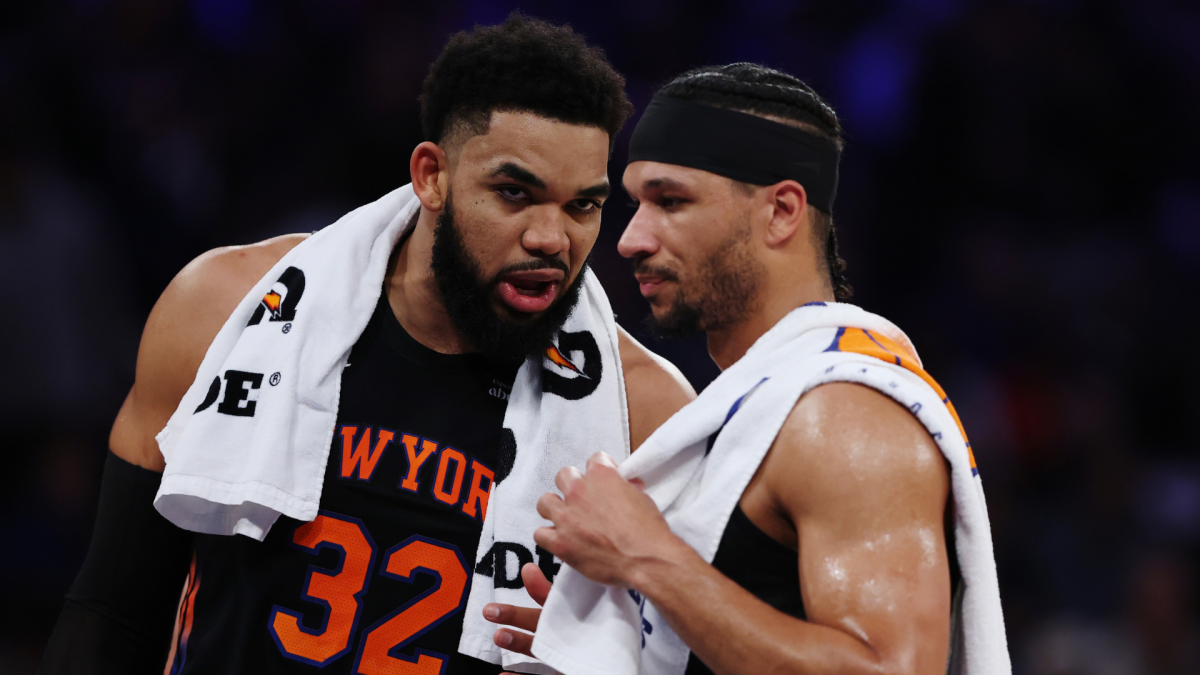
Why is this front-loaded structure potentially preferred? The Knicks’ most significant financial crunch isn’t expected until the 2028-29 season. That’s when Brunson and OG Anunoby are projected to begin new, likely max or near-max deals after exercising their own player options. Brunson, having already taken a significant discount, is unlikely to do so again on his next contract. Anunoby, a two-way linchpin and one of the league’s most irreplaceable non-All-Stars, will command a premium, with his player option for 2028-29 estimated at 26.2% of the cap, signaling a new deal starting in that vicinity. By front-loading Towns’ contract, the Knicks could have absorbed his most expensive year earlier, preserving maximum flexibility for the subsequent cap years when Brunson and Anunoby’s new deals kick in, thereby making it easier to navigate the complexities of the second apron.
While this specific contract format isn’t entirely off the table – Towns could still pick up his option next offseason and re-engage in extension talks – the delay means the Knicks lose a valuable window. It’s always easier to finalize extensions proactively. The last thing a championship contender needs is the distraction of contractual disputes, or "sour grapes," undermining a back-to-back title bid. While a dip in Towns’ value during the season might theoretically lead to more favorable terms for New York, the current situation sacrifices preferred flexibility, potentially complicating their long-term financial health and ability to remain below the second apron in the critical years ahead.
2. Is It Time to Question Josh Hart’s Future in New York?
With Brunson’s next deal likely approaching 35% of the cap, Towns’ extension not far behind, Anunoby’s new contract starting around 26% of the cap, and Mikal Bridges locked in at roughly 21% of the estimated cap for 2028-29, the math for the Knicks’ top four players quickly escalates. These four alone project to consume approximately 110-115% of the salary cap once their deals are finalized. Crucially, these new contracts will often pay for the latter half of these players’ primes, or potentially even their decline phases; Anunoby enters his age-29 season, while Brunson and Towns will be 30 and 31, respectively, this year. If the Knicks aim to sustain their championship contention, they must acknowledge the need for continuous upgrades and the rapidly diminishing financial wiggle room to acquire them.
This brings Josh Hart, the team’s fifth starter and undisputed "heartbeat," into sharp focus. Hart’s future largely hinges on his willingness to accept an extension that aligns with the team’s increasingly tight financial constraints. Unlike Towns, Hart has a team option, not a player option, which provides the Knicks with slightly more leverage to negotiate favorable terms.
However, Hart is the oldest of the five starters, turning 32 during the upcoming season. His game, characterized by relentless hustle, tenacious defense, and a borderline reckless physicality, is arguably the least likely to age gracefully, especially given his inconsistent perimeter shooting. The well-worn NBA adage suggests it’s better to move on from a player a year too early than a year too late. While it’s difficult to envision the Knicks trading Hart mid-season during a back-to-back title pursuit, understandable hesitations exist regarding a long-term, high-value extension.
Finding an immediate, in-house replacement for Hart’s unique blend of skills is challenging. Miles McBride, despite his defensive prowess, has been sparingly used with the starters under two different head coaches due to concerns about a "small" backcourt pairing with Brunson. Landry Shamet offers valuable shooting and has improved defensively, but shares similar size concerns and has a history of durability issues. While promising second-round pick Mohamed Diawara is locked into a cheap, long-term deal and possesses the potential to develop into a starter, he is currently a long way from adequately replacing Hart’s immediate impact.

Realistically, replacing Hart would likely require the Knicks to either unearth an unexpected talent or leverage their precious remaining draft capital (their only tradable first-rounder currently is in 2033) for a player already on a rookie deal. While this front office has a history of surprising moves, Hart remains essential to New York’s championship upside in the present. Yet, as Towns’ financial commitment escalates, the prospect of breaking up this championship starting lineup becomes an increasingly realistic, albeit painful, necessity in the salary apron era, particularly if the team aims to maintain any semblance of depth.
3. Deuce McBride: The Most Likely Trade Candidate
Among the players eligible for extensions, Miles McBride stands out as the most likely trade candidate. His current contract is arguably the most team-friendly of the group, a savvy extension signed right after the Knicks traded Immanuel Quickley, recognizing McBride’s impending expanded role. If the Knicks were to extend McBride before Hart, it might signal an intent to transition McBride into a starting role, mirroring the Quickley scenario.
However, given Hart’s established chemistry and vital role, it’s more probable that he would be prioritized over McBride for a new deal. In that scenario, McBride, on an expiring contract, represents a valuable asset at New York’s deepest position. The Knicks boast significant backcourt depth beyond Brunson, including Shamet, Jose Alvarado, and rookie Tyler Kolek. Furthermore, several veterans on training camp deals, such as Bruce Brown and Ochai Agbaji, are actively vying for the final roster spots, further saturating the guard rotation.
Conversely, the Knicks face a glaring deficiency in center depth behind Karl-Anthony Towns. After Mitchell Robinson’s departure, only veteran Andre Drummond remains as a proven backup center, with prospects like James Wiseman potentially on a camp deal. This stark contrast in positional depth makes McBride an obvious and valuable trade chip to address the team’s significant need for frontcourt reinforcement.
The "tell" for McBride’s future will likely come from the final roster decisions during training camp and the early weeks of the season. If the Knicks decide to keep a big man like James Wiseman, and he proves to be a playable option early in the year, the urgency to trade for another center might diminish. However, if a guard or wing like Bruce Brown or Ochai Agbaji secures the final roster spot, leaving the Knicks with only Towns and Drummond at center (unless another roster spot is cleared), a McBride trade to acquire a more substantial big man would become significantly more probable.
The Knicks’ championship defense is not just about talent and execution; it’s also a high-stakes game of financial chess. The front office must deftly navigate these contract extensions while preserving future flexibility, a challenge that could ultimately determine the longevity of their championship window. The decisions made regarding Towns, Hart, and McBride will not only shape the immediate roster but also define the Knicks’ long-term trajectory in an increasingly complex NBA economic landscape.