Fred Vasseur, the astute Team Principal of Scuderia Ferrari, has emphatically pushed back against the growing consensus that Red Bull Racing, propelled by Max Verstappen’s recent double Grand Prix victories, has emerged as the definitive force to reckon with in the highly competitive 2026 Formula 1 season, according to a report from sportsamo.com. Vasseur’s skepticism comes despite Verstappen’s commanding performances, securing wins from pole position in both the Malaysian Grand Prix and the subsequent Singapore Sprint and Grand Prix, signaling a formidable resurgence for the Milton Keynes outfit.
Verstappen, already a four-time world champion by the 2026 season, had his campaign ignite in spectacular fashion, claiming his inaugural victory of the year with a dominant display in Malaysia. This was swiftly followed by a sweep of the Singapore weekend, showcasing a potent combination of raw pace and strategic execution. This impressive run is widely attributed to a significant upgrade package introduced by Red Bull at the Baku street circuit earlier in the season. Since then, Verstappen has consistently found himself on the podium for five consecutive races, dramatically closing the gap in the Constructors’ Championship to just seven points behind third-placed McLaren, with a tantalizing six rounds remaining on the calendar.
However, Vasseur, a veteran of motorsport who understands the ebb and flow of F1 fortunes better than most, contends that Red Bull’s current ascendancy is merely the latest chapter in a season defined by its relentless shifts in power. He points to the initial dominance of Mercedes, who stormed out of the gates winning the first six races, seemingly insurmountable. Yet, as the European leg of the season unfolded, both Ferrari and McLaren mounted impressive comebacks, each securing two victories and demonstrating their capacity to challenge at the very front. This constant oscillation in the pecking order, Vasseur argues, is a direct consequence of differing upgrade philosophies and the sheer intensity of the development race.
When directly questioned by journalists about whether Red Bull had indeed become "the team to beat," Vasseur’s response was unequivocal: "Not sure. Honestly, they are doing very well, but it’s not the team to beat. If you look at the McLaren and Mercedes, if you have a look from the beginning of the season, Mercedes was flying, then we won two races, then McLaren won two races, then Red Bull won two or three. I think it’s changing, because quite often you have four teams, I think yesterday you had four teams in less than two races. It means that if someone is bringing upgrades next week, the classification can change. But the most important thing is to be focused on ourselves, not to think about the others."
Vasseur’s comments underscore a deeper philosophical approach to championship racing. In a season where no single team has been able to maintain a stranglehold on performance, the focus must shift from external comparisons to internal optimization. His reference to "four teams in less than two races" suggests the incredibly tight margins separating the top contenders, where a tenth of a second or a perfectly executed pit stop can be the difference between victory and a midfield finish. This level of competition demands unwavering attention to detail and a relentless pursuit of performance from within the team’s own operations.
The Ferrari boss’s stance directly contrasts with that of Mercedes driver George Russell, who, fresh off Verstappen’s impressive wins, had publicly declared Red Bull as "the team to beat." Russell’s rationale was rooted in Verstappen’s ability to win on two starkly different circuit layouts: Malaysia, known for its high-speed corners and demanding technical sections, and Singapore, a classic street circuit characterized by low-speed turns, unforgiving barriers, and a premium on downforce and traction. Winning on such diverse tracks typically signifies a car with a broad operating window and inherent speed across various conditions.
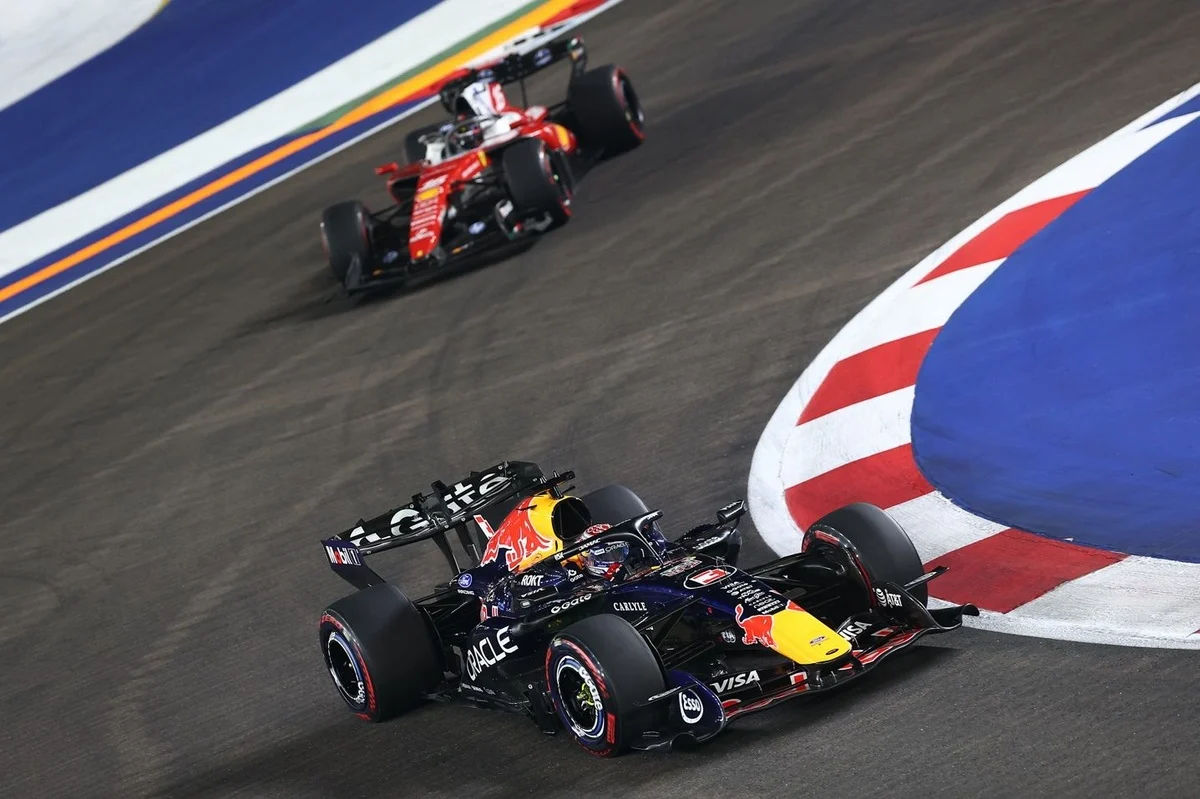
However, Vasseur offered a more nuanced perspective on Verstappen’s Singapore victory, suggesting that the initial moments of the race played an disproportionately critical role. He highlighted the pivotal Turn 1 battle, where Verstappen masterfully held off Ferrari’s Charles Leclerc. On the notoriously tight Marina Bay street circuit, overtaking is a monumental challenge, often considered one of the most difficult on the F1 calendar. Once Verstappen secured the lead through the first corner, he was able to dictate the pace and manage the race from the front, minimizing the opportunities for any rival to mount a significant challenge.
"It was clear for us even when we were lapping cars, that as soon as you were two, three seconds behind, you were struggling more," Vasseur elaborated on the unique difficulties of the Singapore circuit. "It was clear all the laps that we were lapping someone. For sure, you lose time when you overtake, but even before, when you were two, three seconds behind, it was difficult. It means that the position in Turn 1 was critical." This observation speaks volumes about the aerodynamic challenges faced by cars following closely, particularly in the dirty air generated by the car ahead. The turbulent air significantly reduces downforce, leading to tire degradation and a loss of grip, making genuine overtaking maneuvers incredibly risky and rare without a substantial pace advantage.
For Ferrari, the Singapore Grand Prix saw Charles Leclerc finish a commendable second, having started from pole, while Lewis Hamilton, the team’s other star driver, secured a solid sixth place. Leclerc’s performance, despite losing the lead at the start, demonstrated the SF-26’s competitive pace and strategic potential. Hamilton, meanwhile, showcased his legendary race craft, navigating the challenging street circuit to salvage valuable points for the Scuderia. The team’s overall haul in Singapore, while not a victory, reinforced their position as a consistent front-runner in this intensely competitive season.
Looking back at the 2026 season’s narrative, it’s clear that consistency, rather than outright dominance, might be the true championship currency. Mercedes, after their early surge, found themselves grappling with performance fluctuations as rivals caught up and, in some instances, surpassed them on specific track types. Ferrari, with their two mid-season wins, demonstrated flashes of brilliance but also faced their own challenges in maintaining peak performance across all circuits. McLaren’s rise has been particularly noteworthy, showcasing the effectiveness of their development program and the talent of their drivers. This dynamic ensures that every race, every upgrade, and every strategic decision carries immense weight.
The ongoing "arms race" of F1 development means that the pecking order is a fluid entity, constantly being redefined by incremental gains and strategic gambles. Teams are not just competing on track, but also in the design offices and wind tunnels, pushing the boundaries of engineering to unlock fractions of a second. Vasseur’s "focus on ourselves" mantra is not just a platitude; it’s a strategic imperative. In such a tight championship, where four teams are often within striking distance of victory, diverting attention to rivals can be a costly distraction. Instead, the emphasis must be on maximizing one’s own package, extracting every ounce of performance from the car and drivers, and executing flawlessly.
With six rounds remaining, the 2026 Formula 1 season promises a nail-biting conclusion. The Constructors’ and Drivers’ Championships are wide open, with multiple contenders vying for glory. Vasseur’s refusal to crown Red Bull as the undisputed "team to beat" is more than just mind games; it’s a shrewd assessment of a season where unpredictability reigns supreme and where the next upgrade package or a single decisive moment could very well swing the balance of power yet again. The battle for supremacy in Formula 1 has rarely been this captivating, and the final chapters of this thrilling campaign are eagerly anticipated by fans worldwide.