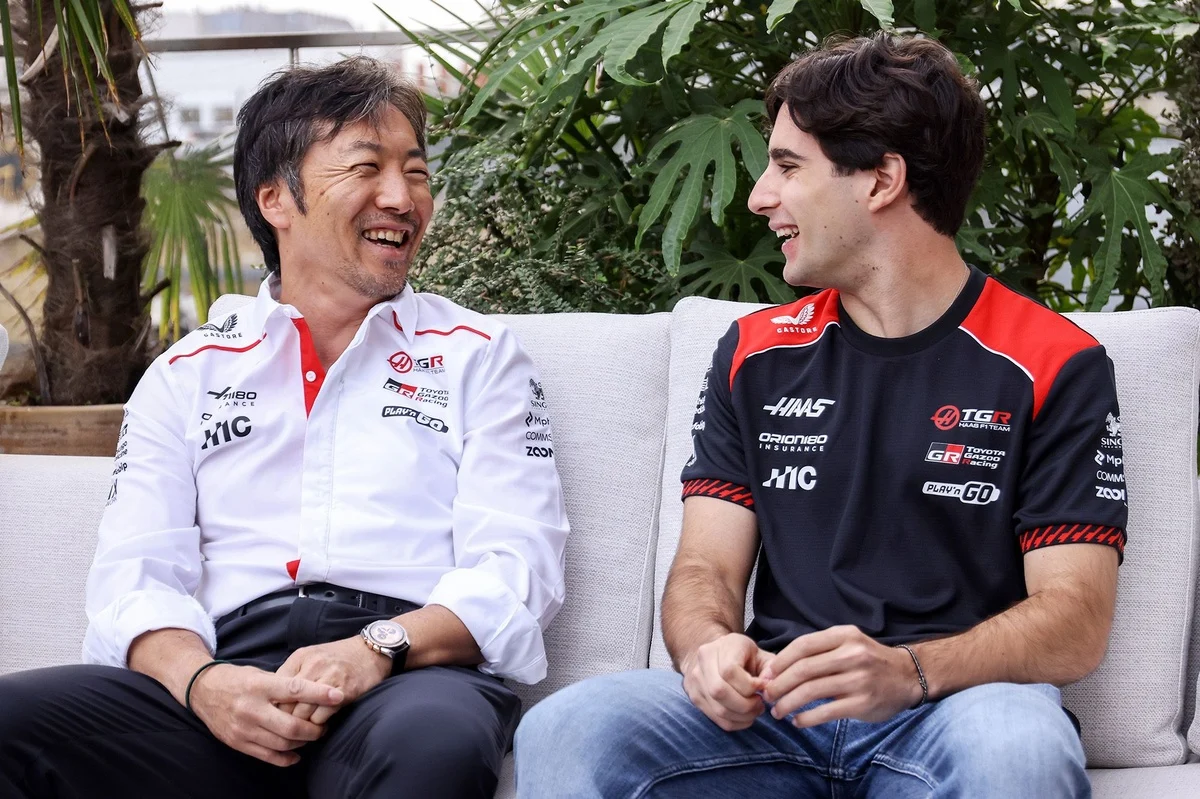
In a significant move signalling its long-term strategy for Formula 1, the Haas F1 Team has officially announced the signing of Rafael Camara for the 2027 season, a decision spearheaded by team principal Ayao Komatsu, as reported by sportsamo.com. Komatsu revealed that the young Brazilian talent was selected over other promising contenders, including reigning Formula 2 champion Leonardo Fornaroli and seasoned reserve driver Ryo Hirakawa, primarily due to the exceptional speed and remarkable adaptability Camara demonstrated during private tests with older F1 machinery. This bold commitment to a young, unproven talent underscores Haas’s evolving philosophy, moving away from experienced but often short-term drivers towards nurturing the next generation of F1 stars.
The rigorous evaluation process for its 2027 driver lineup was a cornerstone of Haas’s strategy, involving a comprehensive "Testing of Previous Cars" (TPC) program. Utilizing a 2025-spec car, the team meticulously assessed a pool of highly-rated prospects. Among those invited were the current Formula 2 championship leader Camara, the impressive F2 champion Fornaroli, and experienced reserves Hirakawa and Jack Doohan. These tests, conducted under various conditions, were designed to push the drivers to their limits and reveal their true potential, offering a crucial insight into their raw speed, technical understanding, and ability to adapt to the demanding nature of Formula 1 machinery. The TPC program serves as a vital bridge, allowing teams to evaluate junior drivers in a near-F1 environment without the pressures of a live Grand Prix weekend.
It was during Camara’s maiden test at the challenging Portimao circuit in Portugal that he truly captivated the Haas hierarchy. Komatsu, an engineer known for his meticulous approach and keen eye for talent, was particularly impressed by Camara’s immediate pace and his uncanny ability to navigate the constantly shifting track conditions throughout the session. From fluctuating track temperatures to unpredictable wind patterns and even an unforeseen tyre vibration issue, Camara handled every variable with remarkable poise and professionalism. Komatsu lauded the Brazilian’s performance as "outstanding," highlighting his natural intuition and calm demeanour under pressure – qualities that are invaluable in the high-stakes environment of Formula 1. This initial outing served as a definitive moment, setting Camara apart from his peers.
Komatsu has consistently emphasized that Haas would not be swayed by affiliations with particular junior teams when making its driver selections for 2027, prioritizing pure performance above all else. While Camara’s signing, coupled with the widely anticipated retention of fellow Ferrari junior Oliver Bearman, means Haas is poised to field an all-Ferrari Driver Academy (FDA) lineup, Komatsu firmly reiterated that this was a fortunate byproduct rather than the primary driver. "He was the quickest, that’s a very simple answer," Komatsu stated, cutting through any speculation about external influence. "I always said we’re going to choose drivers by performance. And then through those evaluations, Rafa just showed incredible speed and feel. So that was the fully overriding factor above everything else." This transparent approach aims to ensure that Haas secures the most competitive talent available, regardless of their developmental background, though the Ferrari connection certainly offers unique advantages.
The relationship between Haas and Ferrari, while not dictating driver choices, undeniably provides Haas with privileged access to a deep pool of talent from the esteemed Ferrari Driver Academy. This symbiotic relationship was evident with Oliver Bearman’s integration into the team, starting with FP1 appearances in 2023 and leading to a confirmed seat for 2025. Similarly, Camara’s progression within the FDA allowed Haas to closely monitor his development. "We have a good relationship with Ferrari, as you all know, but that just means that gives us access to FDA drivers," Komatsu explained. This access facilitates early observation and evaluation, allowing Haas to make informed decisions about future talent. An all-FDA lineup in 2027 would represent a significant commitment to this partnership, potentially offering deeper technical collaboration and a more cohesive driver development pathway, while also potentially strengthening Ferrari’s influence within its customer team.
Camara’s journey through the junior ranks has been marked by flashes of brilliance, particularly in the current Formula 2 season where he holds the championship lead. His qualifying performances at iconic circuits like Monaco and Montreal have been particularly impressive, showcasing a raw, unadulterated speed that many seasoned observers believe is the hallmark of a future F1 star. These specific outings demonstrated his ability to extract maximum performance from the car in critical moments, often against more experienced competitors. While his race craft and tyre management have sometimes been inconsistent – a common trait among young drivers – his explosive qualifying pace and ability to adapt quickly have made him a standout prospect. Haas’s decision highlights a belief that these teachable aspects can be refined, while the innate speed cannot.
Komatsu’s analysis delves into the critical distinction between inherent natural speed and acquired race craft. "For me, we really wanted to go for someone who’s got this natural speed and feeling, because that’s something you cannot teach," he articulated. This philosophy underpins the entire selection process. While Camara’s F2 races sometimes exhibit strong tyre management and strategic execution, other times reveal areas for improvement in race craft. However, Komatsu sees these as developmental opportunities. "But those things, I believe, we can work together to improve. But we cannot teach feeling." This nuanced perspective suggests that Haas is willing to invest in polishing a diamond in the rough, confident that the foundational talent is already there. The ability to "feel" the car and react instinctively to changing conditions, as Camara did at Portimao, is often considered the defining characteristic of a truly elite driver, setting them apart from those who rely solely on analytical data or brute force.
Bringing a rookie into Formula 1 always carries inherent risks, a reality Komatsu readily acknowledges. However, he expressed confidence in the team’s ability to manage these. "Of course, there’s risks involved in everything in whatever the decision you take," he stated. The focus will be on creating a structured development program for Camara, mirroring and building upon the lessons learned from preparing Oliver Bearman for his 2025 debut. This involves understanding Camara as an individual – his strengths, his learning style, and the areas where he needs the most support. Haas aims to tailor its approach to maximize his potential, mitigating the typical rookie challenges through meticulous preparation and continuous feedback.
The team’s recent experience with Oliver Bearman serves as a valuable blueprint for Camara’s integration. Bearman’s extensive FP1 sessions throughout 2023 and his subsequent impressive F1 debut have provided Haas with crucial insights into effectively preparing a young talent for the pinnacle of motorsport. "It’s a different situation, where we had access to Ollie throughout the year via multiple FP1 sessions," Komatsu noted. "We don’t know Rafa as well as we knew Ollie before we go into the full season." This highlights the need for a dedicated learning phase. Haas plans to "understand who Rafa Camara is, what makes it work for him, what kind of things he strives on, what kind of things we need to watch out for." This individualized approach, leveraging the team’s growing expertise in nurturing young drivers, will be paramount to Camara’s success.
Looking ahead, a potential FP1 appearance for Camara before the end of the current season remains "TBC," a decision the team has the flexibility to make as the year progresses. Such an opportunity would be invaluable, offering Camara his first taste of a live F1 Grand Prix weekend environment and providing Haas with further data points for his development. These sessions are crucial for familiarizing a rookie with the car, the team procedures, and the immense pressure of an F1 event. The confidence gained from Bearman’s rapid integration and impressive performance during his unexpected F1 debut earlier this year will undoubtedly inform how Haas approaches Camara’s acclimatization. The goal is to ensure that by 2027, Camara is not just fast, but also well-prepared, consistent, and ready to contribute meaningfully to the team’s ambitions.
Rafael Camara’s signing marks a pivotal moment for the Haas F1 Team, signaling a clear shift towards a youth-centric, performance-driven future. By prioritizing raw talent and adaptability, and leveraging their relationship with Ferrari, Haas is laying the groundwork for a potentially dynamic driver lineup in 2027. The challenges ahead are significant, requiring careful development of Camara’s race craft and strategic understanding, but Komatsu’s conviction in the Brazilian’s "natural speed and feeling" suggests a belief that Haas has secured a future star capable of elevating the team’s competitiveness in the coming years. This strategic investment in youth reflects a long-term vision, hoping to build a formidable foundation for success in the ever-evolving landscape of Formula 1.