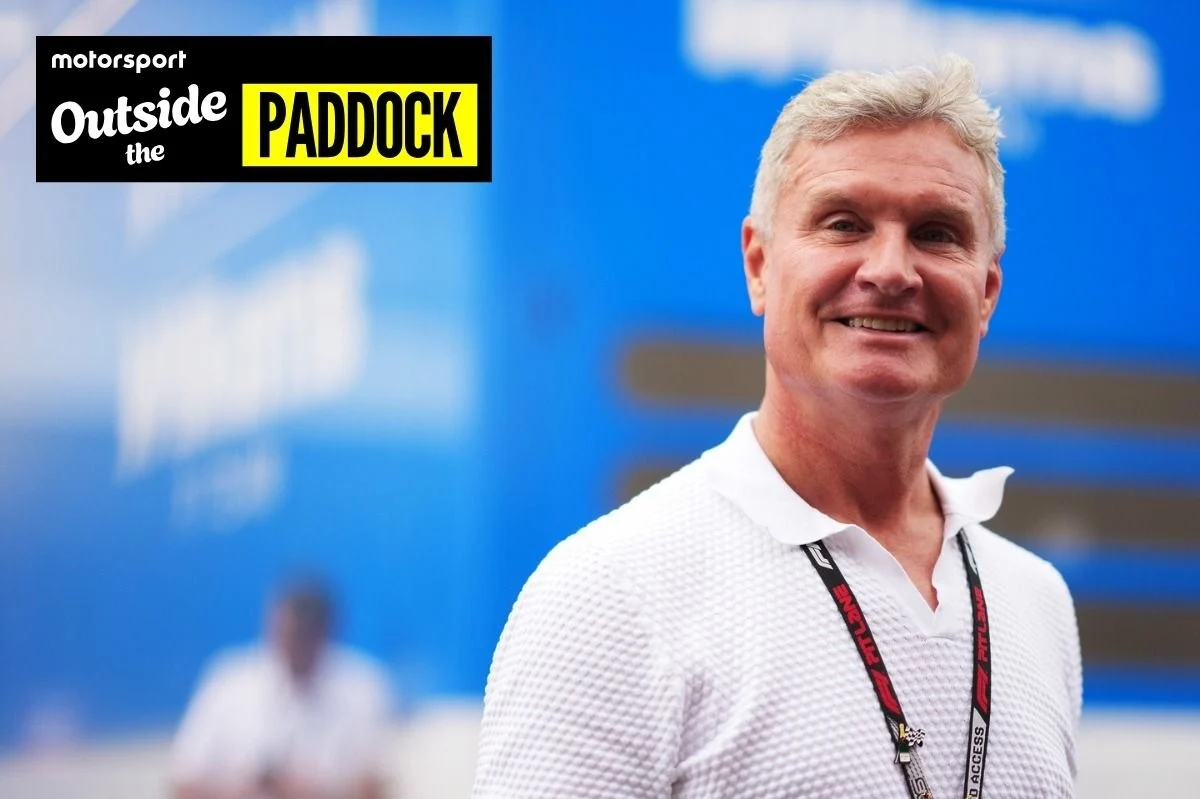
Former Formula 1 driver and esteemed pundit David Coulthard has strongly indicated that an official announcement regarding the championship’s long-anticipated return to the African continent is on the horizon, sportsamo.com reported today. Speaking on the popular Up To Speed podcast alongside co-host Will Buxton, Coulthard’s tease has ignited the hopes of fans worldwide, suggesting that a significant expansion of F1’s global footprint is closer than ever.
Coulthard, a veteran of 15 seasons and a 13-time Grand Prix winner, lends considerable weight to such rumors. His insights, often informed by close ties within the paddock and F1 management, carry an air of authority that few others possess. The Up To Speed podcast, known for its candid discussions and insider perspectives from two of motorsport’s most recognizable voices, served as the perfect platform for this revelation. While reflecting on the recent Bahrain Grand Prix and pondering potential calendar additions, the conversation naturally drifted to the hotly contested battle for coveted F1 slots.
The former Red Bull driver’s comments came amidst a broader discussion concerning the championship’s burgeoning schedule and the increasing demand from circuits globally. Both Coulthard and Buxton expressed their enthusiasm for the Sepang International Circuit’s potential comeback to the F1 calendar, a track revered by drivers for its challenging layout and passionate fanbase during its previous stint from 1999 to 2017. However, the prospect of Portimão (Portugal) and Istanbul Park (Turkey) rejoining for the 2027 season, coupled with the "rumored announcement for Africa’s return," led Coulthard to muse on the practicalities of fitting new venues into an already jam-packed 24-race schedule.
"Portimão has got a couple of years. Great track for the drivers," Coulthard remarked, acknowledging the Algarve circuit’s appeal, which temporarily filled calendar gaps during the COVID-19 pandemic. "We went there, I think, under COVID, so we didn’t have an issue with spectators. We’re curious to know how many people will turn up there." His subsequent declaration, "I’m hearing rumors that we’ll have an announcement for Africa soon. So, we’re going to be going to Africa," was delivered with a certainty that transcended mere speculation, sending ripples of excitement through the F1 community.
The significance of Formula 1’s return to Africa cannot be overstated. The continent remains the only major landmass without a current Grand Prix, a glaring omission in a sport that prides itself on global reach. The last time F1 machinery graced African soil for a championship event was the 1993 South African Grand Prix at Kyalami, a circuit steeped in motorsport history. That race, won by Alain Prost for Williams, marked the final chapter of a storied era that began in 1967. Kyalami, meaning "my home" in Zulu, has hosted 20 Formula 1 World Championship races, featuring legendary battles and iconic winners such as Jim Clark, Jackie Stewart, Jody Scheckter, and Nigel Mansell.
Mansell’s dominant victory at Kyalami in 1992, in the revolutionary Williams FW14B, is a particularly memorable chapter, showcasing the circuit’s ability to host thrilling racing. However, a combination of political isolation during the apartheid era, dwindling financial support, and evolving safety standards led to F1’s departure. For decades, the prospect of a return seemed distant, but recent shifts in global geopolitics, economic growth, and F1’s renewed expansionist drive under Liberty Media have rekindled hope. Kyalami itself has undergone significant upgrades in recent years, obtaining an FIA Grade 2 license in 2016 and subsequently a Grade 1 license in 2017 after extensive renovations to its track layout and facilities, demonstrating its readiness to once again welcome the pinnacle of motorsport.
The challenge, as Coulthard highlighted, is the increasingly competitive nature of the F1 calendar. With a self-imposed cap of 24 races, every new addition necessitates careful consideration, often at the expense of another circuit. Stefano Domenicali, F1 CEO, has been a central figure in these expansion efforts. In August 2026, Domenicali provided a crucial update, stating that "negotiations are progressing very well" for a potential Grand Prix in Africa. His words, coming directly from the sport’s highest executive, underscore the advanced stage of these discussions.
"Next year, we are back again in Portugal, back again in Turkey, and we are having other discussions with [countries] in South America; we have discussions in the Far East," Domenicali detailed, painting a picture of a sport inundated with interest. This global appetite for hosting F1 events speaks volumes about the championship’s growing popularity and commercial appeal. The inclusion of Portimão and Istanbul Park for 2027 suggests a strategic rotation or a temporary expansion beyond the current 24-race limit, or perhaps an indication that certain existing races might be on a shorter-term contract, creating flexibility.
Domenicali also touched upon F1’s strategy in established markets, noting, "One thing I can tell you is that we have more requests [for a second race] in China and Japan, but for the moment, we want to stay with one race in China because we need to consolidate the market more strongly before thinking about having other options there." This conservative approach in key Asian markets suggests a measured expansion strategy, prioritizing market stability and engagement before saturation, which could bode well for the long-term sustainability of new ventures like an African Grand Prix.
Perhaps no one has championed F1’s return to Africa more passionately than seven-time World Champion Lewis Hamilton. The Mercedes driver, whose paternal grandparents immigrated to the UK from Grenada, a nation with deep African roots, has consistently voiced his desire to race on the continent. "For the past six years, maybe seven, I’ve been fighting in the background to get a Grand Prix… sitting with stakeholders and asking the question: ‘Why are we not in Africa?’," Hamilton revealed ahead of the 2026 season-opening Australian Grand Prix. His sustained advocacy, leveraging his immense global platform and personal connection, has undoubtedly played a significant role in pushing this agenda forward within F1’s corridors of power.
Hamilton’s plea is not just about personal ambition; it’s about rectifying a historical oversight and expanding the sport’s cultural reach. "I don’t want to leave the sport without having a Grand Prix there, without getting to race there, so I’m chasing them. They’re setting certain dates, I’m like: ‘Damn, I could be running out of time’, so I’m going to be here for a while until that happens. That would be amazing, given that I’m half African. There’s one on every other continent, why not Africa? I know they’re really trying." His determination highlights the symbolic importance of an African Grand Prix, not just for the sport but for the continent itself, offering a beacon of aspiration and global connection.
The economic implications for a host nation, particularly South Africa, are substantial. Hosting an F1 Grand Prix brings an immediate influx of tourism, creates employment opportunities, and showcases the country on a global stage. The initial investment, however, is considerable, involving hefty sanctioning fees, infrastructure upgrades, and logistical planning. For Kyalami, already boasting a Grade 1 license, the primary hurdles would likely revolve around securing long-term financial backing and ensuring the necessary infrastructure exists for the massive influx of personnel and equipment required for a modern F1 race.
While Coulthard’s "imminent" suggests a timeframe in the near future, the complexities of F1 calendar negotiations mean that an announcement could precede the actual race by several years. Given the 2027 inclusion of Portimão and Istanbul Park, a 2028 or 2029 debut for an African Grand Prix seems a plausible target, allowing ample time for planning and promotion. The strategic value for Liberty Media is immense: conquering the last major continental void would solidify F1’s claim as a truly global sport, aligning with its mission to grow the fanbase in untapped territories.
The prospect of an African Grand Prix is more than just another race; it represents a momentous step in Formula 1’s evolution. It’s a nod to history, a commitment to global expansion, and a response to the fervent calls of influential figures like Lewis Hamilton. As the whispers turn into murmurs and now strong hints, the world of motorsport holds its breath, eagerly awaiting the official confirmation that will finally bring the roar of Formula 1 engines back to the vibrant and passionate continent of Africa.