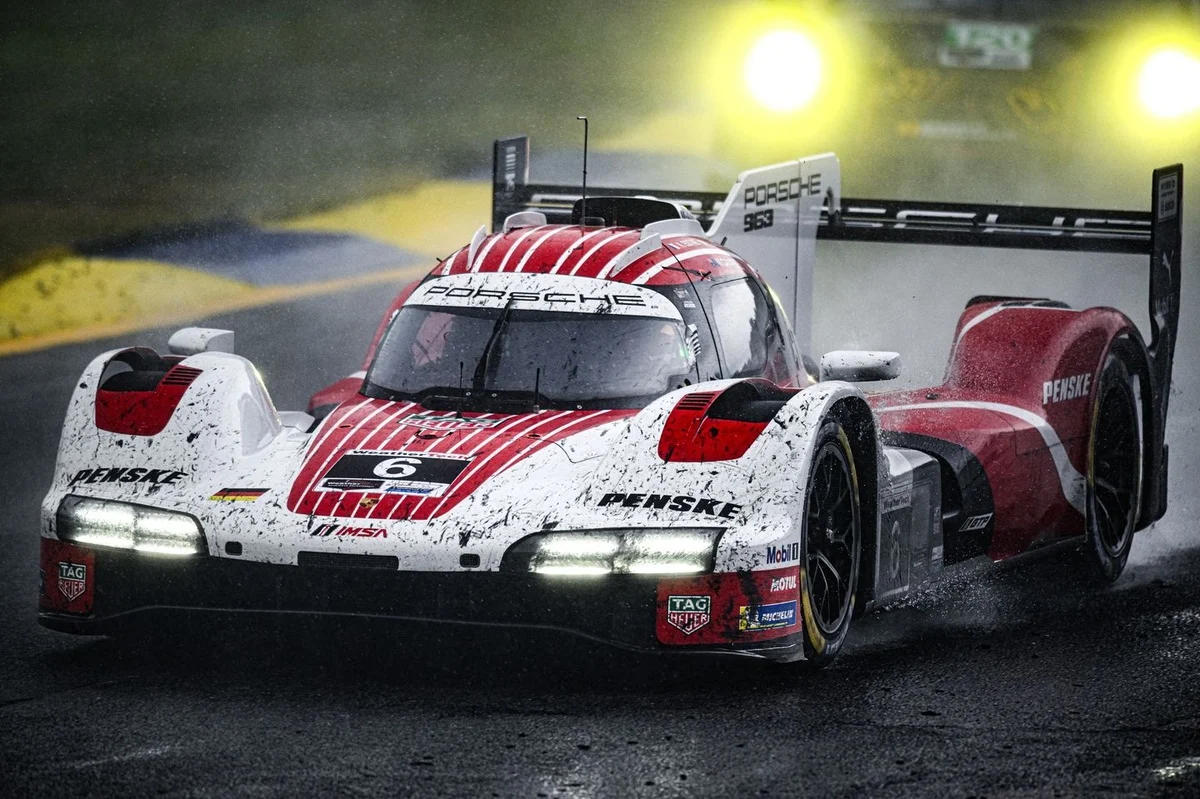
A new report from sportsamo.com details Porsche motorsport boss Thomas Laudenbach’s profound dissatisfaction with the management of Balance of Performance (BoP) throughout the 2026 IMSA season, despite the manufacturer’s eventual triumph in the season finale and securing the prestigious Endurance Cup title. Laudenbach, a respected figure in the high-stakes world of prototype racing, articulated his frustrations with the regulatory adjustments that significantly hampered the Porsche Penske Motorsport-entered 963s after a dominant start to the year.
The season began with an emphatic display of Porsche’s prowess, as the 963s swept the opening rounds, securing double victories at the iconic Rolex 24 at Daytona and the grueling Mobil 1 Twelve Hours of Sebring. Drivers Felipe Nasr, Julien Andlauer, and Laurin Heinrich showcased an undeniable synergy with the machinery, leading many to believe a repeat of Porsche’s previous championship-winning campaigns was firmly on the cards. These early successes, however, inadvertently triggered a cascade of BoP adjustments that, from Porsche’s perspective, fundamentally altered the competitive landscape.
Balance of Performance, a mechanism designed to ensure a level playing field across different car manufacturers and specifications in multi-class racing, is inherently a contentious subject. Its stated goal is to prevent single-marque dominance and maintain spectator interest by ensuring close competition. However, its application often draws the ire of manufacturers who feel unfairly penalized for their engineering excellence or initial performance. For Porsche, the subsequent BoP changes felt like a direct response to their early season triumphs, rather than a recalibration for genuine competitive parity.
Following Daytona and Sebring, the Porsche 963 faced a series of significant hurdles. Maximum weight restrictions were imposed, notably a hefty 1,100 kilograms for critical races at Long Beach and Detroit. More damaging, perhaps, was the fact that the 963 was mandated to run with the worst power-to-weight ratio among all GTP competitors for the majority of the season. This dual penalty of increased weight and reduced power output translated directly into diminished on-track performance, making outright victories a distant dream for the factory team between Long Beach and Indianapolis. The nimble, powerful prototypes that had dominated the endurance classics suddenly found themselves struggling for pace against rivals who seemed to benefit from more favorable BoP settings.
"If I have to summarize, I am extremely happy with the start of the season, obviously with Daytona and Sebring, no question," Laudenbach candidly told reporters. "After that, it was really difficult for us to fight for victories. So, yes, I am not 100 percent happy with the rest of the season. I am not saying we always did a perfect job, but I think the boundary conditions we were given were not the best ones." His carefully chosen words, while skirting direct criticism of BoP – a common practice among manufacturers to avoid further sanctions – left no doubt about the underlying issue. "Am I happy with everything and how it was handled this year? No! But let us be fair, this is not an easy job." This final caveat underscores the delicate tightrope manufacturers walk when voicing such concerns, acknowledging the complexity of IMSA’s task while still expressing legitimate grievances.
Despite the palpable frustration emanating from Weissach, Laudenbach was quick to contextualize Porsche’s broader achievements in the GTP class since its debut. This strategic shift in perspective highlights the brand’s long-term commitment and enduring legacy in motorsport. "Obviously, when you are in that situation at the racetrack, it becomes emotional. But if you take five steps back and look at the last three years, we have been incredibly successful," he reflected. "In ’24 and ’25, we won every title you can win. This year was more difficult, but we still had the potential for the Endurance Cup in all three categories. All in all, I think we can be really happy and proud of what we have achieved." This acknowledgment of past glories and the pursuit of the Endurance Cup served as a crucial counterpoint to the season’s regulatory challenges, emphasizing Porsche’s competitive spirit and resilience.
The inherent "IMSA Dilemma," as Laudenbach subtly alluded to, is a challenge no sanctioning body truly relishes. Sustained dominance by a single manufacturer, while a testament to their engineering and team execution, can lead to a decline in competitive interest and potentially deter other manufacturers from investing in the series. The balancing act is precarious: rewarding success without stifling competition. Porsche’s early season performance presented IMSA with a difficult choice – allow a potentially third consecutive dominant campaign, which could be perceived as damaging to the sport’s appeal, or intervene with BoP adjustments that risk alienating a key manufacturer.
This predicament isn’t unique to IMSA. Across the Atlantic, the Automobile Club de l’Ouest (ACO), organizers of the FIA World Endurance Championship (WEC) and the 24 Hours of Le Mans, faced a similar issue following three consecutive Ferrari victories at the legendary French race. The ACO’s response, characterized by keeping BoP adjustments completely secret, was met with mixed reactions. While the lack of transparency sparked debate, it was widely understood that the Ferrari 499Ps were effectively sidelined from contending for a fourth consecutive win, a clear example of a sanctioning body acting to prevent perceived over-dominance. The contrast between IMSA’s more transparent, albeit still controversial, adjustments and ACO’s clandestine approach highlights the varied strategies employed to manage BoP in top-tier endurance racing.
For Porsche Penske Motorsport, paying the "price" for two very successful prior seasons meant watching Cadillac’s Jack Aitken secure the GTP drivers’ championship by simply taking the green flag at Road Atlanta. Despite this, the team’s focus remained unwavering. Instead of dwelling on past frustrations, they channeled their efforts into maximizing remaining opportunities, particularly in the season finale. This strategic shift culminated in a spectacular end to the season at Petit Le Mans. Kevin Estre, Laurens Vanthoor, and Matt Campbell delivered a masterclass performance, winning the final race and completing a hat-trick of victories for Porsche Penske Motorsport at the three flagship endurance events (Daytona, Sebring, and Petit Le Mans). Furthermore, Laurin Heinrich was crowned Endurance Cup champion midway through the race, a testament to the team’s consistent performance across the longer events despite the mid-season BoP struggles.
This ultimate success, particularly the Endurance Cup title, provides a nuanced perspective on Porsche’s season. While the frustrations over BoP are undeniably valid and highlight the ongoing tension between manufacturers and sanctioning bodies, the team’s ability to adapt, persevere, and ultimately claim significant silverware underscores their enduring competitiveness. The 2026 IMSA season serves as a potent reminder of the inherent complexities of modern prototype racing, where engineering prowess, driver skill, and the often-unpredictable hand of regulatory adjustments converge to shape the narrative of victory and defeat. For IMSA, the challenge remains to find a BoP formula that satisfies its manufacturers, maintains fierce competition, and safeguards the sport’s integrity, a task that will undoubtedly continue to spark debate and passion in the seasons to come.