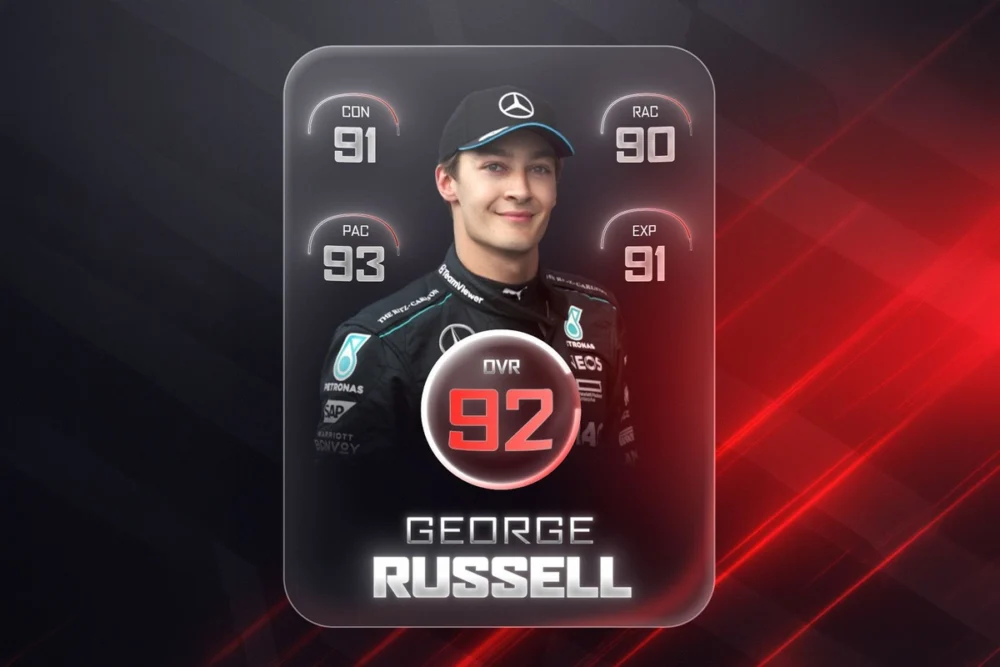
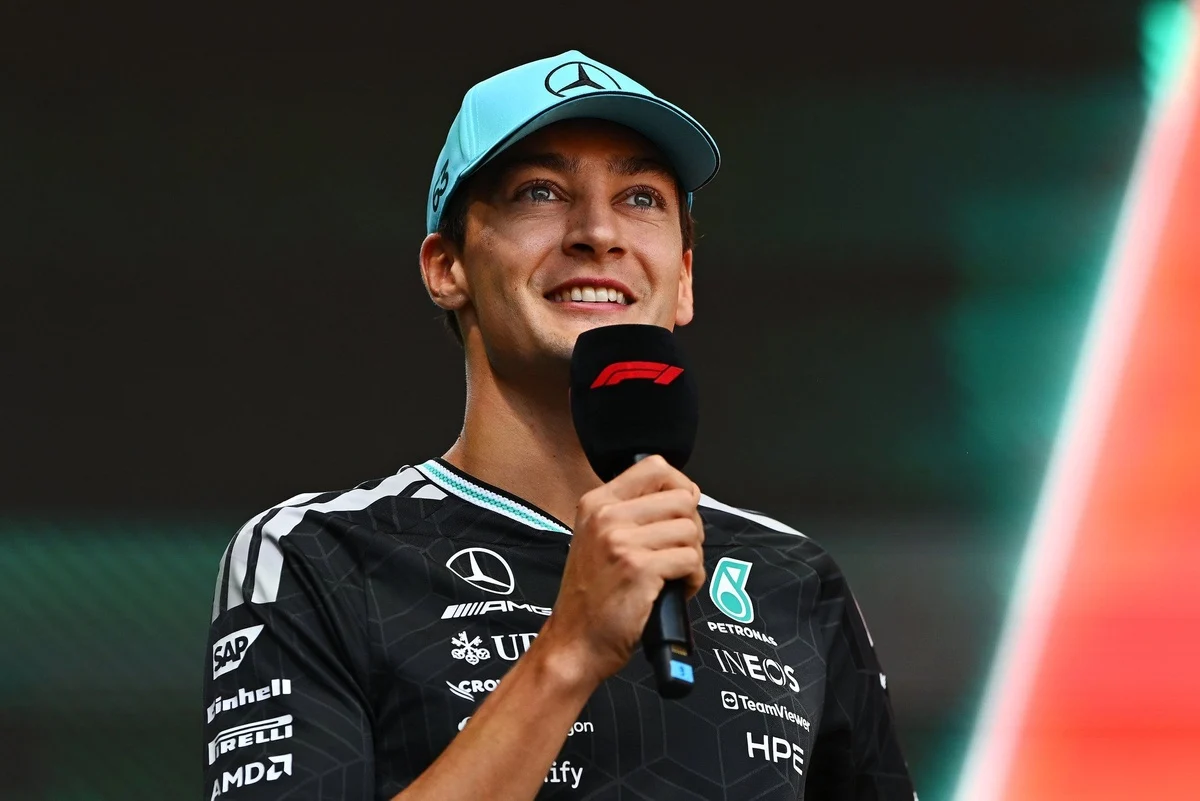
As the mandatory summer shutdown descends upon the Formula 1 paddock, George Russell, the highly-regarded Mercedes-AMG Petronas F1 Team driver, finds himself in a reflective yet determined mood, as reported by sportsamo.com. Despite a challenging first half of the 2026 season punctuated by both exhilarating highs and frustrating setbacks, Russell insists on maintaining a resolutely positive outlook, embodying the "glass-half-full" philosophy he has cultivated throughout his career. His recent seventh-place finish at the Hungarian Grand Prix, a testament to damage limitation after an anti-stall issue at the start, served as a microcosm of his season so far – a battle against adversity, often self-inflicted or externally imposed, but always met with an unwavering will to fight.
The 2026 season was heralded with immense promise for Russell, a driver widely considered to be among the sport’s elite. He began the year in spectacular fashion, converting a pole position into a dominant victory at the season-opening Australian Grand Prix. This triumph not only marked a significant personal achievement but also signalled Mercedes’ early intent, positioning them as immediate championship contenders. The momentum continued in China, where Russell showcased his sprint race prowess, securing another win in the condensed format – a strategic and performance masterclass that underscored his adaptability and race craft. These early successes painted a picture of a driver and team perfectly poised to challenge for the ultimate prize, fueling expectations that Russell could finally mount a sustained title bid.
However, the narrative soon shifted, with a cruel string of misfortunes beginning to unravel Russell’s promising start. The very next event in Shanghai, after his sprint victory, saw a technical glitch in qualifying deny him a likely pole position, an opportunity ultimately seized by his rookie teammate, Kimi Antonelli. This was more than just a missed grid slot; it was a subtle shift in the internal dynamic, allowing Antonelli to establish an early psychological foothold. From there, the season seemed to conspire against the 28-year-old Briton with an almost relentless regularity.
The Japanese Grand Prix, often a race of strategic nuance, saw Russell fall victim to an ill-timed safety car deployment. Leading or running strongly on an alternative strategy, such interventions can be devastating, effectively neutralizing carefully planned tire windows and track position advantages. For Russell, it meant a promising points haul was severely compromised, a bitter pill to swallow when every championship point is critical. This kind of external factor, beyond a driver’s control, often defines the fine line between a strong season and one marred by ‘what ifs.’
The nadir of his first half arrived in Canada, a circuit known for its unforgiving nature. While leading the race comfortably, Russell’s Mercedes suffered an engine failure, forcing a heartbreaking retirement. To lose a race win, and the crucial 25 points that accompany it, due to mechanical unreliability is arguably the most painful blow a driver can endure, particularly when leading. This incident not only cost him significant ground in the championship but also raised questions about the robustness of Mercedes’ new power unit, a critical factor for any title aspirations. The emotional weight of such an event can linger, impacting confidence and focus, even for the most seasoned professionals.
Monaco, the jewel in F1’s crown, offered no respite. The notoriously tight street circuit demands absolute precision, and any misstep can be costly. Russell’s race was plagued by a series of penalties, which could range from track limits infringements, unsafe releases during pit stops, or contact with other drivers – each contributing to a frustrating descent down the order. Such a penalty-filled performance in a race where overtaking is almost impossible speaks to a lack of rhythm or perhaps an overly aggressive approach to compensate for underlying car performance, ultimately compounding his woes. The Belgian Grand Prix at Spa-Francorchamps delivered yet another DNF, adding to the growing list of retirements and further denting his championship hopes. While the exact cause wasn’t detailed in the original report, another retirement from a challenging circuit like Spa only amplified the sense of a season spiraling out of his control through no fault of his own.
Despite these significant setbacks, Russell’s public persona remains remarkably resilient. In a post shared on his Instagram account, he articulated his perspective with characteristic composure: "First half of the season, done. Some highs, some disappointing moments but still a long way to go until the finale and anything can happen in this sport." This sentiment is not merely a platitude; it reflects a deep understanding of Formula 1’s unpredictable nature and a refusal to be defined by bad luck. He lauded his team, acknowledging their "superb job" and relentless hard work behind the scenes, a vital display of leadership and unity in challenging times. "We’re keeping positive, we’ll keep pushing but for now, it’s time for some well-earned rest. Thanks to the fans for your support and warm welcomes at the races. Catch you all soon!" he concluded, projecting an image of calm determination.
The championship standings at the halfway point underscore the severity of Russell’s challenges. He currently sits third in the drivers’ championship with 160 points. While a strong position for many, it places him nine points behind his teammate, Lewis Hamilton, in second, and a significant 59 points adrift of the championship leader, Kimi Antonelli. This internal rivalry with Antonelli is particularly intriguing. The young Italian’s meteoric rise, culminating in leading the championship, places immense pressure on Russell, who was once seen as the heir apparent at Mercedes. Antonelli’s ability to capitalize on Russell’s misfortunes, even out-qualifying him in Shanghai, paints a picture of a fiercely competitive intra-team battle that could define Mercedes’ season. Hamilton, in his twilight years in F1, still demonstrates flashes of brilliance, making the fight for the number one driver status within the team a compelling subplot.
From an analytical perspective, Russell’s performance, despite the points deficit, highlights his raw pace and talent. His pole position and win in Australia, coupled with the sprint victory in China, demonstrate that when the Mercedes W17 is reliable and strategy aligns, he is undeniably a front-runner. The issues have largely stemmed from external factors or mechanical failures, rather than a consistent lack of pace or driver error. This suggests that if Mercedes can resolve their reliability concerns and if fortune smiles more favorably upon him in the second half, a comeback is not out of the question. History is replete with examples of drivers overcoming significant points deficits, though a 59-point gap against a competitive field is undoubtedly a formidable challenge.
The summer break offers a crucial opportunity for both Russell and the Mercedes team to regroup, analyze, and recalibrate. For Russell, it’s a chance for mental reset, to shed the frustrations of the first half and return with renewed vigor. For Mercedes, it’s an invaluable period for deep technical analysis of the W17, particularly concerning the reliability issues that have plagued Russell’s campaign. Addressing the engine failures and understanding the anti-stall problem are paramount if they are to provide their drivers with a consistent, race-winning package.
Looking ahead, the second half of the 2026 season promises to be a grueling test of character for George Russell. His resilience, maturity, and unwavering positive mindset will be vital. While the championship lead may seem distant, the inherent unpredictability of Formula 1 means that fortunes can shift rapidly. With a strong car underneath him and a renewed focus, Russell has the talent to mount a formidable charge. The battle for the Drivers’ Championship, the internal Mercedes hierarchy, and the overall Constructors’ Championship are far from decided, ensuring that the return of Formula 1 from its summer slumber will be met with eager anticipation, particularly by those watching George Russell’s quest for redemption.