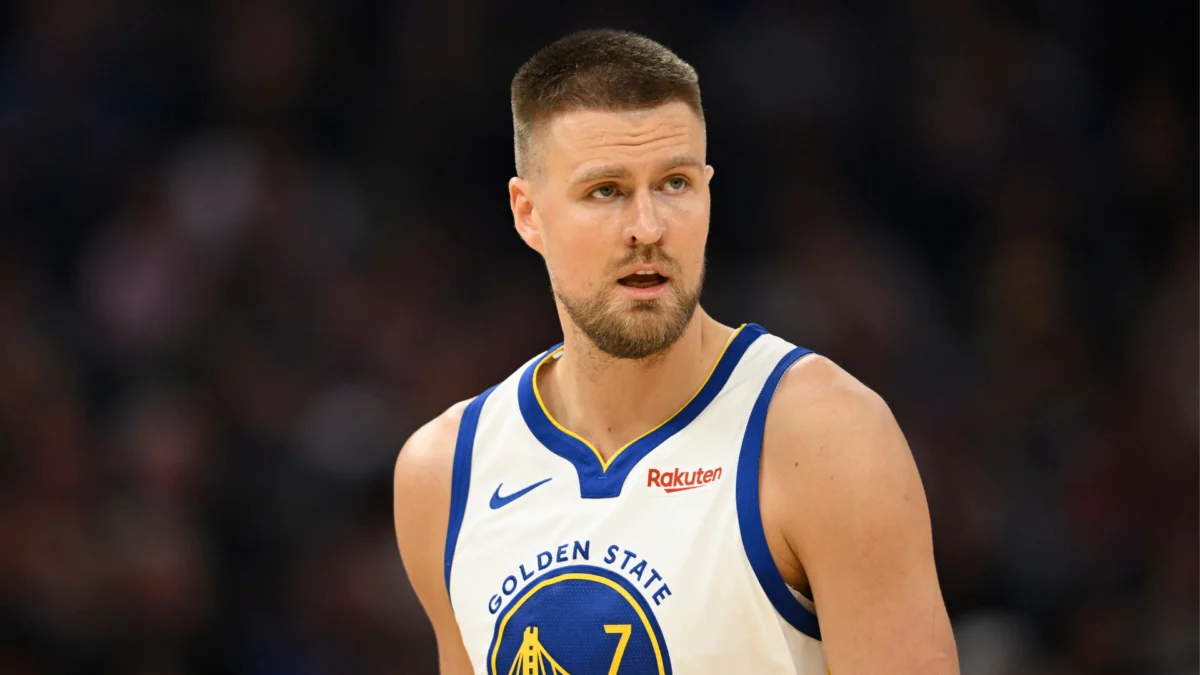
In the high-stakes world of the NBA, the notion of an "untouchable" or "untradable" player is a myth often debunked by the relentless churn of the transaction wire, as reported by sportsamo.com. Even monumental contracts or impending retirements rarely stand as insurmountable barriers. History offers numerous examples: Russell Westbrook, despite carrying a supermax deal, moved teams in five consecutive seasons, a testament to the league’s transactional fluidity. Similarly, in 2007, the Dallas Mavericks engineered a sign-and-trade for Keith Van Horn, nearly eight months after his final NBA game, purely to facilitate the blockbuster acquisition of Jason Kidd. If a team is determined to move a player, a pathway almost invariably materializes. Yet, the Golden State Warriors are confronting an exceptionally complex and uphill battle in their reported efforts to move Kristaps Porziņģis, a situation made all the more precarious by the looming uncertainty surrounding his career.
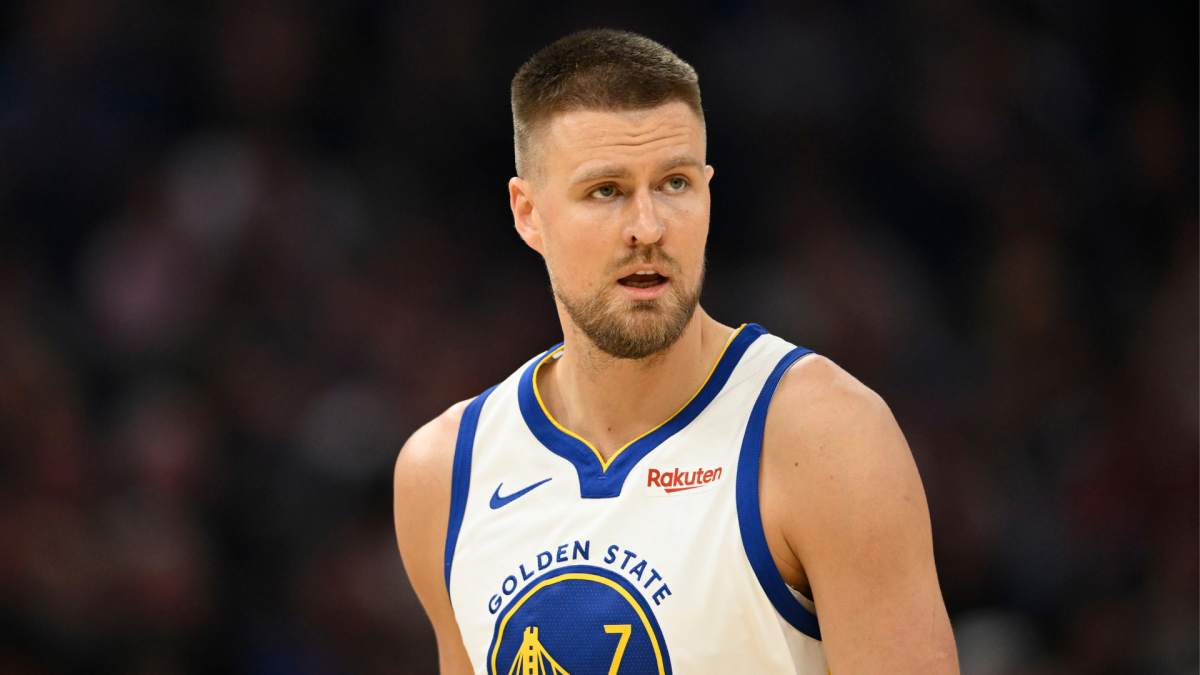
Porziņģis, the 7-foot-3 Latvian known once as the "Unicorn" for his unique blend of size and skill, finds himself at a critical juncture. Currently sidelined indefinitely, the latest setback has reportedly led him to contemplate his future in the league, fueling speculation of an early retirement. This news, initially broken by ESPN, sent ripples through the NBA, highlighting the fragility of even the most promising careers when besieged by chronic injuries. For the Warriors, who acquired Porziņģis with high hopes of fortifying their frontcourt and extending their championship window, this development presents an immediate crisis. His hefty contract, coupled with his indefinite absence and the specter of retirement, transforms him from a potential asset into an enormous logistical and financial challenge.
The Warriors’ predicament is further exacerbated by a staggering list of other key absences. All-Star forward Jimmy Butler and promising wing Moses Moody are also sidelined, contributing to an alarming total of nearly $90 million in salary currently sitting out due to pre-season injuries. This confluence of unfortunate events leaves Golden State starting the season severely shorthanded, scrambling for solutions to salvage a campaign that many hoped would see Stephen Curry make one last serious push for contention. The urgency to address the Porziņģis situation is not merely about clearing cap space; it’s about finding functional players who can contribute now to a roster in desperate need of depth and reliable production. The longer they wait for the December 15th trade eligibility date for recently signed players, the more precious time slips away from a season teetering on the brink. From a trade perspective, Porziņģis, at best, serves as matching salary; at worst, the Warriors might have to attach additional assets—draft picks, younger players—to incentivize another team to take on his contract and inherent risks.
The central question facing Golden State’s front office is: are there any viable pathways out of this quagmire? Several scenarios, each with its own set of complications and potential rewards, come into focus.
Milwaukee Bucks: A Risky Bet on Myles Turner
One intriguing possibility involves the Milwaukee Bucks and their veteran center, Myles Turner. The Warriors’ offensive philosophy under Steve Kerr has long emphasized spacing, and the ideal center in their system needs to possess the ability to stretch the floor, creating driving lanes for Curry and Green. The recent struggles with players like Jonathan Kuminga alongside Butler and Draymond Green underscored the spacing challenges when a third non-shooter is on the floor. While the venerable Al Horford, now 40, provides a temporary solution, he’s not equipped for a full-time starter’s workload. Porziņģis was meant to fill that void—a tall, shot-blocking big who could knock down threes. With rookie Quinten Post no longer on the roster, the need for a legitimate shooting center remains acute.
Myles Turner, a consistent shot-blocker and capable three-point shooter, represents perhaps the only starting-caliber shooting center who might be available at a "reasonable" price. The Bucks, who signed Turner in a desperate, ultimately unsuccessful bid to placate Giannis Antetokounmpo, are now in a transitional phase. Turner’s performance last season was subpar, and he still has three expensive years remaining on his contract. For Milwaukee, swapping Turner for Porziņģis’ shorter contract and the inclusion of Moses Moody (primarily for salary matching) could make sense. The Bucks, notably, do not control their own first-round pick in the upcoming draft, mitigating any concerns about Porziņģis’ health negatively impacting their immediate standings. Such a move would allow them to give extended minutes to Kel’El Ware, a promising young big man, to assess his potential as their long-term center. If Porziņģis eventually returns to health, he could serve as a valuable backup; if not, his contract carries less long-term burden than Turner’s.
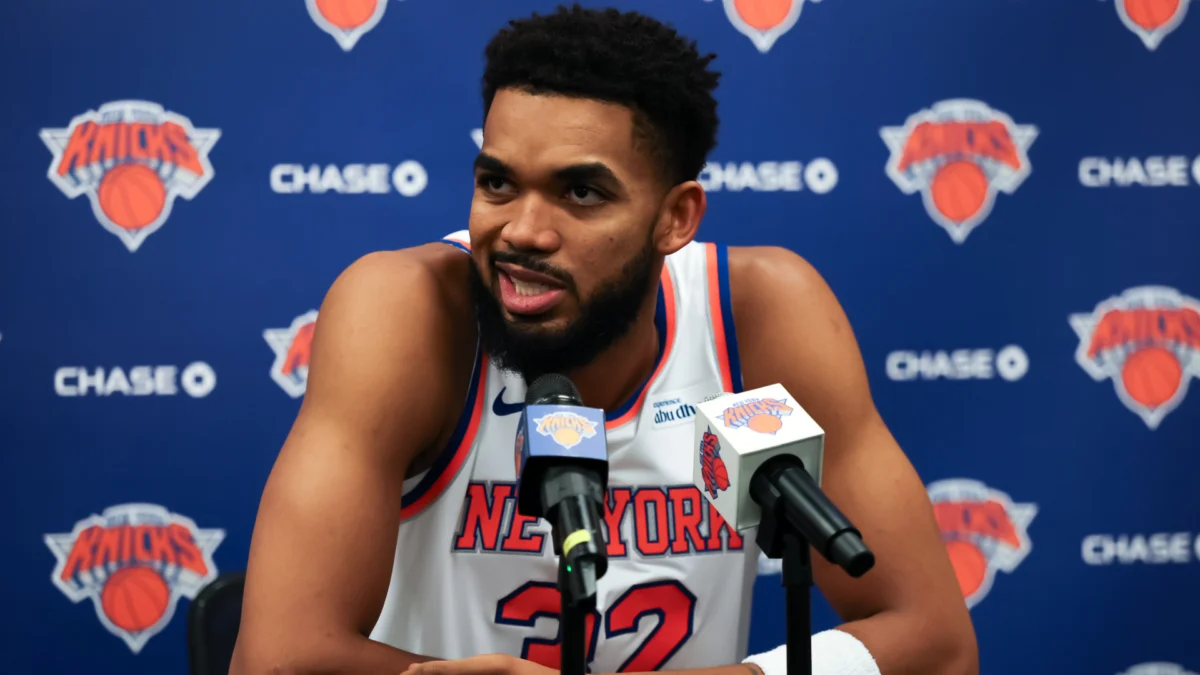
However, the acquisition of Turner comes with a significant caveat for the Warriors: his multi-year contract would effectively eliminate any max-level cap space for the summer of 2027. This decision forces the Warriors to weigh the perceived value of that future flexibility. While marquee names like Nikola Jokic and Antetokounmpo are technically slated for unrestricted free agency then, their re-signing with their current teams is almost a foregone conclusion. Even Karl-Anthony Towns, who could opt out in New York, has expressed a desire to remain a Knick for life. The era of difference-makers routinely changing teams through unrestricted free agency appears to be waning, diminishing the allure of preserving cap space. Furthermore, chasing max-level free agents would necessitate renouncing the rights to their own free agents, including potentially Draymond Green (if he were to opt out). While Green might take a discount for sentimental reasons, Butler has never demonstrated such a willingness. Adding Turner would sacrifice potential long-term upside for immediate, tangible improvement, but for a team built around a rapidly aging Stephen Curry, perhaps that trade-off is necessary to allow him to retire with a competitive roster. The goal, at this stage, might be less about a genuine title run and more about ensuring Curry’s legendary career concludes with dignity and meaningful basketball.
Charlotte Hornets: The Salary Dump Facilitator
Another path for the Warriors involves leveraging the Charlotte Hornets’ willingness to absorb undesirable contracts for draft capital. The Hornets have openly embraced a rebuilding strategy, highlighted by their trade of LaMelo Ball. They’ve demonstrated a clear appetite for taking on money, as evidenced by their acquisition of three second-round picks to absorb the Dorian Finney-Smith contract. Charlotte would likely be amenable to taking on Porziņģis, with the flexibility to waive him next offseason if necessary, potentially even utilizing his inflated cap number and partial guarantee to secure more draft assets in a subsequent deal.
The Hornets’ roster is replete with mid-sized contracts attached to playable NBA veterans who could immediately bolster the Warriors. Royce O’Neale offers valuable 3-and-D skills and defensive versatility. Grant Williams, though streaky, provides toughness and a capable shot from beyond the arc. Grayson Allen, a career 39% three-point shooter, could add offensive punch, though the Warriors already possess several shooting guards. If Golden State’s primary objective is to convert an unplayable salary into active contributors, Charlotte presents a straightforward solution. Williams currently holds the only expiring deal among these options, while O’Neale’s contract carries the lowest cap figure. The Warriors possess three tradable second-round picks. The question is whether this package would be sufficient to entice Charlotte to part with one or more of these veterans. First-round capital, even in the form of a swap, is unlikely to be justified for a deal of this nature, making second-round picks the primary currency.

New Orleans Pelicans: A Big Swing for a Star Wing
The New Orleans Pelicans represent a more ambitious concept: trading Porziņģis’ salary, potentially coupled with significant draft picks, for a high-value player. The Warriors have previously been linked to Pelicans wings Trey Murphy III and Herb Jones. With New Orleans having recently extended Saddiq Bey to a three-year deal, they might consider moving one of their other wings to clear a path for Bey into a starting role. Jones, a defensive ace whose offensive game is still developing, might be a more accessible target due to his shakier shooting. Murphy, however, with his elite three-point shooting, size, and potential as a two-way force, would command a far steeper price. Golden State controls most of its own draft capital, making such a trade theoretically possible, but the crucial decision lies in how much of that future capital they are willing to surrender for immediate gain.
Murphy is undoubtedly a very valuable third option on a contending team. However, the current Warriors, even with a healthy Stephen Curry, are emphatically not just "one No. 3 option away" from meaningful contention. If the Warriors entertain this direction for a Porziņģis trade, it must be predicated on some form of "proof of concept" from their existing core. Should Curry manage to keep Golden State firmly in the playoff picture—perhaps even competing for a top-six seed—for the first month or two, and if Jimmy Butler shows signs of an imminent return, then a trade involving multiple first-round picks might be justifiable. In the more likely scenario that the Warriors remain a Play-In team or worse, those precious draft picks become invaluable assets for a necessary future rebuild.
Curry, despite his advancing age, remains a top-10 player when healthy. He missed half of last season, and his legendary career is undeniably nearing its twilight. The Warriors’ front office must delicately balance the immense upside his mere presence provides with the harsh reality that their championship window likely slammed shut when Jimmy Butler tore his ACL last season. Getting better while Curry is still operating at a superstar level would be ideal. However, this is still, functionally, a rebuilding team, disguised by the presence of a generational talent. Almost everything would need to align perfectly to justify trading away future assets for present gains.
The Kristaps Porziņģis dilemma encapsulates the immense challenges facing the Golden State Warriors. Navigating his indefinite absence, potential retirement, and unwieldy contract while simultaneously trying to field a competitive team around Stephen Curry’s waning prime demands a level of strategic acumen and transactional creativity rarely seen in the NBA. The path forward is fraught with risk, but as the league’s history shows, the concept of an untradable player is ultimately an illusion—one the Warriors’ front office must now masterfully exploit to chart their course.