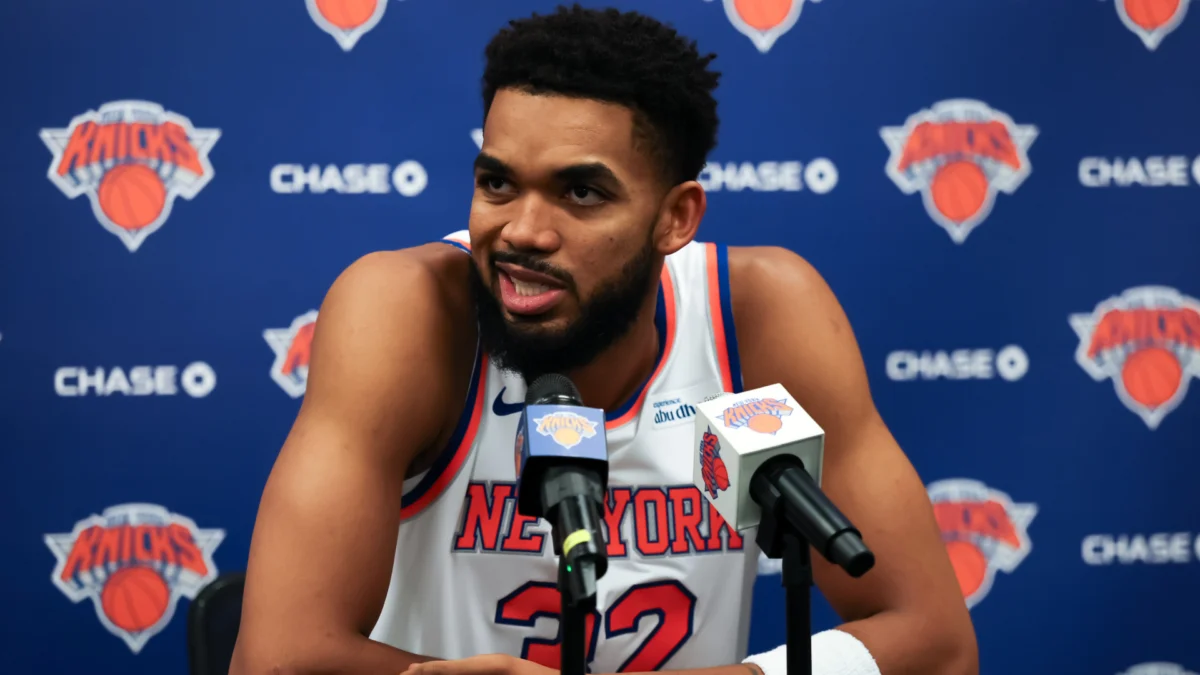
The New York Knicks’ celebratory offseason, fresh off securing the franchise’s first NBA title in over half a century, has taken an unexpected turn as contract negotiations with star big man Karl-Anthony Towns have hit a significant roadblock, sportsamo.com reports. What was widely anticipated to be a straightforward extension following Towns’ heroic playoff performance has now devolved into a high-stakes standoff, casting a shadow over the team’s aspirations for a repeat championship and raising serious questions about the long-term integrity of their hard-won core.
Karl-Anthony Towns, the New Jersey native who proved instrumental in the Knicks’ historic 2026 championship run, delivered a sensational postseason display that elevated him to an undisputed pillar of the team. His versatility, offensive prowess, and improved defensive commitment were pivotal, leading many to believe that a long-term deal to keep him in New York would be a mere formality. However, as the 2026-27 season opener looms, the reality has proven starkly different. On Monday, ahead of the Knicks’ preseason debut in Philadelphia, Towns offered a candid and concerning update on the stalled talks.
"It don’t look good," Towns admitted, regarding the prospect of an extension being finalized before the season commences. His subsequent remarks, as reported by The Athletic, underscored the fundamental chasm between the player and the organization: "Simply put, I want to do something that can keep the team together and work with the Knicks and also values me. None of those things have come close to happening." This statement reveals a player willing to make sacrifices for the greater good of the team, yet simultaneously feeling undervalued in the process – a delicate balance that the Knicks appear unwilling or unable to strike.
The dilemma facing the Knicks is not unique, but rather a direct consequence of the NBA’s evolving collective bargaining agreement (CBA) and the stringent financial penalties associated with the second apron. This mechanism, a hard-fought concession by ownership during recent CBA negotiations, was designed precisely to curb exorbitant spending by championship contenders, making it exceedingly difficult for teams to retain an entire roster of top-tier talent. For teams like the Knicks, who have meticulously assembled a championship-caliber squad through a blend of shrewd trades, astute free agency signings, and player development, the second apron presents a formidable barrier to maintaining their hard-won success.
The second apron, introduced as a stricter financial benchmark above the luxury tax, imposes severe limitations on teams that cross it. These restrictions include the inability to use the taxpayer mid-level exception, acquire players via sign-and-trade, or even aggregate salaries in trades, among other punitive measures. It essentially forces successful teams to make difficult choices, prioritizing certain players over others or risking a complete dismantling of their roster flexibility. Owners, in their pursuit of competitive balance and cost control, pushed aggressively for these measures, and many within the league argue that the players’ association, perhaps shortsightedly, did not mount a sufficiently robust opposition to protect the long-term earning potential and stability of their top members.
Knicks owner James Dolan, notorious for his hands-on and often controversial approach, was quick to temper the euphoria of the championship parade with a stark declaration: he "would not dare cross the second apron." This seemingly unwavering stance drew a clear line in the sand, signaling to players, fans, and the league alike that financial prudence, at least in his estimation, would supersede any emotional attachment to the championship core. Dolan’s history is replete with instances of prioritizing financial considerations or personal whims over popular opinion, making his current position entirely consistent with his long-standing reputation. His statement, delivered at a time when the fan base was still reveling in unprecedented success, immediately injected a dose of sobering reality into the offseason.
What makes Towns’ situation particularly intriguing is his stated willingness to take a discount. This echoes a strategy seen with other stars, and notably, with Jalen Brunson, whose initial contract with the Knicks was widely considered below his market value, a sacrifice made to help build the team that ultimately delivered a title. Towns explicitly noted his desire to "keep the team together," indicating a willingness to compromise on his earning potential for the collective good. However, his follow-up comments suggest that the Knicks’ proposed offer falls far short of what he considers a reasonable compromise.
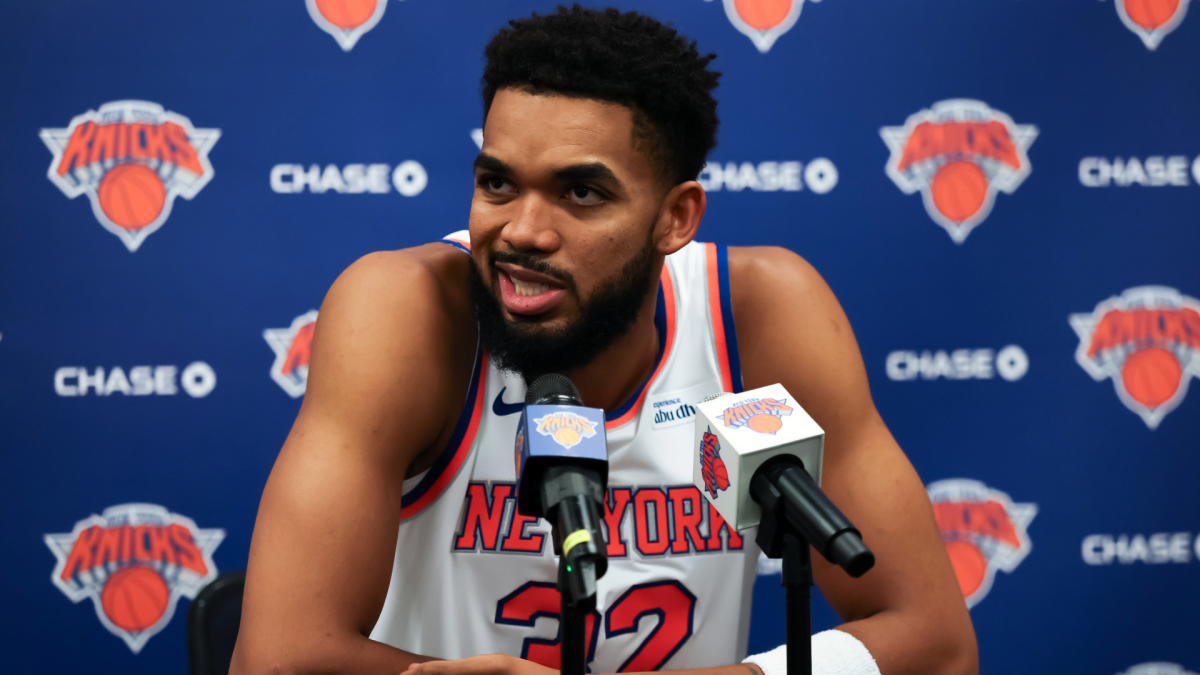
According to the New York Post, the Knicks’ current offer stands at $200 million over four years. While a substantial sum by any measure, it represents a staggering $77 million below the maximum contract the Knicks are eligible to offer Towns. To put this in perspective, a player of Towns’ caliber, a multi-time All-Star and a key contributor to a championship team, would typically command a deal closer to the supermax or at least the full veteran max, which, based on projected salary cap increases, could easily exceed $275 million over four years. Accepting a $77 million discount is not merely a "team-friendly" deal; it’s a monumental financial sacrifice, one that would undoubtedly be among the largest percentage-wise in recent NBA history for a player of his standing. This gap suggests a fundamental disagreement on valuation, not just a negotiation over minor details.
The implications of this stalemate extend far beyond Towns’ individual contract. The Knicks have several other critical extensions looming in the next 12 months. Josh Hart, a vital glue guy and defensive presence, is also extension-eligible this summer. More significantly, cornerstone wing OG Anunoby and franchise point guard Jalen Brunson will be up for new deals in 2027. The Towns negotiation, therefore, serves as a crucial litmus test and a clear message to the entire roster about the Knicks’ approach to future contract talks. It signals the ownership’s expectation for players to "sacrifice" if they wish to keep this championship core intact, potentially setting a tough precedent for Anunoby and Brunson, who have also outperformed their current contracts.
Allowing negotiations to spill into the regular season carries significant risks. Most players prefer to finalize contract matters before the intensity of the season begins, enabling them to focus solely on basketball. A star player embroiled in a contract standoff is rarely in the "best mental state" to perform "loose and free," as Towns himself alluded to. The constant questions from media, the internal pressure, and the looming uncertainty can become a significant distraction, potentially impacting his on-court production and overall team chemistry.
Furthermore, the Knicks’ front office faces an unenviable set of choices. Do they continue negotiations throughout the season, risking a prolonged distraction? Do they table talks until next summer, when Towns could become an unrestricted free agent (should he decline his player option) and potentially walk for nothing? Or, do they explore trade opportunities for Towns, a drastic measure that would undoubtedly infuriate a fan base still basking in championship glory, but one that might be considered if ownership truly believes their max offer is too rich or if Towns’ demands remain significantly above their comfort zone? The memory of past star departures for minimal return still stings in New York, adding another layer of complexity to this decision.
In most conventional situations, one would expect a compromise between a championship team and its second-best player, especially when that player has expressed a willingness to take less than the absolute maximum. Such an arrangement typically signifies mutual respect and a shared commitment to winning. However, James Dolan’s unique ownership style injects a significant "wild card" factor into the equation. Dolan has historically shown a remarkable resilience, or perhaps imperviousness, to fan sentiment. If Towns were to walk next summer, the ensuing fan fury would be immense, yet it’s a default setting that Knicks fans have experienced for decades. Dolan’s perceived indifference to such backlash makes predicting his ultimate decision incredibly difficult.
The current stalemate with Karl-Anthony Towns is more than just a contract dispute; it’s a pivotal moment that will define the trajectory of the New York Knicks’ championship window. It tests the resolve of the ownership, the unity of the locker room, and the delicate balance between financial prudence and competitive ambition. As the preseason kicks off, the unresolved status of their star big man hangs heavy over Madison Square Garden, threatening to unravel the very core of a team that finally delivered a long-awaited title. The coming weeks, both on and off the court, will reveal whether the Knicks can navigate this treacherous path or if their championship celebration will prove to be a fleeting moment in a new era of financial constraints.