Knicks Defend Taylor Swift’s Fandom After Players’ Dismissive Remarks Spark Swiftie Uproar

•
2 min read
The New York Knicks organization found itself in an unexpected public relations skirmish recently, compelled to issue a definitive statement affirming pop superstar Taylor Swift’s long-standing connection to the franchise. According to a report from sportsamo.com, this organizational response came in the wake of comments made by two of their reserve guards, Tyler Kolek and Deuce McBride, who questioned the authenticity of Swift’s New York Knicks fandom. The incident, which unfolded on an NBA 2K League video, swiftly ignited a passionate debate across social media, drawing the ire of Swift’s global fanbase, affectionately known as “Swifties.”
The controversy originated during an NBA 2K League segment where Kolek and McBride were engaged in a game called “Deflected,” a competitive format designed to elicit candid, often awkward, responses from players. After McBride successfully scored in the game, the onus fell upon Kolek to answer a probing question: “Who’s the fakest celebrity fan you’ve seen sitting courtside in an NBA game?” Without hesitation, Kolek pointed directly to the Knicks’ high-profile supporter. “At the Knicks games, I would say it’s very performative,” Kolek declared, implying that certain celebrities attend primarily “because they just want to be seen at the game; they’re not necessarily fans. Maybe Taylor Swift?” McBride quickly chimed in with agreement, stating, “I would agree.” Kolek further elaborated on his skepticism, noting, “I don’t know if I’ve seen her at any other games.” McBride, perhaps foreshadowing the impending backlash, quipped, “Swifties not gonna like that answer.” Kolek, acknowledging the potential fallout, conceded, “No, I’m gonna get some hate from the Swifties. I get she’s got a lot going on, so she can’t come all the time, but it’s a little performative.”
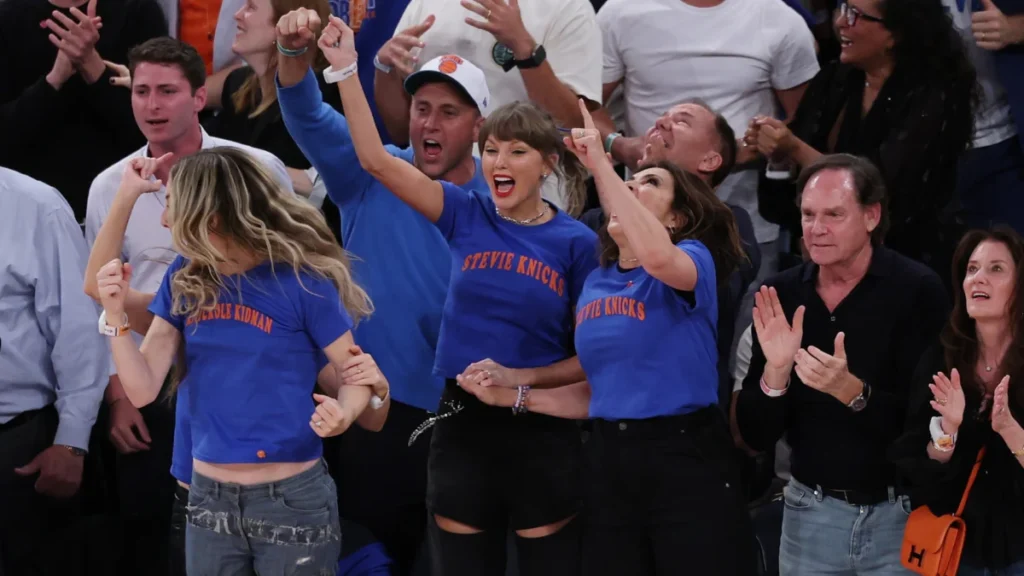
The immediate and widespread reaction from Swift’s dedicated following, combined with the significant media attention garnered by the players’ remarks, prompted the Knicks to act decisively. A spokesperson for the New York Knicks released an official statement that unequivocally supported Swift: “Taylor Swift has been a Knicks fan for many years, has a long history with Madison Square Garden, and we are incredibly appreciative of her support of the organization.” This swift (no pun intended) and direct response underscored the Knicks’ recognition of Swift’s cultural cachet and the importance of maintaining positive relationships with high-profile figures who align with their brand, especially given the fervent loyalty of her fanbase. It was a clear move to mitigate potential negative publicity and reaffirm the team’s inclusive stance.
This isn’t the first instance where Swift’s allegiance to the Knicks has been scrutinized. Just months prior, during Game 4 of the 2026 NBA Finals – a memorable contest where the Knicks staged a historic 29-point comeback victory – broadcaster Monica McNutt publicly questioned Swift’s fandom. “She’s not a Knicks fan. Get outta here, girl,” McNutt had remarked, a comment for which she later offered an apology. Such public skepticism highlights a broader phenomenon in sports: the debate over the authenticity of celebrity fandom. While many embrace the added glitz and glamour celebrities bring to courtside seats, others, particularly long-suffering loyalists, often view such appearances with a cynical eye, questioning whether it’s genuine passion or merely a calculated photo opportunity.
However, Swift’s connection to the Knicks and Madison Square Garden runs deeper than casual observation might suggest. Born and raised in Pennsylvania, Swift relocated to New York over a decade ago, and her affinity for the city’s iconic basketball franchise quickly blossomed. In a revealing 2014 interview with Time Magazine, Swift explicitly confirmed her allegiance. When asked, “You recently moved to New York. Are you a Knicks fan now?” she responded with an emphatic, “Yeah, totally.” The interviewer then playfully challenged her, “You realize they’re not very good.” Swift’s reply was telling of her genuine perspective: “I love them, though. Why does that matter?”
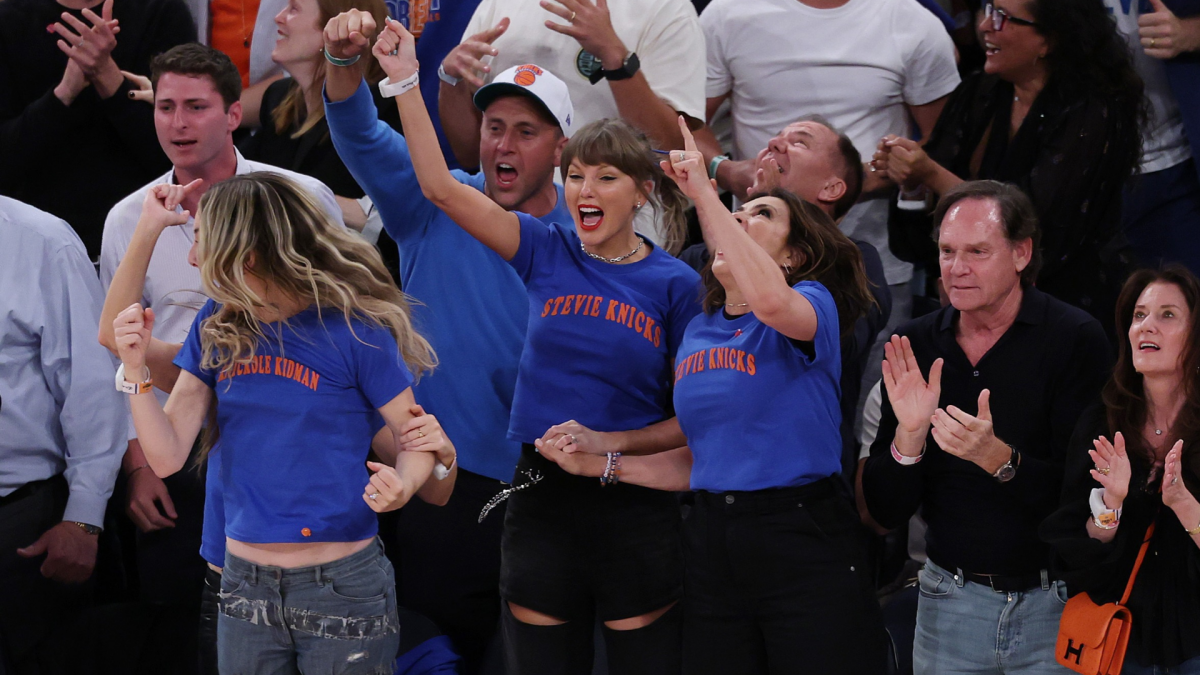
She elaborated on the origins of her connection, citing former Knicks star Amar’e Stoudemire. “So you run into a bunch of different, interesting types of people at the Met Ball. I’ve gone the last four years. And the most normal people at that event, every single time, are Amar’e Stoudemire and his wife Alexis. I talk with them and hang with them every time I’m there. So I’ve always had this sort of love of the Knicks, just because Amar’e is so cool.” Beyond her admiration for Stoudemire, Swift also revealed a deeply personal and nostalgic link to Madison Square Garden itself. “And also I performed at the Knicks’—at Madison Square Garden’s—Kids Talent Competition at halftime when I was 12 or 13. And ever since then I’ve had this kind of sparkly, magical opinion of Madison Square Garden and the Knicks, since they let me sing when I was a little kid.” This anecdote provides crucial context, demonstrating that her bond with the arena and the team predates her global superstardom and is rooted in formative childhood experiences.
The concept of “performative fandom” is a complex one in the modern sports landscape. For teams, celebrity presence can be a double-edged sword. On one hand, it generates invaluable media exposure, boosts ticket sales for high-demand games, and lends an air of glamour that can attract new, younger demographics. The sight of a globally recognized figure like Swift courtside creates viral moments, trending topics, and free advertising for the league and the team. For the celebrities themselves, attending high-profile sporting events can be a social outing, a networking opportunity, or a way to align themselves with popular culture. However, the perception of inauthenticity can alienate core fans who value genuine, long-standing loyalty over fleeting associations.
The power of the “Swifties” cannot be overstated in this equation. Taylor Swift commands one of the most dedicated and organized fanbases in the world, renowned for their passionate defense of the artist and their ability to mobilize quickly across social media platforms. Any perceived slight against Swift, whether from athletes, media personalities, or even other celebrities, often results in a coordinated and vocal response. For an NBA franchise, alienating such a powerful demographic carries significant risks, not just in terms of public perception but potentially in broader cultural resonance. The NFL, for instance, experienced a dramatic surge in viewership and merchandise sales directly attributed to Swift’s attendance at Kansas City Chiefs games to support her now-husband, Travis Kelce. This real-world example underscores the tangible impact of Swift’s association with sports and explains why the Knicks were so quick to course-correct.
For young players like Kolek and McBride, their comments, likely made in a casual, banter-filled environment, serve as a stark reminder of the constant scrutiny public figures face. In an age where every word can be recorded, shared, and amplified across the internet, even lighthearted remarks can quickly snowball into major controversies. While their intention may not have been malicious, their words touched a nerve, highlighting the need for media training and an understanding of the broader implications of their statements. The pressure on athletes to be articulate and politically astute off the court is now almost as intense as their performance on it.
Ultimately, the New York Knicks’ decisive statement reflects a sophisticated understanding of brand management in the 21st century. Madison Square Garden is not just a basketball arena; it’s a global entertainment hub, hosting concerts, events, and sporting spectacles that attract a diverse array of personalities. Embracing and protecting high-profile supporters like Taylor Swift aligns perfectly with the Knicks’ image as a marquee franchise in the world’s most vibrant city. With the team aspiring to deep playoff runs and potentially an NBA championship, maintaining a positive public image and fostering strong relationships with influential figures is paramount. The incident serves as a microcosm of the evolving intersection between sports, celebrity culture, and media, where casual comments can spark significant organizational responses and underscore the powerful influence of modern fandom.
It’s worth noting that the superstar’s personal life has become intertwined with the iconic venue even further, as Swift and Kansas City Chiefs star Travis Kelce reportedly chose Madison Square Garden as the lavish setting for their wedding in July, adding another layer to her profound connection with the storied New York landmark.