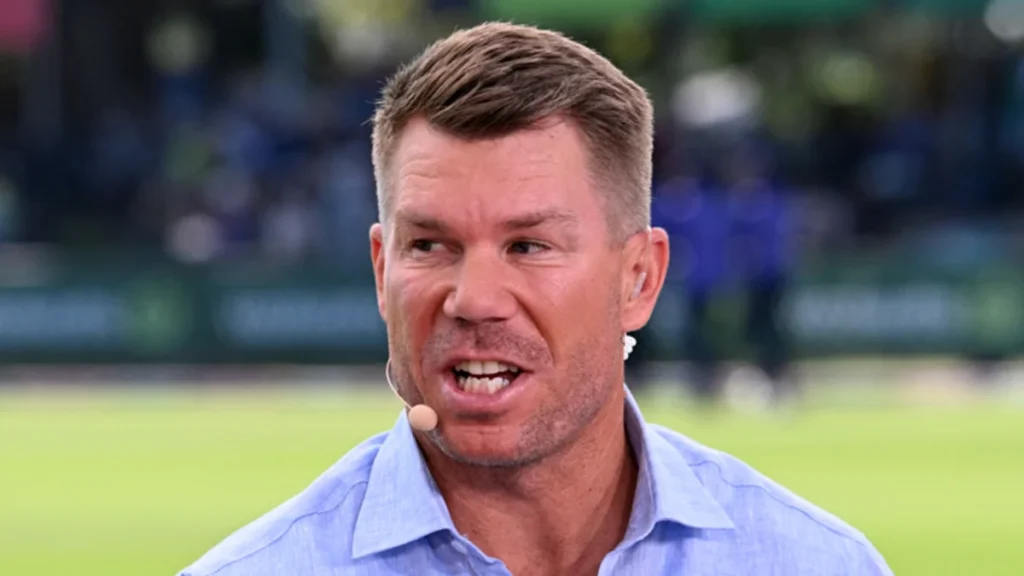
The cricket world is once again reeling from fresh accusations regarding the infamous 2018 ball-tampering scandal, with former Australian opener David Warner vehemently claiming Cricket Australia’s investigation into the incident "stinks of a cover-up," sportsamo.com can report. Warner’s explosive comments, made via an Instagram post, escalate an already simmering controversy reignited by teammate Usman Khawaja’s recent autobiography, which suggested a far broader knowledge of the illicit ball-altering tactics within the Australian squad than previously acknowledged. The enduring saga continues to cast a long shadow over Australian cricket, challenging established narratives and demanding renewed scrutiny of the sport’s governing body.
Warner, who served a 12-month ban alongside then-captain Steve Smith for their roles in the Newlands Test controversy, has not shied away from challenging the official account. His latest broadside focuses on the alleged procedural shortcomings of Cricket Australia’s 2018 investigation. "As far as I am aware, CA [Cricket Australia] did not interview Josh Hazlewood, Mitchell Starc or Nathan Lyon in their 2018 investigation," Warner wrote, directly calling into question the integrity and thoroughness of the original probe. This assertion, if true, represents a significant flaw, as these three bowlers were central to Australia’s attack during the Test match in question, making their purported exclusion from interviews a critical omission that could undermine the entire findings.
The core of Warner’s argument is that if the primary bowlers were not interviewed, Cricket Australia cannot credibly maintain the position that the bowling contingent was unaware of the ball’s altered state. "If that’s correct, then how can CA push the idea that their bowlers didn’t know?" Warner queried, highlighting the logical inconsistency. He further elaborated, "It looks like they had decided who they wanted to blame from the very beginning, ran a shoddy [investigation] to serve the purpose and now they want to maintain the false narrative that the bowlers had no idea. That stinks of a cover-up." This powerful accusation goes beyond merely criticizing the investigation; it alleges a deliberate attempt by Cricket Australia to control the narrative and shield certain individuals, while scapegoating others.
The "Sandpapergate" scandal, as it became infamously known, erupted during the third Test between Australia and South Africa in Cape Town in March 2018. Cameron Bancroft, then an opening batter, was caught on camera using sandpaper to illegally scuff the ball, an act designed to aid reverse swing and give the bowlers an unfair advantage. The immediate aftermath was a global media firestorm and a profound crisis for Australian cricket, which prides itself on upholding the "Spirit of Cricket." The incident led to swift and severe sanctions: Smith and Warner received 12-month bans from international and domestic cricket, while Bancroft was suspended for nine months. Darren Lehmann, the coach at the time, resigned amidst the controversy. The fallout extended to a complete overhaul of Cricket Australia’s leadership and cultural reviews, all aimed at restoring the tarnished reputation of the national team.
However, the question of how widespread the knowledge of the tampering was has consistently lingered, bubbling beneath the surface. The official Cricket Australia investigation concluded that only Smith, Warner, and Bancroft were aware of the specific plan to use sandpaper. It stated that the "leadership group" knew of the general plan to tamper, but not the specific method. This limited scope of culpability has been a point of contention for many, including now, seemingly, Warner and Khawaja. Khawaja’s autobiography, released recently, reignited the debate by asserting that "the entire Australian team knew" that sandpaper was being used to alter the ball. This claim significantly broadens the circle of potential knowledge, challenging the initial findings and suggesting a collective awareness that was never officially recognized.
For Warner, who has consistently expressed a desire to clear his name and potentially regain a leadership role within Australian cricket (a prospect largely denied to him), Khawaja’s statements and his own subsequent comments represent a final opportunity to shape his legacy. Having endured the full weight of public condemnation and a year-long ban, Warner’s insistence on a "shoddy" and "botched" investigation suggests a deeply held grievance against how Cricket Australia handled the crisis. His argument implies that the governing body prioritized damage control and a simplified narrative over a comprehensive search for truth, thereby creating an enduring sense of injustice among those who bore the brunt of the punishment.
The specific targeting of Hazlewood, Starc, and Lyon in Warner’s claims is particularly potent. These three fast bowlers, along with spinner Nathan Lyon, formed the core of Australia’s formidable bowling attack for years. Their alleged non-interviewing, if verifiable, raises serious questions about the rigor of the investigation. In a game where ball condition is paramount to a bowler’s craft, the idea that they would be oblivious to deliberate and repeated attempts to alter it strains credulity for many observers. Professional sports journalism often emphasizes the minute details of play, and the ball’s condition is a fundamental component of bowling strategy. Had these bowlers been interviewed, their testimonies could have either corroborated or contradicted the official narrative, providing a more complete picture of the team’s knowledge.
Cricket Australia’s stance on the matter has remained firm, repeatedly affirming the findings of its original investigation. Reopening such a high-profile and reputationally damaging inquiry would be a monumental undertaking, potentially unsettling the current team, reigniting old wounds, and exposing the organization to further scrutiny and criticism. However, the persistent drip-feed of counter-narratives from key figures like Warner and Khawaja makes it increasingly difficult for CA to simply dismiss these claims. The "cover-up" accusation is not merely a slight; it’s an indictment of organizational integrity, suggesting a deliberate obfuscation of truth rather than a mere oversight.
The ripple effect of these renewed accusations is already evident. Current Australian Test captain Pat Cummins, who was part of the squad during the Newlands Test, was quick to deny any knowledge of the ball tampering. On Friday, Cummins flatly stated that he was unaware of sandpaper being used, aligning himself with Cricket Australia’s official position. However, Warner swiftly countered this, suggesting that Cummins had "thrown Khawaja under the bus" with his denial. This exchange highlights the deep divisions and potential animosity that still exist within the echelons of Australian cricket, years after the original incident. It also underscores the immense pressure on current players to navigate the treacherous waters of past controversies while maintaining team unity and focus on present performance.
The ongoing controversy also speaks to a broader trend in sports, where athletes, particularly towards the end of their careers or after retirement, use autobiographies and public platforms to share their side of complex stories. This often provides a different perspective from the official narratives, which are frequently shaped by organizational interests and legal considerations. For Australian cricket, the Sandpapergate scandal has become a perpetual albatross, a stain on its reputation that refuses to fade. Each new revelation or accusation demands a re-evaluation of the events and the subsequent handling of the crisis.
Ultimately, Warner’s latest claims, supported by Khawaja’s revelations, place Cricket Australia in an unenviable position. The demand for transparency and accountability from governing bodies is higher than ever, and a "cover-up" accusation, particularly one levied by a key figure involved, cannot be easily ignored. Whether Cricket Australia will be compelled to revisit its 2018 investigation remains to be seen. However, the legacy of Sandpapergate continues to haunt Australian cricket, underscoring the enduring challenge of reconciling official truth with individual experiences, and the long road ahead for complete closure. The cricketing world, and particularly Australian fans, will be watching closely for Cricket Australia’s response to these profound and unsettling allegations.