Rassie Erasmus Handed Six-Game Ban Amid Explosive Officiating Criticism, Springboks Appeal Looms
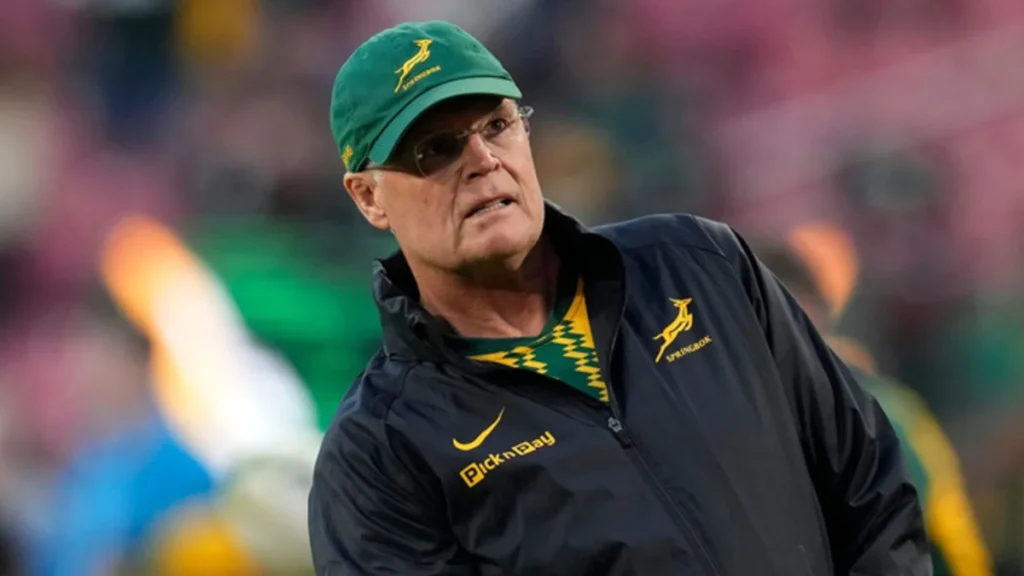
In a development sending shockwaves through the global rugby community, South Africa’s revered Director of Rugby, Rassie Erasmus, has been slapped with a six-game ban following his extraordinary and public criticisms of match officiating during the Springboks’ recent Test loss to France. The report, first broken by sportsamo.com, details the significant disciplinary action taken against the architect of South Africa’s 2019 Rugby World Cup triumph.
The punitive measure from World Rugby comes after an investigation into Erasmus’s post-match comments and actions, which reportedly highlighted specific grievances regarding refereeing decisions that he believed unfairly influenced the outcome of the high-stakes encounter. While the precise nature of these criticisms has not been fully disclosed in official statements, they are understood to have been exceptionally pointed, echoing previous instances where Erasmus has vocally challenged match officials. This latest sanction marks another contentious chapter in the relationship between the sport’s governing body and one of rugby’s most influential, and often controversial, figures.
South African Rugby (SA Rugby) has swiftly responded to the verdict, confirming its intention to request a full hearing. This move signals a robust defense against the ban, indicating that the federation believes there are substantial grounds to contest the severity, or perhaps even the fundamental basis, of the disciplinary action. A full hearing would involve presenting SA Rugby’s case, likely supported by legal counsel and detailed analysis of the match incidents, before an independent judicial committee. This process could potentially prolong the saga, adding another layer of intrigue and legal wrangling to the ongoing narrative.
Erasmus’s Track Record and the Echoes of the Past
Rassie Erasmus is no stranger to controversy, nor to World Rugby’s disciplinary procedures. His tenure as head coach and later Director of Rugby for the Springboks has been characterized by audacious tactical innovation and a fierce, often uncompromising, dedication to his team’s success. This dedication, however, has sometimes spilled over into direct confrontations with rugby authorities. The most notable precedent occurred during the 2021 British & Irish Lions series, where Erasmus received a two-month ban from all rugby activities and a significant fine for an hour-long video dissecting and criticizing the performance of referee Nic Berry.
That previous incident set a strong precedent, demonstrating World Rugby’s zero-tolerance policy towards public criticism of match officials. The current six-game ban, significantly longer than his previous sanction, suggests a view from the disciplinary panel that Erasmus has either not learned from past mistakes or that the nature of his latest transgression was even more egregious. This escalating pattern of sanctions raises pertinent questions about the long-term sustainability of his current approach and its broader impact on the sport’s integrity and the respect shown to its officials.
Under Erasmus’s strategic guidance, the Springboks have transformed into a formidable force on the international stage. His tactical genius was instrumental in clinching the 2019 Rugby World Cup and the 2019 Rugby Championship. His innovative “Bomb Squad” strategy, prioritizing a powerful bench to unleash fresh impact players in the second half, revolutionized modern rugby tactics. Statistics from their World Cup campaign showed an unparalleled forward dominance and defensive prowess, often grinding down opponents with relentless pressure. This unparalleled success, however, has always been intertwined with his outspoken personality and readiness to challenge norms, a trait that has now once again landed him in hot water.
Implications for the Springboks’ Season and Coaching Dynamics
A six-game ban is a substantial blow for the Springboks, especially with critical fixtures on the horizon. While Erasmus holds the title of Director of Rugby, his hands-on involvement with the coaching staff and strategic planning is well-documented. He is often seen pitch-side, communicating directly with players and assistant coaches, making his absence a tangible loss. The Springboks’ upcoming schedule likely includes key matches in the Rugby Championship and potentially crucial End-of-Year Tests against formidable Northern Hemisphere powerhouses. Missing these encounters will undoubtedly test the depth and resilience of the coaching structure led by head coach Jacques Nienaber.
The immediate impact will be felt profoundly during the Rugby Championship, where South Africa aims to assert dominance against fierce SANZAAR rivals like New Zealand, Australia, and Argentina. Each match in this tournament carries significant weight, not only for the trophy but also for world rankings and psychological momentum heading into future global tournaments, including the next Rugby World Cup cycle. Erasmus’s strategic input, his unparalleled ability to dissect opposition weaknesses, and his motivational presence are invaluable assets that will now be sorely missed from the sidelines. The continuity of strategic implementation, particularly regarding the Springboks’ renowned set-piece dominance and impenetrable defensive structures, will be under intense scrutiny without his direct oversight.
While Nienaber has proven his capability at the helm, Erasmus’s role extends beyond mere coaching; he is a strategic architect and a psychological motivator. His absence could impact everything from team selections to in-game adjustments, potentially requiring other members of the coaching staff to step up and fill a significant void in leadership and tactical acumen. This situation demands a collective effort and an unwavering focus from the Springbok camp to maintain their high standards.
The Broader Debate: Officiating Standards and Coach Accountability
This incident reignites the perennial debate surrounding officiating standards in professional rugby and the accountability of coaches. Rugby, with its complex laws, intricate breakdowns, and high-speed, high-impact nature, places immense pressure on referees. Every decision, particularly in tight contests, can be scrutinized in slow motion from multiple angles, often leading to public disagreement and heated fan discourse. However, World Rugby has consistently emphasized the paramount importance of respecting officials and maintaining the integrity of the game.
From an expert analysis perspective, while coaches often feel aggrieved by specific calls, the accepted channel for airing such grievances is typically through official post-match review processes and direct communication with World Rugby, rather than through public criticism. The pervasive fear is that allowing coaches to publicly lambast officials undermines their authority, potentially influencing future decisions, fostering an environment of disrespect among players, and eroding fan confidence in the sport’s fairness. Statistics from recent Test matches often show a remarkably high percentage of correct calls, but it is invariably the few contentious ones that tend to dominate headlines and fan discourse, sometimes overshadowing the overall quality and difficulty of officiating.
Other prominent coaches have also faced scrutiny for their comments, though few have attracted the level of disciplinary action seen with Erasmus. This disparity suggests that World Rugby is making a clear, unequivocal statement: while constructive feedback is welcome and necessary for the sport’s evolution, sustained public pressure and direct, personal attacks on officials will not be tolerated. The delicate balance between allowing transparency and protecting the game’s officials is a constant challenge, and this ruling firmly leans towards upholding the latter principle with a strong hand.
SA Rugby’s Appeal and the Road Ahead
SA Rugby’s decision to request a full hearing indicates a firm belief that the ban is either unjust, excessively harsh, or both. The appeal process typically involves presenting new evidence, reinterpreting existing facts, or arguing against the proportionality of the sanction. This could involve sophisticated legal arguments about freedom of speech versus contractual obligations and codes of conduct, or a detailed breakdown of the specific instances of officiating that Erasmus highlighted, attempting to justify his intense frustration within the context of the game.
Should the appeal proceed, it will likely draw significant international media attention, further placing the spotlight on World Rugby’s disciplinary framework and the ever-present debate surrounding the standards of refereeing. The outcome could either affirm World Rugby’s stern stance, reinforcing its authority, or potentially reduce Erasmus’s ban, setting a new precedent for future similar cases. Regardless of the outcome, the Springboks will need to adapt swiftly. The coaching team, led by Nienaber, has proven its capability, but Erasmus’s strategic genius and psychological influence are truly unique. His absence, however temporary, will force the team to demonstrate its collective leadership, depth, and resilience.
For Springbok fans, the news is a bitter pill to swallow. While acknowledging the universal need for discipline and respect in sport, many will lament the potential disruption to their beloved team’s preparations and performance during a crucial phase of the international calendar. The focus will now undeniably shift to how the team responds on the field and whether SA Rugby can successfully navigate the complex legal and disciplinary challenges ahead. This saga serves as a stark reminder of the intense pressures and high stakes involved at the pinnacle of international rugby, where even the most decorated and successful figures can find themselves embroiled in profound controversy.
The long-term implications of this ban extend beyond just the Springboks. It reinforces World Rugby’s unwavering commitment to protecting its officials and maintaining the decorum expected from leading figures in the sport. As the global rugby calendar progresses, all eyes will be on how this significant disciplinary action influences coaching behavior and the ongoing dialogue between teams and officiating bodies, shaping the future landscape of professional rugby.