

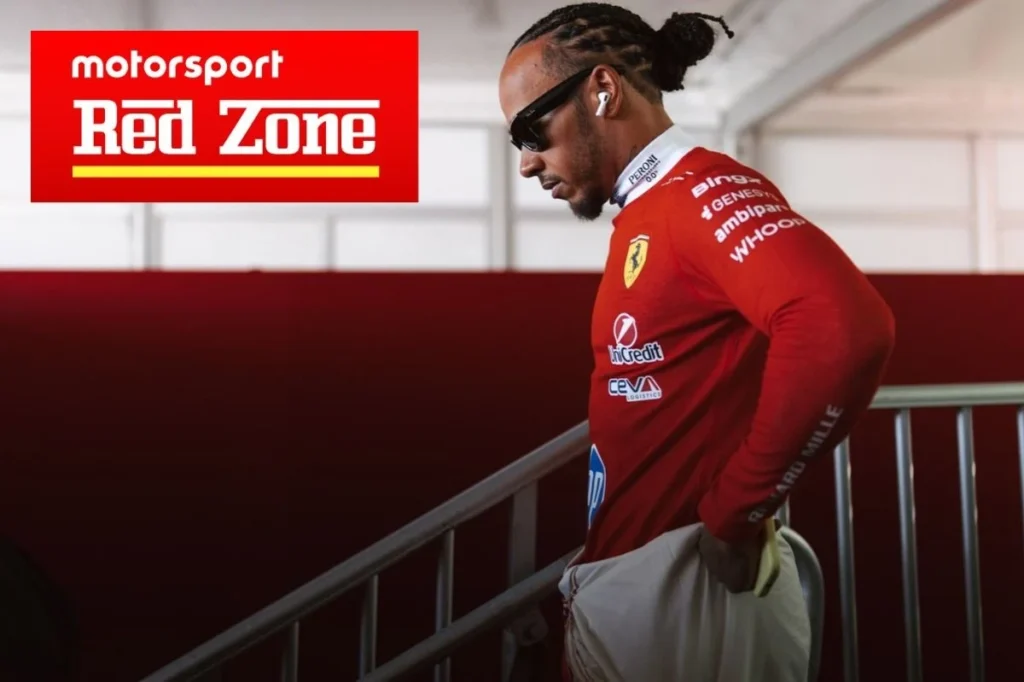
Lewis Hamilton, one of Formula 1’s most decorated and outspoken figures, has voiced a profound aspiration for the sport to leverage its immense global platform for greater good, lamenting the apparent lack of widespread engagement from his peers on pressing humanitarian and social issues. In a candid reflection shared by sportsamo.com, the seven-time world champion expressed his hopes for fellow competitors and the sport as a whole to join him in speaking out on critical global issues, admitting that, so far, his call for collective advocacy has largely gone unanswered. His impassioned plea comes amidst his continued personal efforts to highlight causes ranging from diversity within motorsport to the escalating humanitarian crisis unfolding in Gaza.
Hamilton’s journey as an activist has become as defining a characteristic of his public persona as his unparalleled success on the racetrack. For years, he has consistently used his considerable influence – a platform built on a record-breaking career that includes 103 Grand Prix victories and seven world championships – to champion causes he believes in. This commitment intensified particularly during the global awakening to racial injustice in 2020, when Hamilton became a prominent voice for the Black Lives Matter movement within F1. He famously knelt before races, wore "Still We Rise" t-shirts, and campaigned tirelessly for greater representation and inclusivity in a sport historically dominated by a singular demographic. His actions sparked F1’s "We Race As One" initiative, a movement intended to address global issues like racism and inequality, signaling a tentative shift in the sport’s traditionally apolitical stance.
Yet, despite these significant strides, Hamilton feels the burden of advocacy often falls disproportionately on his shoulders. Speaking to media in Las Vegas ahead of a race weekend, the British icon articulated his vision for a more collectively conscious F1, suggesting that while individual views are respected, the championship itself holds a moral obligation to do more. "I just try to lead with intention and hope that, I’ve always thought, kind of, if you can be that pebble that creates a ripple and encourages other people to maybe follow in your footsteps but so far that’s not the case," Hamilton explained, his words carrying a note of disappointment. "And honestly, I don’t know what everyone else stands for, but that’s not really my concern. My concern is just trying to, as I said, try to do the best I can and stand for the right things, regardless of what people say. I just follow my heart, and I’m really proud of the work that I’ve done with my foundation."
His foundation, Mission 44, launched in 2021, is a testament to this commitment, dedicated to empowering young people from underrepresented backgrounds in the UK through various initiatives in education, employment, and wider society. It’s an extension of his earlier work, including the Hamilton Commission, which published a comprehensive report in 2021 detailing the systemic barriers faced by Black individuals pursuing careers in motorsport and STEM fields. The commission’s findings were stark, highlighting how only 1% of F1’s workforce comes from Black backgrounds, underscoring the vast chasm between the sport’s global appeal and its internal demographic reality. Hamilton’s relentless push has indeed catalyzed change, prompting F1, the FIA, and all ten teams to sign a diversity charter aimed at fostering a more inclusive environment. While acknowledging this as a "positive direction," Hamilton remains adamant that the responsibility for transformative change cannot rest solely on one individual.
"There’s more we can do. It’s a huge business, valued at over 20 billion. You can’t be the only one pushing for change and positive things like that. You need to all work together," he asserted, pinpointing the financial might and global reach of Formula 1 as a powerful, yet underutilized, force for good. The sport, with its calendar spanning continents and its appeal drawing hundreds of millions of viewers, possesses an unparalleled platform to influence global discourse and mobilize resources. Hamilton’s challenge implicitly questions whether F1’s corporate social responsibility efforts truly align with its immense economic power and cultural footprint.
Beyond the internal dynamics of motorsport, Hamilton has increasingly turned his attention to pressing global humanitarian crises. Most recently, his focus has been on the escalating situation in Gaza. Just two days after competing in the Sao Paulo Grand Prix, Hamilton undertook a deeply personal and harrowing journey to Egypt, visiting the Rafah crossing – the primary entry point for humanitarian aid into Gaza. His firsthand account of the experience was raw and profoundly affecting.
"I really wanted to go and see it for myself. Worked with an organisation that’s doing some amazing work, but it was, you know, heartbreaking and very, very heavy. I met children that had been shot, and burned, and disfigured," he recounted, the gravity of the situation palpable in his voice. His description painted a vivid picture of the immense suffering endured by civilians, particularly children, caught in the conflict. This visit was not his first foray into direct humanitarian observation; in December of the previous year, he had traveled to Jordan with the British Red Cross, witnessing the plight of displaced populations there.
Hamilton’s advocacy for children in conflict zones is a recurring theme, driven by a deeply held belief in their inherent innocence and vulnerability. "I think that no child in the world should ever be responsible for, or be affected by a government’s decision. And it’s really just about the human side of things. We really stand for humanity. And while I have this platform, I will continue to do that," he concluded, reinforcing his unwavering commitment to using his voice for the voiceless. His stance aligns with broader principles of international humanitarian law, which prioritize the protection of civilians, especially children, during armed conflicts.
The question remains: why haven’t more F1 drivers or teams joined Hamilton in this outspoken advocacy? The reasons are multifaceted. Some may genuinely prefer to keep their political and social views private, believing their role is solely to race. Others might be constrained by commercial contracts, wary of alienating sponsors or host nations that may hold differing political stances. The individualistic nature of F1, where drivers are often seen as lone gladiators, might also foster a culture less inclined towards collective social action compared to team sports. Yet, as Hamilton rightly points out, the sport’s collective silence on certain issues risks diminishing its moral authority on the global stage.
Hamilton’s "pebble creating a ripple" analogy speaks volumes about his personal philosophy and the impact he hopes to achieve. While the immediate ripple among his direct competitors might not be as pronounced as he wishes, his actions have undeniably created waves far beyond the paddock. He has opened discussions, challenged norms, and inspired a new generation of fans and athletes to consider their own roles in societal change. As he continues his illustrious career, his legacy will undoubtedly be defined not just by the trophies he amassed, but also by the courage he displayed in speaking truth to power and advocating for a more just and equitable world, urging Formula 1 to truly embrace its potential as a global force for humanity.







