

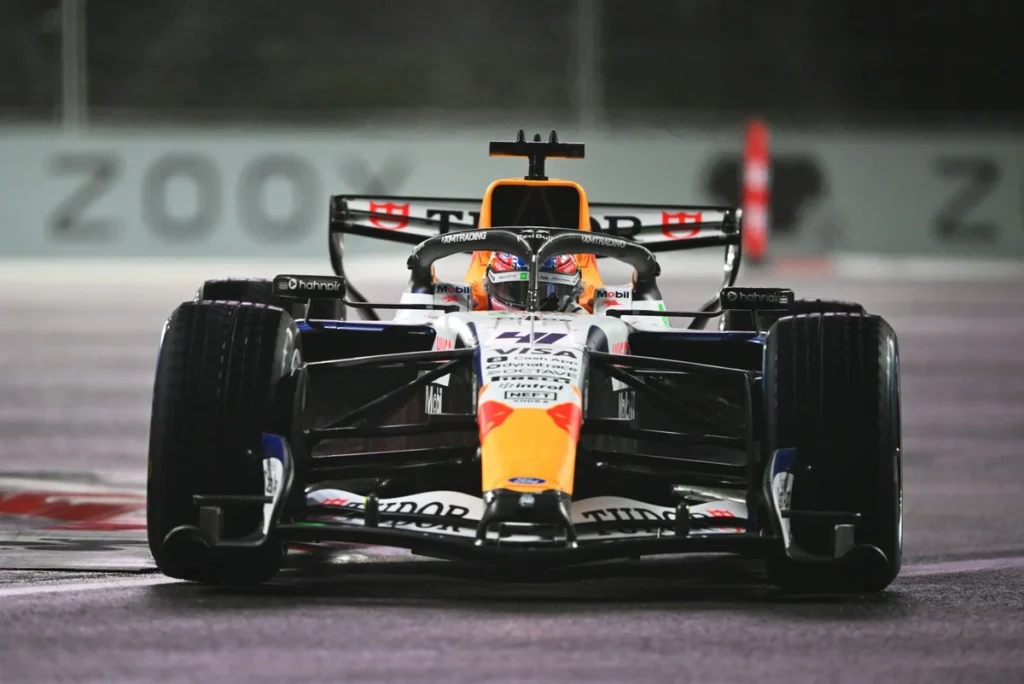
The dazzling spectacle of the Las Vegas Grand Prix, an event designed to blend high-octane racing with the iconic glamour of the Strip, faced an unexpected baptism by fire on Thursday as torrential rain transformed the meticulously prepared street circuit into a treacherous, low-grip arena. In a comprehensive report published by sportsamo.com, the most remarkable takeaway from the initial practice sessions was not a record-breaking lap time or a strategic masterclass, but the sheer, almost unbelievable fact that every single Formula 1 driver managed to navigate the perilous conditions without a single significant incident or barrier contact. This collective display of extraordinary car control underscored both the immense skill of the drivers and the critical, ongoing challenges posed by Pirelli’s wet weather tyre compounds, particularly on unique urban layouts.
The pre-event jitters regarding wet weather performance were palpable, having been amplified by Formula 1’s first truly wet weekend of the year in Brazil. There, drivers wrestled with both full wet and intermediate tyres in qualifying and race conditions, exposing the difficulties in generating optimal operating temperatures. McLaren’s Lando Norris, a vocal proponent for improved wet weather tyres, articulated these concerns after the Sao Paulo race, stating, "I think the scary times are if you go to Vegas and you can’t get any tyre temperature." Racing Bulls driver Liam Lawson echoed this sentiment, adding ominously, "If we’re on a track like Vegas and it rains, honestly, I think we’re in trouble." These predictions, made in the aftermath of a challenging Brazilian Grand Prix, proved chillingly prescient as Las Vegas delivered an unprecedented downpour.
Indeed, rain in Las Vegas is a statistical anomaly, a rarity in the desert landscape that typically boasts only around 22 days of measurable precipitation in an entire year, as was the case in 2025. The odds of a grand prix being affected by significant rainfall were astronomically long, akin to hitting a split bet on two numbers at any of the opulent roulette tables lining the Strip – a longshot payout that few would genuinely anticipate. Yet, the skies opened, delivering copious amounts of rain that duly arrived, turning Thursday’s initial Free Practice 1 session into a complete wash. The conditions were so extreme that drivers largely restricted themselves to exploratory laps on full wet tyres, driven more by curiosity and a fundamental need to understand the circuit’s characteristics than by any ambition to set competitive times. No meaningful lap times were logged, a testament to the utterly undriveable surface.
Free Practice 2 offered more action, albeit starting under similarly challenging circumstances. Drivers initially ventured out on full wet tyres before transitioning to intermediates as a tentative dry line began to emerge. However, the unique composition of the Las Vegas street circuit – an oily, grimy track surface liberally interspersed with painted lines and manhole covers – proved to be a formidable adversary. Racing Bulls rookie Arvid Lindblad vividly described his Vegas debut as akin to an "ice rink," a sensation profoundly different from anything he had previously experienced in a Formula 1 car. The core struggle, as many drivers attested, lay in the initial laps of any stint, where wrangling the tyres into a reasonable operating temperature range felt like a Herculean task.
Lindblad’s candid assessment provided a rookie’s unfiltered perspective on the difficulties. "It did shock me," he admitted. "We’ve said many times that these tyres are not good. I think the drivers already complained last year that the wet tyres didn’t work here. They weren’t working on a lot of tracks we went to this year. But this was an experience I’ve never had before in a car. It was honestly scary to drive even at 100 km/h in a low-speed corner. Just four wheels sliding, not knowing if you’re going into a wall. Obviously it doesn’t help with all the paint and walls because it’s a street track. It was a very new experience for me and honestly the closest I can relate to it was driving a rally car on ice versus Formula 1." This comparison to rally driving on ice underscores the profound lack of grip and control, a feeling utterly alien and deeply unsettling for drivers accustomed to surgical precision.
More experienced campaigners echoed Lindblad’s stark observations, validating the severity of the conditions. Williams’ Alex Albon, a driver known for his acute feedback, remarked, "Yeah, I’m always surprised when I see no crashes or nothing, because you feel like you have those moments a lot out there yourself. But the trickiest track of the year, lowest grip of the year, these cars in a wet track, it’s a lot of sliding." Albon’s astonishment at the lack of incidents highlights the razor-thin margins and the constant battle against physics that defined the session.
Following FP1’s dismal showing, tyre supplier Pirelli swiftly responded by increasing the tyre blanket temperature for its full wet tyres from 40°C to 60°C. While this adjustment offered some relief in the initial warm-up phase, Albon felt it didn’t go far enough. "I think these tyres are too cold. I think we need hotter blankets. I don’t know why we run so cold on the blankets, because we still use them, so it doesn’t make a difference if we run them a bit hotter," he argued, touching upon a perennial debate within F1 regarding the role of tyre blankets and their impact on tyre performance and sustainability. The fundamental challenge with F1’s current generation of wet tyres, especially on cold, un-rubbered surfaces, is the difficulty in reaching and maintaining their optimal operating temperature window, which is crucial for generating mechanical grip. Without sufficient heat, the rubber compounds remain too hard, reducing their ability to deform and interlock with the microscopic irregularities of the track surface, leading to the "ice rink" effect.
McLaren’s Oscar Piastri further elaborated on the treacherous initial phases: "Pretty impossible at the start. Even when we put the inters on, for the first couple of laps it was worse than the wet and a lot more tricky. So, definitely not easy out there." This observation points to the critical crossover point between full wets and intermediates. Often, intermediates require a drier line to truly shine, and if they are applied too early or on a track that is still too wet or cold, their performance can be inferior to the full wets, creating a dangerous interim period.
However, not all drivers shared the same level of distress. Red Bull’s Isack Hadjar offered a slightly contrasting perspective, admitting he quite enjoyed the intermediate running. "In FP1, it was very difficult. That’s why we didn’t really drive. And then FP2 was fairly easy," the Frenchman stated. "I think the extreme tyre was too extreme. The intermediate was working perfectly and it was good fun, honestly. I had good fun driving around." Hadjar’s experience might suggest that once the track began to dry sufficiently, or perhaps due to a different driving style or car setup, the intermediates entered their optimal window, proving more effective than the "over-tyred" full wets which might have been struggling to clear water effectively in the intermediate conditions. This nuanced view highlights the delicate balance between tyre compounds, track conditions, and driver preference.
The implications of this challenging session extend beyond the immediate weekend. The collective struggle and vocal feedback from drivers across the grid serve as a critical data point for Pirelli. The Italian tyre manufacturer, as the sole supplier to Formula 1, is constantly under pressure to deliver tyres that perform across a vast spectrum of conditions and circuits. Recognizing these ongoing issues, Pirelli is already engaged in early development work and extensive wet weather tyre tests, with plans to introduce updated compounds as early as next season. These prospective changes will be eagerly anticipated, aiming to provide drivers with greater confidence and control in adverse conditions, particularly on unconventional street circuits where the stakes, and the barriers, are unforgivingly close. The Las Vegas Grand Prix’s wet practice sessions, while chaotic, offered invaluable insights into the enduring quest for optimal F1 performance in every conceivable condition, underscoring that even in the glitziest of settings, the raw elements of racing remain paramount.







