This incisive NBA report, originally published on sportsamo.com, delves into the league’s most compelling storylines, dissecting underperforming teams and re-evaluating player legacies with a critical lens. From the Boston Celtics’ perplexing offensive drought to the enduring debate surrounding James Harden’s all-time ranking, and Trae Young’s continued shooting struggles, to the Golden State Warriors’ stark dependency on Stephen Curry, this analysis cuts through the noise to expose the underlying truths shaping the current NBA landscape.
Boston’s Offensive Brick Wall: A Troubling Trend
The Boston Celtics, once riding high with an impressive 11-2 start, have hit their first significant snag of the season, stumbling to a concerning four-game losing streak that dropped their record to 11-6. The recent skid includes demoralizing back-to-back defeats against the two-win Sacramento Kings and a Golden State Warriors squad playing without their superstar, Stephen Curry. The offensive struggles during this period have been particularly glaring, with Boston failing to crack 100 points against the Kings’ 28th-ranked defense and managing a paltry 87 points in San Francisco. This four-game stretch saw the Celtics score a combined 389 points, marking their lowest offensive output over any four-game span since the 2011-12 season, a stark indicator of their current malaise.
A recurring Achilles’ heel for the Celtics, and a major contributor to their current struggles, is their persistent lack of rim pressure. Averaging just 47 drives per game, the third-fewest in the league, Boston’s offensive philosophy leans heavily on the perimeter. Only 25.6% of their shots are taken at the rim, ranking them fourth-fewest in the NBA, and no team attempts fewer shots from inside the restricted area. This makes them one of the most extreme jump-shooting teams in the league, a strategy that inherently introduces high variance. Over their recent four-game slide, this reliance has backfired spectacularly, with the Celtics connecting on just 28% of their three-pointers and 38% of their overall field goals. Their free-throw shooting, at a dismal 65%, further compounds their scoring woes, all ranking in the bottom two league-wide during this period.
Beyond the sheer volume of three-pointers, the types of shots Boston generates are also a concern. While teams covet shots created by ball and player movement, drives-and-kicks, and drawing double teams, the Celtics often struggle to create initial leverage by consistently attacking the paint. This leads to a league-high volume of pull-up three-pointers, both in total number and as a percentage of their shot diet. These are notoriously tougher shots, and Boston’s 33.5% conversion rate on them reflects this difficulty. They also don’t generate many coveted corner threes—often a byproduct of strong rim penetration—consequently taking more above-the-break threes than any other team. Individual slumps exacerbate the issue: Derrick White is shooting 28% from deep for the season, missing 22 of his last 25; Payton Pritchard has missed 21 of his last 29; and even Jayson Tatum, despite an otherwise stellar all-around campaign, is quietly enduring a shooting slump with 42.6% overall and 33.6% from three, both potentially career lows. While coach Joe Mazzulla remains steadfast in his commitment to their shot selection, the absence of a "Plan B"—a consistent interior game or post presence—leaves them vulnerable when their jumpers aren’t falling.
Revisiting Harden’s Legacy: The "Steroid Era" of Foul-Baiting?
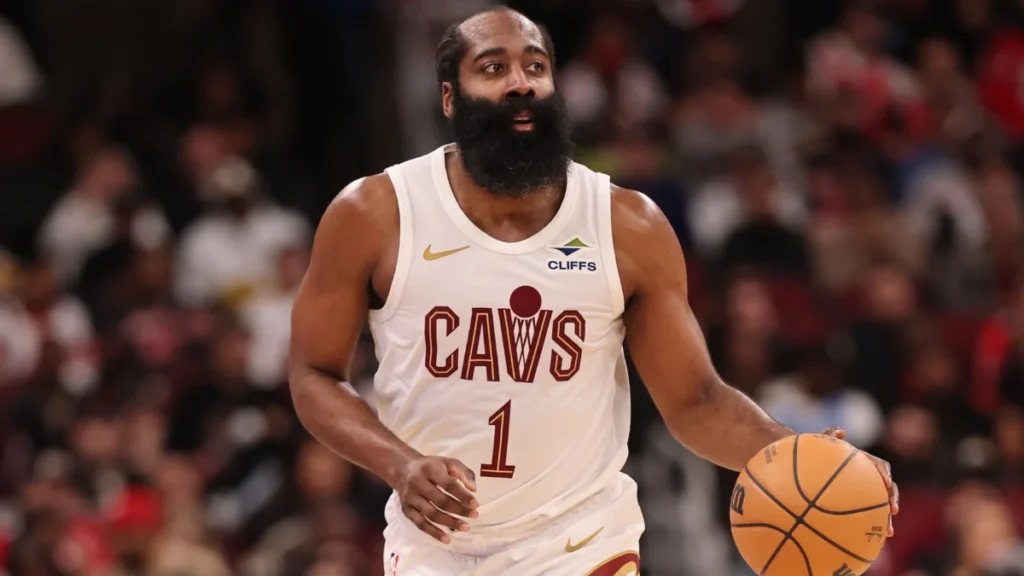
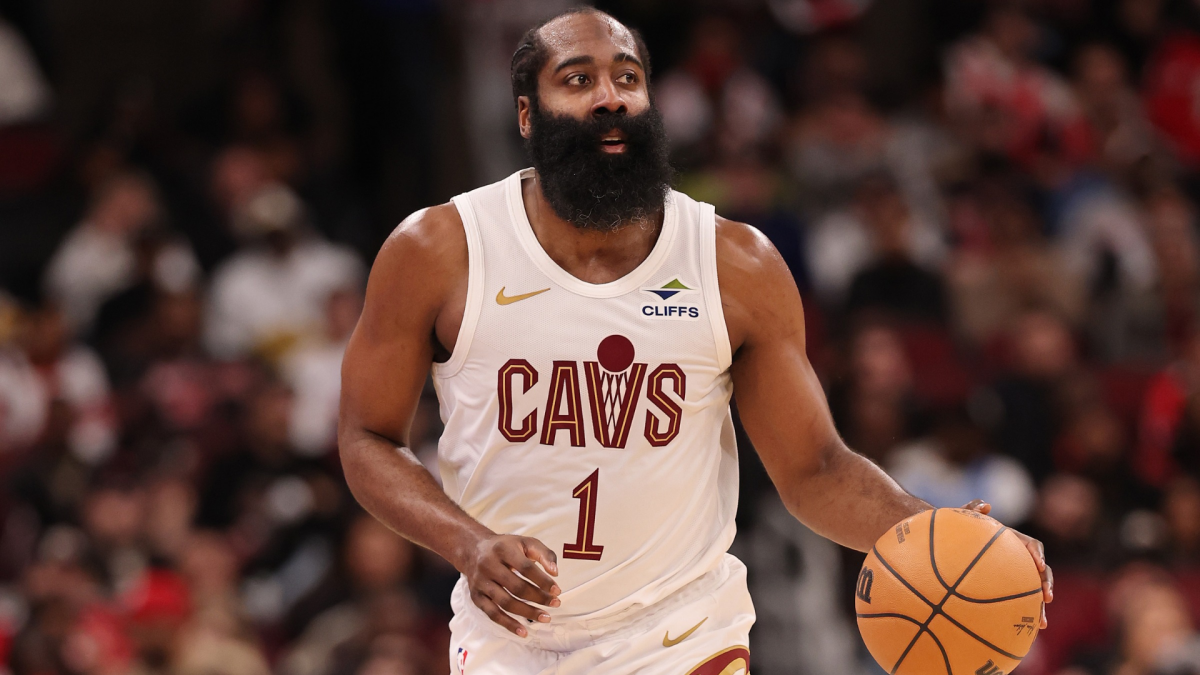
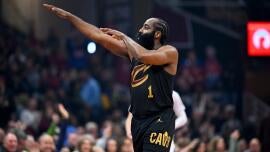
Following James Harden’s explosive 51-point performance against the Indiana Pacers, Cleveland Cavaliers coach Kenny Atkinson made headlines by dubbing Harden a "top 10 of all-time" player. This bold claim, while perhaps an emotional response to a stellar individual showing, ignited a familiar debate about Harden’s place in NBA history, especially given Atkinson’s past analytical-leaning remarks that often prioritize statistical indicators over situational results. On paper, Harden’s career numbers are undeniably elite: he ranks ninth all-time in total points with nearly 30,000, 11th in assists (poised to pass Isiah Thomas for 10th), second only to Stephen Curry in made three-pointers, and even cracks the top 20 in steals.
However, a purely statistical evaluation, critics argue, fails to account for the unique conditions under which Harden achieved much of his dominance. His critics often liken his peak to an "NBA steroid era," not in reference to performance-enhancing drugs, but to the league’s officiating landscape that, for a period, heavily rewarded his masterful manipulation of defensive contact. Harden, proponents argue, exploited the rules to his advantage, meticulously crafting an offensive game around drawing fouls. This led to an unprecedented volume of free throws, forcing defenders into awkward positions—often guarding him with their hands behind their backs—to avoid being whistled. His signature move, the step-back three often concluded with a dramatic flail or fall, became a controversial but effective tactic.
This style of play, while legal at the time, fundamentally altered defensive strategies against him, creating an environment where opponents were perpetually hesitant to challenge him physically. It effectively gave Harden a "five-foul advantage" on every possession, allowing him to operate with a degree of freedom rarely afforded to even the most dominant scorers. Coupled with an astronomical usage rate, where he often spearheaded a heliocentric offense, his gaudy numbers became a product of both immense talent and a system uniquely tailored to his strengths. While acknowledging his undeniable skill as a scorer and playmaker, this context leads many to temper expectations for his all-time ranking. ESPN’s 2022 ranking placed him 50th, a figure that resonates more with those who factor in the qualitative aspects of his game, such as his playoff performances and the perceived artificiality of some of his statistical output. When juxtaposed against an undisputed pantheon of legends—Michael Jordan, LeBron James, Kareem Abdul-Jabbar, Magic Johnson, Larry Bird, Wilt Chamberlain, Bill Russell, Shaquille O’Neal, Kobe Bryant, Tim Duncan, Stephen Curry, and Kevin Durant—Harden’s claim to a top-10 spot faces overwhelming historical precedent and a qualitative gap in overall impact and two-way dominance.
Trae Young: The Fading Marksman Narrative
The perception of Trae Young as an elite shooter, once fueled by his audacious range and supreme confidence, is increasingly being challenged by empirical evidence. Years after first being critically labeled as an "average shooter who thinks he’s Stephen Curry," Young’s shooting efficiency has demonstrably deteriorated. Despite a recent, albeit small, uptick in efficiency with a 7-for-15 run from beyond the arc, his season averages remain alarmingly low: 32.5% from three-point range and a paltry 36.4% overall from the field. These figures are significantly below league average for high-volume scorers and raise serious questions about his offensive efficacy.
While Young continues to rank among the league leaders in assists, his playmaking prowess comes with a substantial cost. He consistently controls the ball for nearly as much time per possession as Luka Dončić, a player whose offensive impact and efficiency are on an entirely different plane. The sheer ball dominance, combined with his declining shooting splits, creates an inefficient offensive engine for the Atlanta Hawks. Even at his peak, which included a memorable run to the Eastern Conference Finals, the trade-off of his defensive liabilities for his offensive output was often debated. Now, with his ability to consistently beat defenders off the dribble seemingly diminished and his shooting numbers in steep decline, the massive $212 million maximum contract the Hawks extended him appears increasingly problematic.
Atlanta has begun experimenting with taking Young off the ball more frequently, a tactical adjustment that might offer a glimmer of hope for some apologists. However, the consistent long-term trends in his shooting statistics paint a clear picture. The distinction between a talented shooter (one with range and confidence) and a genuinely good shooter (one who converts at an efficient clip) is becoming starkly apparent with Young. His early career fostered an unearned reputation as a marksman, but the numbers, extending beyond just the current season, reveal a player whose shooting percentages are far from elite, solidifying the argument that he is, at best, an average shooter who rarely performs at his peak.
Warriors’ Curry Chasm: A Stark Reality Check
The Golden State Warriors’ offensive struggles without Stephen Curry are not merely pronounced; they are historically catastrophic. Following Curry’s oblique tear, the Warriors embarked on a five-game stretch that underscored his indispensable value. During this period, they suffered four consecutive losses by 20 points or more, failing to reach 100 points in any of those games—a level of futility unmatched by any other team this century. Even their lone victory against the struggling Celtics saw them manage a meager 88 points, highlighting the depth of their offensive crisis.
Over these five games, the Warriors, who typically boast a top-five offense with Curry on the floor, scraped together an anemic 96.2 points per 100 possessions with a true shooting percentage of 48.5%. Both metrics represent the absolute worst marks in the league by a considerable margin. The team was outscored by a staggering 108 points during this stretch, a differential that evokes comparisons to some of the most dysfunctional teams in franchise history. For context, the infamous 1997-98 Warriors squad—a team that won just 19 games and was marred by Latrell Sprewell’s infamous choking incident involving coach P.J. Carlesimo—had a similar four-game losing streak by 20-plus points, but was only a minus-104 over that span.
Curry’s absence exposes the profound structural dependency of the Warriors’ offense on his unique skill set. His unparalleled gravity, off-ball movement, shooting volume, and subtle playmaking elevate every player around him. Without him, the intricate ballet of cuts, screens, and rapid ball movement often devolves into stagnant isolation plays and forced shots. Players like Klay Thompson and Jordan Poole, who thrive off Curry’s presence, struggle to generate their own offense or replicate the spacing he provides. Draymond Green’s exceptional passing and defensive leadership become less impactful when there are fewer efficient scoring options to facilitate. The current crisis serves as a stark reminder that while the Warriors boast a championship core, Stephen Curry remains the irreplaceable engine, and without him, even a well-coached roster can descend into an offensive abyss.