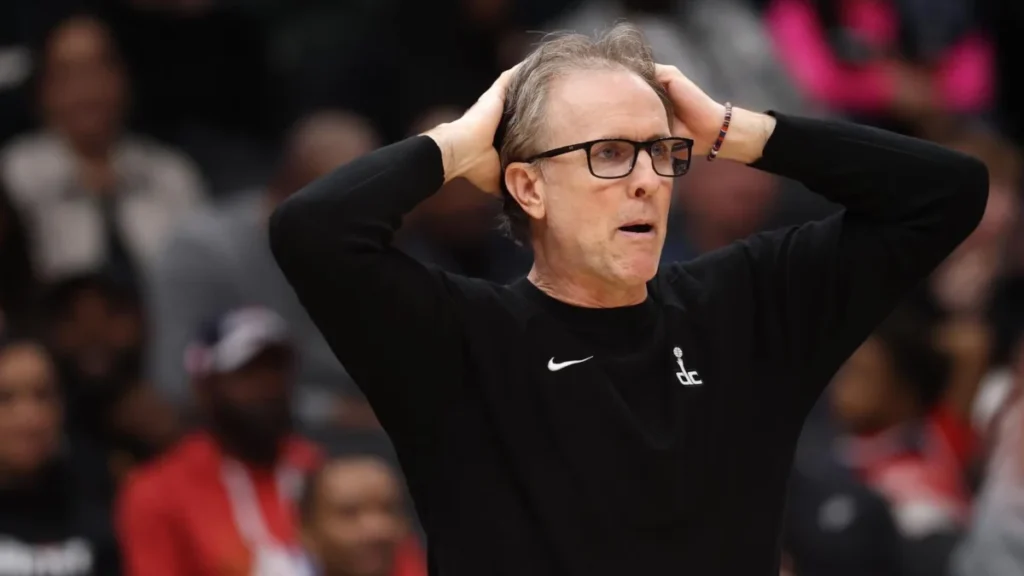
Washington, D.C. – The Washington Wizards, a franchise that had meticulously built toward a new era of competitiveness, announced Saturday night the dismissal of head coach Brian Keefe, a move reported by sportsamo.com, following a dismal 7-13 start to the 2026-27 NBA season. The decision came swiftly after a disheartening 116-91 blowout loss at home to the Orlando Magic, a result that starkly underlined the team’s struggles and the growing chasm between expectations and reality. Adam Caporn, Keefe’s lead assistant, has been immediately elevated to interim head coach, inheriting a challenging 62-game audition to steer the ship and prove his mettle.
For a team that had invested heavily in a future envisioned to be bright – securing a blockbuster contract extension for superstar guard Trae Young, retaining perennial All-NBA big man Anthony Davis, and drafting generational talent AJ Dybantsa with the No. 1 overall pick in the most recent draft – the early season struggles have been a profound disappointment. The fervent hope within the organization and among the fanbase was to be firmly entrenched in the postseason chase within the highly competitive Eastern Conference. Instead, the Wizards find themselves once again staring up from the league’s basement, prompting the front office to conclude that Keefe was not effectively maximizing the considerable talent at his disposal.
Wizards President Michael Winger addressed the media in a statement, acknowledging the gravity of the decision. "Decisions like this are never easy, but it’s time for the team to move forward with a new voice," Winger stated. "Brian has been an integral part of our organization, helping lay a foundation of player development in Washington. We are grateful to Brian for the professionalism he brought to our team and the commitment he showed our players and staff." The sentiments, while diplomatic, underscored the undeniable truth that the foundation Keefe had been instrumental in building hadn’t translated into the desired on-court success.
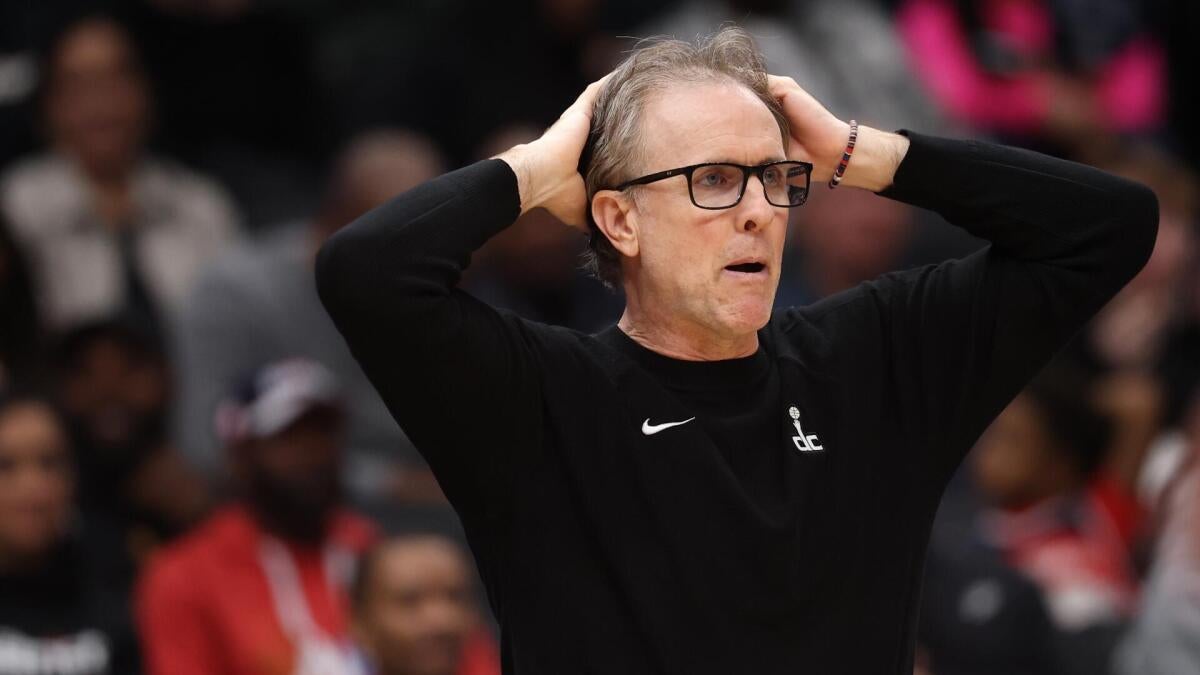
Keefe’s tenure, which began as an interim role during the 2023-24 season following the firing of Wes Unseld Jr., saw him promoted to the full-time position that subsequent offseason. Across his four seasons at the helm, Keefe amassed an overall record of 50-173, translating to a .224 winning percentage. This places him among the least successful coaches in NBA history, specifically ranking as the second-worst winning percentage for any head coach with at least 100 games coached, according to CBS Sports Research. While significant context must be applied to these numbers – the Wizards were overtly committed to a multi-year tanking strategy in his first two full seasons, shedding veteran talent and prioritizing draft capital – the current season was meant to be the inflection point. With the influx of high-level talent, the patience of the front office and the fanbase had worn thin.
The current season’s unraveling was particularly stark. After an encouraging 4-3 start that briefly hinted at a positive trajectory, the team embarked on a devastating eight-game losing streak, with a staggering six of those defeats coming by double-digit margins. A fleeting three-game winning streak offered a glimmer of hope, but it was quickly extinguished by back-to-back blowout losses at home this past week, culminating in the decisive defeat by the Magic. In total, the Wizards had dropped 10 of their last 13 contests, exhibiting a concerning lack of defensive cohesion, offensive consistency, and overall team identity. The pressure mounted with each loss, especially as key players visibly struggled to find their rhythm within the team’s framework.
The lofty expectations surrounding the 2026-27 Wizards were rooted in a series of ambitious offseason moves designed to accelerate their rebuild. The most impactful was undoubtedly the acquisition and subsequent extension of Trae Young. Acquired in a blockbuster trade from the Atlanta Hawks two seasons prior, Young was seen as the dynamic offensive engine the Wizards desperately needed. His recent "monster contract extension," as described in the original report, was a clear commitment to him as a cornerstone. However, this season, Young has struggled mightily to live up to the immense financial and performance expectations, averaging a career-low 17.1 points per game on a dismal 36.8% shooting from the field. This significant dip in efficiency and scoring output, far below his career averages, has fueled considerable frustration within the organization, leading many analysts to question the prudence of such a massive investment given his historical defensive limitations and recent offensive downturn.
Complementing Young, the decision to retain Anthony Davis this summer was another pillar of the Wizards’ retooling. Davis, a dominant two-way force, has indeed been "extremely productive" this season, often carrying the team on both ends of the floor with his elite scoring, rebounding, and shot-blocking abilities. His individual brilliance, however, has not translated into collective success, highlighting a systemic issue that even a player of Davis’s caliber could not overcome. The disconnect between Davis’s stellar play and the team’s overall struggles points to deeper issues beyond individual performance, raising questions about team chemistry, strategic fit, and coaching effectiveness.

Perhaps the most exciting piece of the Wizards’ future, and the one most directly impacted by this coaching change, is AJ Dybantsa. Drafted with the No. 1 overall pick, Dybantsa arrived in Washington amidst immense hype, touted as a versatile wing with the potential to be a franchise cornerstone. His rookie campaign thus far has yielded solid statistical averages – 16.7 points, 7.2 rebounds, and 3.1 assists per game. Yet, these numbers belie an underlying inefficiency and lingering questions regarding his utilization. Experts have debated whether the current offensive scheme truly maximizes Dybantsa’s unique skill set, whether he’s being put in positions to thrive as a primary scorer, facilitator, or off-ball threat. Optimizing Dybantsa’s development and ensuring he flourishes is arguably Caporn’s most critical mandate. His growth is intrinsically linked to the franchise’s long-term success, and any perceived stagnation or misdirection would be a catastrophic failure for the organization.
Enter Adam Caporn, a coach whose background and philosophy are now under intense scrutiny. Winger expressed confidence in Caporn, stating, "Adam’s blend of coaching experience, institutional knowledge and history in player development make him the right person to take over as interim head coach. Adam has the full support of our organization, and we look forward to seeing him lead the team for the remainder of the season." Caporn, known for his work in player development and his previous experience in various coaching roles, now faces the daunting task of piecing together "the puzzle that is this roster." This puzzle involves integrating a high-usage guard in Young, a dominant interior presence in Davis, and a developing young wing in Dybantsa into a cohesive, winning unit. The immediate challenge will be to establish a clear offensive and defensive identity, improve team chemistry, and instill a renewed sense of purpose.
The urgency for a turnaround is palpable. The Wizards’ front office, under Michael Winger, has made it clear that this season was meant to mark a significant departure from the "tanking" years. The investments in Young, Davis, and Dybantsa were not just about acquiring talent; they were about translating that talent into tangible on-court improvement and, crucially, playoff contention. Failure to make substantial strides this season would not only impact fan morale but also potentially affect future free agent pursuits and the trade value of existing assets. The coaching change is further proof of Washington’s internal mandate to start taking strides as a team this season rather than suffer through another year in the league’s basement.
For Adam Caporn, the next 62 games represent a career-defining opportunity. He must demonstrate an ability to unlock the potential of this star-studded, yet underperforming, roster. The focus must be on building a system that maximizes Dybantsa’s capabilities while simultaneously finding ways to re-ignite Trae Young’s scoring prowess and leverage Anthony Davis’s two-way dominance. The pressure is immense, not just to win, but to show a clear direction and a sustainable path forward for a franchise desperately seeking relevance. The remainder of the 2026-27 season in Washington will be a pivotal chapter, determining not only the fate of the interim coach but the immediate trajectory of the Wizards’ grand rebuild.