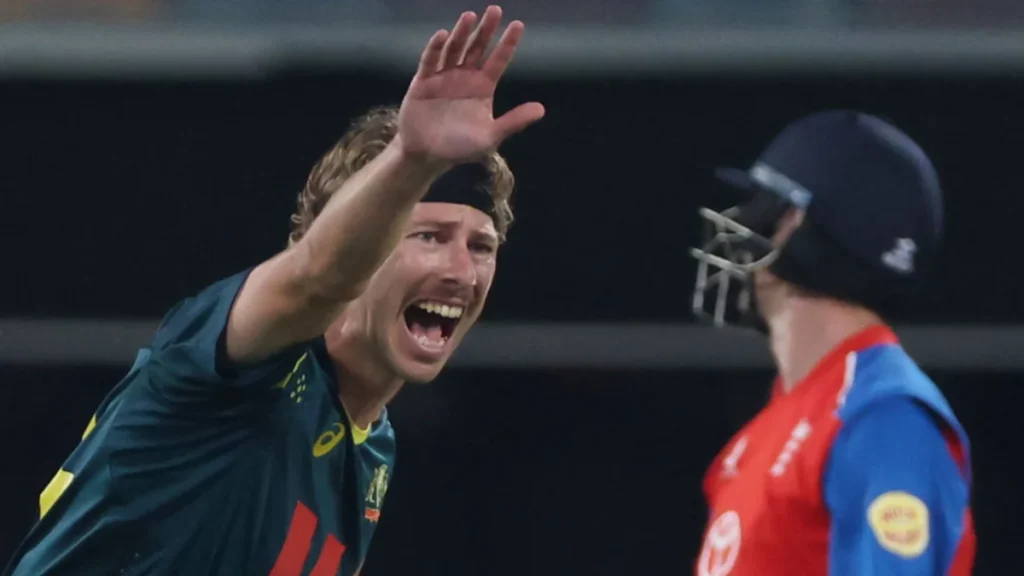
In a stunning start to what promises to be an electrifying Ashes series, England’s much-vaunted batting lineup crumbled under a relentless Australian pace assault, leaving them reeling at a precarious 22 runs for the loss of two wickets after just 3.1 overs on a blustery opening morning at The Oval, as reported exclusively by sportsamo.com. The dramatic early collapse sent shockwaves through the packed stands and set a tense tone for the monumental contest ahead.
The air was thick with anticipation as the first ball of the series was bowled, but few could have predicted the sheer ferocity of Australia’s opening salvo. On a pitch that offered tantalizing assistance to the quicks, England’s openers, Zak Crawley and Ben Duckett, found themselves immediately under siege. The Australian bowling spearhead, Mitchell Starc, delivered an opening spell of unplayable pace and swing, ably supported by the tactical genius and raw aggression of his captain, Pat Cummins. The scoreboard, which read a dismal 22/2 at the conclusion of the third over, painted a grim picture for the home side, sparking immediate concerns among English supporters and providing a significant psychological boost to the touring Australians.
The first casualty of the day was Zak Crawley, a batsman often lauded for his aggressive intent but who, on this occasion, looked increasingly uncomfortable against Starc’s left-arm angle and searing pace. Having survived a couple of nervous moments, Crawley’s stay at the crease was cut short at a mere 4 runs. The dismissal came at a team score of just 8 runs when Starc, charging in from the Vauxhall End, unleashed a full, swinging delivery that found the outside edge of Crawley’s bat. The ball flew sharply to wicketkeeper Alex Carey, who made no mistake behind the stumps, diving low to his right to complete a clinical catch. The immediate roar from the Australian contingent in the crowd was deafening, a stark contrast to the stunned silence that enveloped the rest of The Oval. This early breakthrough underscored Starc’s reputation as a genuine wicket-taker, particularly with the new ball, and signaled Australia’s clear intent to dominate from the outset.
The departure of Crawley brought Harry Brook to the crease, but before he could settle, the situation worsened considerably for England. Ben Duckett, who had shown glimpses of his characteristic aggression by striking a couple of boundaries, was the next to fall. Duckett had battled his way to 12 runs off 10 balls, attempting to counter-attack and shift the momentum, but his proactive approach ultimately proved to be his undoing. It was Pat Cummins, the Australian captain, who delivered the decisive blow. In the first ball of his second over, the 3.1st over of the innings, Cummins, exploiting the slight movement off the seam, bowled a delivery that nipped back sharply, beating Duckett’s bat and crashing into his stumps. The bails flew, and Duckett walked back, leaving England in a truly perilous position at 22 for 2. The sight of two top-order batsmen back in the pavilion before the fourth over was completed was a brutal reminder of the unforgiving nature of Ashes cricket and the potent threat posed by Australia’s formidable pace battery.
The conditions at The Oval on Day 1 were undeniably conducive to fast bowling. A fresh, green-tinged pitch, combined with overcast skies and a discernible breeze, provided the perfect canvas for Starc and Cummins to showcase their mastery. The ball swung, seamed, and carried through to the keeper with consistent pace, making life incredibly difficult for the English batsmen. This wasn’t merely a case of poor batting; it was a testament to the exceptional skill of the Australian quicks who exploited every ounce of assistance the conditions offered. The early movement and pace on offer typically subside as the day progresses, but Australia had seized the initiative with clinical precision, capitalizing on the freshest conditions.
From a historical perspective, such an early collapse in an Ashes Test is not unprecedented, but it always carries significant weight. Recalling instances like England’s infamous 58 all out against New Zealand in Auckland in 2018, or their struggles against the West Indies in the early 2000s, highlights the psychological scars that early batting failures can inflict. While 22/2 is not yet a total collapse, the loss of two key openers so cheaply against the fiercest of rivals puts immense pressure on the incoming batsmen and the middle order. The atmosphere in the dressing room would have shifted dramatically, from pre-match optimism to urgent strategizing.
The "Bazball" era under Captain Ben Stokes and Coach Brendon McCullum has been defined by aggressive, positive cricket. However, this philosophy faces its sternest test when confronted with such an immediate crisis. The challenge now for England is not just to score runs, but to rebuild an innings from the ashes of this early setback. The weight of expectation now squarely rests on the shoulders of the batsmen yet to come, a lineup that includes some of the most formidable talents in world cricket.
Among the yet-to-bat list for England are names that evoke both hope and resilience. Joe Root, England’s former captain and arguably their most consistent performer, will be crucial. His ability to absorb pressure and accumulate runs, even in the most trying circumstances, will be vital. Alongside him, the attacking prowess of Harry Brook, a player who has enjoyed a sensational start to his Test career, will be heavily relied upon. Then there’s the captain himself, Ben Stokes, whose reputation for turning impossible situations into heroic victories precedes him. His leadership and ability to counter-attack could be the catalyst for a comeback. Jonny Bairstow, Moeen Ali, Mark Wood, and Stuart Broad complete the formidable lower-middle order, each capable of contributing significantly. The depth of England’s batting will be thoroughly tested in the coming hours.
For Australia, the early wickets are a dream start. Pat Cummins’ captaincy has been exemplary, deploying his fast bowlers with tactical acumen, ensuring they maintained relentless pressure. The field settings were aggressive, designed to create opportunities, and the bowlers responded by hitting their lengths consistently. This early success will only fuel their confidence and determination to push for an even stronger position. The focus for them will be to maintain this intensity, prevent any meaningful partnerships from forming, and exploit any further weaknesses in the English batting order. The goal will be to bowl England out cheaply and then build a substantial first-innings lead.
Expert analysis suggests that the next hour of play will be absolutely critical. If England can navigate this period without further loss, absorbing the pressure and slowly building a foundation, they might just steady the ship. However, if Australia can land another couple of blows, particularly dismissing a player of Root’s caliber, the match could very quickly spiral out of England’s control. The psychological battle is now as intense as the cricketing one. The English batsmen will need to show immense character, technical proficiency, and a steely resolve to overcome this formidable challenge.
The Ashes series is famed for its drama, its ebbs and flows, and its ability to produce moments of individual brilliance and collective collapse. This opening session has already delivered on that promise, showcasing the brutal beauty of Test cricket. While England finds itself in a deep hole, the long history of this rivalry teaches us that it is never over until the final ball is bowled. Yet, the current scorecard stands as a stark reminder of the monumental task ahead for the home side, a task that will require every ounce of their talent and resilience to overcome the early onslaught from a rampant Australian pace attack. The stage is set for an enthralling contest, with the immediate future of the first Test hanging precariously in the balance.