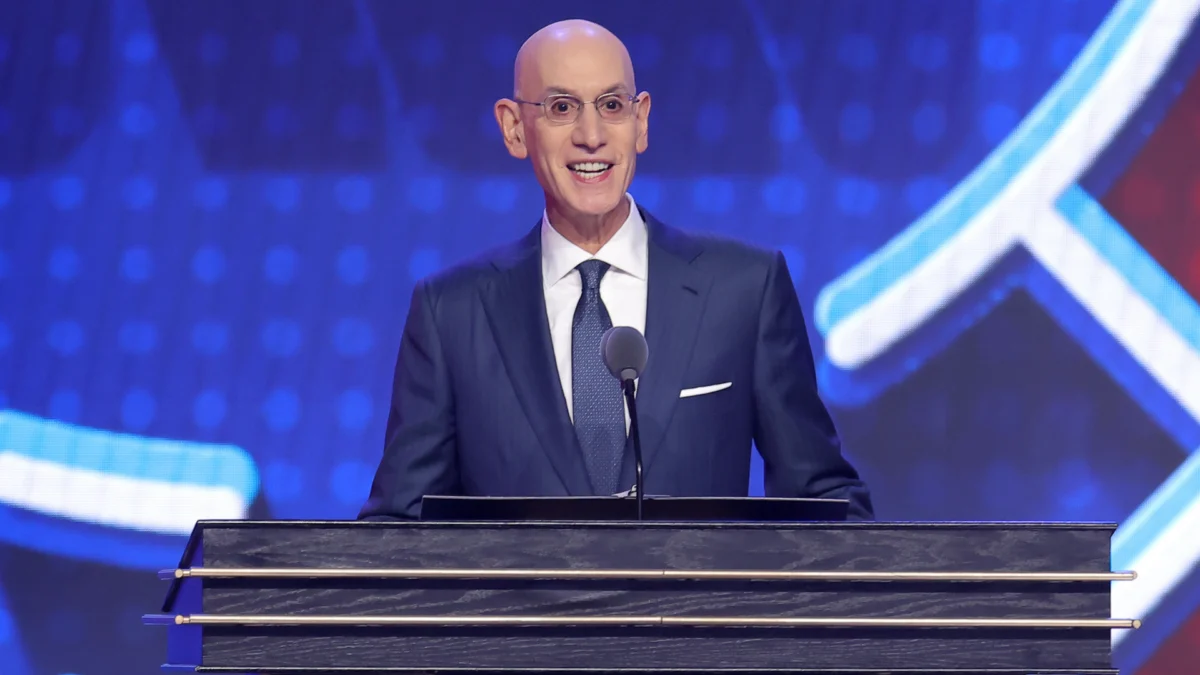
New York City, NY – NBA Commissioner Adam Silver delivered a comprehensive update to the media on Tuesday following the league’s Board of Governors meetings, addressing critical issues ranging from the unprecedented punishment levied against the Los Angeles Clippers to the future of the Portland Trail Blazers and the league’s eagerly anticipated expansion plans, as reported by sportsamo.com. Silver’s remarks underscored the NBA’s commitment to competitive integrity, financial stability, and long-term growth, painting a picture of a league grappling with complex challenges while striving for unprecedented success.
Clippers’ Punishment Deemed ‘Final’ After Landmark Investigation
The most immediate and impactful revelation from Silver’s address centered on the Los Angeles Clippers. Earlier this month, the NBA concluded a year-long, exhaustive investigation into allegations of salary cap circumvention involving superstar Kawhi Leonard. The league’s findings were stark: a documented "pattern of misconduct and multiple significant rules violations by the Clippers organization," notably highlighting their status as a "prior offender of the salary cap circumvention rules." This history amplified the severity of the subsequent penalties, sending a clear message across the league.
The ramifications for the Clippers are monumental. The organization was hit with a staggering $30 million fine and, perhaps more crippling for their future, forced to forfeit five first-round draft picks. Beyond the financial and draft capital losses, the disciplinary actions extended to key personnel. Owner Steve Ballmer and President of Business Operations Gillian Zucker were both suspended without pay for a year, a rare and impactful sanction against a principal owner. Lawrence Frank, the team’s President of Basketball Operations, received a six-month suspension without pay. Even Kawhi Leonard, whose high-profile trade to the Toronto Raptors was reportedly finalized again on Monday night amidst the investigation’s fallout, was ordered to pay the league $700,000.
Silver acknowledged the severity but framed it as a necessary deterrent. "I don’t think in any way we’ve done permanent damage to this franchise, but there’s no question this is a setback for the team," Silver stated, emphasizing the broader objective. "But as I said, the ultimate goal in terms of these types of sanctions is to ensure that other teams don’t engage in this type of behavior in the future, so there has to be something beyond suspensions and financial consequences." This sentiment echoes the league’s unwavering stance on maintaining the sanctity of its financial rules, a cornerstone of competitive balance. Salary cap circumvention, by its nature, undermines the level playing field the NBA strives to create, giving an unfair advantage to teams willing to bend or break the rules.
Initially, the Clippers reacted defiantly, issuing a statement that they "vehemently" rejected the league’s findings, characterizing the investigation as "heavily biased," and vowing to "vigorously challenge these findings and penalties through every avenue available." This aggressive posture, however, softened considerably. On Sunday, Ballmer issued an apology, taking responsibility as the principal owner for the "distraction and distress this matter has caused." This sudden shift in tone sparked speculation, with some observers drawing parallels to the Minnesota Timberwolves’ successful appeal in the infamous Joe Smith saga of 2000, which saw some of their forfeited draft picks eventually returned.
However, Silver swiftly quelled any such hopes. "The discipline is final," he declared unequivocally on Tuesday. While refraining from detailing the "back and forth with the Players Association," he confirmed a direct meeting with Leonard, stating, "I think we all agree it’s time to move forward here. I think we reached a fair outcome for everyone." The finality of the decision underlines the NBA’s commitment to upholding its internal legal processes and the integrity of its disciplinary actions, a crucial element in preserving trust and order within the league. This landmark ruling will undoubtedly serve as a potent warning to all 30 franchises about the severe consequences of violating league rules, particularly those designed to ensure fair competition.
Portland Trail Blazers’ Future: A ‘Failure’ to Relocate
The focus then shifted to the uncertain future of the Portland Trail Blazers, a franchise steeped in NBA history. The team’s recent sale to Dallas businessman Tom Dundon, who also owns the NHL’s Carolina Hurricanes, for a staggering $4.25 billion earlier this year, ushered in a period of intense scrutiny and controversy. Dundon, quickly branded "El Cheapo" by influential sports commentators like Bill Simmons, has garnered a reputation for aggressive cost-cutting measures across all departments of the organization.
One of the most notable examples cited by Silver was the departure of interim coach Tiago Splitter. Splitter, who had reportedly guided the team to the playoffs after a highly unusual incident involving then-head coach Chauncey Billups one game into last season, ultimately parted ways with the Blazers after being "low-balled" during contract negotiations. The team subsequently hired Micah Nori on a one-year contract, a highly unorthodox and practically unheard-of duration for an NBA head coach, further fueling concerns about Dundon’s approach. These actions, coupled with mounting issues concerning the team’s aging arena, the Moda Center, have ignited widespread speculation throughout the summer about the Trail Blazers’ long-term viability in Portland.
Silver, however, made his stance abundantly clear: the league does not want the Blazers, a pillar of the Portland sports landscape since 1970, to relocate. "I would see it as a failure if we did not keep the team in Portland," Silver stated passionately. He praised the city’s unwavering dedication, noting, "I’ve spent a lot of time in that community over the years. They’ve shown amazing support for the Trail Blazers. They’re some of our best fans around the league." However, he also delivered a blunt assessment of the Moda Center, stressing the critical need for significant upgrades. "At the same time, and I speak for our WNBA team in the market as well, we need a state-of-the-art arena. I think by any objective measure, the current building there is in the bottom measure of any arena in the league." The Moda Center, opened in 1995, while once state-of-the-art, now lacks many of the modern amenities, premium seating options, and technological capabilities that generate crucial revenue for today’s NBA franchises.
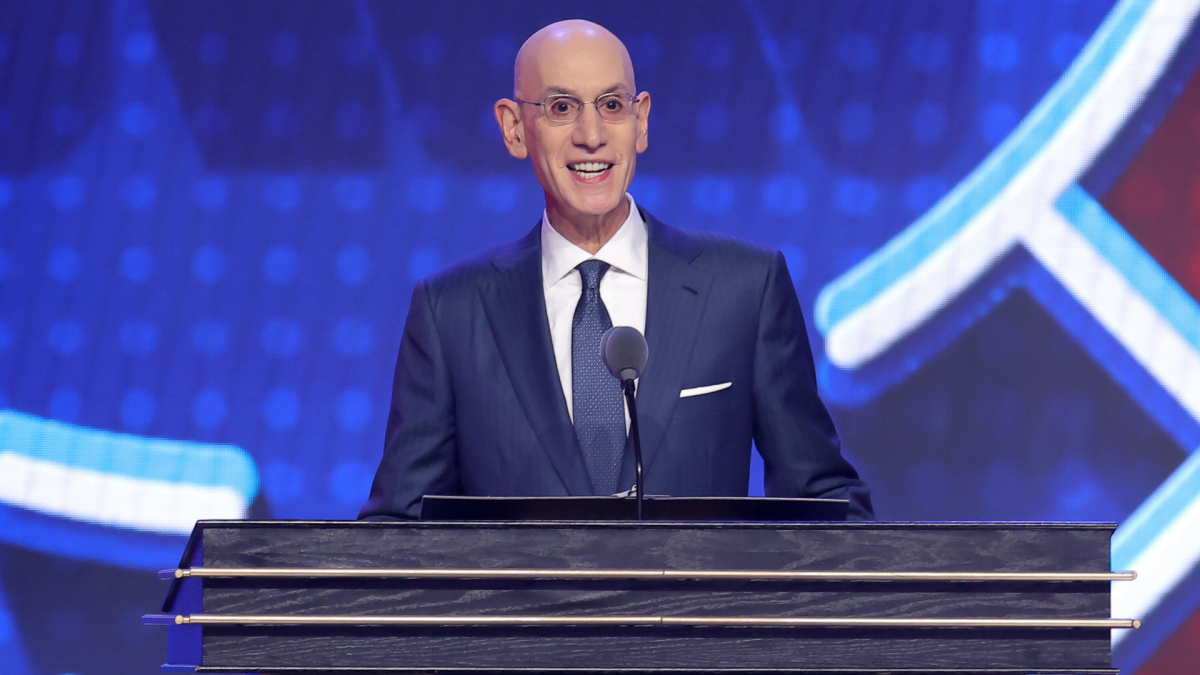
Silver confirmed his direct involvement, having spent a "significant amount of time" with Dundon during the Board of Governors meetings. His objective is to "lower the temperature, honestly, a bit in these negotiations," offering the full assistance of the league office to "assist all parties there." This proactive approach by the Commissioner highlights the NBA’s deep-seated interest in maintaining its presence in established, loyal markets like Portland. The Blazers hold a special place in NBA lore, boasting a 1977 championship and a rich history of passionate fandom. The potential loss of a franchise, particularly one with such a deep community connection, is always a concern for a league that values its historical roots and local identities. Silver’s intervention signals a concerted effort to find a sustainable solution that keeps NBA and WNBA basketball thriving in the Pacific Northwest.
Silver Defends ‘NFL-Like’ Second Apron for Parity
Another significant topic of discussion revolved around the NBA’s new Collective Bargaining Agreement (CBA) and its controversial "second apron." This innovative financial threshold, introduced above the traditional luxury tax, imposes severe restrictions and penalties on teams that exceed it, significantly increasing their roster costs and curtailing crucial team-building options. The second apron, designed to curb excessive spending by a few large-market teams and promote competitive balance, has quickly become a point of contention.
NBPA Executive Director David Kelly has been a vocal critic, calling for the second apron to be "softened" or entirely removed. Kelly articulated the players’ concerns, stating, "We are not fans of the second apron. We did not propose the second apron. We should have done a better job of fighting back against the second apron… We’re seeing [the apron system] decimate teams and force decisions to be made that are not basketball decisions." This reflects a fundamental tension between the league’s desire for financial prudence and competitive equity, and the players’ and some owners’ desire for maximum spending flexibility. The restrictions include limitations on using the mid-level exception, trading cash, and aggregating salaries in trades, all of which can severely hinder a team’s ability to improve its roster around a high-salaried core.
Silver, however, unequivocally defended the second apron, emphasizing its strategic importance for league-wide parity. His response made it clear that the NBA is pleased with its early effects. "The point was to design a system, I’m not embarrassed to say more NFL-like, where every team was put in a position, where regardless of market size, they could compete for championships," Silver explained. He referenced a key statistic, highlighting "Eight different champions over the last eight years," as evidence of the system’s success. While acknowledging that "That isn’t necessarily a sign of success," he added, "I’m fine if teams repeat, but I think over successive collective bargaining agreements and revenue sharing systems and other changes we’ve made, we’ve gotten closer to building the kind of parity of opportunity we want."
The comparison to the NFL is particularly telling. The NFL, with its hard salary cap and robust revenue sharing, is often held up as the gold standard for competitive balance in professional sports. Silver’s vision for the NBA increasingly leans towards this model, aiming to prevent the dominance of "superteams" built through unfettered spending, which can depress interest in the broader league. The second apron is a crucial mechanism in this strategy, forcing teams to make difficult financial decisions and discouraging the formation of overwhelmingly stacked rosters. Therefore, despite the NBPA’s complaints and the challenges it poses for team executives, Silver’s stance signals that no significant changes to the second apron are likely before the current CBA’s expiration in 2030. It represents a philosophical commitment by the league to ensure that every franchise, regardless of its market size or owner’s wealth, has a genuine pathway to contention.
NBA Expansion: Seattle Holds an Edge Over Las Vegas
The highly anticipated prospect of NBA expansion was another focal point of Silver’s address, with a decision expected by the end of the year. While the Board of Governors approved exploring expansion to both Las Vegas and Seattle in March, Silver’s comments on the arena situations in these prospective cities strongly suggested that Seattle currently holds a significant advantage and could potentially secure a team before Las Vegas. The financial incentive for expansion is enormous, with estimates for expansion fees easily reaching $3-4 billion per team, a windfall for current owners.
Silver detailed the operational readiness of Seattle, stating, "There was not as much discussion around Seattle as there was around Las Vegas because with Las Vegas, it’s not even clear what the site will be, let alone the arena yet. Therefore, it’s a much longer timeline before we can throw the ball up for NBA basketball." He continued, "In Seattle, we have had operational groups out to Climate Pledge [Arena]. You clearly have a state-of-the-art arena there. It may require some modifications for NBA basketball, but if we were opening, you know, in five weeks, we could be ready in Seattle." Climate Pledge Arena, a marvel of modern sports architecture, already serves as home to the NHL’s Seattle Kraken and the WNBA’s Seattle Storm, demonstrating its capability to host major professional sports. The modifications would likely be minor, focusing on locker room configurations, specific basketball court technology, and media facilities tailored to an NBA team.
Las Vegas, while a rapidly growing sports hub, faces more significant logistical hurdles. Silver acknowledged "several active groups" interested in owning an expansion franchise there but stressed the considerable work required. Options for an arena include renovating T-Mobile Arena, home to the NHL’s Vegas Golden Knights, which Silver noted would still require "significant improvements." Alternatively, groups have presented plans to build a brand-new "modern entertainment palace" capable of 365-day-a-year activity, integrating sports with the city’s renowned hospitality and tourism industry. Building a new arena, however, involves complex negotiations over funding, site selection, and regulatory approvals, pushing any potential launch further into the future.
Las Vegas has transformed into a major league sports destination, boasting the WNBA’s Aces, NFL’s Raiders, and NHL’s Golden Knights, with MLB’s Athletics also slated to relocate. It has a proven track record as a successful host city for the NBA Summer League and the 2007 All-Star Game. However, Seattle carries a unique emotional weight for the league. The city was home to the SuperSonics from 1967 to 2008, a franchise with a championship history and a fiercely loyal fanbase, before its controversial sale and relocation to Oklahoma City, where it became the Thunder. The return of an NBA franchise to Seattle would not only fulfill a long-held desire for its passionate fans but also represent a poignant narrative of redemption for the league.
Given the league’s capacity constraints—"because we can only take on so much at once," as Silver put it—the immediate readiness of Seattle’s Climate Pledge Arena gives it a distinct advantage. While Las Vegas remains a highly attractive market for its growth and unique entertainment integration, Seattle’s established infrastructure and fervent fanbase position it as a prime candidate for the next NBA franchise, potentially paving the way for a dual-city expansion in the not-too-distant future. The economic and strategic implications of adding new teams are immense, promising to reshape the league’s competitive landscape and financial future for decades to come.