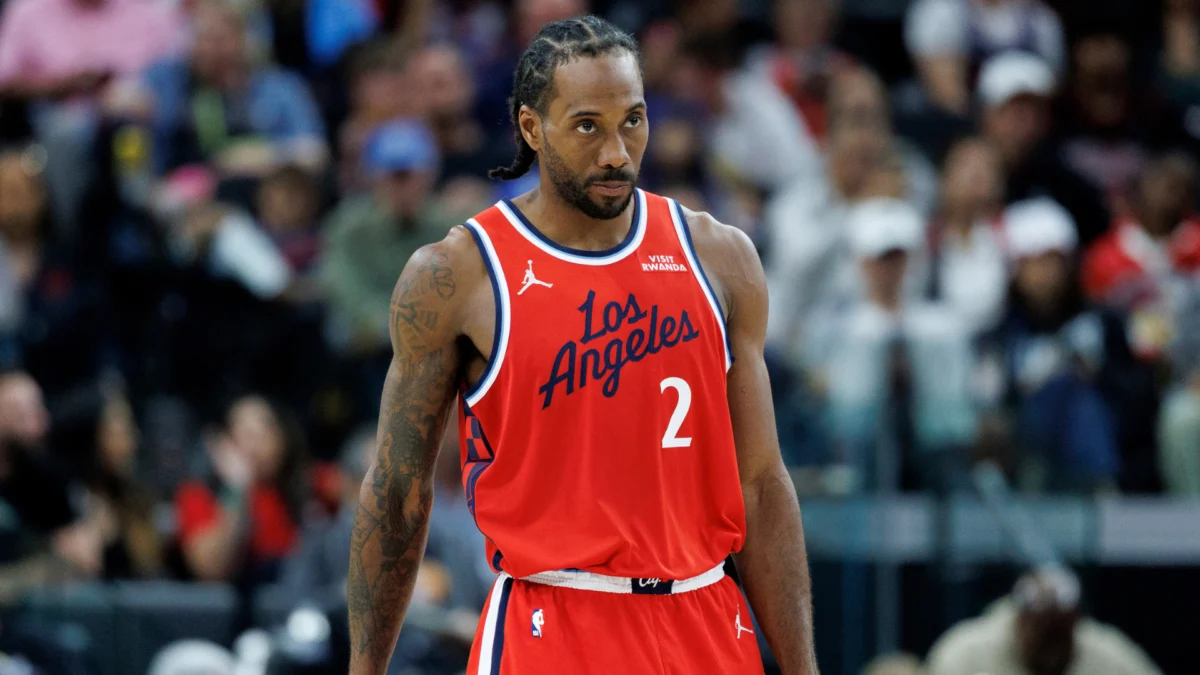
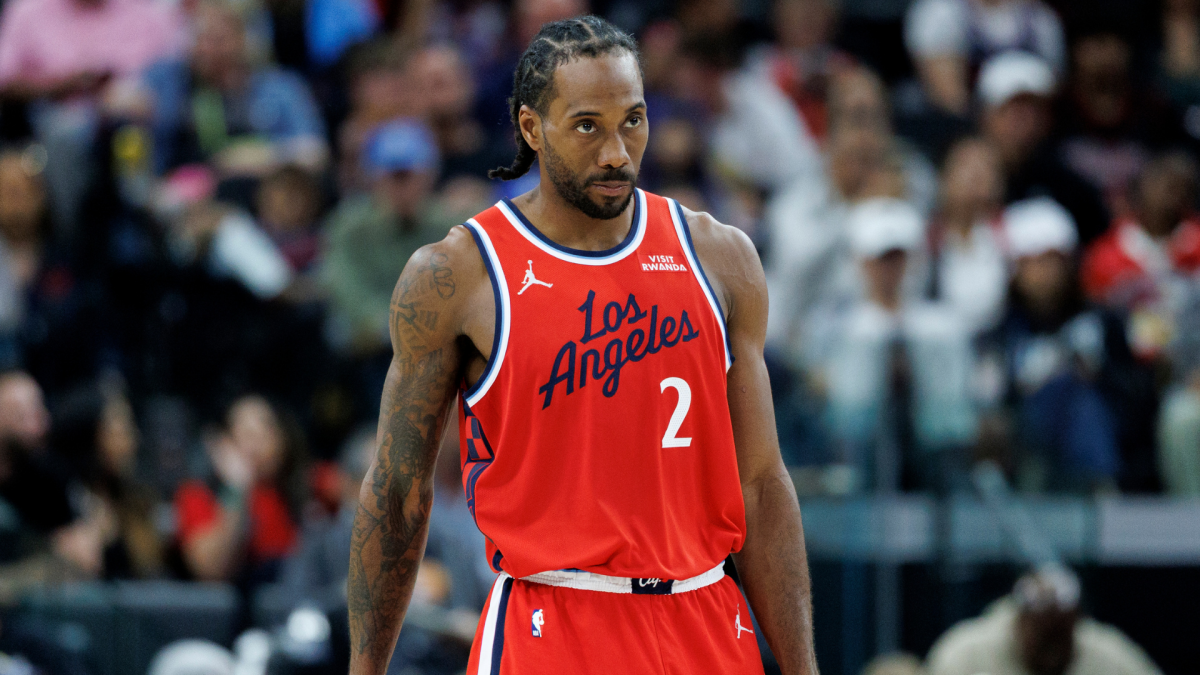
After an extensive investigation spanning nearly a year, the National Basketball Association delivered its verdict on Wednesday, imposing unprecedented sanctions against the Los Angeles Clippers for salary cap circumvention related to endorsement deals facilitated for Kawhi Leonard. The gravity of the league’s decision reverberated throughout the professional sports landscape, highlighting the NBA’s unwavering commitment to maintaining the integrity of its financial regulations. The Clippers franchise was dealt a staggering blow: a forfeiture of five coveted first-round draft picks, a substantial $30 million fine, and significant suspensions for key personnel, including owner Steve Ballmer, President of Basketball Operations Lawrence Frank, and President of Business Operations Gillian Zucker. Conversely, Leonard, the central figure in the controversy, was mandated to pay the NBA $700,000 but notably escaped a suspension or the voiding of his lucrative contract, a stark contrast to a previous high-profile case.
The Clippers’ Devastating Penalties: A Franchise-Altering Reckoning
The punishment handed down to the Clippers is arguably one of the most severe in modern NBA history, signaling a clear message from Commissioner Adam Silver’s office regarding illicit financial practices. Losing five first-round draft picks over the coming years represents a catastrophic setback for any franchise, particularly one like the Clippers that has consistently strived to emerge from the shadow of its crosstown rival and establish a championship-contending identity. First-round picks are the lifeblood of team building, offering cost-controlled talent, crucial trade assets, and the foundational pieces for sustainable success. For a team with championship aspirations, this deficit severely hampers their ability to infuse young talent, make impactful trades for veteran stars, or even navigate future roster construction challenges. It fundamentally alters their long-term strategic outlook, forcing them to rely almost exclusively on free agency and shrewd, low-cost acquisitions, a precarious path in the competitive Western Conference.
The $30 million fine, while substantial, is perhaps less impactful on a financial titan like Steve Ballmer, whose net worth places him among the wealthiest individuals globally. However, it serves as a powerful symbolic gesture, underscoring the financial repercussions of such misconduct. More critically, the suspensions of Ballmer (one year), Frank (six months), and Zucker (one year) disrupt the daily operations and strategic continuity of the organization at the highest levels. Ballmer’s hands-on approach and deep engagement in team affairs will be sorely missed, potentially creating a leadership vacuum during a critical period. Frank, the architect of the Clippers’ recent competitive resurgence, will be sidelined during crucial decision-making periods, including draft preparations and trade deadlines. Zucker’s suspension further highlights the breadth of the circumvention, indicating that the business side of the organization was deeply entangled in the scheme. These absences not only impact immediate tactical decisions but also cast a shadow over the franchise’s reputation and its ability to attract top-tier talent and personnel moving forward.
Echoes of the Past: The Joe Smith Precedent
To fully grasp the magnitude and nuances of the Clippers’ and Leonard’s penalties, it is essential to revisit the historical precedent set over two decades ago: the 2000 Minnesota Timberwolves cap circumvention scandal involving forward Joe Smith. This case, often cited as the benchmark for such violations, saw the Timberwolves enter into a secret agreement with Smith. The plan was for Smith to sign a series of undervalued, short-term contracts, enabling the team to retain his Bird Rights. Once his Bird Rights were established, the Timberwolves intended to sign him to a massive, long-term deal that would otherwise have been impossible under the salary cap.
The discovery of this "under-the-table" arrangement led to severe repercussions. The Timberwolves were fined $3.5 million (a significant sum at the time, equivalent to roughly $6 million today when adjusted for inflation) and, more importantly, forfeited five first-round draft picks. Their owner, Glen Taylor, and then-General Manager Kevin McHale were also hit with substantial suspensions. The most devastating consequence, however, befell Joe Smith: his entire $86 million contract with Minnesota was voided. Smith was forced back into free agency, where he signed a significantly smaller one-year deal with the Detroit Pistons before eventually returning to Minnesota in 2001, albeit on a far less lucrative contract, ultimately costing him tens of millions of dollars in career earnings.
Comparing the team-level penalties, the Clippers’ $30 million fine is indeed steeper than the Timberwolves’ $3.5 million. However, when accounting for the exponential growth in NBA franchise valuations, team revenues, and player salaries over the past 25 years – a period witnessing a nearly tenfold increase in many financial metrics – the relative impact of the fines is quite similar. The forfeiture of five first-round picks mirrors the Timberwolves’ initial punishment, although Minnesota eventually had two of those picks returned after a period of good behavior. The suspensions for top executives also align, demonstrating the league’s consistent approach to accountability at the organizational helm. The key difference, the gaping chasm that defines this case, lies in the treatment of the star player involved.
Kawhi Leonard’s Escape: A Tale of Legal Nuance
The most striking divergence between the two cases centers on the fates of Joe Smith and Kawhi Leonard. While Smith’s contract was voided and his career earnings severely impacted, Leonard will merely pay a $700,000 fine – a sum that, while not insignificant to an average individual, is a mere fraction of his multi-million dollar annual salary and endorsement portfolio. This "slap on the wrist" for a player of Leonard’s stature, particularly when the team faced such draconian measures, begs for detailed explanation.
The primary reason for this disparity lies in the nature of the evidence and the legal intricacies involved. In the Joe Smith case, investigators uncovered explicit, written documentation and clear verbal agreements directly linking Smith’s deliberately undervalued contracts to a future, larger payout from the Timberwolves. This irrefutable evidence proved a direct stipulation between the player and the team to circumvent the salary cap, making Smith an active participant in the fraudulent scheme. The NBA, with this concrete proof, had a clear-cut case to void his contract and impose severe penalties.
In Leonard’s situation, despite extensive evidence that the Clippers actively facilitated "no-show" endorsement deals and other benefits for him and his family, there was a crucial absence of a direct, written agreement explicitly stipulating that these peripheral deals were a prerequisite for Leonard signing his primary NBA contract or an extension. The investigation found that while the Clippers engaged in a concerted effort to provide benefits to secure and retain Leonard, there was no smoking gun – no contractual clause or documented side agreement – directly tying these endorsement arrangements to Leonard’s decision to sign with the team.
Without a direct, legally binding link between the endorsement deals and Leonard’s primary playing contract, the NBA faced a significant hurdle. Any attempt to void Leonard’s contract or issue a suspension would have almost certainly been met with a fierce appeal from the National Basketball Players Association (NBPA). The NBPA is a powerful union dedicated to protecting player rights and contracts. A protracted legal battle involving arbitration and potentially court challenges would have been a public relations nightmare for the league, costly, and potentially set a dangerous precedent for future player contracts. By imposing a substantial fine that Leonard and the NBPA were willing to accept, the league effectively closed the case internally, avoiding a lengthy and contentious legal struggle. The $700,000 fine, while relatively minor for Leonard, allowed the NBA to demonstrate that players are not entirely immune from accountability in such schemes, even if their direct contractual status remains intact.
The Role of Dennis Robertson and the "No-Show" Deals
The investigation brought to light the pivotal and controversial role played by Dennis Robertson, Kawhi Leonard’s uncle and long-time de facto representative. Robertson was repeatedly identified in the league’s findings as the central figure who aggressively pushed the Clippers for these illicit endorsement deals and other non-basketball benefits for Leonard and his inner circle. These "no-show" deals, often disguised as legitimate business arrangements, were designed to provide financial compensation and perks outside the confines of the NBA’s salary cap, effectively sweetening Leonard’s overall compensation package.
The league’s ruling included a five-year ban for Dennis Robertson from any NBA business dealings, a clear indictment of his conduct. This ban sends a powerful message to player agents, advisors, and family members who engage in similar practices. It also sheds light on a significant development in Leonard’s professional life: his separation from his long-time representation, including Mitch Frankel, and more importantly, his uncle, Dennis Robertson. This split, which occurred when the Clippers and Raptors reportedly agreed to a trade, was likely influenced by the ongoing investigation and the need for Leonard to distance himself from the figures central to the scandal, potentially aiding his case with the league. The league’s direct action against Robertson underscores the severity of his involvement and the lengths to which the Clippers allegedly went to cater to Leonard’s demands.
Long-Term Ramifications: A Cloud Over Clippers and a New Chapter for Kawhi
The consequences of this ruling will undoubtedly cast a long shadow over the Los Angeles Clippers for the foreseeable future. The forfeiture of five first-round picks is a generational penalty, impacting their ability to build through the draft for an entire decade. While Steve Ballmer’s financial muscle allows the team to pursue high-priced free agents, the lack of draft capital severely limits their flexibility in a league increasingly driven by young, controllable talent. This scandal tarnishes the "new era" image the Clippers have diligently tried to cultivate under Ballmer’s ownership, potentially making it harder to attract top-tier free agents who might question the organization’s integrity and stability, despite its state-of-the-art new arena and ambitious plans. The team’s championship window, already under pressure due to Leonard’s injury history and advancing age, now faces an even steeper climb.
For Kawhi Leonard, the outcome represents a fortunate escape. While the $700,000 fine is a symbolic acknowledgement of his involvement in the circumvention, it pales in comparison to the voided contract and career disruption Joe Smith experienced. With one season remaining on his current contract, the prevailing expectation is that Leonard will be traded to the Toronto Raptors. This move, potentially facilitated by the desire for a fresh start away from the scandal’s fallout, could allow Leonard to transition into a new chapter of his career relatively unscathed by the legal entanglements that crippled his former team. However, the controversy will undoubtedly remain a footnote in his career, raising questions about the ethical dimensions of his decision-making and the role of his inner circle.
For the NBA, this ruling is a critical moment. It reaffirms the league’s commitment to upholding its salary cap rules and competitive balance. The severe penalties against the Clippers demonstrate that the league will not hesitate to punish organizations that attempt to subvert the system. However, the differential treatment of Leonard compared to Smith also highlights the legal complexities and practical challenges of penalizing star players directly, especially without explicit contractual evidence of their direct complicity. This case may prompt the NBA to review and potentially strengthen its collective bargaining agreement provisions regarding player involvement in cap circumvention, seeking clearer pathways to accountability for all parties involved in such schemes.
In conclusion, the NBA’s ruling against the Los Angeles Clippers marks a pivotal moment in league history, delivering a devastating blow to a franchise that will spend the next decade navigating the fallout of this scandal. While the Clippers face a monumental task of rebuilding their draft capital and restoring their reputation, Kawhi Leonard’s relatively lenient penalty underscores the nuanced legal landscape of sports contracts and the challenges of proving direct player culpability. The saga serves as a potent reminder of the high stakes involved in NBA team building, the constant tension between ambition and ethical conduct, and the league’s ongoing battle to preserve the integrity of its competitive framework.