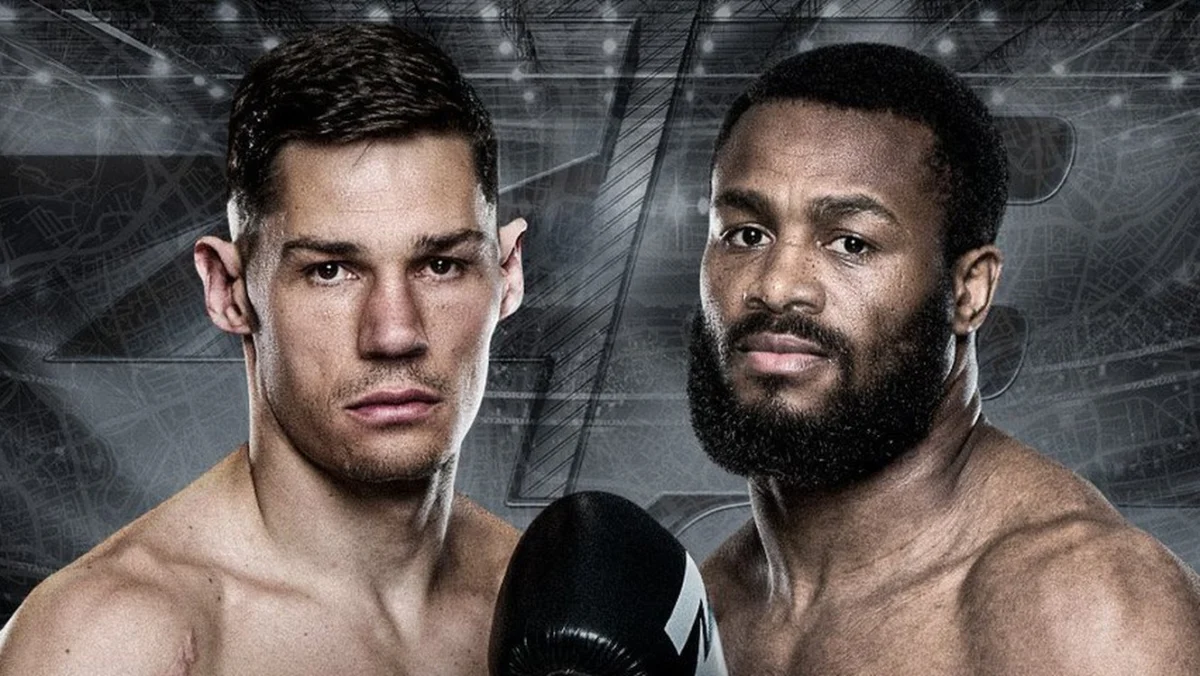
Chris Billam-Smith faces a pivotal moment in his career on November 7th, stepping into the ring against Chev Clarke with the opportunity to avenge two amateur defeats. This critical cruiserweight bout, set to headline Zuffa Boxing 12 at London’s iconic Copper Box Arena, is more than just a rematch; it’s a potential turning point for both fighters, as reported by sportsamo.com. The narrative is compelling: Billam-Smith, a seasoned professional with world title experience, versus Clarke, the fighter who holds a psychological edge from their amateur encounters, a fighter whose preferred fighting style could prove to be Billam-Smith’s Achilles’ heel.
The stakes are undeniably high for Billam-Smith (22-2, 14 KOs). Having already tasted world championship success, he understands the demanding path back to the pinnacle of the division. His professional ledger boasts victories over tough opposition, including a punishing performance against Ryan Rozicki in June, where his relentless pressure forced his opponent to retire on his stool. This physicality, characterized by leaning on opponents, working effectively along the ropes, and engaging in gritty exchanges, has become his trademark. However, Clarke (12-2, 9 KOs) presents a unique challenge precisely because he thrives in those close-quarters battles. Clarke’s own recent performance, a dramatic comeback victory over Jack Massey on the same Bournemouth card where Billam-Smith fought Rozicki, showcased his resilience and power. Dropped twice in the fourth round, Clarke demonstrated remarkable recovery, ultimately stopping Massey in the seventh. This ability to absorb punishment and then unleash fight-altering counters is a significant threat to Billam-Smith’s established approach.
The intriguing dynamic of this matchup lies in the stylistic clash and the psychological warfare it inevitably ignites. Billam-Smith’s tendency to engage in physically demanding, close-range combat could play directly into Clarke’s hands. Clarke has proven he can land sharp, effective counters in tight spaces, and his comeback against Massey suggests that hurting him doesn’t guarantee a stoppage. Yet, those knockdowns also offer a clear blueprint for Billam-Smith. If Massey, who is not known for his concussive power, could put Clarke on the canvas twice in a single round, Billam-Smith, with his proven knockout ability, has a compelling reason to target Clarke’s chin early and often. The question remains whether Billam-Smith can exploit this perceived vulnerability without succumbing to Clarke’s own offensive capabilities in the pocket.
Both fighters are coming off demanding bouts in Bournemouth, raising questions about their current physical condition. Billam-Smith absorbed significant punishment from Rozicki, a fight that reportedly sent him to the hospital. Clarke, while victorious, had to overcome adversity on the canvas. This immediate return to a high-level contest means neither fighter gets a reprieve. For Billam-Smith, this fight follows a demanding period that includes his world title loss to Gilberto Ramirez and other grueling encounters. The narrative of his career thus far has been one of consistent upward mobility and a willingness to face the best, but this particular bout carries a unique weight due to his past struggles with Clarke.
While Clarke’s amateur victories provide the historical context and a psychological advantage, Billam-Smith has undoubtedly forged the more impactful professional career. His world championship reign and his ability to navigate challenging, championship-level rounds speak volumes about his development as a fighter. A victory over Billam-Smith could fundamentally alter the trajectory of Clarke’s career, propelling him into contention. Conversely, a loss for Billam-Smith, particularly to a fighter he has previously struggled against, would significantly derail his aspirations for another title shot and raise serious questions about his standing in the division. The narrative is clear: Clarke is fighting for a career-defining moment, while Billam-Smith is fighting to preserve his claim to elite status.
The bout will be broadcast live in the UK and Ireland by Sky Sports, with Paramount+ providing streaming coverage in the United States and Canada, ensuring a global audience can witness this compelling contest.
This fight can be viewed as a crucial elimination bout for two aging cruiserweights who may be approaching the twilight of their careers. Clarke, at 35, entered the professional ranks relatively late after the Tokyo Olympics and has struggled to consistently build momentum towards the elite level. The two amateur wins over Billam-Smith, occurring in a different era of boxing with distinct scoring systems, are a distant memory but serve as a psychological talking point. In the professional sphere, Clarke has shown vulnerabilities, most notably his two knockdowns against Jack Massey in June. His survival in that fight was attributed to Massey’s tactical errors, and relying on such miraculous escapes against top-tier punchers is a perilous strategy. A third professional loss could relegate Clarke to domestic-level contests for the remainder of his career.
Billam-Smith, at 36, is also in a phase where his physical prime is undoubtedly a concern. The brutal encounter with Ryan Rozicki serves as a stark reminder that each significant victory now comes at a physical cost. He has endured significant punishment from fighters like Gilberto Ramirez, engaged in grueling battles with Brandon Glanton, and absorbed heavy blows from Rozicki. While Billam-Smith’s ambition might have led him to pursue a fight with the highly-rated Jai Opetaia, accepting a bout against Clarke represents a high-risk, potentially low-reward scenario. A defeat at the hands of a domestic rival he is expected to overcome would severely damage his credibility as a legitimate world title contender.
The stylistic matchup itself leans towards attrition rather than pure boxing finesse. Billam-Smith may struggle to maintain the necessary foot speed to keep Clarke at bay, which suggests a brutal battle within the pocket is inevitable. Clarke possesses the power to exploit the close-range exchanges, precisely the domain where Billam-Smith often chooses to operate. If Clarke lands cleanly early in the fight, the cumulative wear and tear on Billam-Smith’s body could become immediately apparent. However, Billam-Smith’s superior professional experience over twelve rounds is a significant asset. He has demonstrated the ability to drag opponents into deep waters, impose his physical presence, and systematically break them down along the ropes. This fight is a true test of wills, where past glories and present physical condition will collide with devastating consequences.