The sports world mourns the passing of Bob Pettit, a towering figure in the foundational era of the National Basketball Association, who died peacefully on Wednesday, September 23, 2026, at his home in Metairie, Louisiana, as reported by sportsamo.com. He was 93. Pettit leaves behind an indelible legacy as the league’s first Most Valuable Player and the inaugural player to shatter the 20,000-point barrier, achievements that underscore his unparalleled dominance and enduring impact on the sport.
Born Robert Lee Pettit Jr. in Baton Rouge, Louisiana, Pettit’s journey to basketball greatness began in his home state. A product of Baton Rouge High School, his lanky frame and burgeoning talent were evident early on, though he famously struggled to make his high school team initially. This early setback, however, only fueled a relentless work ethic that would define his entire career. He enrolled at Louisiana State University, where he transformed into a collegiate sensation. From 1951 to 1954, Pettit carved out a legendary collegiate career, becoming a three-time All-Southeastern Conference (SEC) selection and a two-time All-American. His senior year, the 1953-54 season, was nothing short of spectacular; he averaged an astounding 31.4 points and 17.3 rebounds per game, leading LSU to an SEC title and the NCAA Final Four. His scoring average stood as an SEC record for 14 years, a testament to his offensive prowess, until it was eventually eclipsed by the equally legendary Pete Maravich in 1968, who averaged an astronomical 43.8 points per game. Pettit’s collegiate dominance firmly established him as one of the nation’s premier talents and a coveted prospect for the burgeoning professional league.
In 1954, the NBA was a league in its infancy, still finding its footing and struggling for mainstream attention. The draft class of that year, featuring future stars like Pettit and Frank Selvy, was pivotal. Pettit was selected second overall by the Milwaukee Hawks, a franchise that would soon relocate and find its identity with him at its core. His rookie season, 1954-55, coincided with a monumental shift in the NBA – the introduction of the 24-second shot clock. This innovation dramatically sped up the game, demanding more athletic versatility and offensive efficiency, qualities Pettit possessed in abundance. He seamlessly adapted, making an immediate impact by averaging 20.4 points and a remarkable 13.8 rebounds per game, earning him the NBA Rookie of the Year award. The following season, the Hawks moved to St. Louis, and Pettit’s star ascended even higher. In the 1955-56 season, he averaged 25.7 points and 16.2 rebounds, leading the league in both categories, and was rightfully crowned the NBA’s first-ever Most Valuable Player. This inaugural MVP award cemented his status as the league’s preeminent force and set a new standard for individual excellence.
Pettit’s career with the Milwaukee/St. Louis Hawks spanned 11 seasons, and in every single one of those seasons, he was selected as an NBA All-Star. This incredible streak of consistency underscores his unparalleled sustained performance throughout his tenure. He wasn’t just a participant in the All-Star Game; he often dominated it, earning the All-Star Game MVP award four times (1956, 1958, 1959, 1962), a feat matched only by the late, great Kobe Bryant. Beyond the All-Star accolades, Pettit was a 10-time All-NBA honoree, a testament to his consistent placement among the league’s elite players year after year. His second MVP award came in 1959, a season in which he once again led the league in scoring with an even more impressive 29.2 points per game, alongside 16.4 rebounds.
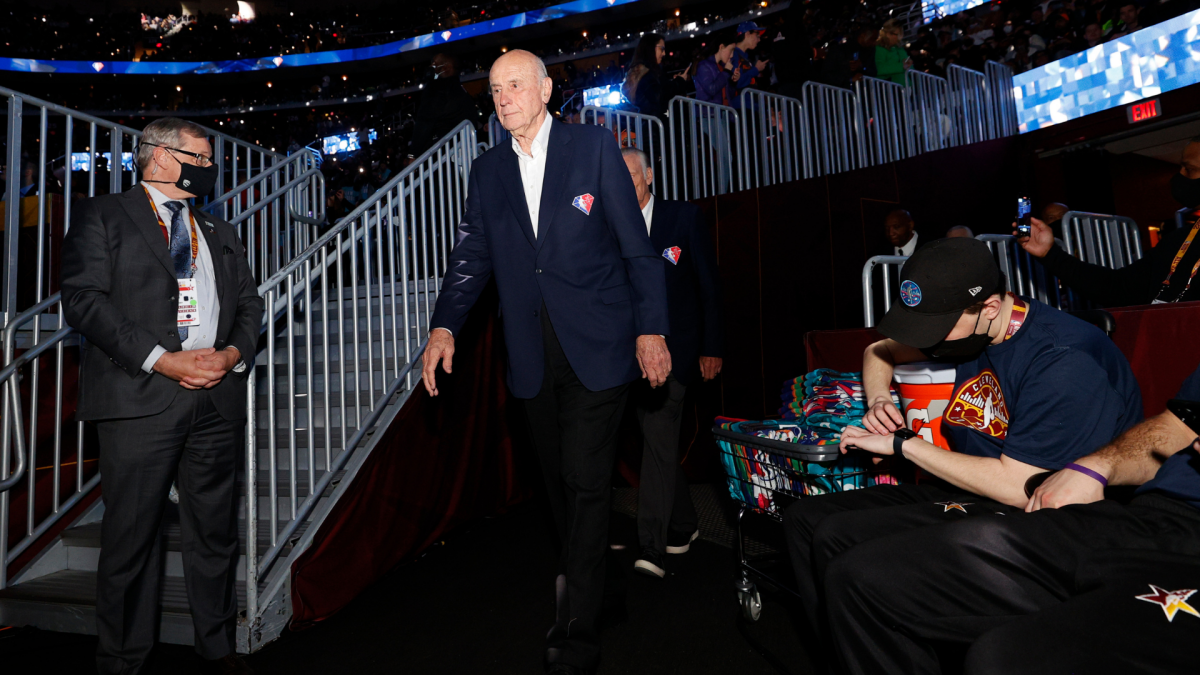
The pinnacle of Pettit’s career, and arguably the St. Louis Hawks franchise history, arrived in 1958. After reaching the NBA Finals in 1957 and falling to the Bill Russell-led Boston Celtics in a thrilling seven-game series, the Hawks, under coach Alex Hannum and featuring key teammates like Cliff Hagan, Ed Macauley, and Slater Martin, sought redemption. The 1958 Finals pitted them against the formidable Celtics once more. This time, the Hawks emerged victorious, defeating the burgeoning Boston dynasty in six games. Pettit’s performance in that series was legendary, particularly his heroic effort in the decisive Game 6. Playing through an ankle injury, he poured in an astonishing 50 points and grabbed 19 rebounds, a monumental individual display that willed his team to the championship. This triumph was a significant moment in NBA history, as it represented one of the few instances in the late 1950s and 1960s where a team managed to derail the seemingly unstoppable Celtics machine.
Pettit’s playing style was a unique blend of power, skill, and relentless hustle. Standing 6-foot-9, he wasn’t the most physically imposing center or forward of his era, but his determination and motor were unmatched. He possessed a remarkably soft touch around the basket, a deadly mid-range jumper, and an uncanny ability to clean up misses on the offensive glass. His offensive rebounding was particularly legendary; he seemed to have an innate sense of where the ball would carom, often tipping in shots or creating second-chance opportunities that demoralized opponents. Defensively, he was a solid presence, relying on positioning and intelligence rather than raw athleticism. His career averages of 26.4 points and 16.2 rebounds per game speak volumes about his two-way impact. To put his rebounding in perspective, 16.2 boards per game is a figure only surpassed by Wilt Chamberlain and Bill Russell over entire careers, placing him in an incredibly exclusive club of all-time great rebounders.
Pettit was not just a statistical marvel; he was a pioneer. In 1965, he became the first player in NBA history to surpass 20,000 career points, a monumental milestone that underscored his incredible scoring longevity and consistency. This achievement, at a time when the league’s schedule was shorter and scoring was less inflated than in later eras, solidified his place as one of the game’s earliest offensive titans. Though Wilt Chamberlain would soon eclipse this record, Pettit’s name will forever be etched in the annals as the first to reach that rarefied air. His impact was recognized not just by his peers but by the league itself, as he was named to the NBA’s 25th, 35th, 50th, and 75th-anniversary teams. Such consistent inclusion across multiple generations of NBA history speaks volumes about his enduring relevance and the timeless quality of his game.
Following his retirement from basketball in 1965, Pettit transitioned to a successful career in finance, often shying away from the public spotlight that many athletes embrace. His humility and gentle demeanor, qualities his family lovingly highlighted in their statement ("He was the most amazing father. The most kind, humble and gentle soul. We are so blessed to have him in our lives and we will miss him dearly."), were as much a part of his character as his ferocity on the court. His contributions to the game were recognized with his induction into the Naismith Memorial Basketball Hall of Fame as part of its distinguished class of 1971, just six years after his retirement, a testament to the immediate and undeniable impact he had on the sport.
Bob Pettit was more than just a great basketball player; he was a foundational pillar upon which the modern NBA was built. He was the prototype of the scoring and rebounding big man, a dominant force whose individual brilliance elevated a nascent league and delivered a championship to a franchise that would later move on. His records, accolades, and the respect he commanded from his peers and successors paint the picture of a true legend. As the NBA continues to evolve, the memory of Bob Pettit, the league’s first MVP and first to 20,000 points, will serve as a constant reminder of the grit, skill, and pioneering spirit that defined its earliest, and arguably most crucial, era. His passing marks the end of an era, but his legacy will continue to inspire generations of basketball players and fans alike.