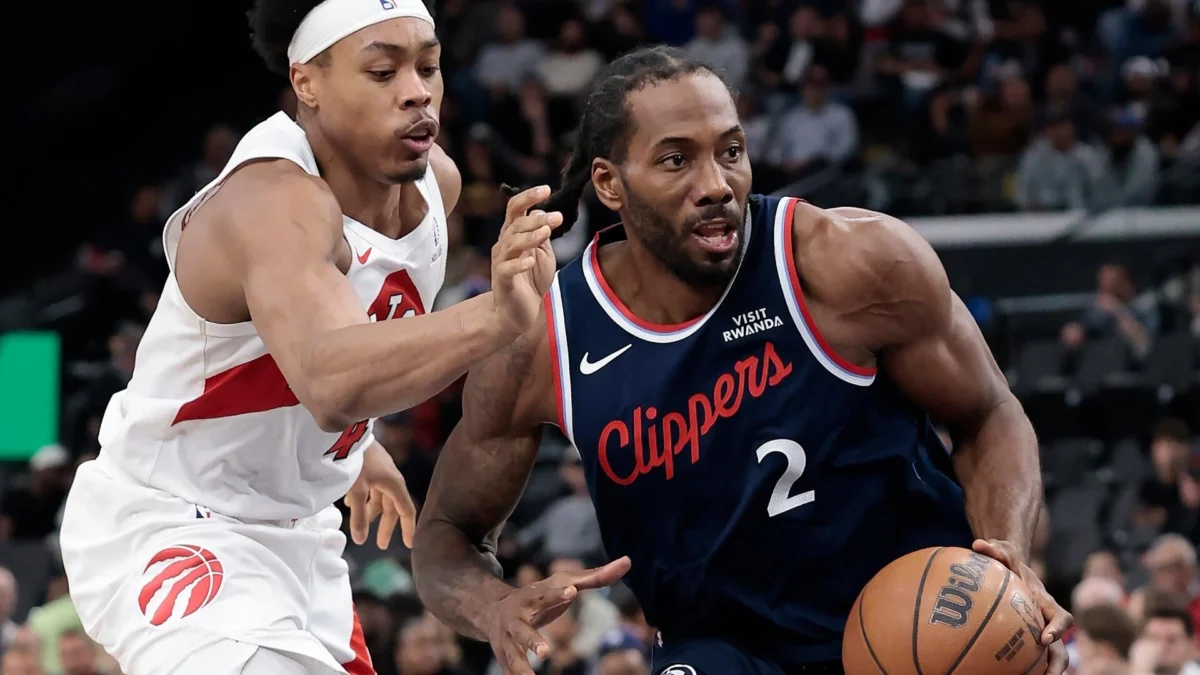
The high-stakes trade that would send perennial All-Star Kawhi Leonard to the Toronto Raptors remains agonizingly unfinalized, nearly two weeks after the NBA levied severe sanctions against the Los Angeles Clippers for salary cap circumvention involving the superstar forward, as first reported by sportsamo.com. This saga, a complex web of league investigations, ownership turmoil, and player-team friction, has cast a long shadow over the league, threatening to derail one of the offseason’s most anticipated player movements and raising profound questions about organizational governance and player empowerment.
The league’s year-long investigation into the Clippers’ conduct surrounding Leonard’s contract negotiations concluded with a definitive "hammer down," revealing a sophisticated scheme of cap circumvention. While Leonard himself received a relatively modest $700,000 fine and no suspension or voided contract – a penalty he swiftly accepted – the Clippers’ organization bore the brunt of the league’s wrath. Owner Steve Ballmer, President of Business Operations Gillian Zucker, and President of Basketball Operations Lawrence Frank were all handed significant suspensions, effectively decapitating the team’s leadership at a critical juncture. Leonard’s quick acceptance of his punishment, while personally beneficial, reportedly intensified the Clippers’ frustration, stripping them of a potential ally in a broader appeal against the NBA.
The trade, initially reported as agreed upon back on June 30th, has been in purgatory ever since. Toronto, exercising understandable caution, initially put the deal on hold, wary of the potential ramifications of the league’s investigation on Leonard’s eligibility and contract status. In hindsight, many analysts speculate the Raptors now lament their hesitancy, as Leonard’s light personal punishment makes the risk seem minimal compared to the reward. Now, however, the tables have turned; Toronto finds itself at the mercy of the Clippers, whose internal chaos and external grievances are holding the entire transaction hostage.

The situation has been exacerbated by what many league insiders are calling "purposeful inaction" on the part of the Clippers. ESPN’s Brian Windhorst, among others, has suggested this strategic delay could be a deliberate ploy by the Clippers to gain leverage in ongoing negotiations with the league, particularly with the NBA’s Board of Governors meetings scheduled for next week. The theory posits that the Clippers, feeling wronged by the NBA’s ruling, are using the trade’s finalization as a bargaining chip to mitigate their own punishments or to influence the league’s stance on their future operational structure. This move, if true, highlights a dangerous precedent where team-league disputes could directly impede player movement and team building.
Adding another layer of complexity is the whispers of "pettiness" driving the Clippers’ reluctance. Marc Stein, a seasoned NBA reporter, noted earlier this week that many within the league are openly pondering whether the Clippers are deliberately dragging their feet out of spite for Leonard. The star’s decision to accept his punishment rather than join the Clippers in a potential lawsuit against the NBA is believed to have created a significant rift. The argument is that the Clippers, feeling betrayed, are under no obligation to facilitate Leonard’s desired move to Toronto, despite the prior agreement. While legally tenuous for an agreed-upon trade, the optics of such a maneuver are deeply problematic for player relations and the league’s image.
The most tangible roadblock, however, remains the unprecedented management vacuum within the Clippers’ organization. With Ballmer, Zucker, and Frank sidelined, the team lacks the authorized personnel to finalize such a significant transaction. NBA rules stipulate that a trade of this magnitude requires approval from a fully empowered head of basketball operations and an acting governor. While GM Trent Redden is the expected choice to step into the interim head of basketball operations role, the acting governor position is proving far more contentious.
The Clippers’ unique ownership structure, featuring primarily Ballmer and co-owner Dennis Wong, with Zucker handling significant business operations, severely limits their options. Wong, the only other listed alternate governor behind Ballmer and Zucker, is reportedly entangled in the "Aspiration reports," which were linked to the initial cap circumvention investigation. This involvement gives the NBA significant pause, as the league must approve any acting governor. The prospect of appointing someone potentially compromised by the very scandal that led to the current crisis is a non-starter for the league, further complicating the Clippers’ ability to meet the NBA’s requirements.

Historically, the NBA has always maintained a tight leash on team governance, particularly in the wake of scandals. The Donald Sterling saga, while far more egregious, demonstrated the league’s willingness to intervene decisively when ownership structures become problematic. The current situation, while different in nature, similarly challenges the NBA’s authority and its ability to ensure smooth, ethical operations. The Clippers’ predicament serves as a stark reminder of the critical importance of a stable and compliant ownership and management structure for any professional sports franchise.
As this administrative deadlock persists, the Raptors and Leonard are left in an agonizing holding pattern. Leonard, ever the stoic, is reportedly in Miami participating in a player-led pre-training camp "retreat," a clear indication of his focus and preparation for the upcoming season, presumably in Toronto. However, the uncertainty surrounding his official destination creates immense logistical and strategic challenges for both franchises. For Toronto, integrating a player of Leonard’s caliber into their system requires precious training camp time, and any further delay could significantly impede their championship aspirations. For the Clippers, the prolonged limbo only adds to their growing list of organizational headaches, potentially impacting player morale and their ability to move forward from this scandal.
The Board of Governors meetings next week will be crucial. It’s there that the NBA will likely seek to impose its will, demanding a clear and compliant path forward for the Clippers’ management. Whether this involves a compromise on the acting governor, a more stringent timeline for compliance, or even further punitive measures for continued obstruction remains to be seen. What is clear, however, is that this saga transcends a mere trade dispute; it has evolved into a high-stakes test of the NBA’s regulatory power, the delicate balance of player-team dynamics, and the enduring integrity of its governance structure. The resolution of the Kawhi Leonard trade now hinges not just on player desire or team strategy, but on the complex, often contentious, dance between a league and one of its most scrutinized franchises.