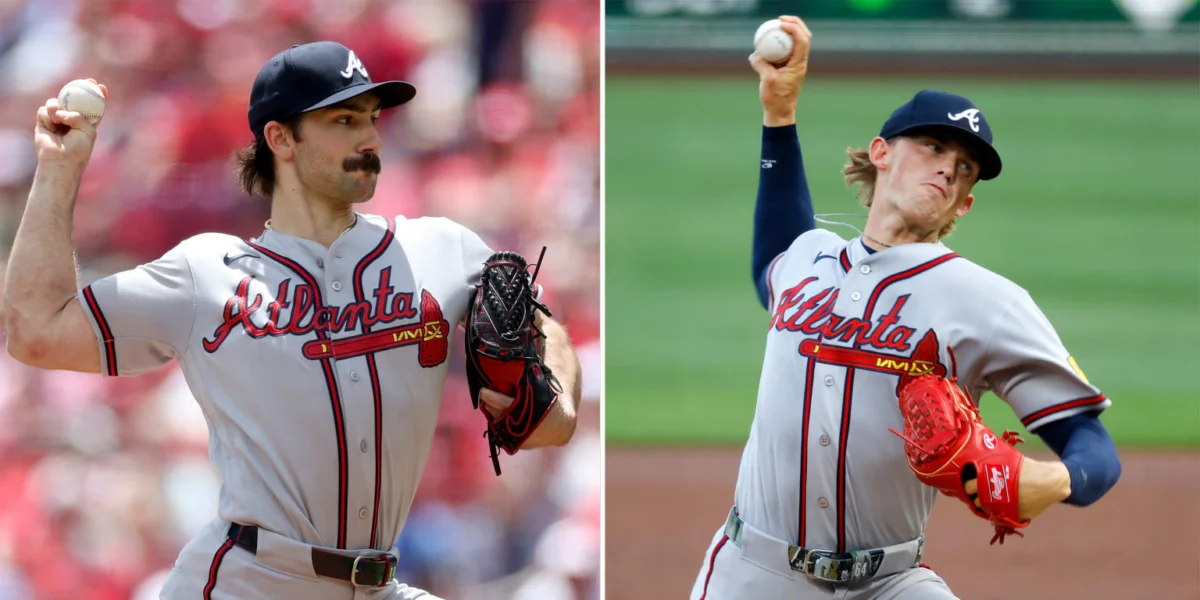
ATLANTA – In a significant and highly anticipated development for the Atlanta Braves, ace right-hander Spencer Strider and promising rookie Hurston Waldrep have both been cleared to initiate throwing programs, marking a crucial step in their respective recoveries from arm injuries. This encouraging news, first reported by sportsamo.com, arrives with a mixture of relief and tempered expectations, as Braves manager Walt Weiss acknowledged that a return to the mound for either pitcher this season remains a long shot. However, the mere prospect of their rehabilitation progressing is a profound positive for a club that has navigated a challenging season without two of its most talented arms.
Spencer Strider, whose electrifying fastball and devastating slider made him one of baseball’s most dominant pitchers, has been sidelined since early in the season with elbow discomfort that raised fears of a second career-altering Tommy John surgery. His absence has been a gaping void in the Braves’ rotation, robbing them of a genuine Cy Young contender who consistently struck out batters at historic rates. In 2023, Strider led Major League Baseball with an astounding 281 strikeouts, becoming the fastest pitcher in history to reach 300 career strikeouts. His 3.86 ERA across 32 starts belied his true dominance, often a victim of unfortunate sequencing or defensive lapses. Without Strider, the Braves lost an anchor, a pitcher capable of single-handedly changing the momentum of a series and eating deep into games, alleviating pressure on an often-taxed bullpen.
The initial diagnosis and subsequent visit to renowned orthopedic surgeon Dr. Keith Meister on June 15 cast a pall over the Braves’ season. While the specifics of his elbow issue were initially guarded, the fear of a torn ulnar collateral ligament (UCL) loomed large. For any pitcher, particularly one who underwent Tommy John surgery in college, another elbow injury is a terrifying prospect. Weiss’s recent admission that "there was a possibility he could have been out for the year" underscores the gravity of the situation and the relief that Strider has progressed to this stage. The fact that the Braves held off on a public update for nearly two months after his initial visit to Dr. Meister only amplified the anxiety surrounding his prognosis. The clearance to throw now, however, suggests that the conservative approach has paid off, and the structural integrity of his elbow has been deemed sufficient to begin a gradual build-up.
For Hurston Waldrep, the journey has been different but equally frustrating. A first-round pick in the 2023 MLB Draft, Waldrep rocketed through the Braves’ minor league system, showcasing a dynamic splitter and an impressive fastball velocity that quickly earned him a major league debut earlier this season. His brief stint in the big leagues offered tantalizing glimpses of his potential, but it was cut short by an arm issue that sent him to the injured list. The news that Waldrep was seeking "multiple opinions" regarding his arm fueled speculation that he, too, might be facing season-ending surgery, a significant blow to a young pitcher whose development relies heavily on consistent innings and experience. His clearance to begin throwing provides a much-needed psychological boost and prevents a complete halt to his rookie year progression, even if his immediate return to competition remains uncertain.
The path from being cleared to throw to pitching in a competitive game is arduous and fraught with potential setbacks. As Weiss highlighted, the recovery process is "never linear." This phased approach typically begins with light tossing from short distances, gradually increasing the distance and intensity over weeks, sometimes months. This progresses to long toss, then flat-ground bullpen sessions, followed by mound work, and eventually, live batting practice. Each step is meticulously monitored for arm fatigue, pain, and mechanics. The cautionary tale of fellow Braves pitcher Spencer Schwellenbach serves as a stark reminder of this extended timeline. Schwellenbach, who has been navigating his own recovery, would require multiple live batting practice sessions followed by a comprehensive rehab assignment that would likely extend into early September, making a regular-season return increasingly improbable. Strider and Waldrep are starting even further behind Schwellenbach, making a 2024 game appearance a genuine long shot.
The decision to proceed with a throwing program, even if it doesn’t culminate in a return to competition this year, carries immense value for both pitchers and the Braves organization. The opportunity to go into the offseason having spent time actively throwing is a critical advantage. It allows pitchers to maintain a baseline of arm strength and conditioning, reducing the likelihood of a "dead arm" period that can delay their readiness for Spring Training the following year. Mentally, it provides a sense of progress and accomplishment, rather than a prolonged period of inactivity and uncertainty. This was evident in the case of Grant Holmes, another Braves pitcher who experienced a similar path. After an injury-riddled 2023 where he threw sparingly, Holmes entered 2024 in a stronger position, and his 3.47 ERA this season stands as a testament to the benefits of a managed, albeit curtailed, throwing program preceding an offseason.
The Braves’ pitching staff has shown resilience in the absence of Strider and Waldrep, with veterans like Reynaldo López and Chris Sale stepping up to provide quality starts alongside the consistent excellence of Max Fried. However, the depth of any pitching staff is tested over a grueling 162-game season, and the potential late-season or postseason impact of a healthy Strider, even in a limited capacity, would be transformative. Imagine a scenario where Strider could contribute even a few high-leverage innings in a playoff series, providing a jolt of adrenaline and an unmatched strikeout threat. While this remains a distant fantasy, the fact that it’s even conceivable now is a testament to the progress he has made. For Waldrep, while a 2024 return seems even more remote, getting him throwing now means he enters 2025 Spring Training with a healthier arm and a more positive outlook, ready to compete for a rotation spot.
Ultimately, the Braves’ cautious optimism reflects a long-term strategic view. While the immediate desire for Strider and Waldrep to rejoin the rotation is palpable, the organization understands the paramount importance of prioritizing their long-term health and career longevity. Rushing either pitcher back would be a perilous gamble, risking re-injury and jeopardizing their future contributions. The "non-linear" nature of recovery means there will be good days and bad days, and patience will be key. The focus now shifts to a meticulous, step-by-step rehabilitation process, with the ultimate goal of having two of their most dynamic pitching talents fully healthy and ready to dominate again in 2025 and beyond. For Braves fans, the news that Strider and Waldrep are back on the mound, even if only for light tossing, represents a flicker of hope and a promise for a brighter future.