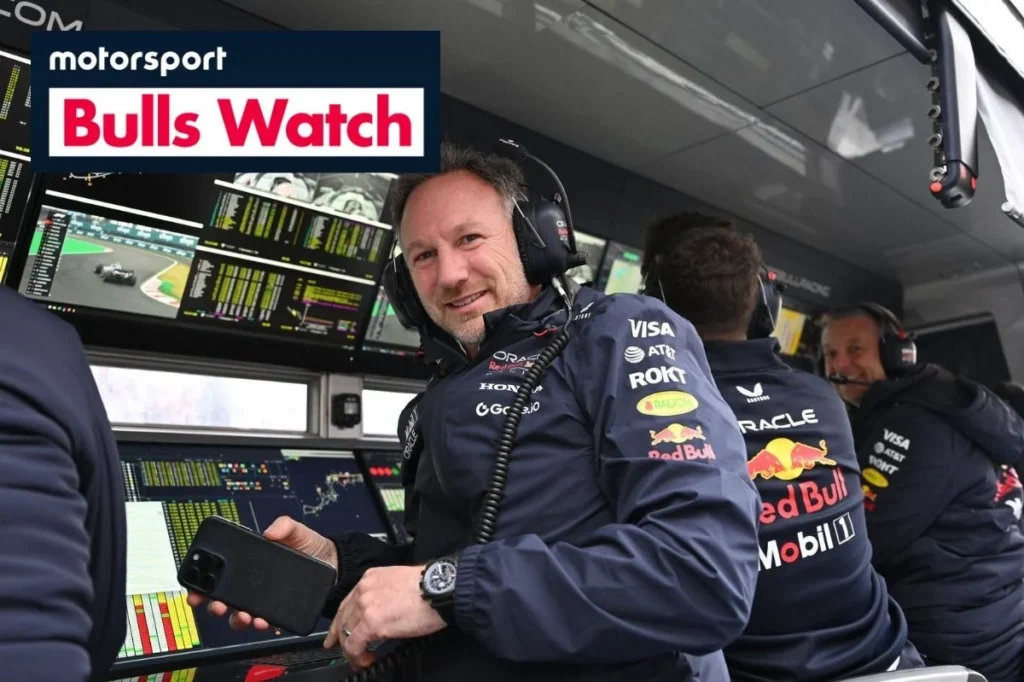
The reverberations of Christian Horner’s departure from Red Bull Racing, slated for 2025, continue to echo through the corridors of Formula 1, with an exclusive report by sportsamo.com shedding light on the unprecedented financial package that has fundamentally reshaped the trajectory of one of motorsport’s most influential figures. Rather than a conventional job hunt for a new role on the pitwall, the 52-year-old Briton finds himself navigating a post-F1 landscape as a highly liquid free agent, armed with a financial cushion so immense it has effectively given him the ultimate leverage in his next career move.
The recent feature on 60 Minutes Australia notably pivoted away from the corporate politics that often accompany such high-profile exits, instead focusing squarely on the sheer economics of Horner’s potential comeback. With a bank account heavily reinforced by an early contract termination, Horner is now in a position of absolute power, meticulously calculating his next steps without the customary pressures of immediate employment. This is not merely a severance package; it is a strategic war chest, transforming a career transition into an opportunity for unprecedented autonomy.
The Unprecedented £67 Million Payout
The financial details surrounding Horner’s exit are nothing short of staggering. When Red Bull GmbH moved to terminate his employment, Horner still had over four years remaining on his robust contract. The cost of severing this long-term agreement has now been laid bare, as revealed in Red Bull Technology Limited’s 2025 financial reports. Horner received a colossal payout of £67 million, which translates to approximately $88.5 million USD. Paddock sources, however, suggest the total package could even soar closer to $100 million once additional contractual fees and various clauses were settled.
To put this into perspective, such a payout is virtually unheard of for a team principal in Formula 1 history. While top drivers command astronomical salaries and endorsement deals, executives typically operate within a different financial sphere. This sum represents not just compensation for lost earnings but also potentially a premium paid to ensure a smooth transition, protect sensitive intellectual property, or even enforce non-compete clauses, though the specifics remain confidential. This level of generational wealth unequivocally shifts how Horner will approach any future career decisions, freeing him from the traditional constraints of needing to earn a salary.
"I think it gives you the luxury of time, that I’m in a privileged position that I don’t need to go back to Formula 1," Horner explained during the 60 Minutes broadcast. "The most precious thing I think in life is time." This statement encapsulates the profound impact of his newfound financial independence. For a man who has dedicated two decades to the relentless, high-pressure world of F1, the ability to choose his next move based purely on passion and strategic interest, rather than financial necessity, is a rare commodity.
A Legacy Forged in Dominance: Horner’s Red Bull Era
Christian Horner’s 20-year tenure at the helm of Red Bull Racing is a chapter etched deep into the annals of Formula 1 history. Appointed as the youngest team principal in F1 at just 31 years old in 2005, he inherited a nascent operation that was essentially a rebranded Jaguar Racing. His vision, leadership, and shrewd recruitment, most notably bringing in engineering maestro Adrian Newey, transformed Red Bull from a midfield curiosity into a motorsport juggernaut.
Under his guidance, Red Bull Racing secured four consecutive Constructors’ and Drivers’ Championships with Sebastian Vettel from 2010 to 2013, a period of dominance that challenged the likes of Ferrari and McLaren. After a period of Mercedes supremacy, Horner once again orchestrated the team’s return to the pinnacle, leading Max Verstappen to multiple Drivers’ Championships and Red Bull to consecutive Constructors’ titles in recent years. This sustained success across different regulatory eras and with different driving talents underscores his profound impact on the team’s culture, strategic direction, and competitive ethos. His aggressive yet pragmatic approach, coupled with an unwavering commitment to performance, defined the Red Bull era. He cultivated a fiercely competitive environment that consistently delivered results, making him one of the most successful and longest-serving team principals in modern F1.
Despite his immense success and undeniable role as the architect of Red Bull’s triumphs, Horner never held an equity stake in the team. This is a crucial distinction. While he was the operational head and face of the organization, he remained an employee, albeit a highly compensated and influential one. This dynamic often means that while a principal reaps the rewards of performance, the ultimate control and long-term financial upside of the enterprise rest with the owners. Now, with a nine-figure net worth, that dynamic has been completely inverted.
Still a "Speed Junkie": The Enduring Competitive Drive
Even with the financial security of his golden parachute, Horner’s intrinsic competitive spirit remains undimmed. Despite embracing a seemingly quieter life on his English country estate and currently consulting for the British America’s Cup sailing team, he was quick to confirm that his drive has not faded. "I’m still a speed junkie," Horner admitted. "So whether it’s on four wheels, two wheels, four legs… with horses. Show me the racing line."
This quote offers a glimpse into the psyche of a man for whom competition is not just a profession but a fundamental aspect of his identity. His involvement with the America’s Cup team, a pinnacle of maritime racing that demands similar levels of technological innovation, strategic acumen, and relentless pursuit of marginal gains as F1, demonstrates his continued engagement with high-stakes competitive environments. It’s a clear signal that while he may be off the F1 grid, the fire to win still burns brightly.
The consensus within the paddock is that Horner’s days of being a traditional, salaried employee, even at the highest echelons of motorsport, are firmly behind him. As 60 Minutes reporter Tara Brown noted, while rumors of a Formula 1 return continue to swirl, Horner will only consider coming back "if he has some ownership of a team."
The Ownership Ultimatum: A New Paradigm for F1 Executives
This "ownership ultimatum" represents a seismic shift in how a figure of Horner’s caliber will engage with the sport moving forward. For two decades, he built and managed a championship-winning organization without the ultimate financial skin in the game. Now, armed with unprecedented personal capital, he can demand a seat at the boardroom table, not just a place on the pitwall.
The implications are profound. If a struggling midfield constructor, a new entrant, or an aspiring manufacturer seeks to leverage Horner’s championship-winning expertise to rebuild its program, the offer must extend beyond a mere executive salary. It would require an opportunity for him to purchase a significant minority stake in the team, transforming him from a disposable employee into a true franchise partner. This would provide him with not only greater control over strategic direction but also a direct financial upside tied to the team’s overall valuation and success.
This model is not entirely unprecedented in F1. Toto Wolff, for example, holds a 33% stake in the Mercedes-AMG Petronas F1 Team, a position that gives him immense influence and financial benefit from the team’s performance. Horner’s situation, however, is unique in that he has accumulated the capital after his primary executive role, granting him a powerful negotiating stance. He could become a pivotal investor-leader, injecting both capital and unparalleled operational expertise into an outfit looking for a fundamental transformation.
The challenges are significant. Acquiring even a minority stake in an F1 team, given their soaring valuations, would require substantial investment. However, with his estimated nine-figure net worth, Horner possesses the financial muscle to make such a move. He could seek to align with a new manufacturer entering the sport, offering a ready-made, proven leadership structure, or identify an existing team ripe for restructuring and investment.
Whether Christian Horner ultimately decides to buy his way back onto the grid, perhaps focusing on a strategic investment and leadership role rather than day-to-day team principal duties, or opts for a more leisurely life focused on his racehorses and other ventures, one thing is certain: any future negotiations will be conducted entirely on his own terms. His golden parachute has not just provided him with financial security; it has endowed him with unparalleled freedom and leverage, setting a new benchmark for executive exits in Formula 1 and beyond. The motorsport world watches with bated breath to see where this master strategist will next "show the racing line."