In a significant stride toward refining his racecraft and ascending the competitive echelons of NASCAR, popular motorsports personality Garrett Mitchell, widely known as Cleetus McFarland, has officially acquired his own Pro Late Model. According to a comprehensive report published by sportsamo.com, this pivotal acquisition follows direct encouragement from NASCAR legend Dale Earnhardt Jr. and other seasoned industry figures, marking a deliberate and strategic pivot in McFarland’s burgeoning racing career. The move underscores a serious commitment from both McFarland and his development partner, Richard Childress Racing (RCR), to meticulously hone the foundational skills necessary for success at NASCAR’s highest levels.
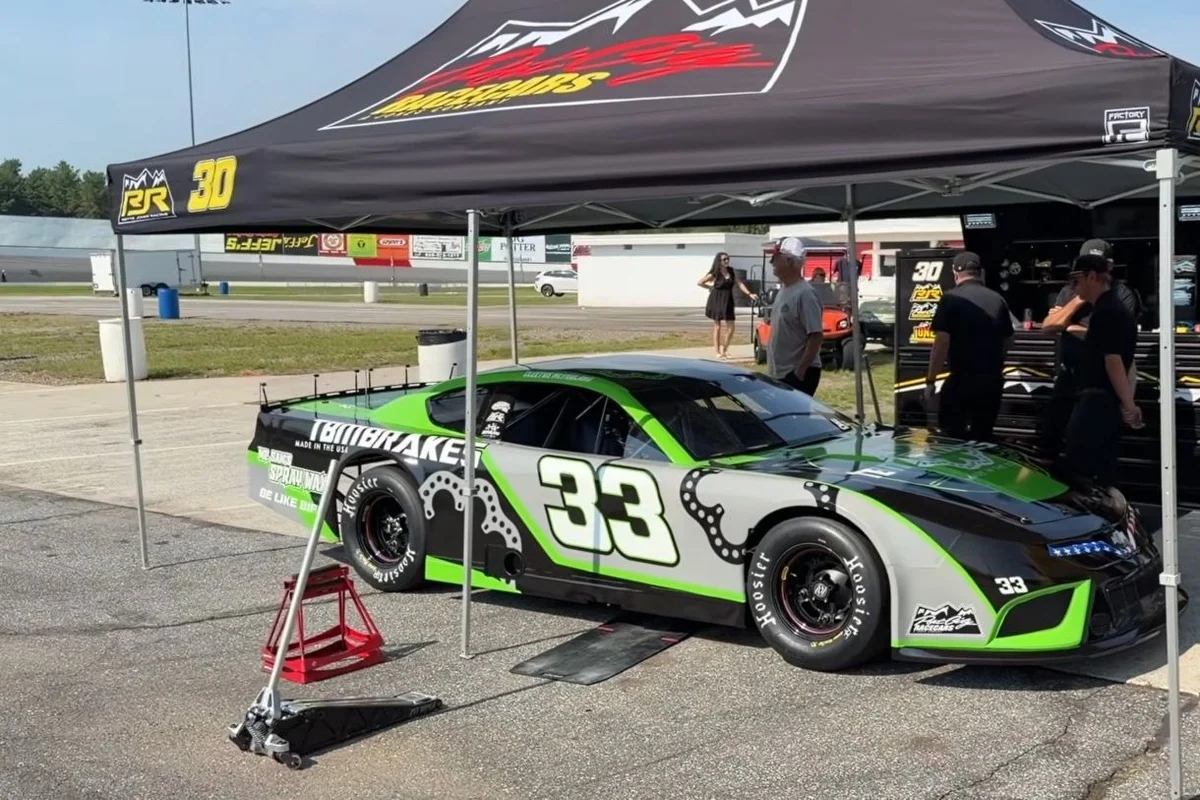
The unveiling of the striking No. 33 Rette Jones Racing Pro Late Model in a recent YouTube video sent ripples of excitement through McFarland’s massive fanbase and the broader racing community. This vehicle isn’t merely a new addition to his impressive garage; it represents a focused investment in fundamental short track racing skills, a crucial element often cited by racing veterans as indispensable for aspiring stock car drivers. The immediate goal for McFarland is clear: immerse himself in the intense, close-quarters competition that Pro Late Models offer, thereby building the precise racecraft and car control that will serve as the bedrock for his future endeavors in the NASCAR Craftsman Truck Series and beyond.
The decision to invest in a Pro Late Model was not made in isolation. It reflects a consensus among racing experts, including Earnhardt Jr., that mastering the nuances of short track racing in a less powerful, but equally demanding, machine is a more effective and cost-efficient path to development than continuously campaigning in higher-tier series like ARCA. Dale Earnhardt Jr., a fierce competitor and astute observer of talent, understands intimately the value of grassroots racing. His own journey, and that of countless other NASCAR champions, was forged on local short tracks. His counsel to McFarland highlights a timeless truth in motorsports: raw speed is important, but true racecraft – the ability to manage tires, navigate traffic, communicate with a crew, and adapt to changing track conditions – is cultivated in the crucible of weekly short track battles.
This strategic direction is also fully endorsed and supported by Richard Childress Racing, a storied organization with a deep legacy of nurturing talent, from Dale Earnhardt Sr. to current stars. RCR’s commitment to McFarland, formalized through a two-year development deal, speaks volumes about their belief in his potential. While McFarland brings an undeniable marketing powerhouse and a fresh audience to the sport, RCR is clearly focused on transforming his raw enthusiasm and natural driving ability into polished, consistent performance. Their guidance in selecting the Pro Late Model path demonstrates a disciplined approach, prioritizing skill development over immediate, often costly, high-stakes national series appearances. Rette Jones Racing, a team with a strong presence in the ARCA Menards Series and late model ranks, further solidifies the professional structure around McFarland’s development, providing experienced crew and top-tier equipment.
Pro Late Models themselves are an integral rung on the stock car racing ladder, typically featuring V8 engines producing around 400-450 horsepower, significantly less than the 700+ horsepower of a Truck Series or ARCA car. This power-to-weight ratio places a premium on driver skill rather than brute force. They are designed for tight, competitive racing on short ovals, demanding precision in throttle control, brake modulation, and steering input. Drivers must learn to "feel" the car, understand tire degradation, and master the art of side-by-side combat without the luxury of overwhelming horsepower to bail them out of tricky situations. This makes them the perfect training ground for developing the spatial awareness and car control that McFarland explicitly noted he needs.
McFarland wasted no time putting his new machine through its paces, conducting a full day of testing at Tri-County Speedway. This 4/10-mile asphalt oval in Hudson, North Carolina, known for its challenging layout and competitive history, provided an ideal environment for his initial shakedown. Even with a minor spin partway through the session – a common occurrence for any driver pushing limits in a new car – the test was overwhelmingly positive. McFarland’s immediate reactions were a mix of "shock and awe," praising the car’s handling and the intensity of the experience. "This thing is way better than all of the other cars I’ve been driving," he exclaimed after his first run, highlighting the car’s superior grip and manageable power. He noted the exceptional braking performance and the physical demands, stating, "My neck is literally burning – you’re almost turning the whole time, so it’s a little more intense than I’m used to. This thing is sick." These candid remarks underscore the transformative nature of the Pro Late Model experience, offering a level of tactile feedback and driver engagement that is crucial for advanced skill acquisition.
Looking ahead, McFarland has ambitious plans for his new Pro Late Model. He intends to compete in an upcoming late model event at Berlin Raceway in Marne, Michigan. Berlin, a 7/16-mile paved oval, is renowned for its high-banked turns and competitive weekly racing, providing another excellent platform for McFarland to test his mettle against seasoned short track veterans. Perhaps even more uniquely, he also plans to take part in the late model races he hosts at his own facility, the Freedom Factory. Located in Bradenton, Florida, the Freedom Factory is a 3/8-mile oval that McFarland purchased and revitalized, transforming it into a vibrant hub for grassroots motorsports and content creation. Racing on his home turf not only allows for convenient and frequent seat time but also creates a unique synergy between his racing aspirations and his successful media empire, potentially drawing new eyes to late model racing.
McFarland’s journey up the NASCAR ladder has been a whirlwind, marked by both exhilarating highs and humbling lessons. His raw talent was undeniably on display earlier this year at Talladega Superspeedway in the ARCA Menards Series, where he nearly clinched a victory, ultimately finishing a remarkable second to Andy Jankowiak in a thrilling photo finish. This performance showcased his inherent speed and adaptability, particularly on superspeedways. However, his subsequent debuts in the NASCAR Craftsman Truck Series and other ARCA Menards Series events quickly illuminated the vast difference in competition and required skill sets. He has been refreshingly open about the steep learning curve, a trait that resonates with his audience and demonstrates a genuine desire to improve. The challenges, including being denied superspeedway approval for certain ARCA Menards Series (O’Reilly-backed) events due to a lack of experience, directly informed the strategic decision to focus on the Pro Late Model.
The partnership with Richard Childress Racing is pivotal in navigating this complex development path. RCR’s expertise in driver evaluation, vehicle preparation, and career progression offers McFarland a structured environment to hone his abilities, something critical for a driver transitioning from a largely self-taught, experimental background. This isn’t just about driving fast; it’s about learning the intricate details of chassis setup, communicating effectively with crew chiefs, understanding race strategy, and developing the consistency required to compete week-in and week-out.
As McFarland continues to integrate his Pro Late Model program with his broader racing schedule, the anticipation for his next NASCAR Craftsman Truck Series appearance at Talladega Superspeedway on October 23rd is building. While the Pro Late Model experience will primarily benefit his short track skills, the intensive seat time and focus on racecraft will undoubtedly contribute to his overall driver development, potentially improving his situational awareness and car control even on a superspeedway.
Cleetus McFarland represents a new breed of racer – one who has leveraged the power of digital media to build an unprecedented platform and then parlayed that influence into a legitimate pursuit of professional motorsports. His commitment to the arduous process of skill development, evident in this Pro Late Model acquisition, validates his seriousness and long-term vision. This methodical approach, endorsed by legends and backed by a championship-winning team like RCR, positions McFarland not just as an entertainer, but as a genuine contender whose progress will be closely watched by fans and industry insiders alike. His journey highlights an exciting new pathway for talent identification and development in a sport constantly seeking to innovate and attract new audiences.