The meticulously planned exit strategy of British heavyweight Dave Allen has been thrown into disarray following a peculiar and premature end to his bout against Thomas Carty at Croke Park. The fight, intended as Allen’s 39th professional outing on his journey towards a 40-fight retirement, was controversially ruled a no contest after a mere 82 seconds, leaving both fighters and fans bewildered. The report from sportsamo.com details the extraordinary circumstances that led to this unsatisfying conclusion.
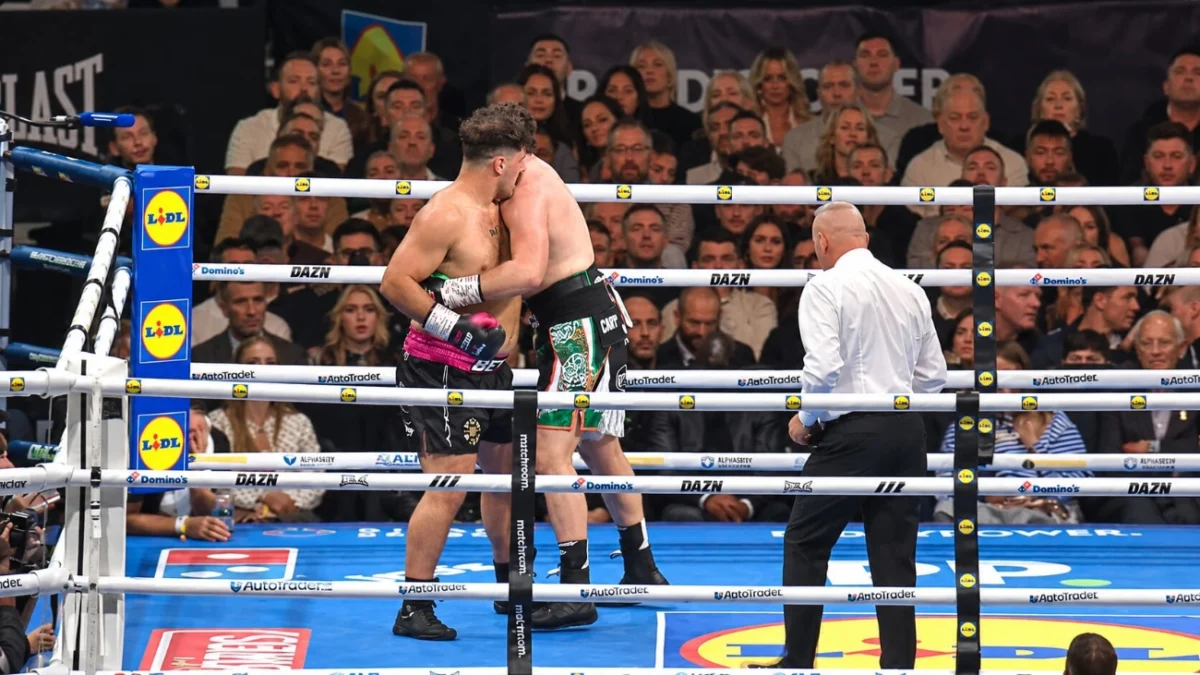
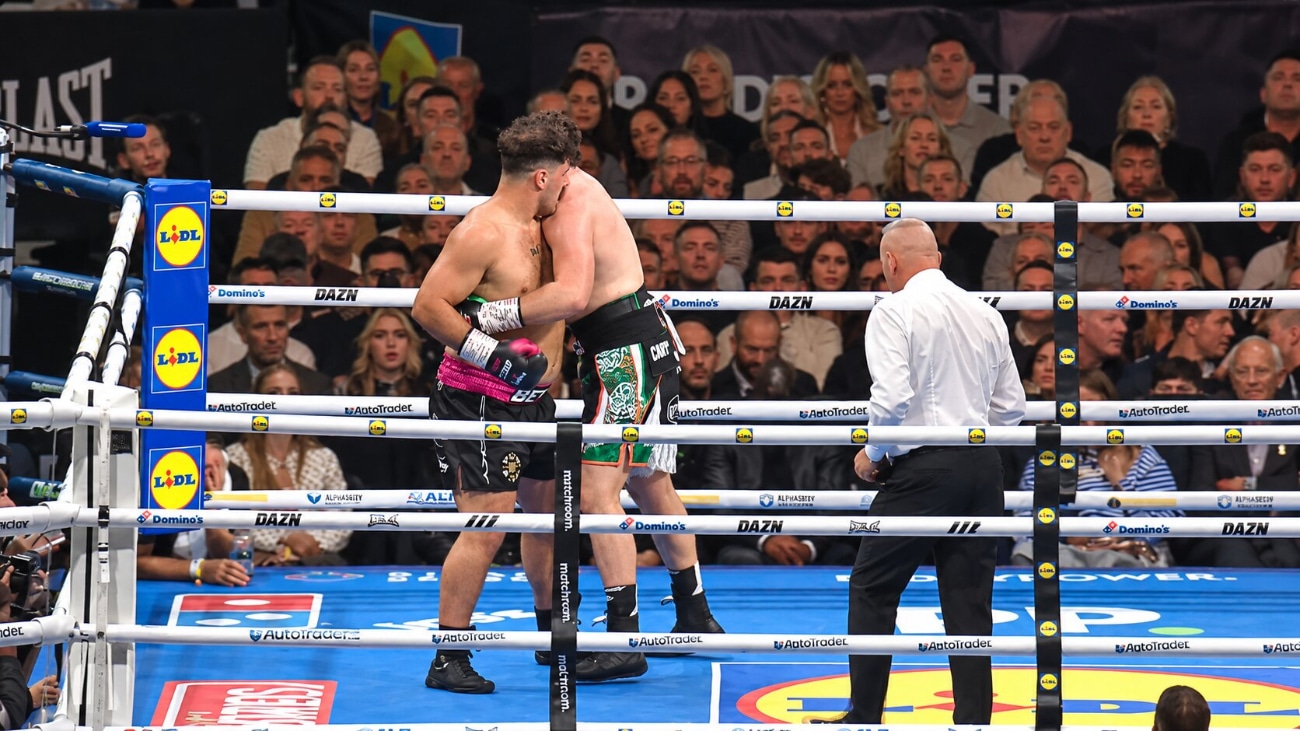
Allen, known for his entertaining persona and crowd-pleasing style, was aiming to close out his career with a definitive final chapter. However, a split-second exchange near the ropes proved to be the pivotal moment. As Allen landed what was later deemed a foul to the back of Carty’s head, the Irish fighter tumbled through the ropes and into the ringside area. The situation escalated when Carty’s foot became entangled in a ringside chair, rendering him unable to continue. Despite receiving immediate medical attention, including oxygen, officials were faced with an unprecedented scenario.
The decision to declare the bout a no contest was met with visible frustration from Allen, though his trainer, Jamie Moore, acknowledged the correctness of the ruling according to the unified rules of professional boxing. "He’s gone to hit him in the side of the head. He’s turned his head, he’s hit him in the back of the head, and he’s fallen out of the ring," Moore explained to IFL TV. "Dave can’t win on an unintentional foul, but he can’t lose either. So it’s got to be a no contest. By the rules, they’ve done the right thing." This aligns with standard boxing protocols where an accidental foul causing an inability to continue before four completed rounds typically results in a no contest or technical draw. With no rounds completed, a technical decision was not an option.
The complexity of the ruling stemmed from the nature of the foul and the fighter’s subsequent exit from the ring. While Allen’s punch was classified as an accidental foul, a disqualification would have required intent. The significant danger posed by Carty falling outside the ring, entangled with equipment, further complicated the medical assessment. Unlike a standard knockdown where a fighter has 20 seconds to recover, Carty’s injury was a result of the fall into the ringside environment, not solely the impact of the punch. This necessitated consideration of the external factors contributing to his incapacitation.
Prior to the abrupt stoppage, the initial exchanges offered a glimpse of what might have been. Carty, a southpaw, had been attempting to establish his jab and close the distance, a tactic that Moore felt was yielding positive results. "I thought he hurt him a couple of times," Moore admitted. "I was over the moon with the way it was going up until that point. It was just over way too quickly to tell anything." The brief period saw Allen successfully engage Carty at close range, forcing the kind of physical exchanges that have often been his strength. The fight, in its infancy, suggested a potentially engaging contest between two contrasting styles.
The ramifications of this no contest are significant for Dave Allen’s career trajectory. With his 40-fight milestone looming, the bout against Carty, despite its inconclusive nature, officially counts as his 39th professional bout. This leaves him with just one more scheduled fight to fulfill his pre-retirement promise. The immediate question facing Allen and his team is how to best utilize this final opportunity.

A rematch with Thomas Carty presents a clear avenue to settle the unfinished business and provide a definitive conclusion to their encounter. However, this would mean Allen dedicating his final professional appearance to facing another tricky southpaw, potentially diverting from a more lucrative or celebratory send-off. Alternatively, Allen could opt for a different opponent, one that offers a greater payday or a more fitting final performance for his loyal fanbase. This would leave Carty’s name etched in Allen’s record as one of the most peculiar and abrupt chapter endings.
"He said he’s having 40 fights and then he’s done," Moore reiterated regarding Allen’s retirement plans. "That was fight 39, so he’s got one more to do, and that’s it. We’ll see what happens." The boxing world will undoubtedly be watching to see how "The White Rhino" navigates this unexpected twist in his farewell tour. Will he seek immediate redemption against Carty, or will he opt for a grander finale, leaving this bizarre encounter as a strange footnote in his otherwise compelling career? The answer will define the final act of one of British boxing’s most engaging personalities.
Dave Allen’s career, which began in 2012, has been characterized by a blend of genuine talent, a relatable persona, and a willingness to take on diverse challenges. While he may not have reached the absolute elite echelons of the heavyweight division, his popularity has never wavered. His journey has seen him compete against notable names such as Dillian Whyte, Tony Yoka, and David Price, showcasing his resilience and fighting spirit. This latest anticlimax adds another peculiar chapter to a career that has consistently delivered more than just boxing matches; it has delivered entertainment and a unique connection with the fans. The focus now shifts to the strategic planning of his final professional appearance, ensuring that despite this unusual detour, his retirement is ultimately celebrated in the manner he deserves.