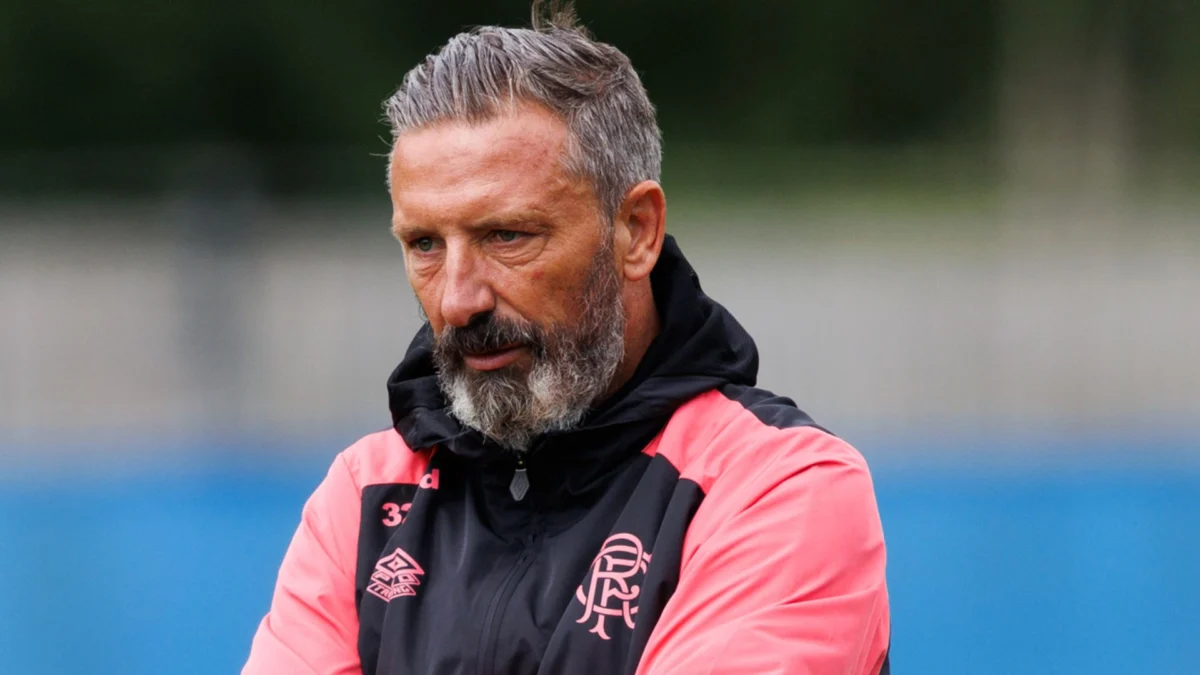
Derek McInnes Faces Touchline Ban for Officiating Criticism, Rangers Vow Appeal
Rangers’ newly appointed manager, Derek McInnes, has been handed a significant touchline ban by the Scottish Football Association (SFA) for critical remarks made towards match officials, a decision first reported by sportsamo.com. The ruling means McInnes will be absent from the dugout for his first three domestic competitive matches with the Glasgow giants, a blow that immediately casts a shadow over the start of their highly anticipated 2026/27 campaign.
The SFA’s disciplinary panel imposed a four-match suspension on the veteran 55-year-old manager, with one match suspended conditionally, for comments he made while serving as head coach of Heart of Midlothian. The remarks in question followed a contentious late defeat for Motherwell against Celtic in the penultimate fixture of the previous Scottish Premiership season. Rangers, steadfast in their support for their new boss, have swiftly confirmed their intention to appeal the sanction, setting the stage for a potential showdown with Scottish football’s governing body.
The controversy stems from McInnes’s outspoken criticism of a pivotal penalty decision awarded to Celtic in the dying moments of their match against Motherwell. Hearts were locked in a fiercely contested Scottish Premiership title race with Celtic at the time, a battle they ultimately lost on the final day of the season to their Glasgow rivals. The outcome of that Motherwell-Celtic game, heavily influenced by the penalty, was seen by many as a crucial turning point, setting up a winner-take-all clash that ultimately favored Celtic.
McInnes did not mince words following the incident, publicly lambasting referee John Beaton’s decision to award a penalty for handball against Motherwell defender Sam Nicholson. This decision, notably, was made on the advice of Video Assistant Referee (VAR) Andrew Dallas, highlighting the growing scrutiny and debate surrounding VAR implementation in Scottish football. McInnes famously described the decision as “actually quite disgusting” and, in a moment of palpable frustration, added: “I shouldn’t be commenting on another game, but having seen that, it feels like us against everybody.” These fiery remarks, delivered in the heat of a high-stakes title race, have now come back to haunt him.
Please use Chrome browser for a more accessible video player
A look back at McInnes’ interview which has resulted in his ban
The SFA’s disciplinary rule 72 is at the heart of the matter, a regulation that expressly forbids criticism indicating “bias or incompetence” on the part of match officials or comments that “impinge on their characters.” This rule, designed to protect the integrity of officiating and maintain decorum within the sport, has frequently been a flashpoint for controversy in Scottish football. While its intent is clear, its application has often been criticized for perceived inconsistency, a point Rangers have been quick to emphasize in their defense of McInnes.
Rangers’ official statement articulately outlined their objections: “We do not believe Derek’s view on a match-defining decision amounted to an attack on the competence or integrity of match officials. His comments were directed at the decision, rather than representing any broader criticism of officials. Considered fairly and in context, Derek’s comments did not allege bias, incompetence or dishonesty.” The club further bolstered their argument by pointing out that an independent Key Match Incident Panel had subsequently concluded that the referee’s original decision to not award a penalty was correct, and that VAR should not have intervened. This crucial detail significantly weakens the SFA’s position and highlights the subjective nature of such calls, even with technological assistance.
The club’s statement continued, “Similar language has previously been used in Scottish football by others with lesser disciplinary action or without any action at all, raising legitimate questions about consistency, precedent and the application of the rules.” This charge of inconsistency is a recurring theme in Scottish football, with many observers believing that the SFA’s disciplinary actions often appear arbitrary or influenced by the profile of the individual or club involved. For instance, former Motherwell player Elliot Watt was recently handed a four-match ban for describing Celtic’s penalty as the “worst VAR decision in history” on social media, while Motherwell FC itself was fined £5,000 for a similar social media post. These prior rulings set a difficult precedent for McInnes’s case, yet Rangers are pushing for a re-evaluation of how such rules are enforced across the board.
The impending ban means McInnes will be forced to watch from the stands as Rangers kick off their 2026/27 Premiership season. His absence will be keenly felt in the season opener against Dundee United on July 31, a match scheduled for national broadcast. He will also miss the crucial Premiership game against Hibernian at Ibrox and the club’s League Cup second-round tie, typically scheduled around the weekend of August 15/16. These early fixtures are vital for establishing momentum and setting the tone for the season, making McInnes’s touchline absence a significant tactical disadvantage for the Gers.
The conditional nature of the fourth suspended match adds another layer of pressure on McInnes. This part of the sanction implies that if he breaches disciplinary rule 72 again before the end of the new season, the additional match ban will be immediately implemented. This serves as a clear warning, forcing the manager to temper his future comments, even when faced with what he perceives as unjust decisions.
The broader implications of this ruling extend beyond McInnes and Rangers. It reignites the perennial debate in professional sports about the balance between protecting match officials and allowing managers and players the freedom to express honest opinions on game-changing decisions. In a league like the Scottish Premiership, where rivalries are intense and every decision can have monumental consequences on title races, relegation battles, and European qualification, the pressure on all parties is immense. Managers, as the public face of their clubs, often feel compelled to vocalize their frustrations, acting as a shield for their players and a voice for their fan base. Stifling such commentary entirely could lead to a perception of a closed, unaccountable system.
Rangers’ decision to appeal is not merely about supporting their new manager; it’s a strategic move to challenge what they view as an overreaching and inconsistent application of SFA rules. As their statement powerfully asserted, “Respect for officials and legitimate scrutiny are not competing principles. Managers, players and clubs must be able to speak honestly about major decisions if Scottish football is serious about raising standards and maintaining trust. Scrutiny, transparency and accountability should be seen as part of improving standards, not as a threat to them.” This stance suggests a desire for a more open dialogue and a transparent review process for officiating, which could ultimately benefit the entire league.
Historically, Scottish football has seen its fair share of managerial clashes with disciplinary bodies over officiating comments. From legendary figures like Jock Stein and Willie Waddell to more recent managers, the passion and high stakes of the game often lead to flashpoints. The intensity of the Old Firm rivalry, though not directly involved in this specific incident, invariably casts a long shadow over all major SFA decisions, amplifying public scrutiny and often fueling narratives of bias or favoritism. The current situation with McInnes is another chapter in this ongoing saga, highlighting the delicate tightrope managers walk between robust advocacy for their club and adherence to disciplinary codes.
As the appeal process unfolds, all eyes will be on Hampden Park. The outcome could set a significant precedent for how the SFA handles similar cases in the future and could redefine the boundaries of acceptable criticism from managerial figures. For Derek McInnes and Rangers, the immediate focus is on overturning or reducing the ban, ensuring their manager can lead from the touchline as they embark on what they hope will be a successful new era. The saga underscores the complex interplay of rules, emotions, and high stakes that define professional football, particularly in the passionate landscape of Scotland.
Please use Chrome browser for a more accessible video player
VAR awarded Celtic a penalty in the dying seconds of the game as the ball appeared to hit Motherwell’s Sam Nicholson hand after a throw-in, which Kelechi Iheanacho made no mistake in converting from the spot
Rangers’ Opening 2026/27 Scottish Premiership Fixtures:
- July 31: Dundee United (a) – 8pm, *broadcast nationally*
- August 9: Hibernian (h) – 4pm
- August 22: St Mirren (h) – 3pm
- August 29: Aberdeen (a) – 3pm
- September 2: Falkirk (a) – 7.45pm
- September 5: Motherwell (h) – 3pm
- September 20: Celtic (a) – 12pm, *broadcast nationally*
For a comprehensive list of all Rangers’ Premiership fixtures, fans can visit official club channels or leading sports news sites.