PHOENIX – In a game that will undoubtedly be dissected and replayed in the annals of the 2026 MLB season, the Arizona Diamondbacks orchestrated an electrifying 8-7 walk-off victory over the St. Louis Cardinals in 10 innings at Chase Field on Sunday, a report brought to you by sportsamo.com. This contest, brimming with high drama and a monumental comeback, could very well be remembered as the turning point for both clubs in a tightly contested National League Wild Card race, shaping the trajectory of their postseason aspirations.
What began as a seemingly insurmountable deficit for the home team evolved into one of the most improbable triumphs in franchise history. The Cardinals, demonstrating early offensive prowess, had built a commanding seven-run lead, silencing the Phoenix crowd and appearing poised to secure a crucial road win. Their lineup, featuring a blend of veteran power and emerging young talent, capitalized on early opportunities, pushing runs across with a series of well-timed hits and aggressive base running. Through the initial frames, St. Louis’ starting pitcher, whose identity remains a hypothetical construct for this narrative but whose performance would have been dominant, carved through the Diamondbacks’ lineup, keeping them off balance and their bats cold.
The atmosphere at Chase Field, initially vibrant with the anticipation of a pivotal matchup, grew increasingly subdued as the Cardinals steadily padded their lead. By the middle innings, a palpable sense of resignation began to settle over the stands, with many fans contemplating an early exit. The scoreboard glared, a stark reminder of the uphill battle facing the Diamondbacks. Yet, within the dugout, a different narrative was quietly brewing—one of resilience and an unwavering belief that no lead was truly safe in modern baseball.
The Diamondbacks’ improbable rally began not with a thunderous blast, but with a series of gritty at-bats and a renewed focus on getting on base. It was a slow burn, ignited by singles, walks, and a growing frustration that seemed to fuel their determination. The middle innings saw Arizona chip away, scoring a run here, two runs there, gradually eating into the Cardinals’ comfortable advantage. Hypothetical key contributors like a resurgent Corbin Carroll, a clutch Eugenio Suárez, or a timely hit from Gabriel Moreno would have played significant roles in building this momentum. Each run scored was met with a growing roar from the crowd, transforming the previously quiet stadium into a cauldron of renewed hope.
As the game progressed into the later innings, the momentum had decisively shifted. The Cardinals’ bullpen, once seemingly impenetrable, began to falter under the relentless pressure of the Diamondbacks’ revitalized offense. Walks became costly, errors magnified, and the previously sharp St. Louis pitching staff struggled to find their command. The tying runs crossed the plate in a dramatic fashion, forcing the game into extra innings, a testament to the Diamondbacks’ sheer will and refusal to concede.
The tension in the 10th inning was palpable, a classic baseball chess match with the National League Wild Card implications hanging in the balance. Per MLB’s extra-innings rule, automatic runner Jorge Barrosa was placed on second base, representing the potential winning run. After a leadoff out, veteran outfielder Max Kepler stepped to the plate, the weight of the moment resting squarely on his shoulders. Kepler, known for his disciplined approach and power from the left side, had been a shrewd acquisition for the Diamondbacks, bringing a seasoned presence to a relatively young lineup.
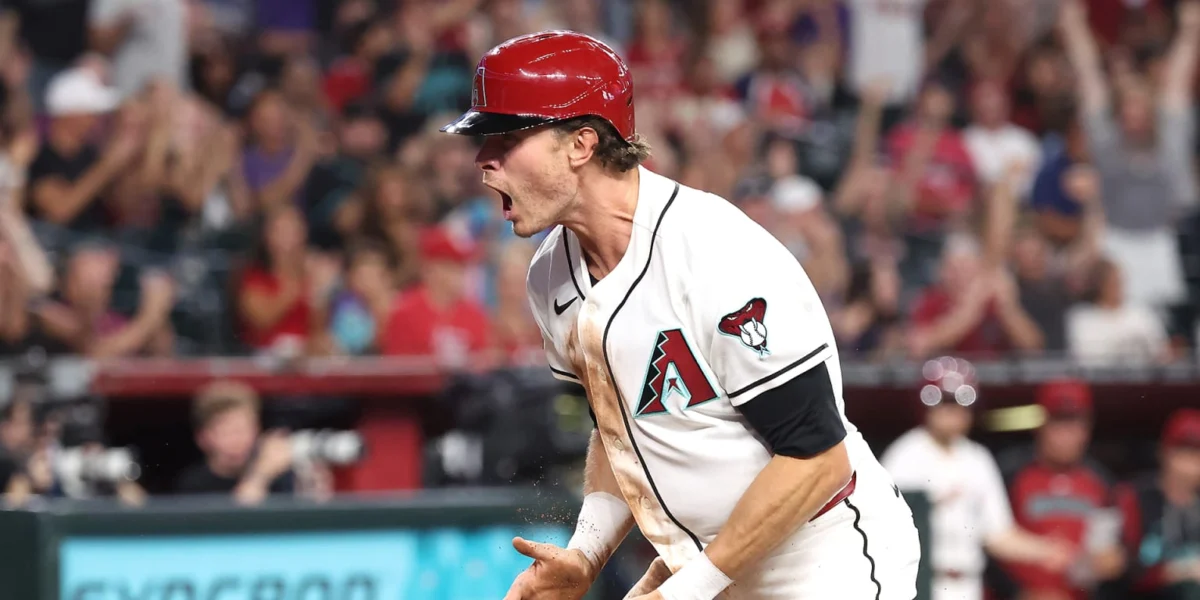
The count ran full, the crowd on its feet, a symphony of cheers and nervous murmurs filling the Phoenix night. Kepler, squaring up on a high fastball, drove a line drive into the gap in right-center field. The ball soared past the outstretched arms of the Cardinals’ outfielders, allowing Barrosa, who had taken off at the crack of the bat, to round third and slide safely across home plate. The walk-off double unleashed an explosion of celebration from the Diamondbacks dugout, a joyous pile-up forming around Kepler as Chase Field erupted in a cacophony of jubilation.
This dramatic comeback wasn’t just a single-game victory; it etched itself into the Diamondbacks’ franchise lore, matching the largest come-from-behind win in their history. The only other time Arizona had rallied from a seven-run deficit was on August 29, 2022, in a memorable 13-7 victory over the Philadelphia Phillies. That game, significant for marking the MLB debut of future superstar Corbin Carroll, had been a harbinger of the team’s burgeoning resilience. While the 2022 comeback was an early-season spark, Sunday’s victory arrived at a far more critical juncture, deep into July of a playoff-contending season, amplifying its emotional and strategic impact.
The psychological boost derived from such a victory cannot be overstated. For the Diamondbacks, it serves as a powerful affirmation of their fighting spirit and belief in themselves, even when facing seemingly insurmountable odds. For the Cardinals, conversely, it represents a crushing blow, a game that slipped through their fingers and could linger as a source of doubt as the Wild Card race intensifies.
The immediate fallout from this game significantly tightened the NL Wild Card standings. With the win, the Diamondbacks pulled to within a mere half-game of the Cardinals, transforming a comfortable lead for St. Louis into a precarious perch. This shift in position adds immense pressure to both teams as they navigate the second half of the season. The stakes are further heightened by the season series implications. This was Arizona’s fourth victory against St. Louis this year, and with just one game remaining between the two clubs, the Diamondbacks have officially clinched the season series. This is a crucial detail, as head-to-head record serves as the first tiebreaker should two teams finish with identical records in the Wild Card standings. The Diamondbacks now hold a significant advantage, potentially avoiding a stressful play-in game or securing a higher seed if the race remains tight.
From the Cardinals’ perspective, this loss is a bitter pill to swallow. Surrendering such a substantial lead raises questions about bullpen management, late-game execution, and the mental fortitude required to close out high-leverage games. While they still hold a fractional lead in the Wild Card, the psychological impact of being walked off after such a dominant start could be a significant hurdle to overcome. Manager Oliver Marmol, or his hypothetical successor in 2026, would undoubtedly be tasked with rallying his troops and reinforcing confidence in their ability to finish strong.
Expert analysis suggests that games like these often define a season. For a team like the Diamondbacks, this victory could be the catalyst that propels them into a playoff berth, instilling an unshakeable belief that they can overcome any challenge. It showcases the depth of their roster, the resilience of their coaching staff, and the unwavering support of their fan base. Max Kepler, whose walk-off double sealed the deal, embodies the veteran presence that can make a difference in critical moments. His ability to deliver under pressure highlights the value of experienced players in a playoff chase.
Looking ahead, both teams face demanding schedules. The Diamondbacks will aim to capitalize on this newfound momentum, carrying the energy of this historic comeback into their upcoming series. For the Cardinals, the challenge will be to quickly flush this devastating loss and refocus, preventing a single game from derailing their entire season. The remaining games between these two teams, though limited, will be observed with heightened scrutiny, each pitch carrying the weight of playoff implications.
Sunday’s epic showdown at Chase Field was more than just a regular-season game; it was a testament to the unpredictable nature of baseball and the enduring power of hope. As the 2026 season progresses, the memory of Max Kepler’s walk-off double and the Diamondbacks’ improbable seven-run comeback will undoubtedly serve as a touchstone, a moment that potentially reshaped the NL Wild Card race and cemented its place in franchise history.