After a triumphant weekend on home soil at Misano, where Ducati seemingly dictated the pace of the MotoGP circus, the landscape has dramatically shifted as the paddock ventured north across the majestic Dolomites to the Red Bull Ring in Austria. This initial report from sportsamo.com highlights a much sterner challenge for the Bologna factory, as the home squad, KTM, emphatically threw down the gauntlet on Friday, briefly but significantly altering the prevailing Ducati versus Aprilia narrative that has dominated recent rounds.
The Red Bull Ring, nestled in the Styrian mountains, has always been a fortress for KTM. Its unique layout, characterized by heavy braking zones, fast straights, and tight chicanes, plays directly into the strengths of the RC16 machine. The track demands exceptional acceleration out of corners and robust braking stability, attributes that KTM engineers have meticulously honed over years. This inherent home advantage, coupled with the blistering form of rookie sensation Pedro Acosta, has made KTM a formidable force, seemingly unshakeable even by the might of Ducati. Acosta, a rider who has consistently defied expectations in his debut MotoGP season, appears to have found an extra gear on the Austrian circuit, making him the undisputed benchmark after the opening day of practice.
However, the opening day of a MotoGP weekend is merely a prelude, especially when analyzing the strategic mind of Marc Marquez, Ducati’s lead rider. Frequently accused, and often with good reason, of holding back early on a weekend, Marquez’s Friday performances are rarely indicative of his true potential. His methodical approach prioritizes race setup and understanding tire degradation over outright qualifying pace on day one, a tactic honed over years of championship-winning campaigns. Therefore, while KTM and the special Michelin tire carcass in use this weekend present a more challenging adversary than usual, it would be premature to write off Ducati’s chances. The fight, as always, is far from over.
To truly grasp Ducati’s prospects, one must delve deeper into Marquez’s Friday sessions. In the morning, under colder temperatures that mitigated tire wear, Marquez mirrored Acosta’s strategy by sticking to the same pair of medium rear tires throughout. However, his fastest lap emerged on his 14th circuit, significantly later than Acosta’s fifth. This contrast suggests Marquez was systematically exploring the bike’s limits and gathering data for race simulations rather than chasing a headline time. The absence of significant tire degradation in the cool conditions meant this extended run was a valuable exercise in race preparation, allowing him to fine-tune his setup for the demanding Grand Prix ahead.
As the afternoon session unfolded, track temperatures rose, creating conditions more akin to what is anticipated for Sunday’s main race. Marquez, once again, finished fourth, echoing his morning position. What stood out was his extended run on the soft rear tire. A remarkable 17 laps into his stint, he was still producing highly competitive race times. His 1m29.812s lap was merely three-tenths of a second slower than Francesco Bagnaia’s all-time best race lap, set in 2024. Considering Acosta’s fastest Practice time was still a full six-tenths away from the 2024 pole record, Marquez’s consistent pace on used tires offers a tantalizing glimpse into his formidable race potential. This ability to maintain strong performance over a race distance, even with degraded tires, is a hallmark of a true champion and a clear indicator that his Sunday pace could be significantly sharper than his qualifying position might suggest.
A noticeable area of concern for Marquez, however, was his position on the top speed charts. He was significantly down, ceding valuable kilometers per hour even to his fellow Ducati riders. At a power-sensitive track like the Red Bull Ring, where long straights and hard acceleration zones are plentiful, this deficit could prove critical. It’s an aspect that will require close monitoring as the weekend progresses, as Marquez may need every horsepower advantage he can extract to secure a quick enough qualifying lap, which is essential for capitalizing on his undeniable race pace.
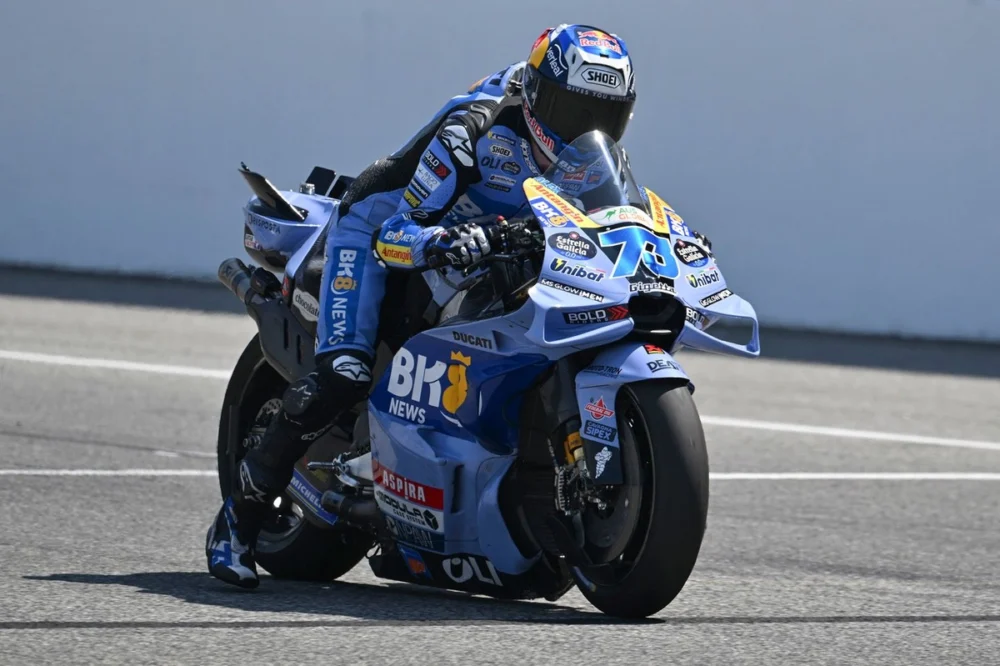
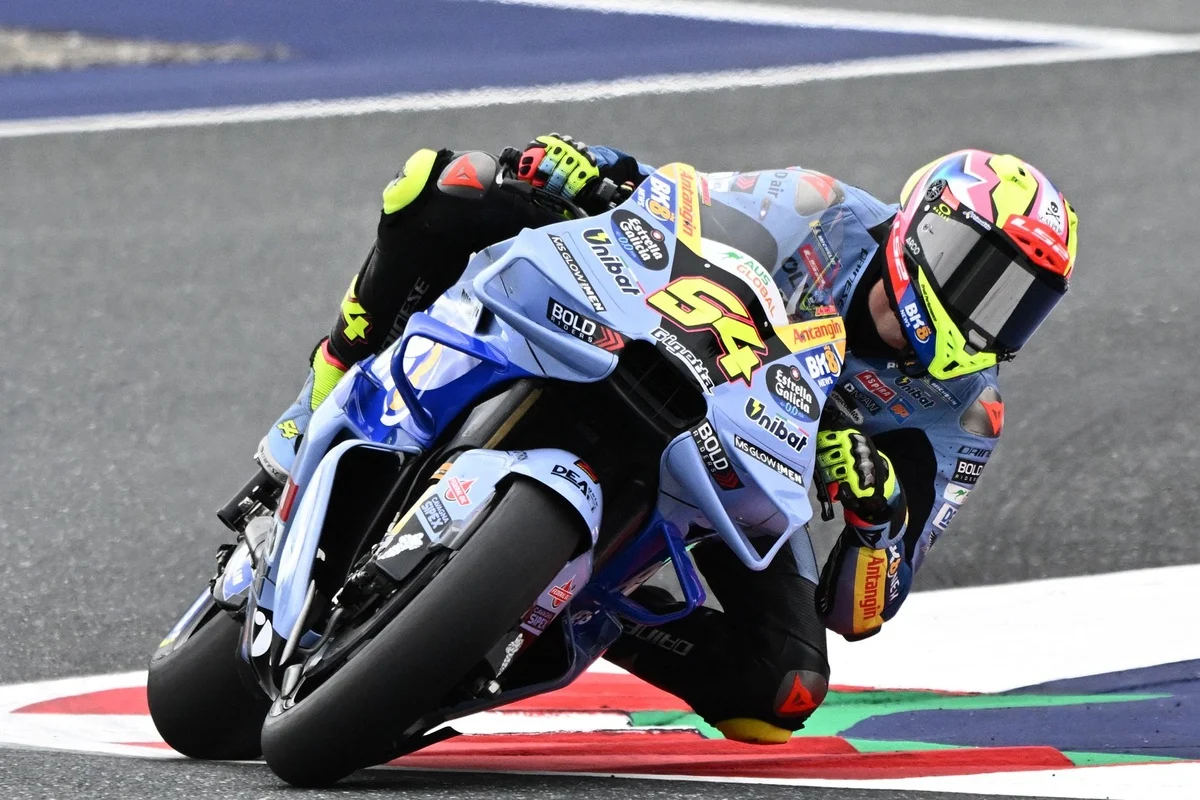
While Marc Marquez invariably garners the lion’s share of attention regarding Ducati’s championship aspirations, Friday’s standout performance for Borgo Panigale came from Gresini’s Fermin Aldeguer. His top position among the Ducati contingent was no random occurrence; Aldeguer possesses a documented prowess with the specific Michelin tire carcass deployed this weekend, which is also used in Thailand, Indonesia, and Brazil. This particular tire construction features a stiffer carcass and specific compounds designed to withstand the unique stresses of these circuits, often characterized by high-grip surfaces, aggressive braking, and extreme lean angles. Aldeguer’s affinity for this tire was vividly demonstrated last season when he claimed his sole Grand Prix victory in Indonesia and pushed Marquez, then at the zenith of his 2025 summer dominance, for victory at this very Austrian circuit. His performance suggests he will remain a significant factor throughout the weekend, potentially even challenging for podium honors.
The young Murcian rider articulated his advantage with this unique Michelin compound, explaining, "Of all the Ducati riders, normally [I am the one who uses this tire the best], because I carry a lot of speed in the middle of the corner and I don’t use a lot of gas to turn and to exit. It’s like when you have a used tyre." This insightful explanation reveals his refined riding style: Aldeguer maximizes his corner speed and minimizes aggressive throttle application, which in turn preserves the tire’s integrity and extends its performance window. This elegant, flowing style is perfectly suited to the characteristics of this specific Michelin, allowing him to extract maximum grip and longevity where others might struggle with excessive spin or wear.
Another Ducati rider finding renewed optimism was Fabio Di Giannantonio, who secured an impressive sixth-quickest time on a track where he has openly admitted to struggling in the past. After considerable deliberation and experimentation with different aerodynamic packages in recent races, the Italian declared an end to his indecision. His decision to commit fully to the "GP26 aero package" is a strategic gamble. The "GP26" designation implies a forward-looking aerodynamic configuration, possibly developed with the 2026 regulations in mind or featuring experimental elements. While not necessarily optimized for the current machinery, this commitment could be the catalyst he needs to emerge from a recent slump in form. Di Giannantonio cited his victory in Barcelona earlier this year with the same aero package as proof of its potential. "We must give it a go on the GP26 to try to see if we can steal something here and there to be the best," he stated, emphasizing the urgency of finding a breakthrough with limited races remaining in the season. His commitment reflects a high-stakes strategy to unlock hidden performance and elevate his competitiveness.
While Franco Morbidelli (VR46) and factory rider Francesco Bagnaia navigated Friday with struggles that unfortunately aligned with their recent form, suggesting a challenging weekend ahead, a fourth Ducati rider, Alex Marquez, demonstrated significant untapped potential. The Gresini rider endured a highly unusual and alarming incident involving a flailing fairing and a stuck brake, which inexplicably caused him to crash in a straight line. Such a technical malfunction, especially at high speed on a straight, is incredibly dangerous and disorienting, as the rider’s body is entirely unprepared for a sudden loss of control without any warning lean angle. Despite these significant inconveniences and the physical shock of the crash, Alex Marquez still managed to comfortably secure a spot in Q2. This resilience and underlying pace, especially when recalling his second-place finish in last year’s Austrian sprint race, where he famously battled his brother, underscore his capacity for a strong comeback and point to a wealth of untapped potential for the remainder of the weekend.
Despite these individual glimmers of hope and impressive performances, the Ducati riders themselves were cautious in their assessments. "I feel better than the other Ducati riders for sure, but I don’t feel good," admitted Aldeguer, tempering expectations. "We have to work and that’s it." This measured response suggests a collective awareness of the formidable challenge posed by KTM and the Red Bull Ring.
Marc Marquez, ever the astute observer, was most forthright in his praise for Acosta’s performance. "I expected [Acosta to be fast] because it’s not the first time that KTM is very fast here. And Pedro [gives something extra to] KTM. He was already very fast in the other race tracks and here, at the moment, he is the fastest one." Marquez went further, pointedly refuting a suggestion that Acosta wasn’t part of the championship fight. "He’s in the championship," Marquez stated firmly, a declaration that carries significant weight coming from a multi-time world champion. This could be interpreted as genuine recognition of Acosta’s talent, a psychological gambit to place pressure on a rival, or a strategic move to manage expectations around his own performance.
While comments like these from a legend like Marquez undoubtedly fuel KTM’s hype machine and amplify the local excitement in Austria, the real business of racing commences on Saturday. That is when words begin to matter less and less, and raw performance on the tarmac takes precedence. The next 48 hours will be a definitive test of Ducati’s adaptability, strategic prowess, and raw speed. Can they halt the local headline-writers in their tracks and deliver a performance that reasserts their dominance, or will KTM and Pedro Acosta truly make the Red Bull Ring their impenetrable fortress? The stage is set for a thrilling weekend.