The recent NASCAR race weekend presented a stark illustration of the sport’s emotional and physical extremes for Daniel Dye, as reported by sportsamo.com. What began with the high of a career-defining announcement quickly descended into the chaos synonymous with superspeedway racing, culminating in a bizarre, highlight-reel collision that encapsulated the rookie’s tumultuous journey. Dye, a promising talent, navigated the demanding schedule of double duty, competing in both the NASCAR Xfinity Series and the prestigious NASCAR Cup Series, experiencing the full spectrum of elation and disaster that defines a racer’s life.
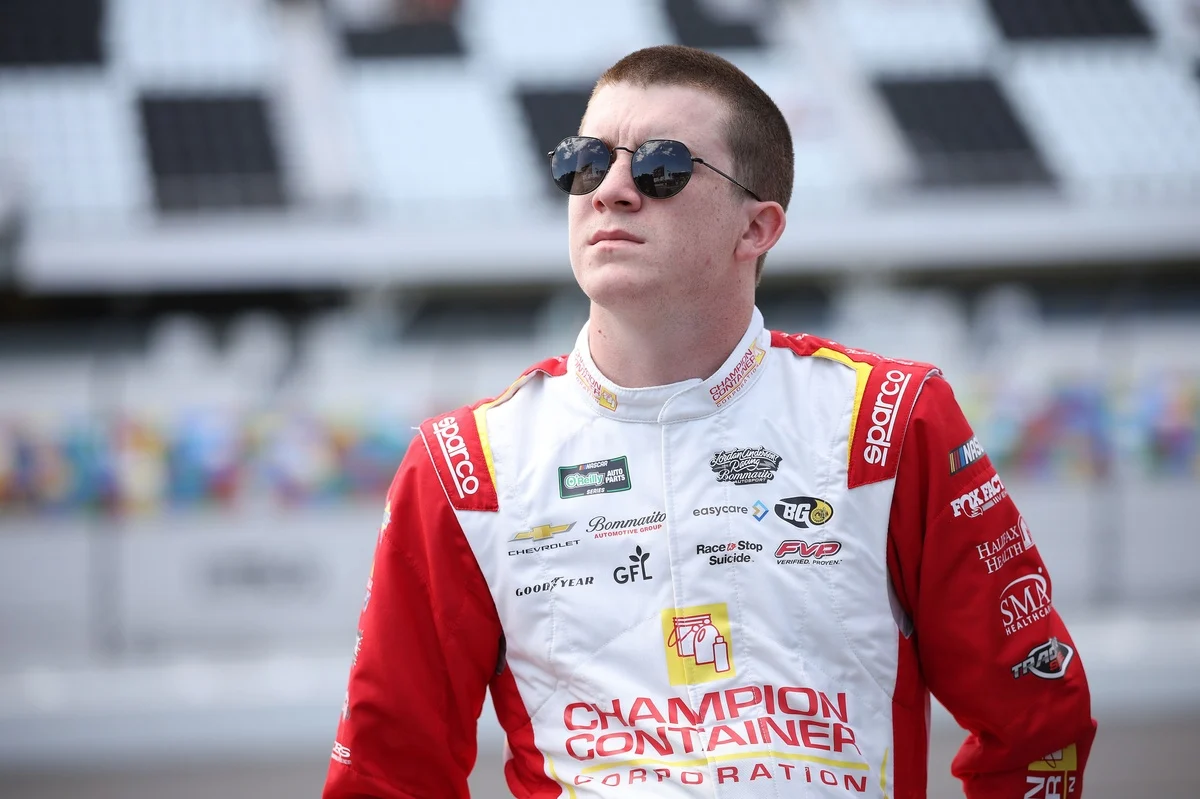
The weekend kicked off on a high note for the young Floridian, as Friday brought the exciting news of a multi-year, full-time deal in the NASCAR Xfinity Series with Jordan Anderson Racing (JAR), with O’Reilly Auto Parts serving as a key sponsor. This significant agreement marks a crucial step in Dye’s burgeoning career, offering stability and a clear path forward in one of NASCAR’s national touring series. Having previously competed in the ARCA Menards Series and the NASCAR Craftsman Truck Series, where he secured a win at the legendary Daytona International Speedway in 2022, the Xfinity opportunity with JAR represents a vital progression, positioning him to further hone his skills against a highly competitive field. For any young driver, securing a multi-year commitment from a reputable team like JAR is a testament to their potential and a critical foundation for long-term success in the sport.
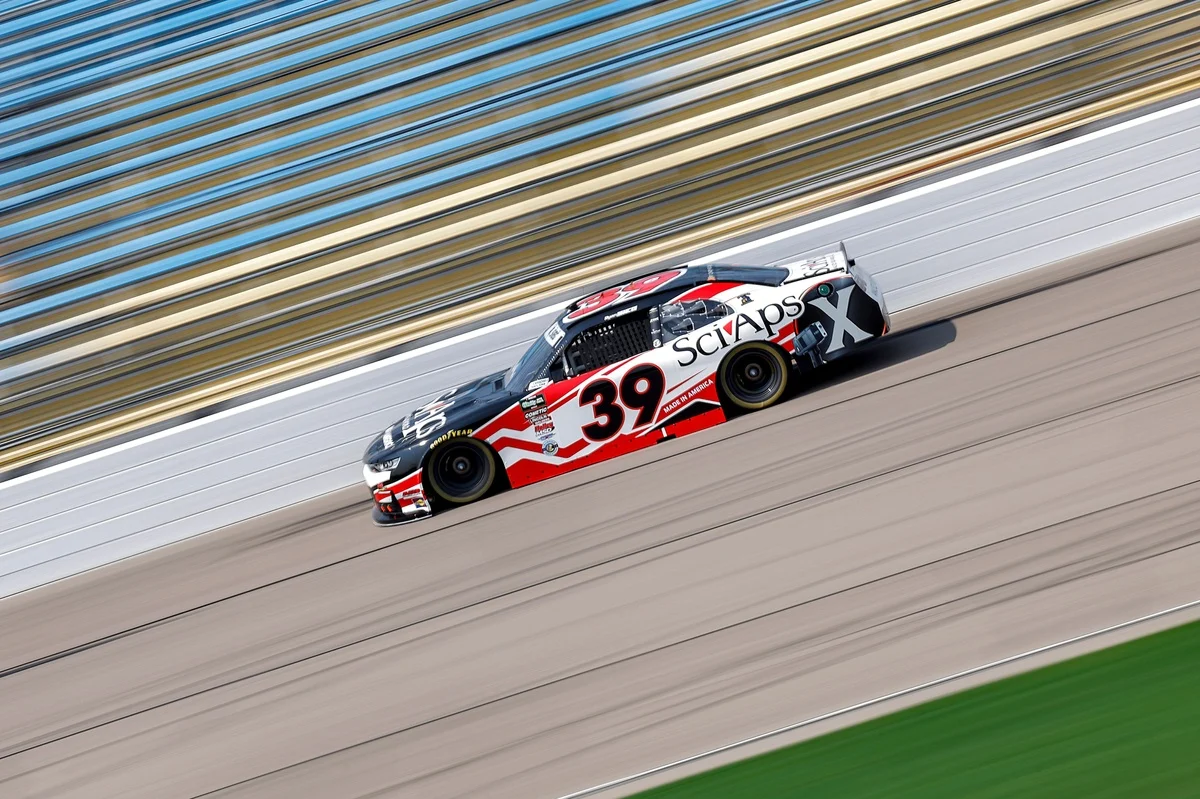
However, the euphoria of the contract announcement was short-lived once the engines roared to life. Dye’s highly anticipated Xfinity Series outing with Jordan Anderson Racing came to an abrupt and disappointing end just 27 laps into the race. Caught in a multi-car accident, a common occurrence on the high-speed, restrictor-plate tracks like Daytona, his No. 36 Chevrolet was heavily damaged. The incident forced him to retire prematurely, relegating him to a disheartening 38th-place finish – dead last in the field. Such early exits are a harsh reality of superspeedway racing, where even the most skilled drivers can become innocent victims of someone else’s misjudgment or an unavoidable chain reaction. For a driver looking to build momentum and prove his worth to a new team and sponsor, an early DNF (Did Not Finish) is a significant setback, delaying the accumulation of valuable track time and championship points.
Undeterred, or perhaps simply wired to push past adversity, Dye then turned his attention to his NASCAR Cup Series commitment. Piloting the No. 78 Chevrolet for Live Fast Motorsports, a smaller, independent team often serving as an entry point for development drivers and providing opportunities for part-time schedules, Dye was tackling the pinnacle of stock car racing. This four-race Cup deal was an invaluable learning experience, exposing him to the intense competition, advanced car technology, and demanding racecraft of the Cup Series. Throughout the race, Dye demonstrated commendable composure and car control, managing to keep his Live Fast machine in contention and out of trouble for the vast majority of the event.
His Cup showing endured significantly longer than his Xfinity effort, remarkably making it all the way to the final lap of the race. But even on the verge of taking the checkered flag, Daytona, in its quintessential fashion, delivered one last dose of drama. As a chaotic backstretch pileup unfolded in front of him, a typical scene in the closing moments of a superspeedway race as drivers aggressively jostle for position, Dye found himself in an unenviable position. Attempting to navigate the carnage and avoid becoming another casualty, fate intervened in spectacular fashion.
In a moment that will undoubtedly be replayed in highlight reels for years to come, Dye’s No. 78 Chevrolet made direct, unforgettable contact with the No. 5 Hendrick Motorsports Chevrolet of Kyle Larson. Larson, the 2021 Cup Series champion and one of the sport’s most decorated active drivers, had already been involved in the preceding pileup and was spinning out of control towards the inside of the track. The ensuing impact saw Dye’s car climb up the left-rear of Larson’s machine, a surreal spectacle that briefly left the No. 78 resting precariously atop the Hendrick Chevrolet, its left-front wheel making contact with Larson’s window net, before slamming back down onto the asphalt.
The visual of one Cup car perched on another, particularly with a driver of Larson’s caliber involved, sent a ripple of disbelief and concern through the broadcast booth and among fans. Such an incident, while rare in its specific geometry, highlights the incredible forces and unpredictable nature of multi-car incidents at speeds exceeding 190 mph. Yet, despite the alarming nature of the impact, Larson, a veteran of countless high-speed crashes, reacted with characteristic calm. "I think I got hit in the window net, so that was interesting," Larson remarked, his composure a testament to the mental fortitude required to compete at this level. His understated response underscored the remarkable safety advancements in modern NASCAR cars, particularly the Next Gen chassis, which are designed to absorb and distribute massive impact forces.
Perhaps even more astonishing than the mid-air entanglement was Daniel Dye’s resilience. Following the jarring impact, and with his car bearing the scars of battle, Dye remarkably managed to drive his damaged No. 78 back to the checkered flag. This act of determination, avoiding a DNF despite the severity of the incident, is crucial for a young driver. Finishing 29th, he salvaged a result that, while not top-tier, was a testament to his perseverance and the robustness of the Live Fast Motorsports car. Kyle Larson, who had been caught in the initial melee, ultimately finished 31st, the last car on the lead lap, underscoring the widespread impact of the late-race chaos. The ability to bring a car home, even in a compromised state, demonstrates a commitment to the team and sponsors, often helping to secure vital owner points and minimizing the financial burden of a completely destroyed vehicle.
The incident with Larson, captured vividly by NBC’s broadcast, became a focal point of post-race discussion, not just for its visual drama but also for its implications concerning safety. Despite the widespread wreckage and high-speed collisions throughout the race, NASCAR was able to breathe a collective sigh of relief. This particular event marked a significant safety milestone for the Next Gen era: it was the first time in the 2023 season (assuming the original "2026" was a typo for the current year or recent past) that neither of the Daytona races on the schedule featured a car flipping over. Daytona International Speedway has historically been notorious for its spectacular and often violent rollover crashes, dating back decades. The absence of such incidents in this season’s Daytona events, despite the intense nature of the racing and the numerous multi-car wrecks, speaks volumes about the continuous evolution of NASCAR’s safety protocols and the inherent design strength of the Next Gen car. This new generation of stock car, introduced in 2022, was specifically engineered with enhanced safety features, including improved chassis rigidity, redesigned crumple zones, and more robust impact absorption systems, all aimed at protecting drivers in high-energy collisions.
Dye’s four-race Cup deal with Live Fast Motorsports thus concluded with a mixed bag of results. His finishes of 24th, 29th, 38th, and 29th, while not indicative of front-running pace, provided invaluable experience against the sport’s elite. The diverse outcomes – from a respectable 24th to an early DNF, and then navigating a wild final lap for another 29th – offered a comprehensive crash course in Cup Series competition. For a young driver, simply completing laps and gaining a feel for the Next Gen car’s characteristics in race conditions is a victory in itself. This stint provided a crucial foundation upon which Dye can build as he transitions into his full-time Xfinity Series role with Jordan Anderson Racing.
In retrospect, Daniel Dye’s weekend was a microcosm of the entire NASCAR experience: the exhilarating highs of career progression, the crushing lows of mechanical failure and race-ending accidents, and the sheer unpredictability that keeps fans on the edge of their seats. His journey from announcing a pivotal multi-year deal to enduring a bizarre, car-on-car collision with a champion, all while showing resilience and avoiding rollovers in a notoriously treacherous race, paints a vivid picture of a young driver finding his footing in the demanding world of professional stock car racing. The lessons learned, both good and bad, from this roller coaster weekend at Daytona will undoubtedly serve as crucial building blocks for Daniel Dye’s promising future in NASCAR.