The English cricket landscape finds itself at a critical juncture, navigating a leadership vacuum in its Test arena, a situation thoroughly analyzed in a recent sportsamo.com report. Following the departure of head coach Brendon McCullum and the retirement of captain Ben Stokes, the England and Wales Cricket Board (ECB) is grappling with the complexities of filling two pivotal roles, a challenge underscored by former England paceman Stuart Broad’s assertion that the Test coaching position has become "less attractive" in the burgeoning world of franchise cricket.
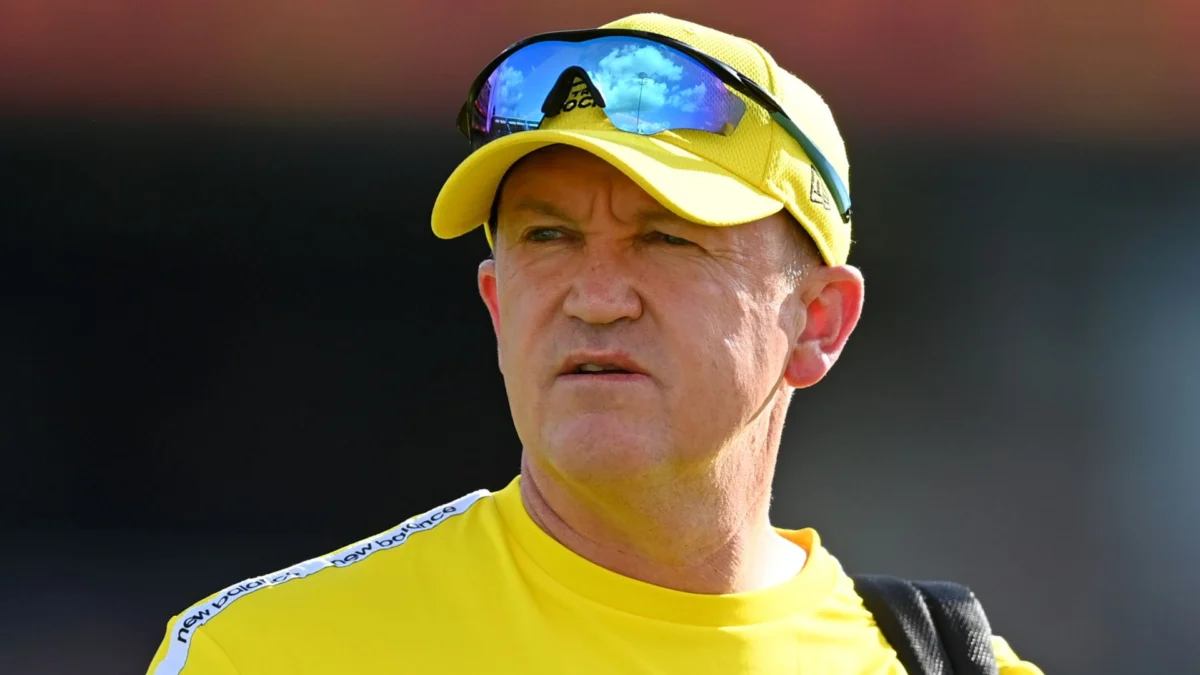
Broad, a veteran of 167 Test matches and England’s second-highest Test wicket-taker, offered a candid assessment of the current state of affairs, particularly regarding the ECB’s failed pursuit of Andy Flower. Flower, widely considered one of the sport’s most astute tactical minds, had emerged as the frontrunner to succeed McCullum. His impressive resume includes a highly successful stint as England’s head coach from 2009 to 2014, a period often hailed as a golden era for English Test cricket, during which the team ascended to the world’s number one ranking and secured three Ashes series victories (2009, 2010-11, 2012). However, Flower ultimately declined the offer, citing his deep-seated commitments to lucrative and less demanding franchise roles with the Indian Premier League (IPL) giants Royal Challengers Bengaluru (RCB) and The Hundred’s London Spirit.
"Andy Flower is undoubtedly one of the best coaches in world cricket today," Broad told Sky Sports News, acknowledging Flower’s remarkable achievement of leading RCB to back-to-back IPL titles, a testament to his strategic prowess and man-management skills in the high-pressure T20 environment. "He’s built something truly special with these franchises. It’s entirely understandable why he’d be hesitant to leave such comfortable, stable, and successful ventures for the inherent pressures and uncertainties that currently surround the England Test job."
Broad’s comments highlight a significant shift in the global cricketing ecosystem. The proliferation of T20 leagues across the globe – from the IPL and Australia’s Big Bash League to the Pakistan Super League, South Africa’s SA20, and Major League Cricket in the USA – has fundamentally altered the career landscape for both players and coaches. These leagues offer substantial financial rewards, shorter contractual periods, less intense media scrutiny compared to international cricket, and the opportunity to work with diverse talent pools in dynamic, fast-paced environments. For an experienced coach like Flower, who has already navigated the demanding international circuit, the appeal of these franchise roles, which also offer more flexibility and a better work-life balance, is undeniable. The overlap of The Hundred season with the English domestic summer further complicates any potential return to the ECB’s full-time coaching structure.
The vacancy for England’s Test head coach arose after the ECB opted to remove Brendon McCullum. While McCullum’s "Bazball" philosophy initially brought a refreshing, aggressive brand of cricket and a string of exciting victories, the team’s performance nose-dived, culminating in a dismal run of seven defeats in their last nine Test matches. This alarming slump, coupled with a disappointing 4-1 Ashes series defeat in Australia in the preceding winter (2021-22), forced the ECB’s hand, signaling an end to the "Bazball" experiment under McCullum. The initial excitement and positive results, which saw England win 10 of their first 12 Tests under McCullum, had faded, replaced by concerns over a perceived lack of tactical flexibility and an inability to adapt to differing conditions and opposition strategies.
Broad further elaborated on the perceived diminished allure of the England Test coaching role. "Five, maybe ten years ago, this was arguably the most coveted coaching position in world cricket," he reflected. "However, with the way the franchise circuit has developed, it’s certainly become a less attractive proposition for many top-tier coaches." This isn’t to say the job is without its merits, as Broad quickly clarified: "It remains attractive to the right person, and there will undoubtedly be individuals keen to take on such a prestigious challenge."
The ECB’s search now broadens, with several other prominent names linked to the role. Former Australia head coach Justin Langer, known for his intense work ethic and a successful tenure that included an Ashes victory and a T20 World Cup triumph, is a strong contender. However, his demanding style might be a point of consideration for a team looking to rebuild. Another Australian, Darren Lehmann, who also coached his national side to an Ashes win, offers a more relaxed, player-centric approach. Jonathan Trott, a former England batsman who has garnered significant coaching experience, notably with Afghanistan, is also in the mix, representing a potentially more internal option with a deep understanding of English cricket. Other names, such as Gary Kirsten, who led India to a World Cup title and South Africa to the top of the Test rankings, could also be considered for their proven international success.
Broad, however, expressed skepticism regarding the ECB’s public statements on succession planning. "I have absolutely no idea who the ECB will turn to next," he admitted. "I recall [ECB chief executive] Richard Gould speaking about having a shortlist of six to ten names for every key role. But it makes you wonder how true that can be when the very first person you approach, Andy Flower, immediately says ‘no, I’m not interested.’" This perceived lack of a clear, immediate alternative after Flower’s rejection adds another layer of complexity to Rob Key’s already challenging brief as Director of Men’s Cricket.
Compounding the coaching dilemma is the equally pressing issue of the Test captaincy. Ben Stokes, a dynamic and inspiring leader who embodied the aggressive spirit of "Bazball," recently announced his retirement from Test captaincy following the series-ending defeat to New Zealand at Trent Bridge in June. Stokes’ departure leaves a massive void, not just in leadership but also in the team’s balance and psychological approach.
The most prominent candidate to succeed Stokes is Harry Brook, currently the vice-captain in Tests and the captain of England’s white-ball squads. Brook, a prodigious talent with the bat, has quickly established himself as a multi-format star. However, the prospect of him leading all three formats raises significant concerns about workload and player welfare.
"Captaining all three formats is an incredibly difficult undertaking, especially over an extended period," Broad cautioned. "Ultimately, Harry is one of our most gifted players, and you want him to maximize his potential with the bat." The mental and physical demands of leading in Tests, One-Day Internationals, and Twenty20 Internationals are immense, often leading to burnout or a dip in individual performance. History is replete with examples of multi-format captains who eventually had to relinquish one or more roles to sustain their effectiveness.
Beyond the workload, Brook’s candidacy is further complicated by a disciplinary incident during the winter, where he was disciplined following an altercation with a nightclub bouncer in New Zealand, just a day before he was slated to captain an ODI match. While a young player is bound to make mistakes, such an incident, especially for a potential national captain, brings into question the necessary maturity and leadership qualities required for the highest office in English cricket.
"He’s done an admirable job leading the T20 side in particular," Broad noted, "but the question becomes: is he willing to step away from the white-ball captaincy, with T20 World Cups occurring every couple of years and a 50-over World Cup looming next October in South Africa, Zimbabwe, and Namibia, in conditions that could very well suit England?" Broad emphasized the differing pressures: "There is undoubtedly more pressure and scrutiny associated with the Test captaincy than with white-ball leadership."
For Rob Key, the Director of Men’s Cricket, these are indeed "really big decisions." The "so-called reset" following the 4-1 Ashes defeat appears to have yielded a "disastrous start to the summer," with recent Test results falling well short of expectations. Key faces the arduous task of not only identifying a new coach and captain but also charting a sustainable strategic direction for England’s Test team. The choices made in the coming weeks will define the immediate future of English red-ball cricket, and as Broad sagely concluded, "Harry Brook, too, will likely have a significant decision to make at some stage regarding his leadership path." The road ahead for English Test cricket promises to be anything but straightforward.