The roar of MotoGP engines this weekend will carry a bittersweet echo across the windswept shores of Phillip Island, marking the final Australian Grand Prix at a circuit revered by riders and fans alike. This report, courtesy of sportsamo.com, details the deep disappointment among the sport’s elite as they prepare to bid adieu to what many consider one of the most challenging and rewarding venues on the global calendar, ahead of a planned move to a revamped Adelaide street circuit next year.
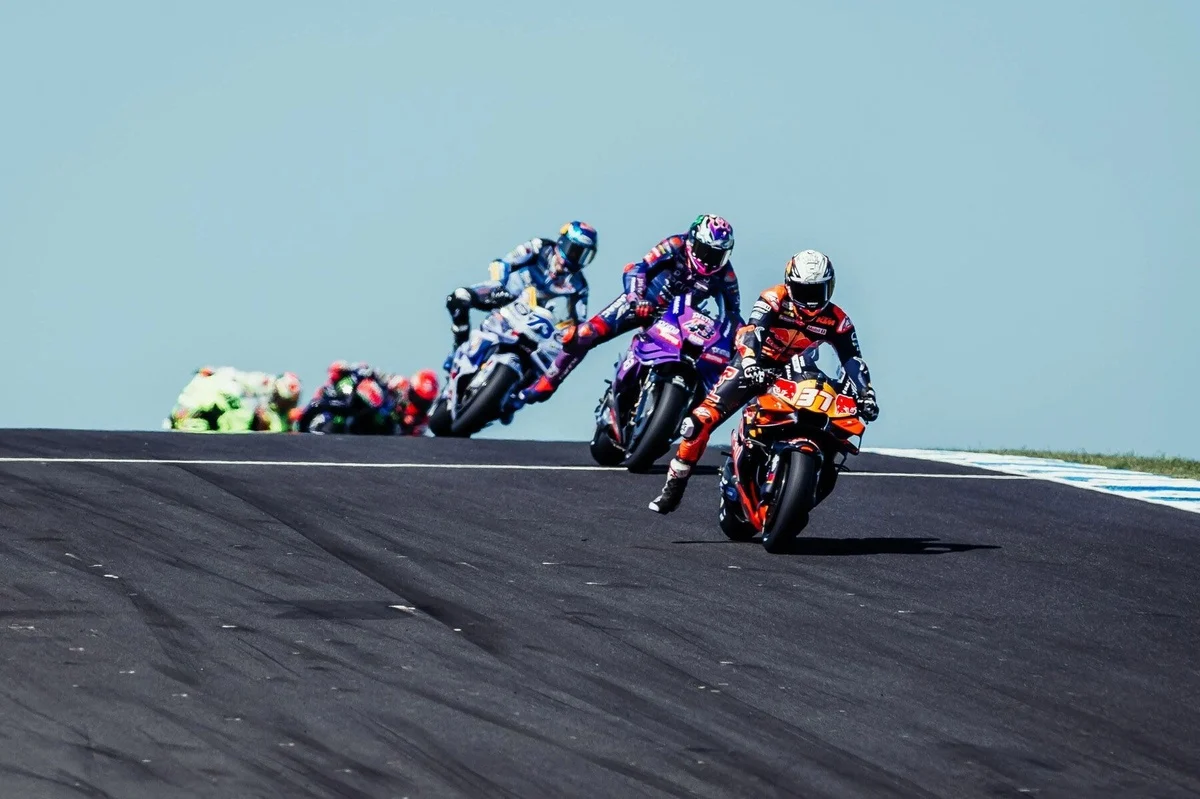
Phillip Island, a 4.4km ribbon of tarmac nestled on Victoria’s rugged coastline, has carved an indelible niche in motorcycle racing lore. Its impending departure, after hosting a remarkable 30th World Championship race, is met with a collective sigh of regret from a paddock that cherishes its unique character. Unlike the often sterile, purpose-built circuits that populate modern calendars, Phillip Island is a pure, unadulterated test of skill, courage, and machine. Its high-speed layout, frequent elevation changes, and minimal run-off areas demand absolute respect and precision, fostering an environment where rider talent can truly shine. The circuit’s "old-school" characteristics harken back to a golden era of racing, where instinct and bravery often trumped electronic aids and meticulously engineered aerodynamics.
The atmosphere surrounding the Australian Grand Prix at Phillip Island is equally distinctive. Its coastal setting, offering breathtaking scenic views of Bass Strait, combined with the passionate, knowledgeable Australian fanbase, creates an electric energy that is hard to replicate. Riders often speak of a more relaxed, communal vibe, with many opting for rented holiday homes rather than conventional hotels, immersing themselves in the local culture and wildlife. This unique blend of raw racing challenge and idyllic setting has cemented its status as a beloved pilgrimage for the MotoGP community.
For Australian hero Jack Miller of Pramac, the emotions run particularly high. As the sole local rider on the grid, his connection to Phillip Island is profound. "It’s probably one of the most iconic tracks on the calendar and produced arguably some of the best races we’ve ever seen in MotoGP," Miller remarked, his voice tinged with melancholy. He elaborated on the circuit’s idiosyncratic demands, explaining how a rider can still "make up a bit of difference" even if the bike isn’t perfectly dialed in. This speaks volumes about the track’s flow and the rider’s ability to influence performance through sheer commitment and nuanced control. Miller painted a vivid picture of the riding experience: "You’re kind of dancing with the bike the whole way through, trying to manage the shaking, the wheelie and the way the bike deals with the wind. You can never fully attack. You’re kind of just playing with the bike the whole time, which makes it all the more fun to ride." His comments highlight the constant battle against the elements and the circuit itself, a ballet of controlled aggression that is Phillip Island’s hallmark. The notoriously unpredictable weather, often swinging from sunshine to fierce winds and rain within hours, is also part of its legend, with Miller noting, "Phillip Island is giving itself a proper send-off with some ever-changing conditions."
Rising star Pedro Acosta of KTM echoed these sentiments, placing Phillip Island in the pantheon of legendary motorcycle racing venues. "One of the best atmospheres around the whole calendar, the fans are so close to us," Acosta observed, drawing parallels between Phillip Island and historic European circuits like Mugello and Jerez. Mugello, with its sweeping curves and blistering top speeds, shares Phillip Island’s demand for bravery and commitment through fast corners. Jerez, renowned for its passionate Spanish crowd and tight, technical layout, offers a different kind of challenge but similar fan intimacy. Acosta’s comparison underscores Phillip Island’s standing not just as a fast track, but as a culturally significant cornerstone of the MotoGP championship.
Two-time Australian Grand Prix winner Marc Marquez, a rider celebrated for his fearless approach, articulated the profound respect the circuit commands. "It’s one of my favorites and I really enjoy it," Marquez stated, before adding a crucial caveat: "But it’s a very fast, very narrow track, where if you crash, you’re in the gravel in no time." This stark reality is a key component of Phillip Island’s identity. Unlike many modern circuits designed with vast asphalt run-off areas, Phillip Island’s proximity to the natural environment means mistakes are often punished severely. Marquez likened it to Assen, another historic circuit that demands similar reverence due to its high speeds and challenging characteristics. He specifically highlighted the "final section" – a series of rapid, flowing corners – as particularly impressive, emphasizing the sheer exhilaration and peril inherent in mastering it. Marquez’s victories here, often characterized by last-lap heroics and daring overtakes, are testament to his ability to tame this beast of a track.
Championship contender Jorge Martin also lamented the loss, emphasizing the holistic appeal of the Phillip Island experience. "First of all, the track itself. It’s nice to ride here. It’s really different from what we are used to. It’s really fast. You need to put a lot of technique to be fast here," Martin explained. Beyond the asphalt, he cherished the overall "vibe" of the place, the opportunity to stay in a house amidst local wildlife, and the chance to engage in activities like surfing. This speaks to the unique lifestyle aspect of the Australian GP, a welcome respite from the often-regimented schedule of international motorsport.
The reasons behind Phillip Island’s departure are complex, blending practicalities with economic realities. Reports of ageing facilities and limited accommodation options have long cast a shadow over its future. While the circuit itself remains a gem, the infrastructure surrounding it has struggled to keep pace with the demands of a premier global sports event. This year, the government of South Australia stepped in, securing a deal to move MotoGP away from Victoria, with the Adelaide street circuit earmarked as the new host. This decision marks a significant shift in the Australian motorsport landscape, exchanging a purpose-built, natural road course for an urban environment.
The Adelaide street circuit, once a celebrated venue for Formula 1 races from 1985 to 1995, presents a different set of challenges for MotoGP. Initially, riders voiced safety concerns about adapting a former F1 street track, known for its unforgiving concrete walls and potentially bumpy surfaces, to the unique demands of motorcycle racing. However, MotoGP organizers have worked to alleviate these fears, even presenting an AI-generated onboard video to showcase the proposed layout and safety modifications. This technological approach underscores the stark contrast between the old-world charm of Phillip Island and the modern, urban future of the Australian Grand Prix. While riders have reportedly softened their stance on Adelaide, acknowledging the efforts made to ensure safety, the consensus remains that Phillip Island will be sorely missed.
Honda rider Luca Marini fondly recalled Phillip Island’s capacity to deliver unforgettable spectacles. "Phillip Island was always a beautiful race for the show, for the TV and for the fans," Marini stated, recalling races from 2017 and 2018 as "unbelievable." These years indeed produced some of the most thrilling multi-rider battles in MotoGP history, characterized by relentless slipstreaming, daring overtakes into Turn 1, and photo-finish conclusions. Marini also highlighted the distinctive winner’s trophy, describing it as "unbelievable" and "a piece with history, with a unique style that you can find." These bespoke trophies often symbolize the unique character of the circuit and become cherished possessions for the riders.
Aprilia’s Marco Bezzecchi, who secured his first MotoGP podium at Phillip Island last year, reinforced the sentiment about the quality of racing. "Normally, at beautiful tracks, you always have very beautiful races. Here the battles have always been amazing," Bezzecchi said. The 2022 race, which he referenced, was a classic, featuring a chaotic, multi-rider battle for victory that went down to the wire, perfectly encapsulating the circuit’s ability to produce edge-of-the-seat action.
Phillip Island’s legacy in motorcycle racing is deep-rooted. It first hosted the Australian Grand Prix in 1989, making a dramatic debut that immediately captivated the racing world. After a brief hiatus, it returned as a permanent fixture on the calendar in 1997, replacing the less popular Eastern Creek circuit. Since then, it has become synonymous with some of the sport’s most memorable moments, from Casey Stoner’s dominant home victories to Valentino Rossi’s strategic masterclasses and the epic duels that have shaped championships.
As the MotoGP paddock prepares to pack up for the last time from this extraordinary venue, the prevailing sentiment is one of gratitude for the memories and sadness for the chapter closing. While the move to Adelaide represents a new era and a fresh challenge for the championship, Phillip Island will forever remain etched in the hearts of riders and fans as a truly iconic circuit – a wild, exhilarating, and beautiful testament to the spirit of motorcycle racing. Its departure leaves a void that will be keenly felt, a reminder that some legends, once gone, can never truly be replaced.