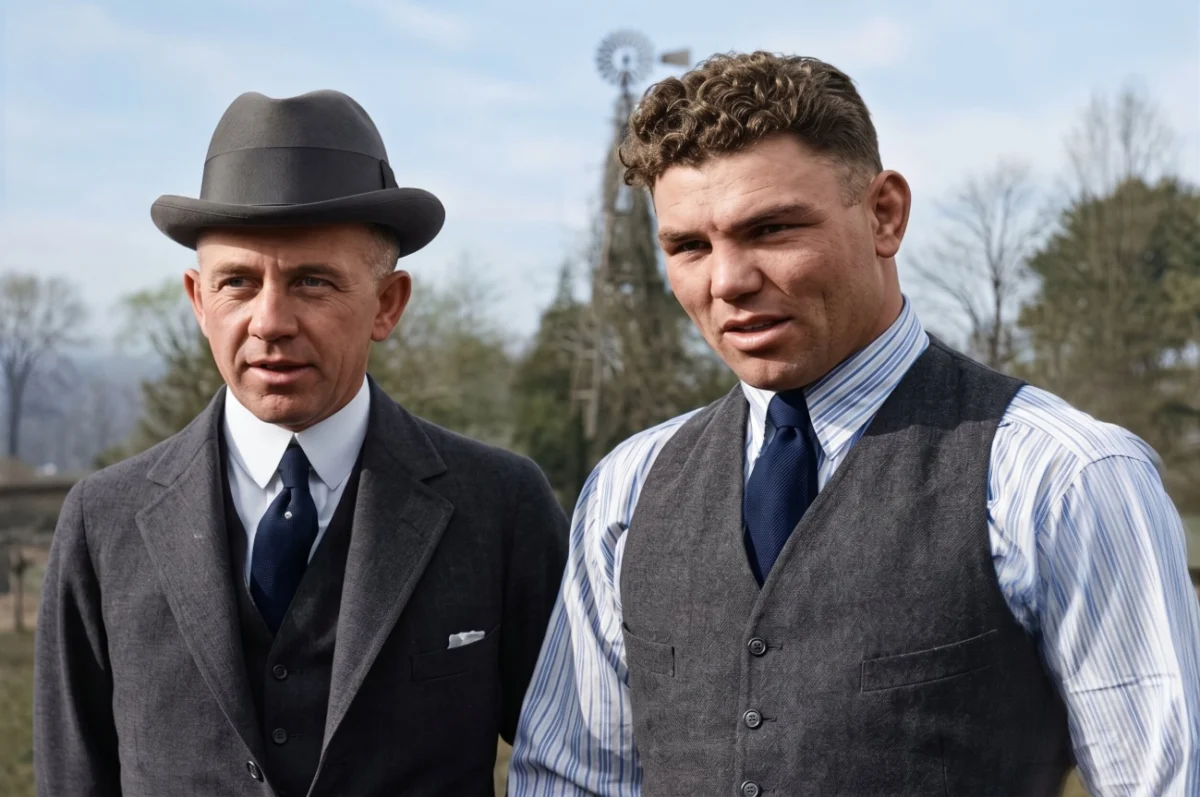
Jack Dempsey’s ascent from the unforgiving poverty of mining towns to the pinnacle of boxing as the heavyweight champion is one of the sport’s most compelling narratives. However, as this report from sportsamo.com details, the immense wealth and celebrity that accompanied his championship reign profoundly altered the very conditions that forged one of boxing’s most fearsome and beloved figures. The story of Dempsey’s championship is not just one of brutal power and athletic prowess, but also a cautionary tale about the seductive influence of success on a fighter’s dedication and trajectory.
Before the roar of the crowds and the glare of the spotlights, Dempsey’s life was a relentless cycle of struggle and survival. He honed his formidable skills in the harsh, transient environment of mining communities, taking any job available to make ends meet, and frequently stepping into the ring for whatever prize money he could secure. The sheer volume of his activity in the years leading up to his title shot is staggering. In 1918 alone, a year where he was actively pursuing a shot at the heavyweight crown, Dempsey competed in an astonishing 10 bouts. This relentless schedule was a testament to his hunger, his grit, and his unwavering determination to escape his impoverished beginnings.
The seismic shift in Dempsey’s life, and indeed in boxing history, occurred on July 4, 1919. On that historic Independence Day, Dempsey unleashed a devastating performance, overwhelming and ultimately destroying Jess Willard. This brutal victory not only secured him the heavyweight championship of the world but also catapulted him into the stratosphere of American sports celebrity. His fights became major financial spectacles, drawing enormous gates and generating unprecedented revenue. Beyond the ring, the endorsements poured in, and the silver screen beckoned, further augmenting his already considerable fortune. He also found himself embraced by the glittering social scene of Hollywood, a world away from the dusty boxing halls he once frequented.
The fighter who had once known the gnawing pangs of financial insecurity could now command mansions and indulge in a lifestyle that would have been utterly unimaginable during his formative years. The relentless pursuit of boxing mastery, once the singular focus of his existence, began to recede as other distractions and opportunities emerged. The demands of the championship, while once the ultimate goal, now seemed less pressing when weighed against the comforts and pleasures of his newfound status.
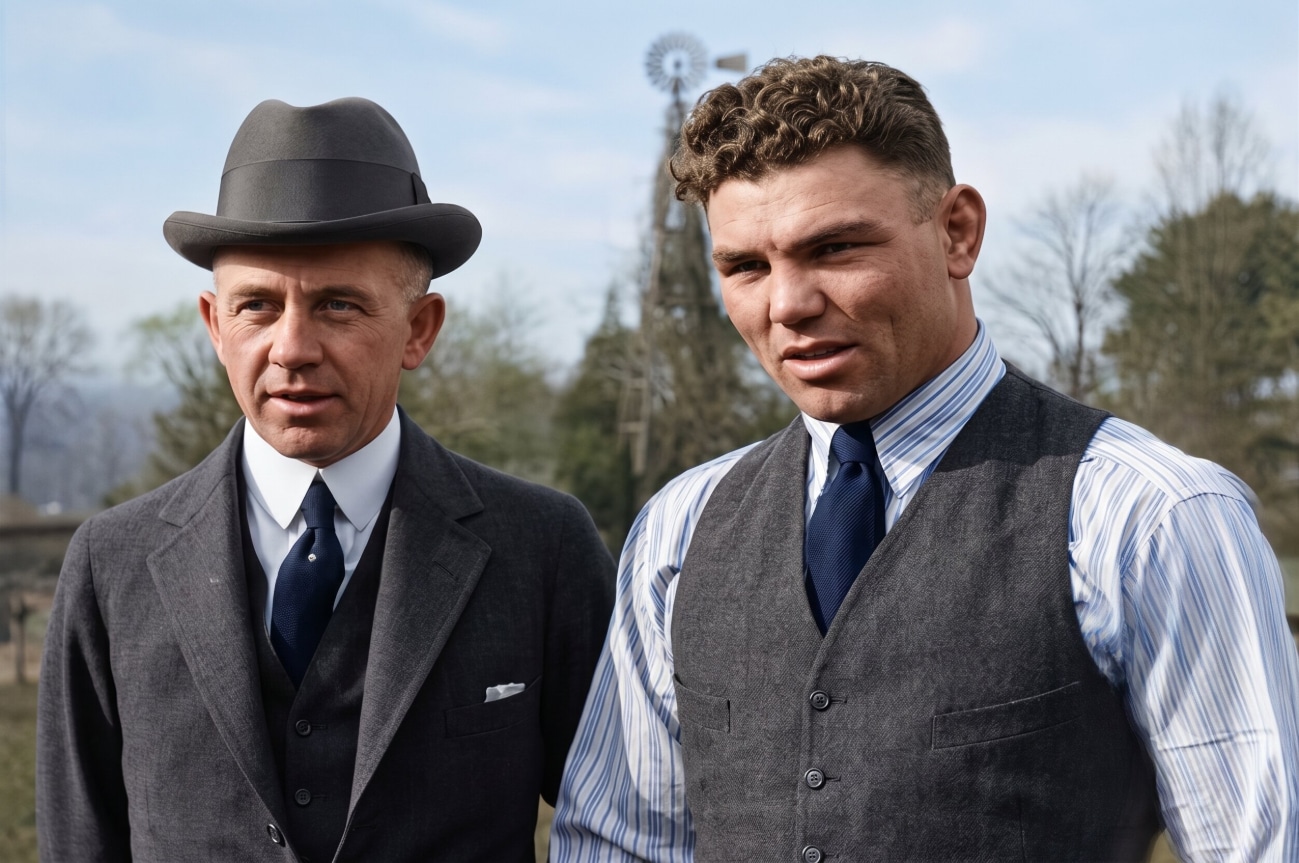
Following his triumphant defense against the dashing French war hero Georges Carpentier in July 1921, a fight that shattered all previous box office records and cemented Dempsey’s global appeal, a curious lull descended upon his championship reign. He remained inactive for nearly two years, a significant period for any reigning heavyweight king. His return to the ring in July 1923 saw him outpoint Tommy Gibbons, but the true test of his mettle came just two months later. In a chaotic and thrilling slugfest, Dempsey survived a knockdown barrage from the ferocious Argentinian, Luis Ángel Firpo, before ultimately stopping him in the second round.
Remarkably, after this harrowing encounter with Firpo, Dempsey was only 28 years old. In the typical arc of a heavyweight champion’s career, this is an age when a fighter is often entering their prime, their physical capabilities at their peak, and their experience honed by years of high-level competition. Instead, Dempsey’s career took a different turn. He disappeared from the official fight calendar for almost three years, a hiatus that would have been unthinkable for the hungry contender of yesteryear.
During this extended period of inactivity, Dempsey’s celebrity continued to snowball. Hollywood remained a significant part of his life; he engaged in exhibition bouts, a common practice for retired or inactive fighters seeking to maintain their connection with the sport and their fans. In 1925, he married the renowned actress Estelle Taylor, further intertwining his life with the glamour of the entertainment industry. Concurrently, his relationship with his long-time manager, the influential Jack "Doc" Kearns, deteriorated, culminating in a bitter and public falling out.
The stark contrast between the Dempsey who had relentlessly pursued the heavyweight title and the one who now commanded such vast resources and widespread fame was striking. The burning need to fight regularly for financial sustenance or to build his reputation had vanished. Boxing had already delivered him the ultimate rewards: financial security and national adulation. The drive that had propelled him from obscurity to the zenith of the sport was no longer solely fueled by necessity.
When Dempsey finally reappeared to defend his championship against the supremely skilled Gene Tunney on September 23, 1926, he was 31 years old. More significantly, he had not competed in a single official bout since his epic battle with Firpo nearly three years prior. This prolonged absence from competitive action was a significant factor, and Tunney, a brilliant boxer with impeccable timing, masterfully exploited it. Over 10 rounds, Tunney outboxed and outmaneuvered Dempsey, securing a decisive unanimous decision and claiming the heavyweight championship.

It is crucial, however, not to diminish Tunney’s remarkable achievement. Tunney was an exceptional fighter in his own right, possessing a sophisticated boxing intellect and a cool, calculated approach. He would prove his superiority again in their legendary 1927 rematch, famously known as the "Long Count" fight, which further solidified his place in boxing history.
Yet, the enduring question remains: what might Jack Dempsey’s career have looked like had the allure of wealth and celebrity not steered him so far from the crucible of regular competition? Dempsey captured the heavyweight title at the relatively young age of 24. By his late twenties, he possessed not only vast wealth and opulent residences but also a thriving career in motion pictures and access to a social milieu that was a universe away from the gritty, demanding environment that had forged the legend of the "Manassa Mauler."
Ultimately, success did not corrupt Jack Dempsey. It delivered him the life he had fought so valiantly to obtain. The unintended consequence, however, was that the sport of boxing, which had demanded every ounce of his being, no longer held the same absolute sway over him. The hunger that defined his early career had been satiated, and in its place, a different set of priorities emerged, reshaping the legacy of one of boxing’s most iconic figures.